
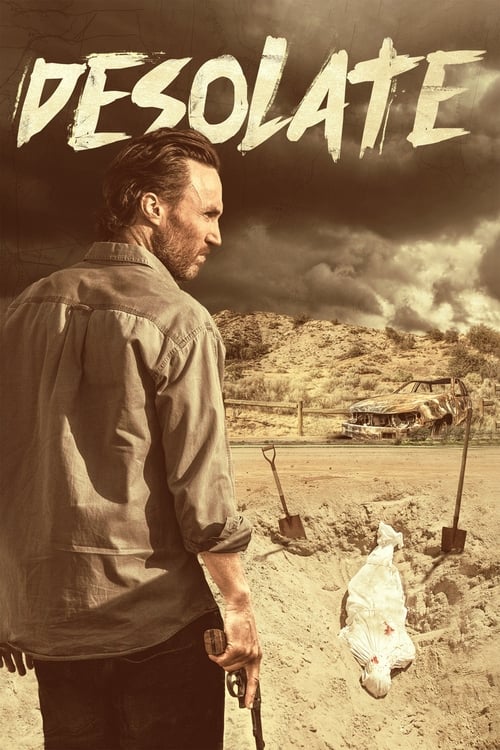












Popular
What role do the supporting characters play in the protagonist's journey?
What motivates the main character to embark on their journey in Desolate?
How does the setting of the desolate landscape influence the characters' development?
What significant event triggers the protagonist's turning point in the story?
How does the protagonist's relationship with nature evolve throughout the film?
Should I watch it?
Ask Your Own Question

What is the plot?
Sorry, we aren't able to watch and write up a full detailed plot yet. Check back in a few days.







What is the ending?
In the ending of "Desolate," the main character, a woman named Sarah, confronts her past and the haunting memories that have plagued her. After a series of intense encounters, she ultimately finds a way to let go of her grief and pain, leading to a moment of catharsis. The film concludes with Sarah standing alone in a vast, empty landscape, symbolizing her newfound freedom and acceptance.
As the final act unfolds, the scene opens with Sarah standing at the edge of a desolate cliff, the wind whipping through her hair, her face a mixture of determination and sorrow. The sun is setting, casting an orange glow over the barren landscape, a stark contrast to the turmoil within her. She reflects on the loss of her loved ones, the memories flooding back like waves crashing against the rocks below. Each memory is a reminder of the pain she has carried, and the weight of her grief is palpable.
In the next scene, Sarah is confronted by the specters of her past--visions of her loved ones who have died. They appear to her in a dreamlike state, their faces filled with both love and sadness. They urge her to move on, to release the burdens that have kept her shackled to her sorrow. Sarah's internal struggle is evident as she grapples with the desire to hold onto their memories while also yearning for peace.
As the visions fade, Sarah takes a deep breath, her resolve strengthening. She begins to walk away from the cliff, symbolizing her decision to step away from the darkness that has consumed her. The camera follows her as she traverses the rugged terrain, each step a testament to her courage. The landscape around her is stark and unforgiving, mirroring her emotional journey, yet she presses on, her heart beating with a newfound sense of hope.
In the final moments, Sarah reaches a clearing where the sky opens up, revealing a vast expanse of stars. She stands there, arms outstretched, embracing the night sky. Tears stream down her face, but they are no longer tears of despair; they are tears of release. The weight of her past begins to lift, and she feels a sense of connection to the universe, as if her loved ones are finally at peace.
The film closes with a wide shot of Sarah standing alone in the expansive landscape, a small figure against the backdrop of the infinite sky. The camera slowly pulls away, leaving her in solitude, yet there is a sense of liberation in her stance. She has faced her demons and emerged stronger, ready to embrace whatever comes next.
In this poignant conclusion, Sarah's journey reflects the themes of loss, acceptance, and the resilience of the human spirit. Each character who played a role in her past has contributed to her growth, and while they may be gone, their influence remains, guiding her toward a brighter future.
Is there a post-credit scene?
In the movie "Desolate," there is no post-credit scene. The film concludes its narrative without any additional scenes or content after the credits roll. The story wraps up with a sense of finality, leaving the audience to reflect on the emotional journey and the themes explored throughout the film. The absence of a post-credit scene emphasizes the weight of the characters' experiences and the resolution of their arcs, allowing viewers to fully absorb the impact of the story as it stands.
What role do the supporting characters play in the protagonist's journey?
The supporting characters serve as catalysts for the protagonist's growth. Each character represents different aspects of the protagonist's psyche, offering contrasting perspectives on grief and survival. Their interactions challenge the protagonist to confront their own vulnerabilities and push towards healing.
What motivates the main character to embark on their journey in Desolate?
The main character, struggling with a deep sense of loss and isolation, is driven by a desperate need to find closure and meaning in their life. This internal conflict propels them into the desolate landscape, where they confront both external challenges and their own emotional turmoil.
How does the setting of the desolate landscape influence the characters' development?
The stark and barren landscape serves as a reflection of the characters' inner struggles. As they navigate through the harsh environment, the physical challenges they face parallel their emotional battles, forcing them to confront their fears, regrets, and ultimately, their resilience.
What significant event triggers the protagonist's turning point in the story?
A pivotal moment occurs when the protagonist encounters a life-threatening situation that forces them to confront their deepest fears. This event acts as a wake-up call, compelling them to reassess their choices and motivations, ultimately leading to a transformative realization about their capacity for hope and change.
How does the protagonist's relationship with nature evolve throughout the film?
Initially, the protagonist views the desolate landscape as a hostile and unforgiving environment, mirroring their internal despair. However, as the story progresses, they begin to find beauty and solace in nature, which becomes a source of strength and inspiration, symbolizing their journey towards acceptance and healing.
Is this family friendly?
"Desolate," produced in 2019, is not considered family-friendly due to its intense themes and mature content. The film contains several potentially objectionable or upsetting scenes that may be distressing for children or sensitive viewers.
- Violence: There are scenes depicting physical confrontations and threats, which may be unsettling.
- Emotional Trauma: Characters experience significant emotional distress, including grief and loss, which could be heavy for younger audiences.
- Isolation: The film explores themes of loneliness and despair, presenting a bleak atmosphere that may be difficult for sensitive viewers to process.
- Dark Themes: The narrative delves into survival in a harsh environment, showcasing desperation and moral dilemmas that could be disturbing.
Overall, the film's tone and subject matter are more suited for mature audiences.