























Popular
What is the significance of the character Mabel in Chained for Life?
How does the character Rosenthal impact Mabel's perspective throughout the film?
What role does the film's setting play in the development of the characters?
How does the film address the theme of exploitation in the context of its characters?
What is the relationship between Mabel and the director, and how does it evolve?
Should I watch it?
Ask Your Own Question

What is the plot?
Sorry, we aren't able to watch and write up a full detailed plot yet. Check back in a few days.







What is the ending?
In the ending of "Chained for Life," the film culminates in a tense and emotional confrontation between the characters, revealing the complexities of identity and perception. The protagonist, Mabel, grapples with her feelings towards her co-stars and the nature of their existence. The film concludes with a poignant moment that leaves the audience reflecting on the themes of beauty, acceptance, and the human experience.
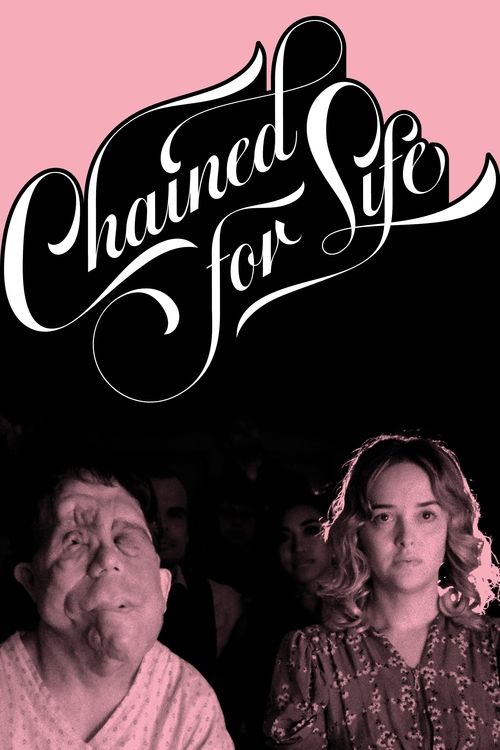
As the final scenes unfold, Mabel, played by Jess Weixler, finds herself increasingly drawn into the world of her co-stars, particularly the character of Rosenthal, portrayed by Adam Pearson. The film's climax occurs during a pivotal scene where Mabel confronts her own biases and the societal perceptions of beauty and normalcy.
In a dimly lit room, Mabel watches as Rosenthal, who has been subjected to the harsh realities of being perceived as "other," delivers a powerful monologue about his life and experiences. His words resonate deeply with Mabel, causing her to reflect on her own role in the film and the industry. The emotional weight of the moment is palpable, as Mabel's internal struggle becomes evident. She is torn between her initial discomfort and a growing empathy for Rosenthal and the other characters who have been marginalized.
As the scene progresses, Mabel's transformation becomes clear. She steps forward, breaking the barrier that has kept her at a distance from her co-stars. In a moment of vulnerability, she reaches out to Rosenthal, acknowledging the shared humanity that transcends physical appearances. This act of connection signifies a turning point for Mabel, as she embraces the complexities of identity and the importance of acceptance.
The film concludes with a haunting image of Mabel standing amidst her co-stars, their faces illuminated by the soft glow of the lights. The camera lingers on their expressions, capturing a mix of hope and uncertainty. Mabel's journey has led her to a place of understanding, but the future remains ambiguous. The final shot fades to black, leaving the audience to ponder the implications of the characters' experiences and the societal constructs that shape their lives.
In summary, the ending of "Chained for Life" encapsulates the film's exploration of identity, beauty, and acceptance, as Mabel's journey culminates in a moment of profound connection with her co-stars, particularly Rosenthal. Each character's fate is intertwined with the themes of the narrative, emphasizing the importance of empathy and understanding in a world that often judges based on appearances.
Is there a post-credit scene?
"Chained for Life," produced in 2019, does not have a post-credit scene. The film concludes its narrative without any additional scenes or content after the credits roll. The story wraps up with a focus on the themes of identity, beauty, and the complexities of human connection, leaving the audience to reflect on the characters and their journeys without further elaboration.
What is the significance of the character Mabel in Chained for Life?
Mabel, played by Jess Weixler, is a central character who embodies the struggle of acceptance and identity within the film. As an actress in a movie that features individuals with physical differences, her interactions with the other cast members, particularly with the character Rosenthal, reveal her internal conflict and evolving understanding of beauty and humanity. Mabel's journey reflects her initial discomfort and eventual empathy, highlighting the film's exploration of societal perceptions of physical appearance.
How does the character Rosenthal impact Mabel's perspective throughout the film?
Rosenthal, portrayed by Adam Pearson, is a character with a facial difference who becomes a pivotal figure in Mabel's transformation. Initially, Mabel is unsure and somewhat distant, but as she spends more time with Rosenthal, she begins to see beyond physical appearances. His candidness and authenticity challenge her preconceived notions, leading to a deeper emotional connection that ultimately influences her performance and personal growth.
What role does the film's setting play in the development of the characters?
The film is set primarily on a movie set, which serves as a microcosm for the exploration of identity and acceptance. The artificiality of the film industry contrasts with the genuine emotions of the characters, particularly Mabel and Rosenthal. This setting amplifies the tension between performance and reality, as the characters navigate their roles both on and off the screen, ultimately leading to moments of vulnerability and self-discovery.
How does the film address the theme of exploitation in the context of its characters?
Chained for Life delves into the exploitation of individuals with physical differences within the film industry. The character dynamics, especially between Mabel and the director, highlight the ethical dilemmas faced by those who are often commodified for their appearances. Mabel's growing awareness of this exploitation forces her to confront her own complicity and the moral implications of her role in the film, leading to a critical examination of the industry's treatment of marginalized bodies.
What is the relationship between Mabel and the director, and how does it evolve?
Mabel's relationship with the director, played by the film's co-writer and director Aaron Schimberg, begins with a sense of professional obligation but quickly becomes strained as she grapples with the ethical implications of their project. The director's vision often clashes with Mabel's growing discomfort regarding the portrayal of her co-stars. As the film progresses, their interactions reveal a power dynamic that shifts, with Mabel asserting her voice and challenging the director's intentions, ultimately leading to a confrontation that underscores her journey towards empowerment.
Is this family friendly?
"Chained for Life" is not considered family-friendly and contains several potentially objectionable or upsetting elements that may affect children or sensitive viewers.
-
Physical Disabilities: The film features characters with visible physical deformities and disabilities, which may be unsettling for some viewers. The portrayal of these characters raises questions about societal perceptions of beauty and normalcy.
-
Body Horror Elements: There are scenes that delve into body horror, showcasing the discomfort and fear surrounding physical appearance and identity.
-
Emotional Distress: Characters experience significant emotional turmoil, including feelings of isolation, rejection, and existential dread, which may be heavy for younger audiences.
-
Dark Themes: The film explores themes of exploitation, identity, and the human condition, which can be intense and thought-provoking, potentially leading to discomfort.
-
Violence and Intimidation: There are moments of implied violence and intimidation that may be distressing, particularly in the context of how characters are treated by others.
These aspects contribute to a tone that is more suited for mature audiences, making it less appropriate for children or those sensitive to such themes.