










Popular
What motivates the main character, Koko, throughout the film?
How does the relationship between Koko and her mother evolve during the film?
What role does the setting play in Koko's journey?
How does Koko's friendship with her neighbor, Timo, impact her character development?
What challenges does Koko face in her pursuit of her dreams, and how does she overcome them?
Should I watch it?
Ask Your Own Question

What is the plot?
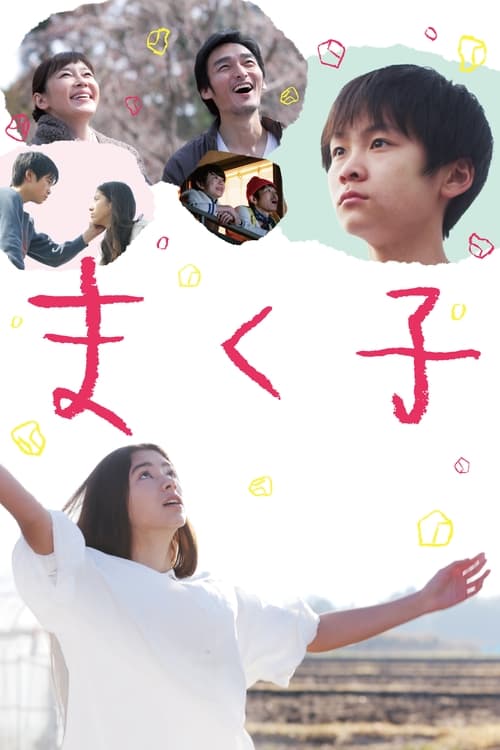
Satoshi, an 11-year-old fifth grader, lives in a quiet rural town in contemporary Japan. The film opens with him in his modest home, a place that should feel safe but instead seems filled with unease. His father's behavior weighs heavily on him--Satoshi is deeply unhappy with the man's perfidy and the questionable company he keeps. This domestic tension sets the emotional backdrop for Satoshi's world: a place where childhood innocence is under threat, and the adult world feels alien and untrustworthy.
At school, Satoshi drifts through his days with a quiet melancholy. His classmates chatter and play, but he remains somewhat detached, his gaze often distant. Then, a new transfer student arrives--Kozue. She is enigmatic, carrying an aura of mystery that immediately captures Satoshi's attention. Kozue's presence is like a sudden shift in the air, a ripple in the otherwise predictable flow of his life.
Their first meeting is subtle yet charged with unspoken curiosity. Kozue doesn't reveal much about herself, and her quiet demeanor only deepens the intrigue. Satoshi senses there is something unusual about her, something beyond the ordinary. Though the film does not explicitly state Kozue's secret at this point, her otherworldly nature is hinted at through fleeting, almost magical moments--glances that linger, a smile that seems to hold a thousand unspoken stories.
As days pass, Satoshi and Kozue grow closer. Their conversations are sparse but meaningful, filled with the tentative explorations of childhood friendship that border on the threshold of first love. Satoshi confides his fears about growing up, about the confusing and contradictory adult world he observes around him, especially through the lens of his father's failings. Kozue listens, her presence a balm to his anxieties.
The school and the small town form a quiet stage for their unfolding relationship. Satoshi's home, with its dim rooms and strained atmosphere, contrasts sharply with the open spaces of the countryside and the schoolyard where he and Kozue meet. These settings reflect Satoshi's internal conflict--the claustrophobia of his family life versus the fleeting freedom he finds in friendship and imagination.
Throughout the film, there are no physical confrontations or deaths. The tension is psychological and emotional, rooted in Satoshi's internal struggle and his perception of the adult world as fraught with betrayal and complexity. His father's moral failings are a source of pain but also a catalyst for Satoshi's desire to hold onto childhood innocence.
The pivotal revelation comes when Satoshi finally learns Kozue's big secret. Though the film is deliberately ambiguous, this secret is understood to be fantastical--perhaps Kozue is not entirely human or is connected to a realm beyond normal experience. This revelation deepens the film's exploration of childhood as a liminal space, caught between reality and fantasy, innocence and experience.
In a quiet, emotionally charged scene, Kozue confides in Satoshi, her voice barely above a whisper: "I'm not like the others. I don't belong here." This moment crystallizes the film's central theme--the alienation of growing up and the bittersweet nature of first love. Satoshi's response is a mix of wonder and sadness, recognizing that Kozue, like himself, is caught between worlds.
The climax unfolds not with dramatic action but with a tender, poignant farewell. Kozue's time at the school is limited, and as she prepares to leave, Satoshi confronts his fear of losing her and, symbolically, his fear of losing childhood itself. Their final moments together are filled with unspoken emotion, a quiet acknowledgment of change and the inevitability of growing up.
The film closes on Satoshi standing alone in the schoolyard, the sun casting long shadows as the day fades. His expression is contemplative, a mixture of melancholy and acceptance. He has been changed by Kozue's presence--his perspective on love, life, and the adult world forever altered. The ending is bittersweet, emphasizing the alienation and transformation that come with adolescence.
No characters die, and no violent confrontations occur. Instead, the film's power lies in its subtle emotional shifts and the delicate portrayal of a boy navigating the painful threshold between childhood and adulthood. Satoshi's journey is one of quiet revelation and emotional growth, framed by the mysterious and ephemeral figure of Kozue, whose secret remains partly veiled, preserving the film's dreamlike quality.
In the final scene, as Kozue disappears from Satoshi's life, he whispers to himself, "I don't want to become a man," capturing the film's core tension--the fear of leaving behind the simplicity of childhood for the complicated, often disappointing world of adults. The screen fades to black, leaving the audience with the lingering ache of first love and the poignant solitude of growing up.
More Movies Like This
Browse All Movies →







What is the ending?
In the ending of "Makuko," the main characters face the consequences of their choices. The film culminates in a tense confrontation that leads to a tragic resolution, ultimately highlighting the themes of loss and redemption.
As the film approaches its conclusion, the atmosphere is thick with tension. The protagonist, a young woman named Tania, finds herself at a crossroads, grappling with the weight of her decisions. She has been on a journey of self-discovery, navigating the complexities of her relationships and the harsh realities of her environment.
In the final scenes, Tania confronts her estranged father, who has been a source of pain and conflict throughout her life. The confrontation is charged with emotion, as Tania expresses her feelings of abandonment and betrayal. Her father, burdened by his own regrets, attempts to explain his actions, but the conversation quickly escalates into a heated argument. The pain of their shared history hangs heavy in the air, and both characters are visibly shaken.
As the argument reaches its peak, Tania's father suffers a heart attack, collapsing to the ground. Tania, caught off guard by the sudden turn of events, rushes to his side, her anger momentarily replaced by fear and concern. In this moment, the film captures the complexity of their relationship--years of resentment and hurt collide with the instinct to care for a loved one in crisis.
In the aftermath, Tania is left grappling with her emotions. The scene shifts to her standing alone outside the hospital, the weight of her father's fate pressing down on her. She reflects on the fragility of life and the importance of forgiveness, realizing that their unresolved issues may never be fully reconciled.
The film closes with Tania walking away from the hospital, her expression a mix of sorrow and determination. She understands that while she cannot change the past, she has the power to shape her future. The final shot lingers on her face, capturing a moment of quiet resolve as she steps into the unknown, ready to embrace whatever comes next.
In summary, the ending of "Makuko" serves as a poignant reminder of the complexities of familial relationships, the impact of choices, and the possibility of redemption even in the face of tragedy. Each character's fate is intertwined with the themes of the film, leaving a lasting impression on the audience.
Is there a post-credit scene?
In the movie "Makuko," there is indeed a post-credit scene that adds an intriguing layer to the story. After the credits roll, the screen fades back in to reveal a serene landscape, reminiscent of the film's earlier scenes. The camera pans slowly over a lush, green field, dotted with wildflowers swaying gently in the breeze.
As the scene unfolds, we see the main character, a young woman named Makuko, sitting on a hilltop, gazing thoughtfully into the distance. Her expression is a mix of hope and contemplation, reflecting the journey she has undergone throughout the film. The sunlight bathes her in a warm glow, symbolizing a new beginning.
Suddenly, the sound of laughter breaks the tranquility. The camera shifts to reveal a group of children playing nearby, their joy infectious. Makuko watches them with a soft smile, her heart visibly lightened. This moment signifies her acceptance of the past and her readiness to embrace the future.
As the laughter fades, the scene transitions to a close-up of a small, colorful flower that Makuko picks from the ground. She holds it delicately, a symbol of resilience and beauty amidst adversity. The screen then fades to black, leaving the audience with a sense of optimism and the idea that life continues to blossom, even after hardship.
This post-credit scene encapsulates the film's themes of growth, healing, and the enduring spirit of hope, providing a poignant conclusion to Makuko's journey.
What motivates the main character, Koko, throughout the film?
Koko is driven by a deep desire to escape her troubled past and find a sense of belonging. Her internal struggle is highlighted through her interactions with other characters, particularly her longing for connection and acceptance in a world that often feels isolating.
How does the relationship between Koko and her mother evolve during the film?
Initially, Koko's relationship with her mother is strained, marked by misunderstandings and emotional distance. As the story progresses, they confront their shared pain and begin to communicate more openly, leading to a poignant reconciliation that highlights themes of forgiveness and familial love.
What role does the setting play in Koko's journey?
The setting, a vibrant yet challenging urban landscape, serves as both a backdrop and a catalyst for Koko's journey. The contrasting environments she navigates reflect her internal turmoil and growth, with each location symbolizing different stages of her emotional development.
How does Koko's friendship with her neighbor, Timo, impact her character development?
Timo's friendship provides Koko with a sense of stability and support that she desperately needs. His unwavering belief in her potential encourages her to confront her fears and take risks, ultimately leading to significant personal growth and a newfound sense of hope.
What challenges does Koko face in her pursuit of her dreams, and how does she overcome them?
Koko faces numerous challenges, including societal expectations, personal insecurities, and the weight of her past. Through resilience and the support of her friends, she learns to confront these obstacles head-on, ultimately finding her voice and the courage to pursue her dreams.
Is this family friendly?
"Makuko," produced in 2019, is a film that explores complex themes and emotional narratives. While it may not be explicitly designed as a family-friendly movie, it does not contain overtly graphic content. However, there are several aspects that could be potentially objectionable or upsetting for children or sensitive viewers:
-
Emotional Turmoil: The film delves into deep emotional struggles, including themes of loss, grief, and familial conflict, which may be intense for younger audiences.
-
Dramatic Tension: There are scenes that depict high-stress situations and confrontations that could be distressing, particularly for sensitive viewers.
-
Social Issues: The film addresses societal challenges and personal hardships that may be difficult for children to fully understand or process.
-
Mature Themes: Topics such as poverty, abandonment, and the complexities of adult relationships are explored, which may not be suitable for younger viewers.
-
Visual Imagery: Some scenes may contain imagery that evokes strong emotional responses, which could be unsettling for some audiences.
Overall, while "Makuko" is not overtly graphic, its emotional depth and thematic content may require parental discretion for younger viewers.






