
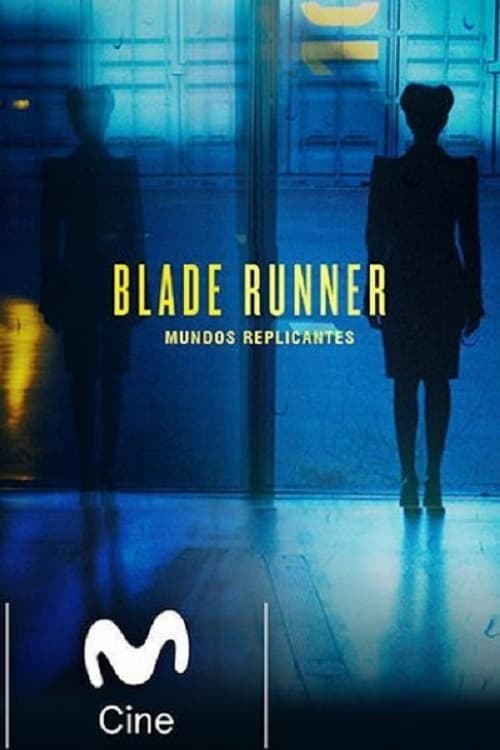





Popular
What is the significance of the character K's journey in Blade Runner: Mundos Replicantes?
How does the relationship between K and Joi evolve throughout the film?
What role does the character Niander Wallace play in the story?
What is the significance of the child that K is searching for?
How does the film explore the theme of memory through K's experiences?
Should I watch it?
Ask Your Own Question

What is the plot?
Sorry, we aren't able to watch and write up a full detailed plot yet. Check back in a few days.






What is the ending?
In the ending of "Blade Runner: Mundos Replicantes," the protagonist, a blade runner named K, confronts the truth about his own existence and the nature of replicants. After a series of intense confrontations, K sacrifices himself to ensure the safety of a new generation of replicants. The film concludes with K's death, leaving a poignant reflection on identity and humanity.
As the final act unfolds, K, having discovered the existence of a replicant child, realizes the significance of this revelation for the future of replicants. He is determined to protect the child from those who would exploit or destroy it. The scene shifts to a dark, rain-soaked cityscape, where K faces off against the forces of the Wallace Corporation, led by the ruthless Luv.
In a tense confrontation, K battles Luv in a visually striking sequence, filled with neon lights and shadows. The fight is brutal, showcasing K's determination and desperation. As he gains the upper hand, K is wounded but manages to defeat Luv, who falls into the water, her fate sealed.
With Luv out of the way, K makes his way to the location where the child is hidden. He is filled with a mix of hope and dread, knowing that he is risking everything for this new life. In a moment of quiet reflection, K contemplates his own existence, grappling with the knowledge that he is a replicant, designed for a purpose, yet yearning for something more.
In the final moments, K encounters the child, a symbol of hope for replicants and a new beginning. He ensures the child's safety, but in doing so, he knows he must face the consequences of his actions. As he succumbs to his injuries, K lies down in the snow, a serene expression on his face, accepting his fate. The camera pans up, revealing the vastness of the city, a stark contrast to K's final moments of peace.
The film closes with a lingering sense of ambiguity, leaving the audience to ponder the implications of K's sacrifice and the future of replicants in a world that has long sought to control them. Each character's fate is intertwined with the themes of identity, freedom, and the quest for meaning, culminating in a powerful and emotional conclusion.
Is there a post-credit scene?
In "Blade Runner: Mundos Replicantes," there is indeed a post-credit scene that adds depth to the film's themes and characters.
As the credits roll, the screen fades to black before transitioning to a dimly lit room filled with flickering holographic images of various replicants. The atmosphere is heavy with a sense of nostalgia and loss. A solitary figure, shrouded in shadows, is seen interacting with the holograms, their fingers gliding over the projections as if trying to touch the memories of a past life.
The camera slowly zooms in on the figure, revealing it to be a familiar character from the film, who has been grappling with their identity and purpose throughout the story. Their expression is one of deep contemplation, a mix of sorrow and determination. The holograms depict moments from the replicants' lives, showcasing their struggles, dreams, and the harsh realities they face in a world that views them as mere machines.
As the figure continues to interact with the holograms, a voiceover begins, echoing the central themes of the film: the quest for identity, the nature of humanity, and the desire for freedom. The voice is soft yet powerful, reflecting the character's internal conflict and longing for connection.
The scene culminates in a poignant moment where the figure pauses, looking directly at the camera, as if breaking the fourth wall. Their eyes convey a profound understanding of their existence and the choices that lie ahead. The screen then fades to black once more, leaving the audience with a lingering sense of hope and uncertainty about the future of replicants in a world that continues to evolve.
This post-credit scene serves as a reflective conclusion to the film, inviting viewers to ponder the implications of artificial life and the enduring quest for meaning in a complex world.
What is the significance of the character K's journey in Blade Runner: Mundos Replicantes?
K, a replicant and blade runner, embarks on a quest to uncover his origins and the truth about replicants' place in society. His journey is marked by a deep internal conflict as he grapples with his identity and the nature of humanity. Throughout the film, K's emotional state fluctuates between hope and despair, particularly as he discovers clues that suggest he may be more than just a manufactured being.
How does the relationship between K and Joi evolve throughout the film?
K's relationship with Joi, an artificial intelligence designed to be his companion, is central to the narrative. Initially, their interactions are filled with warmth and affection, showcasing K's desire for connection. However, as K's quest deepens, he begins to question the authenticity of their bond, leading to moments of profound emotional turmoil as he confronts the limitations of Joi's programming and the nature of love.
What role does the character Niander Wallace play in the story?
Niander Wallace, the creator of the new generation of replicants, serves as the film's antagonist. His obsession with creating a replicant that can reproduce drives much of the plot. Wallace's cold, calculating demeanor contrasts sharply with K's emotional journey, highlighting the ethical implications of replicant creation. His interactions with K reveal his manipulative nature and the lengths he will go to achieve his goals.
What is the significance of the child that K is searching for?
The child represents a pivotal element in the narrative, symbolizing hope for replicants and the possibility of a future where they can transcend their programming. K's search for the child becomes a catalyst for his transformation, pushing him to confront his own existence and the societal boundaries placed upon replicants. The child's existence challenges the established order and raises questions about identity and freedom.
How does the film explore the theme of memory through K's experiences?
Memory plays a crucial role in K's character development. As he uncovers memories that he believes may be real, K's emotional state shifts from a sense of detachment to a yearning for belonging. The film intricately weaves K's memories into the narrative, blurring the lines between reality and fabrication, ultimately leading him to question what it means to be truly alive and to have a past.
Is this family friendly?
"Blade Runner: Mundos Replicantes" is not considered family-friendly due to its mature themes and content. Here are some potentially objectionable or upsetting aspects that may occur:
-
Violence: The film contains scenes of intense violence, including confrontations between characters that may involve physical harm or death.
-
Existential Themes: The narrative explores deep philosophical questions about identity, humanity, and the nature of existence, which may be unsettling for younger viewers.
-
Emotional Distress: Characters experience significant emotional turmoil, including loss, betrayal, and existential dread, which could be distressing for sensitive audiences.
-
Dark Atmosphere: The film's setting is often bleak and dystopian, featuring a grim portrayal of society that may be unsettling.
-
Mature Language: There are instances of strong language that may not be suitable for children.
-
Sexual Content: The film includes suggestive themes and scenes that may not be appropriate for younger viewers.
These elements contribute to a tone that is more suited for adult audiences, making it less appropriate for children or those who are sensitive to such content.









