


















Popular
What are the key events in Jesús' early life as depicted in the film?
How does Jesús' relationship with his disciples develop throughout the film?
What miracles does Jesús perform in the film, and how do they impact those around him?
How does the film portray the conflict between Jesús and the religious authorities?
What is the significance of the Last Supper scene in the film?
Should I watch it?
Ask Your Own Question

What is the plot?
Sorry, we aren't able to watch and write up a full detailed plot yet. Check back in a few days.








What is the ending?
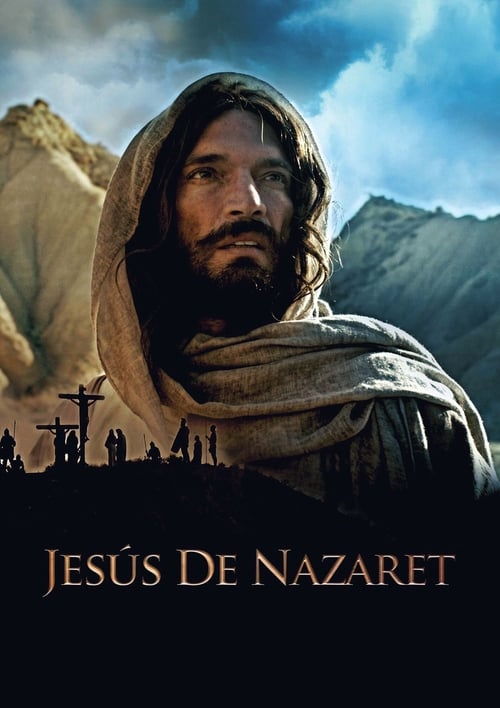
In the ending of "Jesús de Nazaret: El Hijo de Dios," Jesus is crucified, fulfilling the prophecy of his sacrifice for humanity. After his death, he is buried, and on the third day, he rises from the dead, appearing to his disciples and affirming their faith. The film concludes with the promise of his return and the commissioning of his followers to spread his teachings.
As the film approaches its climax, the tension escalates in Jerusalem. The scene opens with Jesus being led to Golgotha, the place of crucifixion. The sky darkens, and a heavy atmosphere envelops the crowd, filled with both supporters and detractors. Jesus, bearing the weight of the cross, stumbles but continues forward, embodying both physical pain and spiritual resolve. His face reflects a mixture of sorrow and determination, knowing the significance of his sacrifice.
The camera shifts to the faces of his disciples, particularly Peter and John, who watch from a distance, their expressions a blend of despair and confusion. They grapple with the reality of losing their leader, feeling helpless as they witness the unfolding tragedy. Mary, Jesus' mother, stands near the foot of the cross, her heart breaking as she watches her son suffer. Tears stream down her face, and her anguish is palpable, showcasing a mother's love and pain.
As Jesus is nailed to the cross, the sound of hammers striking nails echoes ominously, heightening the emotional weight of the moment. He looks out at the crowd, offering words of forgiveness, "Father, forgive them, for they do not know what they are doing." This moment encapsulates his message of love and redemption, even in the face of betrayal and violence.
The crucifixion scene is intense, with the camera capturing the reactions of the onlookers--some jeer, while others weep. The earth trembles, and a storm brews, symbolizing the cosmic significance of this event. As Jesus breathes his last, the sky darkens further, and the temple veil tears, signifying the end of the old covenant and the beginning of a new relationship between God and humanity.
Following his death, Jesus is taken down from the cross and laid in a tomb. The scene shifts to the somber atmosphere of the burial, with his disciples mourning their loss. They are filled with doubt and fear, unsure of what the future holds without their leader. Mary Magdalene, however, remains hopeful, clinging to the memories of Jesus' teachings and miracles.
Three days later, the film transitions to the empty tomb. Mary Magdalene arrives to find the stone rolled away. Confusion and disbelief wash over her as she peers inside, only to encounter two angels who proclaim, "He is not here; he has risen!" Her heart races with a mix of joy and astonishment as she rushes to tell the disciples.
The narrative then follows Mary as she finds Peter and John, breathlessly sharing the news of the resurrection. Initially skeptical, they eventually follow her back to the tomb, where they too find it empty. The realization of Jesus' resurrection begins to dawn on them, igniting a flicker of hope amidst their grief.
In the final scenes, Jesus appears to his disciples, who are gathered in a locked room, filled with fear. His presence brings a wave of relief and joy, as he reassures them, "Peace be with you." He shows them his wounds, confirming his identity and the reality of his resurrection. The disciples, once filled with doubt, are now emboldened by this miraculous event.
The film concludes with Jesus commissioning his followers to spread the good news of his teachings and the promise of eternal life. As he ascends into heaven, a sense of purpose fills the disciples, who are now ready to embark on their mission. The final shot lingers on their faces, reflecting a mix of awe, determination, and newfound faith, symbolizing the birth of the early Christian movement.
In summary, the fates of the main characters are as follows: Jesus sacrifices himself, dies, and rises again, fulfilling his role as the Savior. Mary Magdalene becomes the first witness of the resurrection, embodying hope and faith. The disciples, initially lost and fearful, are transformed into bold proclaimers of Jesus' message, ready to spread his teachings to the world.
Is there a post-credit scene?
The movie "Jesús de Nazaret: El Hijo de Dios" produced in 2019 does not feature a post-credit scene. The film concludes its narrative without any additional scenes or content after the credits roll. The focus remains on the life and teachings of Jesus, culminating in a powerful portrayal of his crucifixion and resurrection, leaving the audience with a sense of closure regarding the story presented.
What are the key events in Jesús' early life as depicted in the film?
The film opens with the nativity scene, showcasing the humble birth of Jesús in Bethlehem. It captures the awe of the shepherds and the visit of the Magi, emphasizing the divine nature of his birth. As a child, Jesús is shown in the temple, engaging with religious scholars, demonstrating his wisdom and understanding of the scriptures, which foreshadows his future role as a teacher.
How does Jesús' relationship with his disciples develop throughout the film?
The film portrays Jesús' gradual gathering of his disciples, starting with Simon Peter and Andrew, who are depicted as fishermen. Their initial skepticism transforms into loyalty as they witness Jesús perform miracles, such as the healing of the sick and the feeding of the 5,000. The emotional bond deepens as they share in his teachings and face the challenges of his growing popularity.
What miracles does Jesús perform in the film, and how do they impact those around him?
Jesús performs several miracles, including turning water into wine at a wedding, healing a blind man, and raising Lazarus from the dead. Each miracle is depicted with emotional intensity, showcasing the awe and disbelief of the witnesses. These acts not only solidify his divine authority but also create tension with religious leaders who feel threatened by his influence.
How does the film portray the conflict between Jesús and the religious authorities?
The film illustrates the escalating tension between Jesús and the Pharisees, who view his teachings as a challenge to their authority. Key scenes depict confrontations in the temple, where Jesús criticizes their hypocrisy. The emotional stakes rise as the religious leaders plot to undermine him, leading to a palpable sense of danger surrounding Jesús and his followers.
What is the significance of the Last Supper scene in the film?
The Last Supper is portrayed with deep emotional resonance, highlighting Jesús' foreknowledge of his betrayal. As he shares bread and wine with his disciples, the atmosphere is heavy with tension and sorrow. This pivotal moment emphasizes themes of sacrifice and love, as Jesús prepares them for the trials ahead, revealing his inner turmoil and the weight of his impending fate.
Is this family friendly?
"Jesús de Nazaret: El Hijo de Dios" is a film that portrays the life of Jesus Christ, focusing on his teachings, miracles, and the events leading up to his crucifixion. While the film is intended to be a religious and inspirational narrative, there are several scenes that may be considered potentially objectionable or upsetting for children or sensitive viewers.
-
Violence and Suffering: The film includes depictions of violence, particularly in scenes that illustrate the persecution of Jesus and his followers. This may include moments of physical aggression and emotional distress.
-
Crucifixion: The portrayal of Jesus' crucifixion is a central and intense moment in the film. It is depicted with a focus on the pain and suffering endured, which may be distressing for younger audiences.
-
Emotional Turmoil: Characters experience significant emotional struggles, including despair, betrayal, and grief. These themes may be heavy for children to process.
-
Conflict and Rejection: There are scenes that show societal rejection and conflict between Jesus and the authorities, which may include harsh words and confrontations that could be unsettling.
-
Miracles and Supernatural Elements: While generally positive, the miracles may be confusing or frightening to some children, particularly if they are not familiar with religious narratives.
Overall, while the film aims to convey messages of love, hope, and redemption, the intense emotional and physical themes may require parental guidance for younger viewers.







