























Popular
How does Chuck Smith first meet Lonnie Frisbee, and what about Lonnie immediately changes Chuck’s approach to ministry?
What happens when Greg Laurie discovers he was adopted, and how does that revelation affect his emotional state and choices?
Why does Chuck Smith open his church to the hippies, and what conflict does that create with his congregation?
What role does Lonnie Frisbee play in drawing crowds and spreading the revival, and how does his personality shape those scenes?
How does Greg Laurie’s relationship with the Jesus Movement develop after his personal struggles, and what leads him toward ministry?
Should I watch it?
Ask Your Own Question

What is the plot?
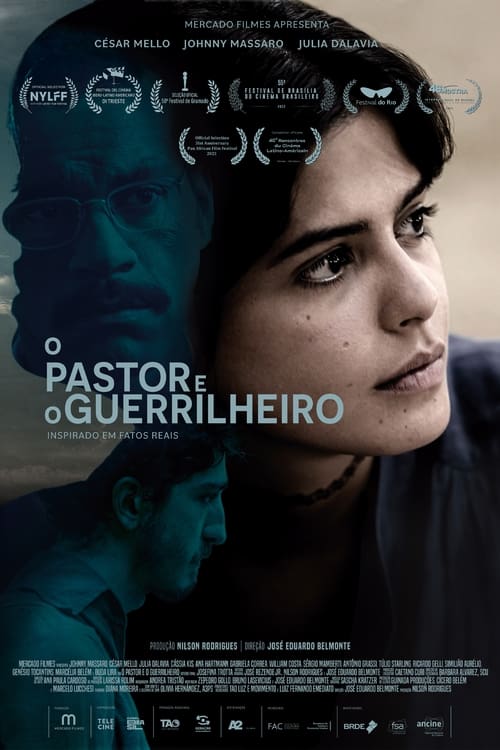
The film opens in 1973, under the shadow of Brazil's military dictatorship, with João already marked as a communist rebel and Zaqueu as an evangelical Christian whose faith has little power to protect him from the regime's violence. They are thrown together in prison after arbitrary arrests, forced into the same cell and into the same machinery of terror, and what begins as ideological distrust quickly turns into a survival story as torture and humiliation grind both men down.
In the cell, the atmosphere is suffocating: damp concrete, harsh light, the metallic echo of doors slamming, the sound of interrogators in the corridor, and the constant threat that either man could be dragged out next. João and Zaqueu initially stand on opposite sides of the political and spiritual divide. João is a militant revolutionary; Zaqueu is a preacher who believes in God, repentance, and endurance. But the prison does not care what they believe. It only cares that they break. Torture becomes the shared language of captivity, and the more the regime tries to strip them of identity, the more they begin to recognize each other's humanity.
Their bond develops slowly through small acts of care. One man steadies the other after interrogation. One shares water, or space, or a fragment of hope. In the face of pain, their arguments about ideology become less important than the fact that they are both being crushed by the same system. João's revolutionary certainty and Zaqueu's religious conviction do not disappear, but they begin to coexist with something more fragile and more powerful: trust. The film treats this relationship as its emotional center, showing that their friendship is not sentimental or easy, but forged in the exact place where the state expects only silence and surrender.
The prison years become the moral foundation of the story. The men suffer repeated torture, and the regime's violence is shown not as a single event but as an ongoing process of degradation. The source material does not specify every individual death in the prison sequence, and no source provided identifies any confirmed on-screen fatalities during the imprisonment itself. What is clear is that the violence is systemic, and the film's tension comes from the fear that death is always one interrogation away.
Amid this brutality, João and Zaqueu make a promise to each other: they will meet again 26 years later, on New Year's Eve of 2000. That pact becomes the emotional thread pulling the narrative across decades. It is not just a reunion plan; it is an act of defiance against the state, against forgetting, and against the idea that prison can erase a person's future. The promise gives them a date, a place in time, and a reason to survive.
The story then jumps forward into 1999, near the end of the millennium, when the dictatorship's long afterlife is still haunting Brazil. By this point, Zaqueu has to face the weight of what happened in prison and what was done to him there. The late-film material introduces Juliana, an activist and student whose search for the truth draws her into the buried history of the men's suffering. She is not just a passive observer; she is the force that reopens the past. Through her investigation, the film shifts from prison survival into political reckoning.
Juliana's discovery is devastating: she learns that her father, a colonel, played a role in the torture of João and Zaqueu. The sources indicate that she is the daughter of a colonel, and that this relationship is central to the final revelations, but they do not provide the colonel's full name. What matters dramatically is the betrayal embedded in the family structure itself. The violence of the regime is no longer abstract history; it has entered her home, her bloodline, and her identity. The film turns this revelation into a confrontation between inherited power and moral accountability.
As Juliana pieces together the past, the old prison friendship becomes newly charged. She learns that the man she knows as her father is tied directly to the torture of two prisoners who endured decades of silence. The emotional force of this twist comes from the collision between public history and private memory: one generation has lived comfortably inside the benefits of the regime while another has carried the wounds. Juliana's search forces those worlds to collide.
The late-film structure moves toward the promised reunion. The anniversary date approaches, and the story tightens around the question of whether the men will actually meet after so many years. Their pact, made in prison under torture, now carries all the emotional weight of a vow and all the uncertainty of lost time. The film's tension rises because the reunion is not guaranteed to be healing. Too much has happened. Too much has been buried. The question is whether truth can survive being brought into the open.
The sources do not provide a full scene-by-scene account of the final confrontation, but they do establish the essential dramatic resolution: Juliana learns the truth about her father's role in the torture, and the story closes by forcing the past into the present. The promised reunion on New Year's Eve of 2000 functions as the culmination of the film's emotional arc. That moment is the payoff for the prison bond that began in 1973, and for the decades of silence that followed. The narrative implies that the men's friendship outlasts the dictatorship's attempt to destroy them, and that memory itself becomes a form of resistance.
What the available sources do not fully confirm is the exact staging of the final meeting, the precise dialogue spoken there, or whether any death occurs in the closing minutes. They also do not identify a confirmed on-screen death caused by one specific character, nor do they provide enough detail to state that any named character dies on screen at all. Based on the sources supplied, the film's ending is centered less on body count than on revelation, reckoning, and the emotional release of a promise finally reaching its date.
By the end, the film has moved from prison torture to political memory, from ideological conflict to personal guilt, and from a forced cell partnership to a generational reckoning. João and Zaqueu begin as enemies shaped by different beliefs and end as men whose shared suffering creates a bond stronger than the regime that tried to erase them. Juliana's discovery transforms the story's final movement into an act of exposure: the dictatorship is not over simply because the years have passed, and the people who benefited from it cannot escape forever.




What is the ending?
The film ends with the revolutionary and the pastor having carried the weight of prison, torture, separation, and memory into old age, and the story closes on their long-awaited connection and the truth of what became of them. The ending makes clear that their bond outlived the conflict that first divided them, and that the final years are shaped by regret, remembrance, and reunion.
Chronological ending, in narrative form:
In the final stretch of the story, the narrative moves between the late 1990s and the memory of the prison years. João, the communist revolutionary, has already become Miguel in later life and is known through the book he wrote about what happened to him. Zaqueu, the evangelical pastor, is now an older man facing his past, carrying the memory of the torture and the friendship that began in prison.
Juliana enters this final section as the younger generation asking questions that the older characters have tried to leave behind. She is trying to find out where Miguel is and what really happened to him, and her search is tied to what she has learned about her own family and her father's connection to the military regime. As this search continues, the film returns repeatedly to the prison years, showing again the two men locked together, suffering under interrogation, and slowly moving from hostility into trust.
The ending brings the story back to the promise the two men made to each other during imprisonment: to meet again on New Year's Eve in the year 2000. That promise is the emotional center of the ending. The film treats it not as a casual plan, but as a thread that holds their lives together across decades of separation, political change, and personal pain.
By the last scenes, the film confirms the fate of the main characters through the present-day framing:
João/Miguel survives into old age, becomes the author of the prison memories, and remains the revolutionary figure whose past continues to draw others toward the truth.
Zaqueu survives into old age as well, still carrying the life of an evangelical pastor and still marked by what happened in prison, but now forced to stand before the past rather than avoid it.
Juliana remains the living witness in the present-day part of the story, following the trail left by the two men and by her father's history, which connects her directly to the old regime and its violence.
The film's ending is built around recognition: the past is not erased, the torture is not forgotten, and the friendship forged in captivity becomes the final lasting fact of the story.
Is there a post-credit scene?
No, there is no post-credit scene in The Pastor and the Revolutionary (O Pastor e o Guerrilheiro, 2023). The credits instead feature real photographs from the Araguaia guerrilla and the youth movements connected to it, which functions as closing material rather than an extra scene.
How does Chuck Smith first meet Lonnie Frisbee, and what about Lonnie immediately changes Chuck’s approach to ministry?
This question asks about the first encounter between Chuck Smith and Lonnie Frisbee, and how that meeting affects Chuck's outlook and decisions in the story.
What happens when Greg Laurie discovers he was adopted, and how does that revelation affect his emotional state and choices?
This question focuses on the adoption reveal in Greg Laurie's storyline and the immediate personal turmoil it causes.
Why does Chuck Smith open his church to the hippies, and what conflict does that create with his congregation?
This question centers on Chuck's decision to welcome the counterculture crowd and the resistance it sparks among his more conservative church members.
What role does Lonnie Frisbee play in drawing crowds and spreading the revival, and how does his personality shape those scenes?
This question is about Lonnie's specific contribution to the movement and how his presence changes the atmosphere around the church.
How does Greg Laurie’s relationship with the Jesus Movement develop after his personal struggles, and what leads him toward ministry?
This question asks about Greg's character arc, especially how his inner conflict connects to his later involvement in ministry.
Is this family friendly?
No--The Pastor and the Revolutionary appears to be the 2023 film Jesus Revolution, and it is not especially family-friendly for young children. It carries a PG-13 rating for strong drug content involving teens and some thematic elements, so it is better suited for older teens and adults than for little kids.
Potentially objectionable or upsetting material includes: - Drug use and intoxication involving teens and adults, including scenes of people getting high and a drug-related seizure. - A car accident tied to impaired driving, with an injured person shown afterward. - Arguments and tense emotional scenes that may be distressing for sensitive viewers. - Brief kissing/romantic content and references to relationships and sexual behavior, though no explicit sex is reported in these guides. - Smoking and drinking, including scenes of alcohol use and cigarette smoking. - Thematic material around regret, desperation, faith, and spiritual conflict that may feel heavy for younger viewers.
If you want, I can also give you a very short "age suitability" recommendation, such as whether it is okay for ages 8+, 12+, or 13+.









