














Popular
What role does the setting of the city play in the characters' lives?
What motivates the main character, Marco, to reconnect with his estranged father?
How does the relationship between Marco and his friends evolve throughout the film?
What is the significance of the last joint in the story?
How does Marco's relationship with his mother influence his actions in the film?
Should I watch it?
Ask Your Own Question

What is the plot?
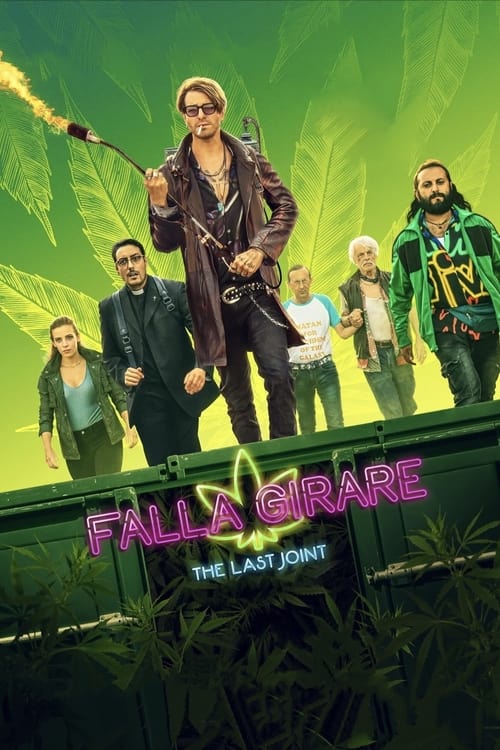
In a near-future Italy where the CH3 virus has wiped cannabis off the planet, Natan Tancredi wakes up in the middle of his own slow-motion collapse and stumbles into the discovery that will hijack everyone's life: in the garden of his house, hidden among ordinary greenery, there is a surviving cannabis plant. He is the kind of man who lives by image first and consequence second, a once-hot influencer drifting on social-media fame, designer confidence, and the echo of a public humiliation tied to his ex-girlfriend. Now, with his momentum fading and his relevance slipping, he sees in the plant not a miracle but an opportunity, a last chance to turn himself back into a phenomenon.
The discovery draws in the people already orbiting Natan's life. Arturo Tancredi, his brother, is there too, a slower, more vulnerable presence whose simplicity becomes part of the comic tension around the find. Guglielmo Bonetti, a journalist invited into the house for an interview, arrives expecting a routine piece on a declining online celebrity, but instead finds himself standing at the center of a world-changing secret. The three men stare at the plant with the excitement of lottery winners and the paranoia of thieves. They understand immediately that in a world where cannabis has gone extinct, this small green object is worth a fortune.
Their first instinct is greed. They bring in Oreste Scherillo, a low-level dealer who thinks small and hustles harder, and Oreste carries the whole thing deeper into the criminal ecosystem by taking them to the camorra boss known as 100 Watt. The meeting has the energy of a black-market coronation: nerves, swagger, and the sense that everyone in the room is trying to outbluff everyone else. But the dream collapses in an instant. The plant is male. The revelation lands like a joke at the expense of all of them, because a male plant cannot produce the profitable crop they imagine. Their gold is worthless. Their revolution is a prank played by biology.
That humiliation changes the direction of the story. If the male plant cannot make them rich, then there must be a female plant somewhere, and the rumors point to the one surviving female specimen hidden in the Vatican botanical garden in Rome. The film shifts from local screwball crime comedy into a ridiculous quest. Naples remains the emotional and criminal home base, but Rome becomes the destination of obsession, the place where the final answer is supposedly locked away behind sacred walls. The idea of the Vatican holding the last female cannabis plant adds a layer of absurdity that the characters barely have time to process before their new plan becomes survival, profit, and leverage all at once.
By now, the circle has expanded. Diego, a criminal just out of prison, enters as another volatile piece in the scheme. He is not the polished kind of gangster one might expect from a classic heist story; he feels like a man who has spent too long on the edge of disaster and has little interest in pretending otherwise. Then comes Sara, an undercover police officer who has been working her way into 100 Watt's criminal world with one goal: bring him down. Her presence changes the entire emotional shape of the story, because she is at once ally, threat, and hidden narrator of the law's gaze. The group is no longer a gang; it is a knot of competing motives held together by the promise of the last female plant.
What follows is a series of increasingly unstable confrontations built on lies, half-truths, and opportunism. Natan keeps trying to turn each setback into content, charm, or a sales pitch, his influencer instincts refusing to die even as the situation becomes more dangerous. Arturo remains the emotional ballast, reacting to the chaos with sincerity rather than strategy. Guglielmo, originally there to interview Natan, gets pulled into the absurdity until he is less observer than participant, his journalistic distance eroded by the lure of the plant and the possibility of a world story bigger than anything he has ever covered. Oreste, who thought he was playing a modest middleman role, finds himself outmatched by bigger predators and more absurd stakes. 100 Watt, the camorra boss, becomes the embodiment of old criminal power trying to grasp a new kind of commodity. Diego shifts between useful brute force and unpredictable liability. Sara, meanwhile, keeps balancing her cover against her mandate, waiting for the moment when she can expose the whole operation.
The story moves between Naples and Rome as the characters chase the female plant and the money attached to it. Each step forward is also a step deeper into farce. The Vatican botanical garden becomes the final destination not only because it holds the last female specimen, but because it represents the collision of sanctity, black market greed, and state secrecy. The heist setup is the film's true engine: a stolen plant, a criminal boss, an infiltrating cop, an influencer trying to become a kingpin, and a journalist who wandered in for an interview and cannot quite escape.
The final stretch reveals the group's hidden alignment in a way that reorders everything. Sara is not merely a cop among criminals; she is undercover inside the operation, and her secret allows the law to survive the chaos without openly crushing the people involved. The twist is that she is acting not simply to arrest them, but to protect them from being trapped by the evidence trail and the larger criminal machinery around 100 Watt. In the version of the ending described in later synopses, she replaces the two cannabis plants with two plants of chicory, effectively defusing the immediate criminal case while quietly planting the seeds of a new scheme. The characters believe they are racing toward the ultimate payoff, but Sara is the one redirecting the outcome from above and beneath the floorboards at once.
As the illegal exchange resolves, the film pivots into its final joke: cannabis begins circulating again, the world's mood lifts, and the promise that once seemed absurd has become a functioning underground economy. Natan, now transformed from fallen influencer into a far more famous version of himself, rides the wave of renewed attention until he reaches a level of internet celebrity that dwarfs his original decline. He becomes visible again, not because he has become wiser, but because the world has once again found him useful. The social-media machine that once seemed like a vanity project becomes his reward and his punishment at the same time.
The ending lands on a cruelly comic note. Two people approach Natan and ask for a photo. He mistakes them for fans wanting a selfie and snaps back at them, telling them off, only to realize too late that his instinct to perform and posture has made him blind to ordinary human gratitude. The moment completes his arc: he remains trapped inside his own image, unable to recognize that his actions have changed the world around him. The final irony is that he has helped restore what he thought he was exploiting, yet he still cannot see himself clearly enough to accept recognition with grace.
No confirmed character deaths are established in the available plot summaries, and the film's dramatic force comes less from a body count than from betrayals, reversals, and the escalating absurdity of everyone chasing the same impossible prize. What matters most is that the male plant, which at first appears to be the miracle, turns out to be only the false start that sends the entire machine into motion. The female plant hidden in the Vatican becomes the true objective, Sara's undercover role becomes the decisive hidden fact, and the ending resolves into a bizarre, satirical restoration of cannabis culture through criminal improvisation, state infiltration, and pure opportunism. The last scene leaves Natan with everything he once wanted and none of the self-awareness to appreciate it, closing the story on a note of hollow triumph and ridiculous loss.





What is the ending?
In the ending of "Falla girare - The Last Joint," the main characters confront their pasts and the choices that have led them to this moment. The film culminates in a poignant scene where they must decide whether to continue their lives burdened by regret or to embrace change. The fate of each character is revealed as they make their choices, leading to a bittersweet resolution.
As the final act unfolds, we find ourselves in a dimly lit room filled with remnants of the past--old photographs, scattered belongings, and the lingering scent of smoke. The atmosphere is heavy with nostalgia and unspoken words. The main characters, a group of friends who have navigated the complexities of life together, gather for one last time.
Scene 1: The Gathering The camera pans across the room, capturing the weary faces of the friends. Each character is lost in their thoughts, reflecting on the years gone by. There's Marco, whose eyes betray a deep sense of regret for the choices he made that led to estrangement from his family. Next to him is Sara, who struggles with the weight of her dreams unfulfilled, feeling the pressure of societal expectations. Then there's Luca, the carefree spirit, who now grapples with the reality of adulthood and the responsibilities it brings.
Scene 2: The Confrontation As the night progresses, the tension in the room escalates. Old grievances surface, and the friends begin to confront each other about their past decisions. Marco, with a trembling voice, admits his failures, expressing a desire to reconnect with his estranged daughter. Sara, tears streaming down her face, reveals her fear of never achieving her dreams, while Luca tries to lighten the mood but ultimately finds himself drawn into the emotional turmoil.
Scene 3: The Decision In a moment of vulnerability, the group decides to share their dreams and fears openly. They pass around a joint, a symbol of their shared past, and reminisce about the carefree days of their youth. As they smoke, the atmosphere shifts; laughter mingles with tears, and they begin to understand the importance of forgiveness--both of themselves and each other.
Scene 4: The Farewell As dawn approaches, the friends realize that this gathering is not just a farewell to their past but a stepping stone to their futures. Marco resolves to reach out to his daughter, Sara decides to pursue her passion for art, and Luca acknowledges the need to take life more seriously. They embrace, promising to support each other in their new paths.
Scene 5: The Departure The film closes with each character leaving the room, stepping into the light of a new day. Marco walks away with a determined look, clutching his phone, ready to make the call to his daughter. Sara, with a newfound sense of purpose, heads towards an art studio, while Luca, with a smile, takes a deep breath, ready to face the challenges ahead.
In the final moments, the camera lingers on the empty room, now filled with the echoes of laughter and the weight of shared memories. The screen fades to black, leaving the audience with a sense of hope and the understanding that while the past shapes us, it is the choices we make in the present that define our futures.
Is there a post-credit scene?
In "Falla girare - The Last Joint," there is indeed a post-credit scene that adds a poignant layer to the film's themes of friendship and legacy.
As the credits roll, the screen fades to black before transitioning to a dimly lit room filled with the remnants of a vibrant past. The camera pans slowly across a table cluttered with old photographs, rolling papers, and a half-finished joint, evoking a sense of nostalgia.
In this scene, we see the main character, Marco, sitting alone at the table, his expression a mix of contemplation and sorrow. He picks up a photograph of himself and his late friend, reminiscing about their shared moments. The atmosphere is heavy with unspoken words and memories, highlighting Marco's internal struggle with loss and the weight of carrying on without his friend.
As he exhales a puff of smoke, the camera zooms in on his face, revealing a flicker of determination in his eyes. He stands up, walks over to a shelf filled with various mementos from their adventures, and picks up a small, worn-out notebook. The scene closes with Marco opening the notebook, revealing sketches and notes about their dreams and plans, suggesting that he is ready to honor his friend's memory by pursuing their shared aspirations.
The post-credit scene encapsulates the film's exploration of friendship, grief, and the enduring impact of those we lose, leaving the audience with a sense of hope and continuity.
What role does the setting of the city play in the characters' lives?
The city serves as a vibrant yet harsh backdrop that reflects the characters' internal struggles. Its bustling streets and underground culture of cannabis use create a sense of freedom and rebellion, but also highlight the dangers and consequences of addiction. The contrasting locations, from lively music venues to dark alleyways, symbolize the duality of the characters' experiences, influencing their choices and relationships throughout the film.
What motivates the main character, Marco, to reconnect with his estranged father?
Marco's motivation to reconnect with his estranged father stems from a deep-seated desire for closure and understanding. Throughout the film, he grapples with feelings of abandonment and resentment, which are compounded by his father's past choices. As Marco faces his own struggles with addiction and the looming threat of losing his friends, he realizes that confronting his father is essential for his own healing and growth.
How does the relationship between Marco and his friends evolve throughout the film?
The relationship between Marco and his friends evolves significantly as they navigate the challenges of addiction and personal crises. Initially, they share a carefree bond, united by their love for cannabis and music. However, as Marco's addiction worsens, tensions rise, leading to moments of conflict and betrayal. The friends' loyalty is tested, but ultimately, they come together to support Marco in his journey towards recovery, highlighting the themes of friendship and redemption.
What is the significance of the last joint in the story?
The last joint symbolizes both a farewell to a lifestyle and a pivotal moment of clarity for Marco. It represents the culmination of his struggles with addiction, serving as a metaphor for letting go of the past and embracing a new beginning. This moment is charged with emotion, as it encapsulates Marco's internal conflict and the weight of his decisions, ultimately leading him to confront his father and seek a path towards healing.
How does Marco's relationship with his mother influence his actions in the film?
Marco's relationship with his mother is complex and deeply influential in shaping his actions throughout the film. Her unwavering support contrasts with his father's absence, creating a sense of loyalty and obligation in Marco. As he battles his addiction, he often reflects on his mother's sacrifices and hopes for him, which drives him to seek redemption not only for himself but also to honor her love and dedication. This emotional connection propels him towards confronting his past and striving for a better future.
Is this family friendly?
"Falla girare - The Last Joint" is not considered family-friendly due to several potentially objectionable elements. The film contains scenes that depict drug use, including the consumption of marijuana, which is central to the narrative. There are also instances of strong language and adult themes that may not be suitable for children.
Additionally, the film explores complex emotional states, including grief, loss, and existential struggles, which may be upsetting for sensitive viewers. Scenes may include confrontations that evoke intense feelings of despair or conflict, as well as moments of vulnerability that delve into the characters' personal traumas. Overall, the film's mature themes and content suggest it is more appropriate for an adult audience.







