












Should I watch it?
Ask Your Own Question

What is the plot?
Leda Caruso is on holiday in Greece. She is a middle-aged university professor and a translator who is staying in a coastal resort. While she is on the beach she encounters Nina, a younger woman with a small child, after Nina's three-year-old daughter Elena goes missing for a short time. Nina is visibly distraught; she is a tired young mother who tells Leda that she is unhappy. Leda searches with other people for Elena, locates the little girl, and brings her back to Nina. After Elena is returned, Nina realizes that her daughter has lost her favorite doll; Leda has in fact already taken that doll and keeps it hidden. Nina does not know this and continues looking for the doll.
In flashback sequences Leda remembers her own past as a young mother to two daughters, Bianca and Martha. Those recollections show that she struggled with patience, withdrew emotionally from her family, and at one point abandoned her children for three years. During that absence she left them in the care of her then-husband and began an affair with a fellow professor. When Leda recounts these memories later in the present, she admits that the years away felt freeing, that she found being apart "amazing," and that she returned to her daughters only after she recognized that she missed them.
At the resort Leda has a meal with Lyle, the caretaker of her holiday apartment. During their dinner Lyle notices the doll in Leda's possession but does not mention it to her or to anyone else. He sees the object but stays silent; he does not warn Nina or disclose what he has observed. Leda learns more about the other people staying at the resort and discovers that Nina is involved in an extramarital relationship with Will, a man who works at the beach bar. Nina tells Leda that her husband, Toni, exerts tight control over her life. Nina places lost-doll flyers around the resort area and posts offers of a reward for the doll's return; she continues to search publicly for Elena's lost toy.
Leda goes to a local market and buys Nina a hatpin, a metal pin intended to keep a sunhat in place. She gives the pin to Nina as a small courtesy; Nina wears the pin in her hat. During a conversation at the market Nina asks Leda about her daughters. Leda responds by telling Nina in detail about her own failure as a mother: she confesses that she abandoned Bianca and Martha for three years because she felt overwhelmed, and that she had had an affair with another professor during that time. She says that being away from her children had felt liberating and that she had felt more like herself. When Nina learns that Leda knows about Nina's affair with Will, it complicates their relationship. Will later approaches Leda and asks if he and Nina can use Leda's apartment to be alone together; he requests permission to borrow her flat for sex.
The next day Nina comes to Leda's apartment to collect keys. Before she takes them, Leda addresses her directly. Leda tells Nina she is selfish and calls herself an "unnatural" mother, using that word aloud. She warns Nina that her depressed state will not simply disappear, saying that the feelings of despair will not go away. In that moment Leda takes out Elena's doll and gives it to Nina, confessing that she is the one who had taken the toy. Leda explains that she had taken the doll because she was "just playing." Nina hears the confession and reacts violently. She uses the hatpin Leda bought at the market to stab Leda in the abdomen. The hatpin pierces Leda's stomach; Nina leaves the apartment and departs from the scene immediately after the attack.
After the stabbing Leda packs a small bag and leaves the resort. She gets into her car and drives along the coastal road. Because of the injury to her stomach she loses control of the vehicle; the wound weakens her and she is unable to maintain direction. Leda's car veers off the road and runs down toward the shoreline. The vehicle comes to rest near the water and she exits or is forced out; she collapses on the sand along the shoreline. She lies there, weakened, as night falls and the sea moves nearby.
The following morning Leda awakens on the beach. She uses a phone to call her daughter Bianca. At the time of the call Bianca is with her sister Martha; they have not heard from their mother for several days and react with relief when Leda's voice answers. Leda tells them that she is fine. She looks down at an orange she has in her hands and peels the skin off in a particular way: she strips the orange peel off "like a snake," the same motion she used to perform for her daughters when they were small. The scene ends with Leda holding the peeled orange after the call to Bianca and Martha; the story closes on that image.


What is the ending?
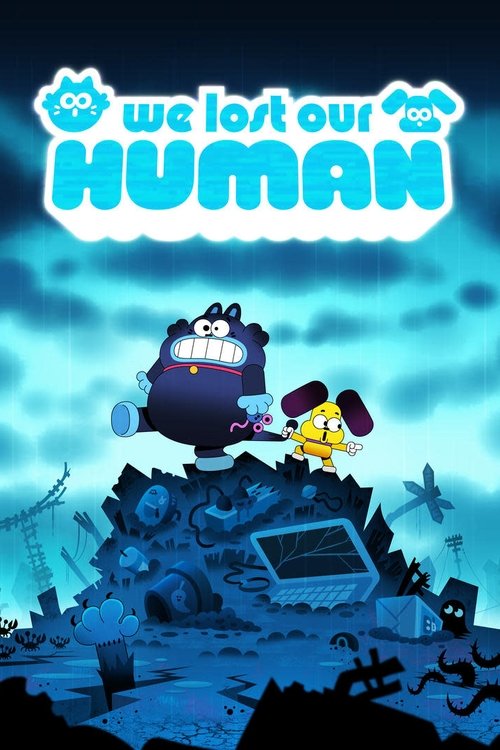
After three playthroughs through the interactive choices, all versions of Ham and Pud from every timeline converge with I.T. at the beginning of the Universe, where Future Ham and Pud argue and break the Amulet, revealing it contains a copy of the human genome.
Now, let me take you through the true ending of We Lost Our Human, the omega ending that unlocks only after you've guided Pud and Ham through three full playthroughs, watching their paths branch and twist across unraveling realities--Ham's determined quests to the Universe Corporation Tower and Pud's selfish solo wanderings--each time facing collapsing buildings, giant pigeons, sentient meatballs, witches, exploding chilies, and multiversal glitches that warp the world around them. Picture this final convergence: the screen pulls back to the vast, swirling void at the dawn of creation itself, a nascent universe flickering like a faulty lightbulb, threads of reality dangling loose. Every single Ham--hyperactive, loyal, wide-eyed versions from countless timelines, their fur singed or matted from perils like stomach acid melts or pigeon bellies--stands shoulder-to-shoulder with every Pud, the spoiled cats with their arched backs and narrowed eyes, some still licking chili stains from their whiskers after bad choices like eating rainbow blowfish or abandoning friends. I.T., the glitchy robot from Universe Corporation, hovers nearby, her metallic frame sparking faintly, isolated no longer, her network finally reconnecting in this primal hub.
Future Ham, battle-worn with scars from visions of her own skeleton future and lava turtles, barks fiercely at Future Pud, whose self-centered scowl deepens from routes where he ditched everyone for a new home. Their argument erupts--Ham yipping about fixing everything for their Human, Pud hissing that it's pointless, his claws out--escalating until Pud swipes at the glowing Amulet they're all gathered around, a crystalline artifact pulsing at the universe's core. It shatters in their paws with a crystalline crack that echoes through the void, fragments scattering like stars. Inside, exposed in a burst of light, lies the human genome--a shimmering code strand, the blueprint for all humans, the missing piece that caused the glitch when Pud and Ham's chili spill shorted the power and unraveled reality.
The Hams and Puds don't hesitate. They stack themselves into a living tower, paws and claws interlocking--Hams at the base with their boundless energy holding firm, Puds balancing atop with reluctant grace--reaching up toward the gaping hole in the universe's fabric where the genome belongs. I.T. jets forward, her extendable arm delicately plucking the genome strand and slotting it precisely into the void's socket. A rumble builds, light floods the screen, realities snap back into alignment--giant pigeons vanish, witches dissolve, chili pots evaporate, the Tower fades. The tower of pets topples gently as the universe stabilizes.
Cut to the familiar apartment, morning light streaming through the window just like the story's start. Ham blinks awake on the couch, shaking off a dream-fog, her tail thumping. Pud stretches lazily beside her, yawning, no memory of the multiverse madness. Their Human enters the room, alive and whole, carrying a fresh chili pot--none the wiser to the cosmic near-miss. Ham bounds over, licking happily; Pud saunters up, rubbing against legs with smug contentment. The door closes on their reunited home, the glitch fixed forever.
Here is the fate of each main participant in this ending: Ham, in all her timeline variants, survives the convergence, stacks into the tower to restore the genome, and awakens safe in the apartment with Human; Pud, across every selfish and reluctant path, also survives, breaks the Amulet in argument, aids the tower, and returns home equally unscathed; I.T. endures, assists in inserting the genome, her malfunction resolved as the universe reboots; the Human, whose genome copy was preserved in the Amulet, manifests fully restored in the apartment, ending the disappearance.
Is there a post-credit scene?
Based on the available search results, I cannot find specific information confirming whether We Lost Our Human contains a post-credit scene or describing its content in detail.
The search results reference credits and end credits from the film, but they do not provide clear documentation of a post-credit scene. One search result mentions that "Future Ham and Pud pop up briefly to congratulate and thank the viewer" after unlocking the Golden Ending, telling them to "remember…'Don't spill chili on the power outlet!'" However, this appears to be part of the interactive ending sequence rather than a traditional post-credit scene.
To get a definitive answer about whether a post-credit scene exists and what it contains, you would need to watch the film directly on Netflix or consult more detailed plot documentation specifically addressing the credits sequence.
Is this family friendly?
Yes, We Lost Our Human (2023) is family-friendly, rated TV-Y7 by the MPAA, with sweet themes of family, love, and teamwork suitable for young audiences.
Potentially objectionable or upsetting aspects for children or sensitive viewers include: - Mild cartoon sci-fi violence such as lasers, peril, falls, electrocutions, and slapstick gags like buildings collapsing or faces stuck on rears. - Intense peril that escalates to feel like genuine deadly threats, including a dinosaur launched into a volcano, a turtle burning in lava, and a "kill count" joke reading 397 billion. - One storyline with surprisingly scary zombies and a minor jump scare. - Frequent rear-end jokes and a creature singing about stealing to feel better.






