






Popular
How does Blake first become fixated on Maggie after rescuing her from drowning?
What is the role of Cade Kerrigan in Maggie’s story, and how does Blake react to him?
Why does Maggie return to surfing after the shark attack, and what happens when she does?
How does Blake manage to isolate Maggie and trap her in the old house?
What is revealed about Blake after Maggie escapes, and does he target anyone else?
Should I watch it?
Ask Your Own Question

What is the plot?
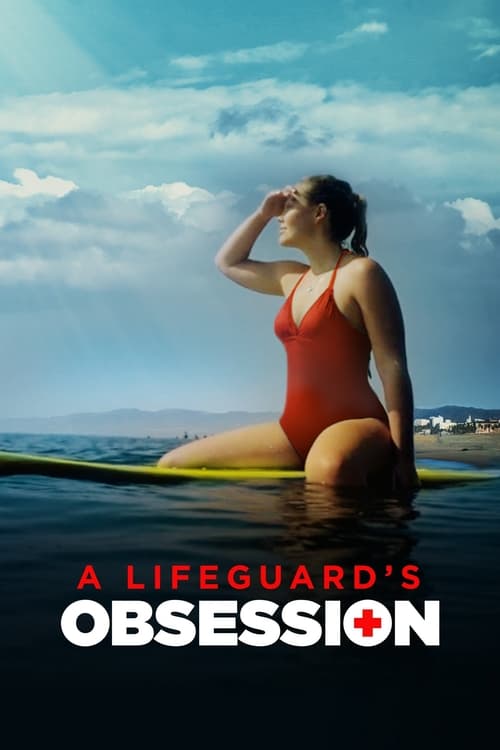
The film opens on a sunlit beach that already feels wrong, as if the waves are hiding something predatory beneath their glittering surface. Two surfers, Tyspm and Liz, sit on their boards and talk about their relationship in hushed, intimate tones, but the mood darkens when Liz admits she is scared because her "psycho ex-boyfriend" may be stalking them even out in the middle of the ocean. Her fear is not paranoia: the threat closes in, and both of them are murdered in the water in the film's opening shock, a brutal attack that is later folded into the beach's "shark attack" story.
Six months later, Maggie Temple returns to work after the beach has been shut down because of those supposed shark attacks, and the atmosphere is less carefree than before. Her boss, AJ, is unreliable and barely present, but he drops a piece of gossip that instantly defines Maggie's life in the story: she has a gorgeous, social-media-obsessed boyfriend named Cade Kerrigan. Maggie is also physically and emotionally off balance. She has a knee injury, her doctor has warned her away from surfing, and her art is going nowhere, leaving the ocean as both her one escape and her danger. Even so, she pushes herself back toward the waves, and the film builds a quiet, ominous tension as she chooses to board again despite every sign telling her not to.
The sea immediately punishes that decision. Maggie's injured knee gives way while she is out surfing, and the ocean drags her under. At the last moment, handsome lifeguard Blake Hopkins dives in and rescues her from drowning. The rescue is filmed like a romantic destiny, but the film quickly lets the audience feel that Blake's attention is not ordinary gratitude or attraction--it is fixation. Maggie is sincerely thankful, and Blake's intervention gives him access to her life that he begins exploiting almost immediately. The rescue also creates a fracture in Maggie's relationship with Cade, because Cade's jealousy starts to flare, and the tension between the men becomes part possessive rivalry, part warning sign.
Blake begins to insert himself into Maggie's world with disarming tenderness. He gives her a gift meant to help her knee recover, and they go for a walk where he learns intimate details about her life, her work, and her disappointments. His attention feels thoughtful on the surface, but the movie keeps revealing the controlling edge beneath it. Maggie even jokes that he is stalking her, and the line lands with terrible irony because the film is already making it clear that he absolutely is. The more he learns about her, the more he seems to engineer opportunities to stay close, and the more Maggie starts to rely on the comfort he provides when Cade becomes increasingly difficult and distracted.
Maggie's art becomes another place where Blake inserts himself. The town gallery owner, Sam, initially rejects her work, leaving Maggie humiliated and stalled. Blake then breaks into the gallery and trashes the place so thoroughly that Sam has no choice but to offer Maggie an exhibit as part of the repair process. This act is one of the first major revelations of his pattern: he does not merely want to be near Maggie, he wants to shape her world, manipulate outcomes, and create the conditions under which she will need him. Maggie is thrilled when his scheme succeeds, and that thrill makes the manipulation even more dangerous, because Blake is now not just helping her but defining the direction of her life from behind the scenes.
As Blake grows bolder, the pressure around Maggie tightens. He helps her set up for the exhibit and casually remarks that Cade and Tina are too close for comfort, stoking suspicion and conflict. Tina is Cade's lifeguard partner, and Blake's remark feeds into the jealousy already simmering around Maggie's relationship. Cade and Maggie's bond deteriorates further as Cade remains preoccupied with appearances and social media, while Blake becomes the steady, attentive presence in her orbit. The triangle is not merely romantic but coercive: every interaction pushes Maggie farther into a web Blake is weaving around her.
The story's first major investigative turn comes when AJ catches Blake in a lie about a burger restaurant. The lie is small, but AJ follows it and discovers something much darker: a story about a woman and boyfriend who were murdered, and a link to Blake's real identity. Blake's actual name is Ryan, and AJ begins to realize that the handsome lifeguard is not who he claims to be. This twist expands the story beyond a possessive romance into a serial-predator narrative, matching the press-kit description that Blake is not just obsessed with Maggie but willing to commit murder to possess her.
Maggie's uncertainty grows as she starts to sense that something about Blake is "off." He is always present, always helpful, always just a little too invested in her moods and choices. The pressure reaches a public breaking point during Maggie's art gallery opening. Cade shows up and insists he needs to talk to Maggie, turning the event into a confrontation over control and loyalty. Blake and Cade then physically fight, their rivalry exploding into direct violence in front of everyone, and Maggie ultimately throws both of them out. The scene is important because it strips away the polite surfaces of the triangle: Cade is jealous and intrusive, Blake is dangerous and manipulative, and Maggie is left trying to protect herself from both men at once.
Behind the scenes, however, Blake's obsession keeps deepening. He does not simply want to win Maggie; he wants to own the emotional landscape around her. He steals her cell phone, cutting off her ability to communicate and isolating her further. He also escalates to drugging her with ketamine, a drastic and terrifying move that signals the collapse of any remaining illusion that he might be merely clingy or lonely. Maggie awakens after being drugged to find herself tied up in an old house, trapped in a grim, secluded space that feels like the physical embodiment of Blake's mind: hidden, controlled, and built to contain her.
The truth comes pouring out in the final confrontation. Blake confesses his obsession directly, telling Maggie that saving her life saved him as well. That line reframes the entire story. In Blake's mind, the rescue was never an act of duty or chance; it was the moment he decided Maggie belonged in his life, and the moment he assigned meaning to his own existence through her. He tells her that he is obsessed with her and that he is willing to kill to keep what he wants. The emotional tone of the scene is suffocating: Maggie is terrified, trapped in a dark room with the man who has been orbiting her life as rescuer, helper, and suitor, only to reveal himself as captor.
The confrontation turns even more vicious as the hidden body count becomes clear. In the middle of the kidnapping sequence, Blake admits that he has killed AJ and Cade. Those murders are not shown in full detail in the available plot reconstruction, but the revelation confirms that Blake has already crossed from stalking into serial murder. It also explains the sudden absence of the men who had been entangled in Maggie's life, and it exposes the extent of his willingness to remove anyone who stands between him and his target. By this point, the film has shifted completely into survival-thriller territory, with Maggie trapped in a deadly private nightmare created by a man who has turned romantic obsession into a killing spree.
Tina re-enters the story at a crucial moment, and her role in the ending becomes essential to Maggie's survival. The recap indicates that Tina regains consciousness underwater and swims up just in time, while Blake continues holding Maggie captive and tries to explain that he wanted to take her away so they could start a new life together. That fantasy is the final form of his delusion: he does not see himself as a kidnapper but as a rescuer building a perfect alternate life from his own violence. Maggie, horrified, keeps looking for a way out. She asks for the bathroom and uses the opportunity to discover Cade's dead body, confirming Blake's confession in the most brutal possible way.
When she emerges, she sees Tina in the room and Blake restraining her, ready to kill again because Tina has become another obstacle. Blake openly remarks that Tina is "really hard to get rid of," a line that shows how casually he treats murder as maintenance work. He is about to kill Tina when Maggie finally strikes back. She knocks Blake out long enough to escape the room, and the movie shifts from trapped helplessness to desperate survival. The escape is frantic and physical, the kind of scene where fear narrows every choice to a single raw impulse: run.
But Blake is not finished. He catches up to Maggie for a final face-off, and the confrontation becomes the story's last burst of violence. Maggie grabs a seashell and stabs him in the neck with it, an improvised, almost primal act of resistance that turns the beach itself into a weapon against him. The wound is not described as fatal in the available materials, and the ending confirms that Blake survives, scarred but alive. Maggie runs, and the film briefly returns to the surf, where she is seen surfing again while Tina stands in her tower and watches her. That image carries a hard-won sense of reclaiming the ocean after trauma, but it is shadowed by the fact that Blake has not been conclusively destroyed.
The final twist refuses the comfort of closure. Six months later, the story cuts to Florida, where Blake is once again working as a lifeguard at a new beach. He now bears a neck scar from Maggie's attack, a visible reminder of his near-death and of the violence that failed to stop him. More chillingly, he is already obsessing over another woman, repeating the same predatory pattern in a new place. The implication is unmistakable: Blake's obsession was never about Maggie specifically, but about the cycle of fixation, control, and murder that he carries from beach to beach. The film ends not with justice, but with continuation, as the killer survives, recovers, and resumes hunting.
More Movies Like This
Browse All Movies →









What is the ending?
The ending is this: Maggie fights Blake, escapes his shack, and stabs him in the neck with a seashell. Tina survives too, and later Maggie is shown surfing again while Tina watches from her tower. Six months later, Blake is alive and back on another Florida beach as a lifeguard, looking at a new woman to obsess over.
Earlier in the ending, AJ's dead body is found on the beach, and Maggie becomes suspicious and starts looking into Blake. She goes to his tower and finds his diary, which contains his writings about her and the photos he secretly took of her on the beach. Before she can get help, Blake attacks her from behind and wakes up with her tied up in the old shack. He admits that he killed AJ and Cade. He tells Maggie that he wanted to take her away so they could begin a new life together.
While this is happening, Tina is still trapped underwater but manages to regain consciousness and swim back up in time. Maggie asks to use the bathroom and, inside, finds Cade's dead body in the shower. When she comes back out, she sees Tina in the room and Blake holding Tina down. Blake says Tina is hard to get rid of and is about to kill her, but Maggie knocks him out and runs. Blake catches up to her, and the two face off on the beach. Maggie stabs him in the neck with a seashell and escapes.
After that, Maggie is shown surfing in the ocean again, and Tina stands in her tower watching her. The film then jumps ahead six months, where Blake is alive and working as a lifeguard at another Florida beach. He has a neck scar from Maggie's attack and is already watching another woman, implying the pattern is starting again.
Fate of the main characters at the end: - Maggie: survives and returns to surfing. - Tina: survives. - Blake: survives, but is scarred and later shown in a new beach town as a lifeguard, beginning to stalk someone else. - AJ: dead. - Cade: dead.
Is there a post-credit scene?
No. There is no post-credit or mid-credit scene in A Lifeguard's Obsession (2023), so nothing extra plays after the movie ends. The available listings for the film identify it as a Lifetime movie about a lonely lifeguard who saves a woman from drowning, and they do not indicate any bonus scene after the credits.
How does Blake first become fixated on Maggie after rescuing her from drowning?
Blake's obsession begins the moment he saves Maggie from the water, because he interprets the rescue as proof that he belongs in her life. The story frames his rescue of her as the event that turns a normal lifesaving act into a possessive fixation, with Blake believing he has earned both a place in her life and her heart.
What is the role of Cade Kerrigan in Maggie’s story, and how does Blake react to him?
Cade Kerrigan is Maggie's boyfriend, and his presence complicates the triangle at the center of the story. Blake reacts with growing jealousy and entitlement, seeing Cade as a barrier between himself and Maggie rather than as a legitimate partner in her life.
Why does Maggie return to surfing after the shark attack, and what happens when she does?
Maggie has avoided surfing since the earlier shark attack, but she eventually decides to go back out on the water. That decision becomes one of the key turning points in the story, because it places her back in the environment where Blake's obsession can escalate.
How does Blake manage to isolate Maggie and trap her in the old house?
Blake drugs Maggie with ketamine, then ties her up in the old house. This sequence shows the story shifting from stalking and fixation into direct captivity, with Blake using restraint and isolation to control her.
What is revealed about Blake after Maggie escapes, and does he target anyone else?
After Maggie is able to survive the ordeal, Blake gets away before the police can arrive. The story then reveals that he relocates to Florida, where he is working as a lifeguard in another beach town and obsessing over a different woman, showing that his behavior is not limited to Maggie.
Is this family friendly?
Probably not ideal for young children, but it is only rated TV-14 in the U.S., which suggests it is aimed more at teens and adults than at small kids.
Potentially upsetting or objectionable elements that may matter for children or sensitive viewers include: - A drowning / near-drowning rescue scene, which can be tense or frightening. - An obsessive stalker-like premise centered on a lifeguard fixating on a woman, which may feel unsettling. - The film appears to involve romantic fixation and emotional manipulation themes, rather than light family entertainment. - The available information does not provide a detailed parental-content guide yet, so specific content like language, violence, or sexual material is not clearly documented in the results.
If you want, I can also give you a very short "safe for kids?" recommendation by age range.









