





































Popular
What motivates Mulan to take her father's place in the army?
How does Mushu help Mulan during her training in the army?
What challenges does Mulan face while pretending to be a man?
What is the significance of the matchmaker scene in Mulan's character development?
How does Mulan's relationship with Li Shang evolve throughout the film?
Should I watch it?
Ask Your Own Question

What is the plot?
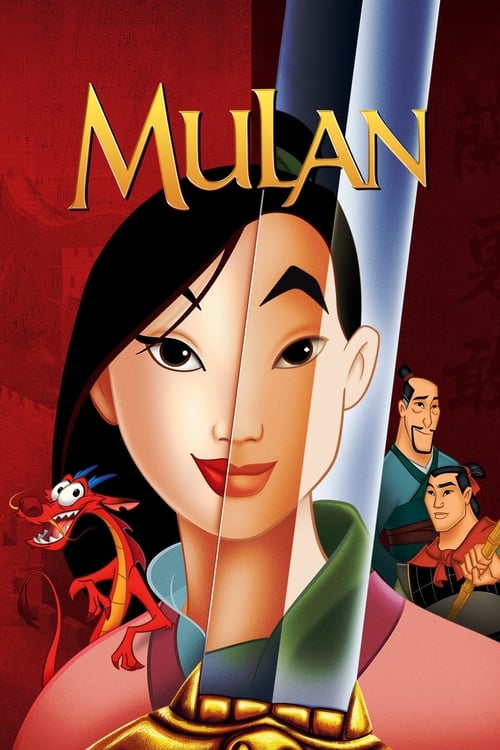
Mulan (1998): Complete Plot Narrative
The story unfolds in ancient China during an unspecified Imperial dynasty, in an era defined by the Great Wall and imperial rule. A lone Chinese soldier patrols the massive stone fortification at night when the sky suddenly erupts in chaos. Shan Yu, the ruthless leader of the invading Huns, storms the Great Wall with his massive army in a devastating nighttime assault. The guard desperately lights the warning signal fire to alert the Imperial City before Shan Yu's forces overwhelm the position. After seizing control of the wall, Shan Yu captures two imperial scouts. In a chilling display of cruelty, he releases one scout to deliver a message to the Emperor while coldly executing the other, reasoning that "it only takes one man to deliver a message." This execution marks the first death that sets the entire conflict in motion.
The warning reaches the Imperial Palace, where the Emperor sits in his throne room receiving the devastating news. The Huns have breached China's greatest defense. The Emperor, understanding the magnitude of the threat, issues an immediate decree: "One man from every family must serve in the Imperial Army." This conscription order will ripple through the entire nation, reaching even the smallest villages. Among those affected is the Fa family, living in a rural village far from the capital.
Before the conscription notice arrives, we meet Fa Mulan in her family home, where she is being prepared for an appointment with the village matchmaker--a crucial test that will determine her eligibility for marriage and her family's social standing. Her mother, Fa Li, fusses over Mulan's appearance, applying makeup and adjusting her clothing while admonishing her to behave properly and speak only when spoken to. Mulan's grandmother, Fa, tests a small cricket by placing it in traffic to see if it survives, believing it to be lucky. She gives this cricket, later named Cri-Kee, to Mulan as a talisman for the matchmaker's test. Mulan, however, is anxious and unprepared for the rigid expectations of traditional society. She writes notes on her arm as a "cheat sheet" for proper behavior, a desperate attempt to fake conformity to expectations she does not naturally embody.
The matchmaker's house becomes the stage for Mulan's humiliation. As she recites the final admonition before the matchmaker, the ink on her arm smudges. The cricket escapes from her possession and causes chaos--tea spills, a fire breaks out, and the entire ritual devolves into disaster. The matchmaker, furious and disgusted, declares that Mulan has brought dishonor to her family and storms out. Mulan stands alone, publicly shamed and convinced she has failed in the most fundamental way her society measures a woman's worth.
Meanwhile, in the Fa family courtyard, Mulan's father, Fa Zhou, an aged and disabled war veteran who walks with a cane, receives the imperial conscription notice. The recruitment officer reads the edict aloud to the gathered villagers. When the officer calls for one man from each family to serve, Fa Zhou, despite his age and infirmity, steps forward to accept his duty. Mulan watches in horror as her father, throwing away his crutch to stand tall, prepares to march to war. She begs him not to go, arguing that he is too old and too weak, that he will surely die. Fa Zhou insists on his duty and his honor as a man and as a father. The argument is emotional but resolute--Fa Zhou will not be swayed.
That night, as rain falls on the village, Mulan makes a decision that will change everything. She cannot allow her father to march to his likely death. In the darkness, she cuts her long hair short, dons her father's armor and battle garments, and takes his sword. She mounts Khan, the family horse, and rides away toward the army encampment, leaving only a note for her family to discover in the morning.
When the Fa family awakens and realizes what Mulan has done, panic and despair grip the household. Fa Li weeps, and Fa Zhou stands in stunned silence. Grandmother Fa, however, rushes to the family's ancestral temple and prays desperately to the family's ancestors, begging them to protect her granddaughter and keep her safe. Her prayer awakens the spirits of the ancestors, who materialize in the temple as ghostly figures. They argue among themselves about whether Mulan's actions will bring honor or ruin to the family. The Great Ancestor, a distinguished spirit leader, makes a decision: the powerful stone dragon guardian, a massive statue that has protected the Fa family for generations, should be awakened to guide and protect Mulan. The Great Ancestor commands Mushu, a small red dragon and a disgraced former family guardian, to wake the stone dragon.
Mushu, eager to redeem himself in the eyes of the ancestors and restore his status as a guardian, rushes to the temple's inner chamber where the great stone dragon statue stands. In his clumsy enthusiasm, he accidentally destroys the statue, shattering it beyond repair. Realizing his mistake and seeing no way to fix it, Mushu makes a bold decision: he will go to Mulan himself and personally ensure her success in war. If he can make Mulan a war hero, the ancestors will surely forgive him and reinstate him as a guardian. With this plan in mind, Mushu sets off to find Mulan, accompanied by Cri-Kee, the lucky cricket.
Mulan arrives at the Imperial Army training encampment, a sprawling military installation nestled in a mountain valley. She reports to the commanding officer using the alias "Fa Ping," adopting a masculine persona and deepening her voice. Captain Li Shang, a young and capable military officer recently promoted to lead a new unit of raw recruits, oversees her registration. Shang has been given command of this unit by his father, General Li, and by the Emperor's counsel, Chi-Fu, a belligerent bureaucrat who will later prove skeptical of Shang's abilities.
Mushu appears to Mulan shortly after she arrives at the camp, initially presenting himself as a powerful dragon sent by the ancestors to guide her. Mulan is skeptical and confused, but Mushu convinces her that he is there to help her become a war hero. Throughout her time at the camp, Mushu provides constant encouragement and clumsy guidance, though his advice is often more comedic than practical. Mulan must now navigate the treacherous task of passing as a man while learning to be a soldier.
At the training camp, Mulan meets three fellow recruits: Yao, Ling, and Chien-Po. Initially, they mock and bully "Ping," finding him weak and clumsy. Mulan struggles with the physical demands and the masculine behaviors expected of soldiers. However, she gradually adapts, using her intelligence and creativity to overcome her physical disadvantages. During one crucial training exercise, Captain Shang places weights on the recruits' wrists and ankles and challenges them to retrieve an arrow from the top of a tall wooden pole. The task seems impossible--the pole is slick, the weights are heavy, and the recruits struggle one after another. Mulan, however, uses the weights themselves as leverage, climbing them like steps to reach the arrow. She becomes the first recruit to succeed, earning the respect of Shang and her fellow soldiers. The other recruits, impressed by her ingenuity, begin to accept "Ping" as a friend and comrade. A montage of training follows, set to the song "I'll Make a Man Out of You," showing Mulan's physical and psychological transformation into a capable soldier.
During this training period, Chi-Fu repeatedly threatens to dissuade the Emperor from allowing Shang's unit to see real combat, arguing that the recruits are not ready. Shang must constantly prove his unit's readiness and his own competence as a commander. The tension between Shang's ambitions and Chi-Fu's bureaucratic obstruction creates ongoing conflict within the military hierarchy.
After weeks of training, Shang receives orders to march his unit toward the front lines to join the larger Imperial Army in confronting the Hun invasion. The troops march northward, climbing higher into the mountains as they approach the battle zone. As they ascend a mountain pass, they discover the horrifying aftermath of earlier Hun attacks: a burned-out village, its buildings charred and destroyed, and a vast snowy battlefield littered with the bodies of fallen soldiers. Among the dead are the remnants of General Li's army, defeated in an earlier engagement. Shang finds his father's helmet and armor among the carnage, realizing that General Li has been killed in battle. The discovery devastates Shang, but he must suppress his grief and focus on his duty to his remaining troops.
As the soldiers continue through the mountain pass, they are suddenly ambushed by Shan Yu and a massive Hun force. The Huns attack from above and behind, attempting to encircle and destroy Shang's small unit. The battle is fierce and chaotic, with arrows flying and soldiers falling. Shang is nearly killed when Shan Yu himself confronts him, but Mulan intervenes, drawing the Hun leader's attention. Recognizing that her unit is vastly outnumbered and facing annihilation, Mulan makes a crucial tactical decision. She grabs the last remaining cannon and, instead of firing it at the approaching Huns, aims it at the mountainside above them. The cannon fires, triggering a massive avalanche that roars down the slope, burying the vast majority of Shan Yu's army in snow and ice. The avalanche saves Shang's unit from certain destruction, but it also wounds Mulan severely. Shan Yu's sword slashes across her torso before he is swept away by the snow.
After the avalanche settles, the surviving soldiers tend to their wounded. Mulan is carried to the medical tent, where a doctor examines her injury. As he treats her wound, the doctor discovers the truth: Mulan is a woman. The revelation spreads quickly through the camp. According to Chinese military law, impersonating a soldier and deceiving the army is treason, punishable by death. Shang, as commanding officer, must decide Mulan's fate. He draws his sword and stands over her in the snow, his face a mixture of anger, betrayal, and internal conflict. Then, he speaks: "A life for a life. My debt is repaid." He sheathes his sword, sparing her execution. Instead, he banishes her from the army, leaving her with a horse and supplies while the troops continue their march toward the Imperial City.
Mulan, devastated by her exposure and rejection, changes back into female clothing and follows the army at a distance. She realizes that Shan Yu and some of his elite warriors survived the avalanche--they were not all buried in the snow. Desperate to warn the others, she rides ahead to the Imperial City, where Shang's unit is being celebrated as heroes in a triumphant parade through the streets. Mulan, now dressed as a woman, tries to approach Shang and tell him that Shan Yu survived and is heading toward the city. But Shang, still hurt and angry over her deception, refuses to listen. The soldiers and officials dismiss her warnings, viewing her as a disgraced impostor whose credibility has been destroyed.
Mulan's worst fears are realized when Shan Yu and his surviving elite warriors infiltrate the Imperial City. They hide themselves within a large dragon-shaped parade float used in the celebration, and when the float reaches the palace, they burst out and attack. The palace guards are overwhelmed, and Shan Yu's men capture the Emperor, dragging him into the palace and up toward his private chambers. Shan Yu confronts the Emperor directly, demanding that he bow to him as a sign of submission. The Emperor, dignified and calm despite the threat, refuses. Shan Yu threatens to cut the Emperor into pieces if he does not comply, but the Emperor remains resolute, accepting death rather than dishonor.
With the Emperor held hostage and the city in chaos, Mulan turns to the only people who still trust her: Yao, Ling, and Chien-Po. She devises a daring plan to infiltrate the palace and rescue the Emperor. The four of them dress as female concubines, using makeup, wigs, and elaborate clothing to disguise themselves. They approach the palace guards, who, expecting concubines to entertain Shan Yu and his men, allow them to enter. Once inside, Mulan, Yao, Ling, and Chien-Po ambush the Hun guards, defeating them in combat and freeing the Emperor. Shang, who has followed them into the palace, arrives and joins the fight, blocking Shan Yu's attempt to assassinate the Emperor. During the struggle, Shan Yu overpowers Shang and hurls him through a window onto a palace balcony.
Mulan lures Shan Yu away from the Emperor and onto the palace roof. There, high above the city, they engage in hand-to-hand combat. Mulan reveals to Shan Yu that she was the soldier who triggered the avalanche, enraging him further. They fight among the rooftop structures, with Mulan using speed and agility to evade his powerful strikes. In a crucial moment, Mulan manages to pin Shan Yu down by driving his own sword through his cape into the roof structure, trapping him momentarily. She calls out to Mushu, who has positioned himself near the palace's fireworks storage tower. Mushu, with Cri-Kee's assistance, lights a massive skyrocket. The rocket launches and strikes Shan Yu directly, propelling him backward into the fireworks tower. The stored fireworks detonate in a catastrophic explosion, lighting up the night sky and killing Shan Yu.
As the explosion fades and smoke clears, Mulan, Shang, Yao, Ling, Chien-Po, and the Emperor descend safely from the palace. The crowd in the Imperial City, initially panicked, sees the explosion and then witnesses the Emperor and his rescuers emerge unharmed. Chi-Fu attempts to list Mulan's crimes--impersonation, dishonoring the army, treason--but the Emperor silences him, focusing instead on her heroism and the fact that she has saved him and all of China.
The Emperor addresses Mulan directly, telling her that she has saved the nation and offering her a position on his imperial council as an honored advisor. This is an extraordinary honor, one that would elevate her family's status immeasurably. But Mulan respectfully declines, saying that her place is with her family. The Emperor, moved by her humility and devotion, bows to Mulan in a gesture of profound respect. Inspired by the Emperor's action, the entire Imperial court and the assembled citizens bow to Mulan, reversing the shame and dishonor that had followed her earlier. Before she leaves, the Emperor presents her with two gifts: his imperial crest, representing official recognition of her deeds and the restoration of her family's honor, and Shan Yu's sword, a symbol of victory over China's greatest enemy.
Mulan returns to her village and enters the Fa family courtyard. She presents her father with the Emperor's crest and Shan Yu's sword, telling him that these gifts will bring the family honor. But Fa Zhou, moved to tears, drops the gifts and embraces his daughter. He tells her that the greatest honor and the greatest gift is having her as his daughter, making it clear that he values her far more than any imperial recognition or symbol of status. In that moment, Mulan understands that true honor comes not from conforming to rigid social expectations but from being true to oneself and one's loved ones.
The ancestors, witnessing Mulan's triumph and the restoration of family honor, reinstate Mushu as a full guardian of the Fa family. In a brief celebratory scene in the ancestral temple, Mushu is finally accepted and celebrated by the spirits, his redemption complete.
Captain Li Shang, encouraged by the Emperor's hints about the virtues of such a woman, travels to the Fa household to see Mulan. He arrives at the courtyard, and Mulan invites him to stay for dinner. Grandmother Fa, delighted by his presence and sensing the growing affection between them, encourages the two to spend time together. The film closes with a light, humorous tone as the family gathers, Mulan and Shang together, and Mushu celebrating his restored status with the ancestors in the background. The overarching resolution is complete: Mulan has reconciled her personal identity with her family's honor, saved her entire nation from invasion, restored Mushu's status as a guardian, and opened the possibility of a new, more equal relationship with Shang--one based on mutual respect and genuine affection rather than rigid social convention.








What is the ending?
At the end of the movie "Mulan," Mulan returns home after saving China from the Huns. She is initially celebrated as a hero, but when she returns to her family, she is met with mixed feelings. Mulan's father, Fa Zhou, is proud of her bravery, while her mother and the rest of the village are surprised by her actions. Ultimately, Mulan is accepted for who she is, and she finds love with Captain Li Shang.
Now, let's delve into the ending in a more detailed narrative fashion:
As the climactic battle against the Huns reaches its peak, Mulan stands on a snowy mountain, having just revealed her true identity to her fellow soldiers. With the Huns defeated, Mulan's bravery shines through, and she is celebrated as a hero. The Emperor of China, impressed by her courage and ingenuity, honors her in a grand ceremony. He presents her with a medal and offers her a position in the Imperial Council, recognizing her contributions to the nation.
However, Mulan's heart is heavy as she contemplates her journey. She knows that her true place is not in the court but with her family. After the ceremony, she returns to her village, where her family awaits her. The atmosphere is filled with a mix of joy and confusion. Mulan's mother, Fa Li, is relieved to see her daughter safe but is also bewildered by the tales of her heroism. Mulan's father, Fa Zhou, embraces her with pride, acknowledging her bravery and the honor she has brought to their family.
As Mulan settles back into village life, she faces the challenge of reconciling her dual identity as a warrior and a woman. The villagers, initially shocked by her actions, begin to see her in a new light. Mulan's journey has not only changed her but has also shifted the perceptions of those around her. The village celebrates her return, and the people start to understand that strength comes in many forms.
In a tender moment, Captain Li Shang arrives at Mulan's home. He expresses his admiration for her bravery and the bond they formed during their time together. Their connection deepens as they share a quiet moment, hinting at the budding romance between them. Mulan's heart swells with hope as she realizes that she can be both a warrior and a woman, embracing her true self.
The film concludes with Mulan standing confidently in her village, surrounded by her family and friends. The final scene captures the essence of her journey: a celebration of individuality, courage, and the importance of being true to oneself. Mulan has not only saved China but has also found her place in the world, where she is accepted and loved for who she is. The screen fades to black, leaving the audience with a sense of fulfillment and the message that honor and bravery can take many forms.
Is there a post-credit scene?
The 1998 animated film "Mulan" does not have a post-credit scene. After the credits roll, the film concludes without any additional scenes or content. The story wraps up with Mulan returning home after her heroic journey, where she is celebrated for her bravery and accomplishments. The final moments focus on the reunion with her family and the acknowledgment of her true self, emphasizing themes of honor, identity, and acceptance. The absence of a post-credit scene allows the emotional weight of Mulan's journey to resonate fully with the audience, leaving them with a sense of closure.
What motivates Mulan to take her father's place in the army?
Mulan is deeply motivated by her love and respect for her father, Fa Zhou, who is a war veteran. When the Emperor's decree calls for one man from each family to join the army to defend China against the Huns, Mulan is devastated to learn that her elderly father, who is physically unfit for battle, will be forced to go. Driven by a sense of duty and a desire to protect him, she decides to disguise herself as a man and take his place, showcasing her bravery and selflessness.
How does Mushu help Mulan during her training in the army?
Mushu, Mulan's small dragon guardian, plays a crucial role in her journey. He initially helps her by providing comic relief and encouragement, but he also takes on the responsibility of training her in the ways of a soldier. Mushu uses his cleverness to create distractions and manipulate situations, such as when he helps Mulan during the training exercises by using his fire-breathing abilities to boost her confidence and ensure she stands out among the other recruits.
What challenges does Mulan face while pretending to be a man?
Throughout her time in the army, Mulan faces numerous challenges while maintaining her disguise. She struggles with the physical demands of training, often feeling inadequate compared to her male counterparts. Additionally, she must navigate the complexities of camaraderie and competition among the soldiers, all while hiding her true identity. The emotional toll of living a lie weighs heavily on her, especially as she forms bonds with her fellow soldiers, particularly with Li Shang, who becomes a source of both support and romantic tension.
What is the significance of the matchmaker scene in Mulan's character development?
The matchmaker scene is pivotal in Mulan's character development as it highlights her struggle with societal expectations. During the matchmaking process, Mulan is anxious and clumsy, failing to impress the matchmaker and ultimately embarrassing her family. This moment underscores her internal conflict between conforming to traditional gender roles and her desire for independence. It serves as a catalyst for her decision to join the army, as she realizes that she does not fit into the mold of a perfect bride and seeks to forge her own path.
How does Mulan's relationship with Li Shang evolve throughout the film?
Mulan's relationship with Li Shang evolves significantly throughout the film. Initially, they share a mentor-student dynamic, with Shang being her commanding officer. As they train together, mutual respect and admiration grow, particularly when Mulan proves her worth in battle. However, their relationship becomes complicated when Shang discovers Mulan's true identity. Despite the initial shock and feelings of betrayal, Shang ultimately recognizes Mulan's bravery and strength, leading to a deeper bond based on understanding and acceptance.
Is this family friendly?
The 1998 animated film "Mulan" is generally considered family-friendly, but it does contain some scenes and themes that may be potentially objectionable or upsetting for younger children or sensitive viewers. Here are a few aspects to consider:
-
War and Violence: The film features scenes of battle and combat, including soldiers fighting and the depiction of war. There are moments of intense action that may be frightening for some children.
-
Death and Loss: Characters face the threat of death, and there are implications of loss throughout the story. This includes the emotional weight of Mulan's decision to take her father's place in the army, which can evoke feelings of fear and sadness.
-
Disguise and Deception: Mulan disguises herself as a man to join the army, which may raise questions about gender identity and societal roles. The themes of deception can be complex for younger viewers to understand.
-
Emotional Struggles: Mulan experiences significant internal conflict, including feelings of inadequacy and the pressure to conform to societal expectations. These emotional struggles may resonate deeply and could be upsetting for some.
-
Cultural Context: The film is set in ancient China and includes elements of cultural representation that may require context for younger viewers to fully appreciate and understand.
While these elements contribute to the film's depth and character development, they may also be sensitive topics for some audiences. Overall, parental guidance is recommended for younger children to help navigate these themes.