










Popular
Why does Ana Kaleb return to Croatia with her 13-year-old son Denis after living in England?
What causes the first major conflict between Ana and her ex-husband Vinko?
What exactly happens during Vinko’s fatal night ride with Denis?
Why is Denis such an important character in the investigation?
What family tensions do Stascha and Emil uncover around Ana, her mother, and her brother Niksa/Nikisa?
Should I watch it?
Ask Your Own Question

What is the plot?
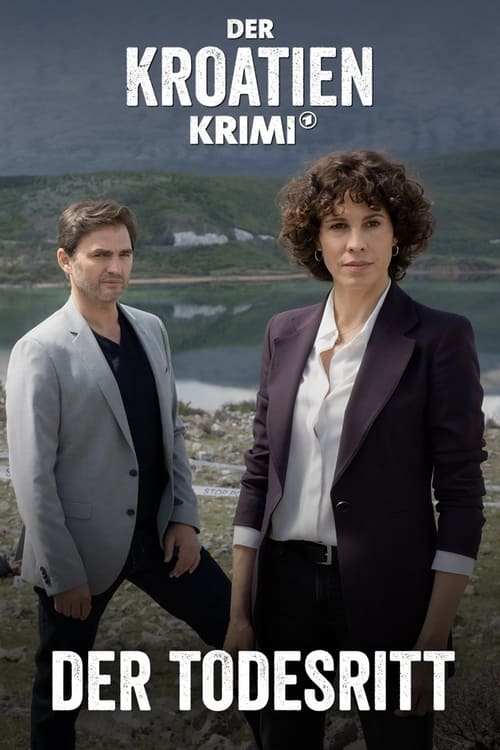
Ana Kaleb comes back to Croatia after years of absence with a grief she has tried to bury in England, and she brings her 13-year-old son Denis with her to the family horse ranch to say goodbye to her dead father. The homecoming is not tender or healing; it is immediately charged with old resentment, because the first reunion with her ex-husband Vinko Tudic turns into an ugly, bitter confrontation that makes clear how little of the past has ever truly been settled. The ranch, which should be a place of mourning, instead feels like a pressure chamber full of half-spoken grievances, inherited roles, and family silence, and the story leans into that tension from the very first moments.
Ana is not returning as a defeated woman but as a successful veterinarian who has built a life elsewhere, and that detail matters because it frames her as someone who left for reasons that were never cleanly resolved. Stascha Nowak later asks exactly that question--why Ana left Croatia and what she was escaping--and the film treats the answer as one of its central mysteries. Ana's mother Stela Kaleb and her brother Niksa are already presented as sources of strain rather than comfort, and the family dynamic is immediately brittle, with the past hanging over every exchange like a threat. Denis, caught in the middle, becomes the human center of the conflict: old wounds between adults are now passing through a child who barely understands the history surrounding him.
The first real rupture comes when Vinko, furious after the confrontation, takes Denis out on a nocturnal ride without Ana's knowledge. The decision feels reckless and provocative even before anything goes wrong, because the night ride is not merely an outing; it is a seizure of control, an act that asserts Vinko's authority over Ana's child in the very moment she is trying to reclaim her place in the family. The landscape itself helps build the dread: the "wild-romantic" Dalmatian steppe is dark, open, and exposed, and when Vinko and Denis vanish into it, the silence becomes ominous rather than peaceful. Then shots crack through the darkness, and the story pivots from domestic conflict to murder.
Vinko Tudic is hit fatally, and one source specifies that he is struck in the forehead. The scene is presented as the central crime of the film, but the killer is not identified in the available plot material, and that uncertainty is deliberately crucial to the story's structure. Denis is present when the shooting happens, which makes him both a witness and a source of chaos: his memories are described as distorted, too fractured to provide clear answers, and his emotional state leaves the detectives with almost nothing solid to hold on to. The murder is therefore not just a whodunit; it is a family tragedy filtered through confusion, fear, and the unreliability of a child who has just seen a man die in front of him.
Kommissarin Stascha Nowak and her colleague Emil arrive to take control of the case, but even the physical evidence at the scene resists easy interpretation. They are a seasoned investigative pair, yet they immediately encounter a wall of silence and contradiction inside a family that is already fractured beyond repair. Stascha senses from the beginning that the tension is not limited to Ana and Vinko, and that the true story runs deeper into the relationships between Ana, Stela, and Niksa. The murder scene does not function as a clean endpoint for the crime; it is instead the opening of a much older case, one buried beneath custom, inheritance, and whatever Ana fled years earlier.
As Stascha pushes further, the film broadens from a single killing into a story about hidden wrongdoing. The investigation suggests that the family's troubles are part of a wider pattern of deception, and the sources explicitly say that Stascha uncovers "verstörende Zusammenhänge" and even "weitere Verbrechen." That means the shooting is not an isolated act of rage or a simple custody dispute gone lethal; it is tied to a larger structure of guilt. The old order in this part of Dalmatia is described as antiquated, which gives the whole family setting a rigid, old-world pressure, as though everyone has been trapped inside roles they were never allowed to question. Ana's return cracks that structure open, and Vinko's death becomes the point where all of its buried fractures begin to show.
The investigators' task is made harder by Denis's condition after the attack. He cannot provide a reliable reconstruction of the event, and his recollections are described as blurred and distorted, which makes him both essential and frustrating as a witness. That uncertainty deepens the suspense because the audience, like the investigators, is forced to infer motives from the emotional landscape rather than from straightforward evidence. Every family interaction becomes suspicious. Every refusal to answer a question feels loaded. Every glance between Ana, Stela, and Niksa suggests that the murder may be only the loudest consequence of secrets that have been poisoning the family for years.
Ana herself emerges as the emotional axis of the story. She is successful, self-contained, and outwardly strong, but her return home reveals how much of her identity is tied to what she left behind. Her choice to build a life in England is not treated as a random career move; it is part of the central tension, and Stascha's decision to probe that decision opens the door to the past Ana has tried to keep sealed. The film makes it clear that the family history is not simply sad, but dangerous. The "further crimes" Stascha uncovers suggest betrayal, cover-up, and damage that have been festering long before Vinko's death. That broader context turns the homecoming into something almost gothic: Ana has returned not to a house, but to an unfinished reckoning.
Vinko's abduction of Denis for the nighttime ride is the key confrontation that drives the plot into violence, and it is also the moment that crystallizes his role in the family conflict. He is not just a victim; he is a catalyst whose anger and recklessness set the final disaster in motion. The available sources do not give a verbatim transcript of the argument between Ana and Vinko, but they do show that the fight is severe enough that his next move is to take the boy away without Ana's permission. That action is the dramatic escalation: he is using Denis as leverage, whether consciously or not, and the film makes the emotional stakes plain before the shooting begins.
The investigators eventually realize that they are dealing with more than a single act of violence because the family structure itself is a crime scene in miniature. Ana, Stela, and Niksa are connected by tensions that do not need to be fully spelled out in the synopsis to feel oppressive; the film's own description insists that these are "deep-seated" strains, the kind that imply years of resentment and unspoken history. The family ranch becomes the visual embodiment of that history, a place where horses, land, inheritance, and masculine authority all coexist with grief and shame. Even the title, Der Todesritt, ties death to movement through that landscape, making the ride itself feel like a passage into doom.
At some point in the investigation, Stascha's curiosity shifts from the murder to Ana's past, and that is where the film's larger secrets begin to surface. She does not merely ask who shot Vinko; she asks why Ana left, what happened in the years she was gone, and what the family has been hiding from itself. The source material is careful not to spell out every discovered secret, but it is explicit that those inquiries lead to more crimes. That means the eventual resolution is not just about identifying one killer. It is about exposing a chain of wrongdoing that the family has lived inside for years, and possibly about showing how one act of violence was shaped by another, older one.
The film's emotional rhythm keeps returning to Denis, because he is the innocent person trapped in the middle of adult vengeance and history. His presence on the ride transforms the scene from a simple murder setup into something more tragic, because a father figure chooses a dangerous display of power in front of the child, and the result is death. Denis's muddled memories mean the truth cannot be recovered cleanly from him, which makes his trauma part of the mystery itself. He is not only a witness to the murder but a symbol of how the family's past keeps reproducing harm in the next generation.
What the available material does not provide is a complete scene-by-scene account of the final confrontation or the precise identity of the person who fires the fatal shot. It does make clear, however, that the mystery is solved by following the threads of family conflict into earlier crimes and hidden motives. The detectives do not stop at the visible death of Vinko Tudic; they keep digging until the underlying pattern comes into view, and the case shifts from "who shot him?" to "what has this family been hiding all along?" That investigative movement is the engine of the film's climax, which is presented as a confrontation between the present crime and a buried past that refuses to stay buried.
The ending, as far as the sources reveal it, resolves through the exposure of that larger truth rather than through any external action sequence. Stascha's persistence uncovers the disturbing connections that link Ana's departure, the family's internal warfare, and the death on the steppe. The film does not present the murder as random; it is folded into a web of lies, love, betrayal, and old resentments that have distorted every relationship in the Kaleb family. The final effect is one of grim clarity: the family's outward stability was never real, and the return to the ranch does not restore anything so much as force everyone to face what they have been avoiding.
Vinko Tudic dies from the shooting during the night ride, and that is the only confirmed death the available sources identify. No other deaths are explicitly reported in the plot material. The film's remaining force comes from the fallout: Ana is left to absorb the truth of what her homecoming has revealed, Denis is left traumatized by what he has seen, and Stascha and Emil have completed an investigation that exposes a family history far uglier than a single murder. The last movement of the story is therefore not about surprise but about reckoning, with the ranch, the family, and the hidden past all locked together in the consequences of that one fatal ride.
More Movies Like This
Browse All Movies →

What is the ending?
At the end of the film, the death of Vinko is not the end of the conflict but the point where the family's buried tensions begin to surface. Stascha and Emil keep digging, Ana is forced to face the past she tried to leave behind, and the story moves from one violent event into the revelation of deeper family secrets.
Ana Kaleb returns from England to the family horse ranch in Croatia to bury her father and bring her son Denis with her. Her return immediately turns into a bitter confrontation with her ex-husband Vinko. Vinko later takes Denis on a night ride without Ana's knowledge, and in the darkness shots are fired. Vinko is hit in the forehead and dies.
From there, the investigation centers on what really happened on that ride. Denis cannot give a clear account because his memories are confused, and the police have trouble reading the scene. Stascha Novak and Emil Perica begin to see that the killing is tied to long-standing tensions inside Ana's family, especially between Ana, her mother Stela, and her brother Nikša. As they press further, the case widens beyond the immediate shooting and points to older wrongdoing and hidden conflict in the family background.
The fate of the main characters at the end is as follows: Vinko dies from the gunshot wound. Ana survives and remains at the center of the family conflict and the investigation. Denis survives the night, but his confused recollection leaves him emotionally caught in the middle. Stascha and Emil continue the investigation rather than ending the story with the shooting itself.
Is there a post-credit scene?
There is no evidence in the available sources that Der Kroatien-Krimi: Der Todesritt includes a post-credit scene, and none of the reference pages mention one.
The materials that are available describe the film's premise and production details, but they do not list any end-credit or extra-scene content. If you want, I can also summarize the ending itself, which is often the best way to tell whether the film leaves room for an extra scene.
Why does Ana Kaleb return to Croatia with her 13-year-old son Denis after living in England?
Ana returns to her family's horse ranch to say goodbye after her father dies, bringing Denis with her from England. The return immediately reopens old family wounds, because it is not just a funeral visit but a confrontation with the people and place she had left behind.
What causes the first major conflict between Ana and her ex-husband Vinko?
The first major conflict comes from their painful reunion after nine years, which turns into an argument tied to unresolved family tensions. Vinko reacts by taking Denis on a night ride without Ana's knowledge, escalating the situation sharply.
What exactly happens during Vinko’s fatal night ride with Denis?
Vinko takes Denis out for a night ride into the darkness of the steppe, and while they are away, shots are fired. Vinko is then found fatally hit in the forehead, making the ride the central event around which the investigation begins.
Why is Denis such an important character in the investigation?
Denis is important because he is the only direct witness to the events surrounding the night ride, but his recollection is described as distorted and not very helpful. His uncertainty leaves the investigators with few reliable clues about what happened to Vinko.
What family tensions do Stascha and Emil uncover around Ana, her mother, and her brother Niksa/Nikisa?
The investigation reveals deep-seated tensions within Ana's family, especially between Ana, her mother Stela, and her brother Nikisa/Niksa. Stascha senses from the beginning that these conflicts are central to understanding both Ana's return and the darker events connected to the fatal shooting.
Is this family friendly?
No, it is not especially family-friendly for young children. It is a crime drama with family conflict, a death/murder-related storyline, and some tense, emotionally heavy scenes, so it is better suited to teens and adults.
Potentially upsetting or objectionable elements include: - A mysterious death and a murder investigation. - Intense family arguments and long-simmering conflict between relatives. - A tense night-time horseback ride followed by gunshots. - A tragic, heavy tone with strong emotional strain rather than light suspense. - Themes of grief, betrayal, and past secrets coming to the surface.
Based on the available descriptions, there is no indication of graphic gore or explicit sexual content in the listed sources, but the violence and family turmoil may still be upsetting for sensitive viewers.








