















Popular
What is the relationship between Emma and her mother, and how does it affect the story?
How does Emma's character develop throughout the film?
What role does the character of the new friend play in Emma's life?
What specific events trigger Emma's violent tendencies?
How does the film explore the theme of nature versus nurture through Emma's actions?
Should I watch it?
Ask Your Own Question

What is the plot?
Sorry, we aren't able to watch and write up a full detailed plot yet. Check back in a few days.



What is the ending?
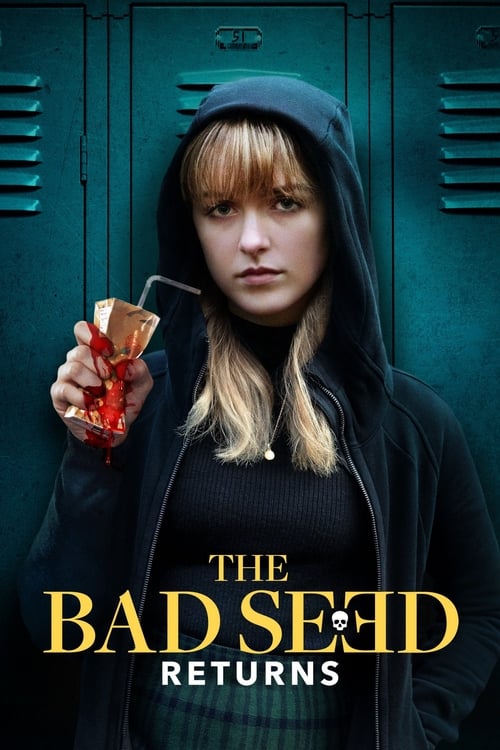
In the ending of "The Bad Seed Returns," Emma, the daughter of the original character Rhoda, confronts her dark legacy. After a series of manipulative and violent actions, she ultimately faces the consequences of her behavior. The film concludes with a tense standoff, leading to a tragic resolution that leaves Emma's fate uncertain, while her mother, Rhoda, grapples with the implications of her daughter's actions.
As the final act unfolds, the tension escalates in a series of gripping scenes.
Scene 1: The confrontation begins in the family home, where Emma's increasingly erratic behavior has raised alarms. Rhoda, now a mother herself, is torn between her love for her daughter and the fear of what Emma is capable of. The atmosphere is thick with dread as Rhoda recalls her own troubled past, feeling the weight of her own dark legacy.
Scene 2: Emma, feeling cornered and misunderstood, lashes out at those around her. She has already manipulated her peers and caused chaos in her school, and now her actions have drawn the attention of the authorities. In a moment of desperation, she confronts Rhoda, demanding to know why her mother is so afraid of her. The emotional stakes are high, as Rhoda tries to reason with Emma, revealing her own fears and regrets.
Scene 3: The climax occurs when Emma's actions lead to a tragic accident involving a classmate. The scene is chaotic, filled with panic and confusion as the consequences of Emma's manipulation come to a head. Rhoda arrives just in time to witness the aftermath, her heart racing as she realizes the extent of Emma's darkness.
Scene 4: In the aftermath, the police arrive, and the community is in shock. Rhoda is left to grapple with the reality of her daughter's actions. Emma, feeling isolated and betrayed, retreats into herself, her emotional state shifting from anger to despair. The tension between mother and daughter reaches a breaking point as Rhoda is forced to confront the possibility that Emma may be beyond redemption.
Scene 5: The film concludes with a haunting scene where Rhoda stands alone, reflecting on her choices and the legacy she has passed on to Emma. The final shot lingers on Emma, who is left in a state of uncertainty, her future ambiguous. The audience is left to ponder the implications of their actions and the cycle of darkness that seems to persist.
In the end, Rhoda is left to deal with the emotional fallout of her daughter's actions, while Emma's fate remains unresolved, encapsulating the film's exploration of inherited darkness and the struggle for redemption.
Is there a post-credit scene?
In "The Bad Seed Returns," there is indeed a post-credit scene that adds an intriguing layer to the film's conclusion.
As the credits roll, the screen fades to black before transitioning to a dimly lit room filled with shadows. The camera slowly pans to reveal a young girl, resembling a younger version of the protagonist, sitting at a table. She is meticulously arranging a collection of dolls, each one eerily similar to characters from the film. The atmosphere is tense, with a haunting melody playing softly in the background.
The girl pauses, her expression shifting from concentration to a sly smile as she picks up one of the dolls, which bears a striking resemblance to her mother. She whispers to the doll, "Don't worry, Mommy. I'll take care of everything." The camera zooms in on her face, capturing a glint of mischief in her eyes, suggesting that the cycle of malevolence may continue.
The scene ends with a close-up of the doll's face, its painted eyes staring blankly, as the screen fades to black once more, leaving the audience with a chilling sense of foreboding about the future. This moment reinforces the film's themes of inherited darkness and the potential for evil to persist across generations.
What is the relationship between Emma and her mother, and how does it affect the story?
Emma, the protagonist, is the daughter of the infamous Rhoda, who was a child murderer in the original film. Their relationship is strained as Emma grapples with her mother's dark legacy while trying to forge her own identity. Emma's internal conflict is heightened by her desire to be good and the fear of inheriting her mother's malevolent traits.
How does Emma's character develop throughout the film?
Emma starts as a seemingly innocent girl, but as the story unfolds, her darker tendencies begin to surface. She struggles with feelings of anger and jealousy, particularly towards her peers. This internal battle is depicted through her interactions, where she oscillates between being sweet and displaying chilling behavior, reflecting her fear of becoming like her mother.
What role does the character of the new friend play in Emma's life?
Emma's new friend serves as a catalyst for her darker impulses. This friend, who is more rebellious and daring, encourages Emma to act out and explore her more sinister side. Their friendship complicates Emma's journey, as she is torn between wanting to fit in and the fear of losing control over her own actions.
What specific events trigger Emma's violent tendencies?
Several key events trigger Emma's violent tendencies, including bullying from her classmates and the pressure to excel in her school environment. These moments of humiliation and frustration lead her to lash out, revealing her capacity for violence, which she struggles to suppress as she tries to maintain her innocence.
How does the film explore the theme of nature versus nurture through Emma's actions?
The film intricately explores the theme of nature versus nurture by showcasing Emma's struggle with her inherited traits from her mother, Rhoda. As Emma faces various challenges, her reactions often mirror her mother's past behaviors, raising questions about whether her violent tendencies are a result of her upbringing or an inherent part of her identity.
Is this family friendly?
"The Bad Seed Returns" is not considered family-friendly due to its themes and content. Here are some potentially objectionable or upsetting aspects that may occur:
-
Violence: The film contains scenes of physical harm and murder, which may be disturbing for younger viewers or sensitive individuals.
-
Psychological Manipulation: There are instances of emotional and psychological manipulation that can be unsettling, showcasing the darker aspects of human behavior.
-
Moral Ambiguity: The characters often grapple with complex moral dilemmas, which may be confusing or distressing for children.
-
Dark Themes: The overarching themes of evil, nature versus nurture, and the exploration of a child's malevolent tendencies can be heavy and unsettling.
-
Intense Emotional Moments: There are scenes that evoke strong emotions, including fear, betrayal, and despair, which may be overwhelming for some viewers.
These elements contribute to a tense and unsettling atmosphere throughout the film, making it more suitable for mature audiences.








