







Popular
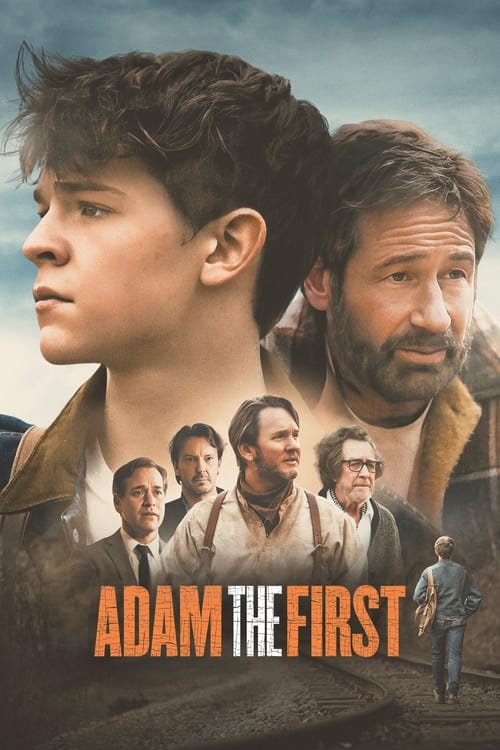
Who is Adam’s real father in Adam the First?
Why did James and Mary raise Adam off the grid and keep his parentage secret?
What are the three possible fathers Adam visits, and how are they different?
What happens to Adam’s parents at the beginning of the story?
How does Adam’s relationship with James shape his journey to find his father?
Should I watch it?
Ask Your Own Question

What is the plot?
The story begins deep in the silent, cypress-draped woods of Mississippi, where the air is thick with the scent of damp earth and the quiet hum of insects. Here, a young boy named Adam, no older than six or seven, sits beside a middle-aged man named James. The fire crackles between them, casting long, dancing shadows against the trees. James looks at the boy with a gaze that is both tender and heavy with a secret he has carried for years. He reaches out, his voice low and steady, and delivers the first truth that will shatter Adam's world. "I am not your birth father," James says, the words hanging in the cold night air. "I found you all alone in this forest, a baby in a basket. I don't know who your parents are, or what they did, but I love you unconditionally."
James reaches into his pocket and pulls out a small, brass compass. He holds it out to Adam, the metal gleaming in the firelight. "This was on you when I found you," James explains, his fingers brushing the boy's hand as he passes the object over. "It's your direction. I promise to teach you everything you need to survive. I will teach you how to hunt, how to read the land, how to be strong." Adam accepts the compass, his small fingers closing around it, unaware that this object will become the anchor of his entire life, a symbol of the unknown origin he is destined to uncover.
Time flows forward like the river nearby. The compass needle turns, marking the passage of years. The scene shifts, and the boy is now a teenager, Adam, fourteen years old. He has grown into a lean, capable young man, his face hardened by the isolation of the wilderness. He lives in a tight, dilapidated mobile home, a trailer parked off the grid in the backwoods of Mississippi. The home is shared with James, who has aged but remains his steadfast guardian, and Mary, a woman Adam has come to call his mother, though she is not his biological parent. The family survives entirely off the land. Adam is shown hunting rabbits, his movements precise and silent, a testament to the skills James taught him. He traps the animals, their fur soft against his hands, and prepares them for dinner, the rhythm of their life a simple, unbroken loop of survival.
One afternoon, while Adam is hunting deeper in the woods, he encounters a stranger. The man approaches cautiously, asking if Adam needs help. Adam's eyes narrow, his guarded upbringing flaring instantly. He finds the offer suspicious, a threat in the guise of kindness. He raises his gun, the barrel steady, and uses it to scare the man away, retreating into the shadows of the forest. The encounter leaves a lingering tension, a reminder that the world outside their sanctuary is not as safe as James and Mary have tried to make it seem.
Back at the trailer, the atmosphere is warm but fragile. During supper, Adam sits at the table, the food simple and plain. He looks at Mary, his curiosity finally boiling over. "Who is my real father?" he asks, the question cutting through the quiet meal. Mary's face hardens, her eyes flashing with a mix of anger and pain. She slams her hand on the table, the sound sharp and sudden. "James raised you!" she shouts, her voice trembling. "James is your father! No father leaves his child alone in the woods in a basket. This is your father. This is the man who raised you." She turns her back on him, leaving the table in a storm of silence, refusing to answer any further.
That night, the peace is shattered. A squad of armed men, a raiding party of criminals, bursts into the trailer. The door is kicked open, and the men storm inside, their weapons drawn. James and Mary do not surrender. They fight back, a desperate, chaotic struggle for survival. James grabs a rifle, his movements frantic but fierce, while Mary stands beside him, shielding Adam. The room is filled with the deafening roar of gunfire, the air thick with smoke and the smell of blood. In the midst of the chaos, James sees Adam cowering behind the table. He rushes to the boy, his face a mask of terror and love. "Adam, listen to me!" James yells, his voice barely audible over the gunfire. "I have to tell you something. I found a note. Your real father's name is Jacob Waterson."
James grabs a piece of paper, a handwritten note he had kept hidden, and thrusts it into Adam's hands. "There are three addresses," James shouts, his eyes scanning the room for the attackers. "Three men named Jacob Waterson. One of them is your father. You have every right to find him. You have to go." The gunfire intensifies. A bullet strikes James, and he falls to the floor, his body twitching as the life drains from him. Mary screams, a sound of pure agony, as she is hit by another bullet. She collapses beside James, her body still, her eyes open and fixed on the ceiling. The attackers, seeing their targets dead, retreat into the night, leaving the trailer in a silence that is more terrifying than the noise.
Adam stands alone in the wreckage, the compass in one hand, the note in the other. The bodies of James and Mary lie before him, the parents who raised him, the people who loved him, now dead. The grief is a physical weight, crushing his chest, but the note burns in his mind. He knows what he must do. He cannot stay here. He must find his father. He must find the truth.
Adam leaves the trailer, the door swinging shut behind him. He walks into the woods, the compass guiding his steps. He knows he cannot survive without weapons or a vehicle. He travels to the edge of the woods, where a rifle seller is parked by the road. Adam approaches the man, his face a mask of cold determination. "I need a rifle," he says, his voice steady. The seller hesitates, but Adam's gun is already in his hand. He robs the man, taking the rifle and the ammunition, leaving the seller terrified and shaken. With the weapon secured, Adam moves to a nearby car, a stolen vehicle parked by the roadside. He steals the car, the engine roaring as he drives away, leaving the backwoods of Mississippi for the first time in his life.
The road stretches out before him, a long, winding ribbon of asphalt that leads to the unknown. Adam drives, the compass on the dashboard, the note in his pocket. He follows the first address, a location in a bustling city. The address leads him to a club, a place of neon lights and loud music. Inside, the air is thick with smoke and the smell of alcohol. Adam finds a woman named Crystal, a bartender with a sharp gaze. "I'm looking for Jacob Waterson," Adam says, his voice cutting through the noise. Crystal looks at him, her expression unreadable. "Jacob is in prison," she says, her voice flat. "He's been there for a long time. You can't see him unless you go to the prison."
Adam leaves the club, the city fading behind him as he drives toward the prison. The prison is a massive, gray structure, surrounded by high walls and guard towers. Adam enters, the air cold and sterile. He is led to a cell where a man sits behind thick glass. The man is Jacob Waterson, the first possible father. He is older, his face lined with the years of confinement, his eyes dark and weary. Adam stands on the other side of the glass, the barrier between them a physical representation of the distance in their lives. "I'm your son," Adam says, the words trembling in his throat. Jacob looks at him, his expression a mix of shock and pain. "I didn't know," Jacob says, his voice muffled by the glass. "I didn't know I had a son. I was in prison for murder. I did terrible things. I don't know if I can be your father."
The conversation is heavy, filled with the weight of Jacob's past and Adam's confusion. Jacob speaks of his mistakes, of the life he lost, of the pain he caused. He tells Adam that he is not the man he should be looking for, that his life is a prison, not a home. Adam leaves the prison, the encounter leaving him with a sense of emptiness. He knows this Jacob is not his father, but the truth is still out there, waiting to be found.
Adam drives to the second address, a rural farm in the countryside. The farm is a sprawling property, with fields of green crops and a large, white house. Adam enters the house, where a man named Jacob, the second possible father, is sitting with his family. This Jacob is a farmer, a man of the earth, with a kind face and a gentle voice. He has a wife and children, a life of simplicity and love. "I'm looking for Jacob Waterson," Adam says, his voice steady. The farmer looks at him, his eyes widening. "I am Jacob Waterson," he says, his voice warm. "But I don't think I'm your father. I have a family. I have a life. I don't know who you are."
The farmer speaks of his life, of his family, of the love he has for them. He tells Adam that he is not the man he is looking for, that his life is a family, not a search. Adam leaves the farm, the encounter leaving him with a sense of hope, but also a sense of confusion. He knows this Jacob is not his father, but the truth is still out there, waiting to be found.
Adam drives to the third address, an isolated property near the forest. The property is a small, wooden house, surrounded by trees and a quiet garden. Inside, an older man named Jacob, the third possible father, is painting. He is an artist, a man of creativity and imagination, with a face that is soft and kind. "I'm looking for Jacob Waterson," Adam says, his voice trembling. The painter looks at him, his eyes full of curiosity. "I am Jacob Waterson," he says, his voice gentle. "But I don't think I'm your father. I am an artist. I have a life of art. I don't know who you are."
The painter speaks of his life, of his art, of the beauty he finds in the world. He tells Adam that he is not the man he is looking for, that his life is art, not a search. Adam leaves the property, the encounter leaving him with a sense of peace, but also a sense of loss. He knows this Jacob is not his father, but the truth is still out there, waiting to be found.
Adam drives to the final location, a small house in the city. Inside, he meets a young man named Jacob Jr., the estranged son of the painter Jacob. "I'm looking for Jacob Waterson," Adam says, his voice steady. Jacob Jr. looks at him, his eyes full of confusion. "I am Jacob Jr.," he says, his voice quiet. "I am the son of Jacob Waterson. But I don't think I'm your father. I am a young man. I have a life of my own. I don't know who you are."
Jacob Jr. speaks of his life, of his father, of the pain of abandonment. He tells Adam that he is not the man he is looking for, that his life is a family, not a search. Adam leaves the house, the encounter leaving him with a sense of despair. He knows this Jacob Jr. is not his father, but the truth is still out there, waiting to be found.
Adam sits in the car, the compass on the dashboard, the note in his pocket. He is tired, his body weary, his mind full of questions. He has met four men named Jacob Waterson, and none of them are his father. He is lost, his journey a failure. But then, he remembers the compass. He remembers James's words. "This is your direction." He looks at the compass, the needle spinning, pointing to a new direction. He knows he must go back, he must go to the place where he was found. He must go to the woods.
Adam drives back to the woods, the compass guiding his steps. He arrives at the place where James found him, the spot in the forest where the basket was left. He stands there, the compass in his hand, the note in his pocket. He looks at the ground, the earth soft and damp. He remembers the words of James. "I found you all alone in this forest." He remembers the words of Mary. "No father leaves his child alone in the woods in a basket." He remembers the words of the painter. "I am an artist. I have a life of art." He remembers the words of Jacob Jr. "I am the son of Jacob Waterson."
Suddenly, a man appears from the trees. He is an older man, his face kind and gentle. He is Jacob Waterson, the real father. "I am your father," the man says, his voice warm and loving. "I found you in the forest. I left you there because I was in prison. I was afraid. I didn't know what to do. But I love you. I have always loved you."
Adam looks at the man, his eyes full of tears. He knows this is the truth. He knows this is his father. He runs to the man, his arms wrapping around him, his heart full of love. "I found you," Adam says, his voice trembling. "I found you."
The man holds Adam, his arms strong and loving. "I found you too," he says, his voice full of joy. "I found you."
The story ends with Adam and his father walking through the woods, the compass in Adam's hand, the note in his pocket. They are together, a family, a bond that is stronger than any distance, any pain, any loss. The compass stands as the symbol of their journey, a symbol of direction and self-discovery. Adam has found his father, he has found his truth, he has found his home. The journey is complete, the story is finished, the truth is revealed. Adam is no longer a lost boy, he is a man, a son, a father, a family. The story ends with the compass spinning, pointing to a new direction, a new journey, a new life. Adam is ready, he is strong, he is free. The story is complete.








What is the ending?
Short, Simple Narrative of the Ending
Adam finally finds his real father, Jacob Waterson Jr., and learns that his mother, Mary, works at a karaoke restaurant and sings a song every day to remember him. When Adam meets Mary at the restaurant, she recognizes him instantly and is shocked but overjoyed. The story ends with Adam reuniting with both of his birth parents. His mother accepts him, and Adam is happy to know she is alive, having always thought she was dead. James, the man who raised him, is gone, having died earlier in the film while protecting Adam.
Expanded Chronological and Narrative Description of the Ending
The ending of Adam the First unfolds in a series of specific, emotionally charged moments that bring Adam's journey of self-discovery to its conclusion.
Scene 1: The Revelation of Jacob Waterson Jr. After traveling across the country and meeting three men named Jacob Waterson--a prisoner, a farmer, and an old painter--Adam finally locates the fourth man, Jacob Waterson Jr. This man is the estranged son of the old painter. When Adam confronts him, Jacob Waterson Jr. admits that he is indeed Adam's biological father. He explains the truth of Adam's abandonment: Adam was taken away from his mother, Mary, and himself at the hospital shortly after birth. Jacob reveals that he and Mary could never recover from the loss, leading to their separation. He also tells Adam that a hospital note later revealed that Mary was forced to let Adam go so that she could remain a mother to him, a detail that adds a layer of tragic necessity to the abandonment.
Scene 2: The Search for Mary With the identity of his father confirmed, Adam's next goal is to find his mother. Jacob Waterson Jr. takes Adam out for a meal and provides the final clue. He tells Adam that Mary works hard every day at a local karaoke restaurant. He explains that she sings the same song daily, a song she uses to preserve the memory of Adam. As Jacob finishes his sentence, the sound of a woman singing fills the air. The song is the one Jacob described.
Scene 3: The Encounter at the Karaoke Restaurant Adam enters the karaoke restaurant. He hears the woman singing the song. When she finishes her performance, she comes to wait at Adam's table. As she looks at Jacob Waterson Jr., who is sitting with Adam, she suddenly realizes that the boy is Adam. Her face registers immediate shock. The realization hits her that the child she lost years ago has returned. The emotion on her face is a mix of disbelief, pain, and overwhelming joy.
Scene 4: The Reunion The scene transitions to the reunion. Adam is now standing with both his biological parents, Jacob Waterson Jr. and Mary. Mary looks at Adam, and her expression confirms that she accepts him. There is no anger or rejection; instead, there is a profound sense of healing. Adam is visibly joyous. He had always believed his mother was dead, and finding her alive is the culmination of his emotional journey. He is happy to know the truth and to be with the people who are his real family.
Scene 5: The Fate of the Characters The story concludes with the fates of the main characters clearly defined: * Adam: He is reunited with his birth parents. He is happy, accepted, and has found the answers he sought about his past. He is now part of a family that loves him. * Mary (Biological Mother): She is alive and working at the karaoke restaurant. She has accepted Adam back into her life. Her daily singing of the song is revealed to be an act of preserving his memory, showing her enduring love. * Jacob Waterson Jr. (Biological Father): He is present at the reunion. He has explained the truth of the abandonment and is now part of Adam's life again. He has a new family, as mentioned in the film, but he is willing to reconnect with Adam. * James (The Man Who Raised Adam): James is not present at the ending. Earlier in the film, James and his girlfriend Mary (the woman who raised Adam, not the biological mother) were killed by bounty hunters while trying to protect Adam. Before dying, James gave Adam the note with the names and addresses of the potential fathers. His death is the catalyst that forced Adam to leave the woods and begin his journey. His fate is tragic, but his final act was one of love and protection for Adam.
The film ends on an open note, suggesting that Adam will likely live with his biological mother, Mary, given that Jacob Waterson Jr. already has a new family. The ending is sweet and heartwarming, emphasizing that despite the pain of abandonment, love and connection can be restored. The song Mary sings serves as the emotional anchor of the ending, symbolizing her unbroken bond with her son.
Is there a post-credit scene?
There is no reliable evidence in the provided results about a post-credit scene for Adam the First, and the search results do not mention that film at all. The only "Adam" result is a Spotify track titled "Adam - End Credits," which is unrelated to the 2024 movie, so I can't verify any post-credit scene from these sources.
If you want, I can help you identify whether Adam the First has a post-credit scene by checking more film-specific sources.
Who is Adam’s real father in Adam the First?
Adam's search centers on determining which of the three men named Jacob Waterson is his biological father. James leaves him a note naming three possible fathers--a felon, a farmer, and an artist--but the film's setup makes the identity question the engine of the story rather than a simple one-line reveal.
Why did James and Mary raise Adam off the grid and keep his parentage secret?
Adam is raised in isolation by James and Mary in a remote, off-the-grid setting, and the film shows that James has been hiding the truth about Adam's origins until the attack on their home forces him to tell Adam that he is not Adam's biological father.
What are the three possible fathers Adam visits, and how are they different?
James's note points Adam toward three different men named Jacob Waterson, each representing a different possible life path for Adam: one is described as a felon, one as a farmer, and one as an artist.
What happens to Adam’s parents at the beginning of the story?
After Adam receives the truth about his parentage, the family home is attacked by armed men at night, and Mary and James are killed, leaving Adam alone and forcing him to survive on his own.
How does Adam’s relationship with James shape his journey to find his father?
James has been Adam's survival teacher and surrogate father, so Adam's quest is not only about biology but also about deciding what kind of man he wants to become after losing the person who raised him and learning that his assumed father was not his birth father.
Is this family friendly?
Probably not for very young children. It is a PG-13 drama with some serious material, including violence, deaths, weapons, and smoking, so it is better suited to older kids and teens than small children.
Potentially objectionable or upsetting elements mentioned in reviews include:
- Gun and knife violence
- People getting shot and killed, with bloodied dead bodies shown
- A home attack/raid that leads to a violent death scene
- Threatening or unsafe situations during a cross-country search that can feel tense or unsettling
- Stealing by the boy protagonist
- Cigarette smoking
- A tone shift that may feel emotionally heavy or confusing for some viewers
- A symbolic/fantasy-type scene in the later part of the film that could be confusing, especially for younger viewers
If you want, I can also give you a more specific age recommendation (for example, whether it's okay for 10–12, 13+, or teens) based on these content notes.