




















Popular
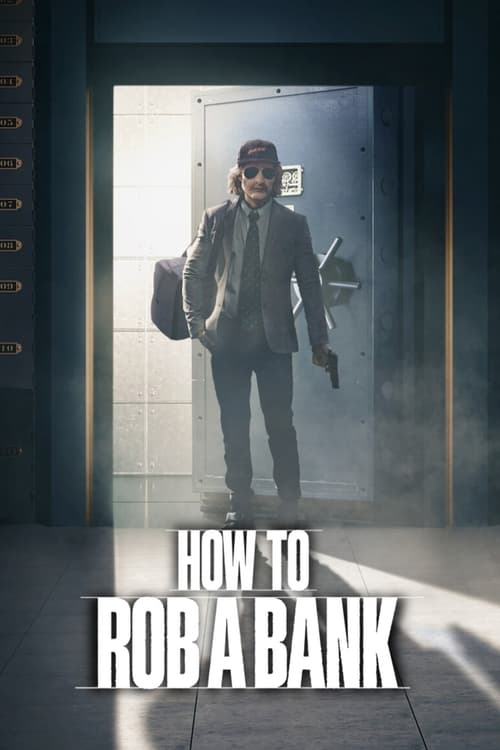
What role does Scott Scurlock play in the 2024 documentary How to Rob a Bank, and how is his personality shown through his robberies?
How do Steve Meyers and Mark Biggins fit into Scott Scurlock’s robbery crew in How to Rob a Bank?
What do the FBI agents Shawn Johnson and Ellen Glasser contribute to the story in How to Rob a Bank?
How does How to Rob a Bank show the impact of the robberies on bank employees like Susan Dodd and Scott Levine?
What is the significance of Scott Scurlock’s father, sister, and childhood friends in How to Rob a Bank?
Should I watch it?
Ask Your Own Question

What is the plot?
Jason "Jinx" Taylor stands in front of an ATM late one afternoon, fuming as the screen flashes the bank's fee notice. He tries to withdraw his last twenty dollars and watches the balance shrink because of a transaction charge he never expected. Irritated and short on patience, he pushes through the revolving doors of the branch to speak with a teller. The bank floor is unusually noisy; an armored crew moves with practiced calm. Before he can get attention, the vault door starts to close behind him and the electric locks thud shut. Jinx slams the glass and tries the handle, but the bolt slides home. When he backs away in search of an employee to help, the glass vault door lifts and drops again -- this time he is across the threshold and the mechanism seals both him and a bound woman inside.
The woman is striking, hair slightly dishevelled, her wrists secured with handcuffs and her mouth gagged with duct tape. She looks more composed than a frightened hostage should; her eyes flick from Jinx to the vault panel as if calculating. Outside the vault, masked figures with rifles fan out through the bank. One of them barked commands while the others move toward the teller cages, forcing staff and customers to the floor. Jinx, thinking he is witnessing a robbery, peels the tape from the woman's mouth reflexively and she speaks through the thin barrier of the duct. Her name is Jessica. She tells him to stay quiet and keep his hands where he can be seen. Her voice is low and measured; she straps a temper around her, and Jinx notices, with growing unease, that her handcuffs are tight but not desperately so. When he asks how she came to be cuffed, she answers with a clipped sentence: she is supposed to be the captive.
Outside, a man who identifies himself as Simon talks into a headset, giving instructions to someone deeper in the operation. He needs the vault open because the crew cannot access the safe deposit boxes without specific authorization. Inside the vault, Jinx realizes he has a phone in his pocket. He calls Simon out of desperation to ask what is going on and how to get out. Simon sounds irritated but not panicked. He tells Jinx to cooperate: follow directions, keep Jessica under control until the door opens. When Jinx presses for answers, Simon tells him to wait; instructions will come. Simon expects Jinx to be a minor problem. He does not expect Jinx to find that Jessica is not only conscious and communicating but in command of crucial information.
Jessica does not act like a frightened victim. She slips off the remaining duct tape with one hand when Simon looks away and murmurs to Jinx that the duct tape and cuffs are part of a show. Her wrists are shackled not because she is being held by the crew, she explains, but because she is hiding something. She is both the face of the calamity and the operator of a secret: she alone knows a bespoke computer code that unlocks a digital ledger the heist team covets. Simon assumes Jessica will open the digital vault, but the reality is inverted--Jessica used to be the group's point person for the digital side, and her role tonight is to simulate a hostage while making certain only she and a trusted accomplice can access the skimmed funds. She avoids pronouncing the full backstory but lets Jinx see that the crew's surface violence and the bank's mechanical doors are part of a larger, more clinical plan.
The crew outside splits into two groups. One team forces the tellers to surrender access cards; the other sweeps the corridors toward the safe deposit rooms. A man with a thicker voice and an air of authority contacts Simon by headset. He is impatient and occasionally cruel; he pushes for speed and threatens consequences for slowness. Simon tells him they cannot proceed until Jinx is made to cooperate; he frames the problem for the rest of the group as a small delay caused by a civilian who blundered into the vault. The man on the headset huffs that they are losing time and dial tone grows tense as he barks to accelerate. Radios hiss orders. The bank alarms have been muted, but the building still has layers of surveillance and a live-feed outside the windows shows police vehicles already beginning to roll toward the branch.
Officer DeGepse arrives early in the siege. He directs his squad to form a perimeter and orders the bank manager to keep the doors closed. DeGepse's voice, authoritative through a loudspeaker, demands that the robbers surrender and allow hostages to be released. He assumes a conventional robbery: armed crew, frightened civilians, one or two ringleaders. He and his team set up behind the bank's planters and a squad car's engine idles as they wait for a hostage negotiation team. DeGepse speaks with calm firmness but he also registers annoyance at the ambiguity -- something about the situation does not fit the typical pattern. He radios for reinforcements and more experienced negotiators.
Inside the vault, Jinx and Jessica trade terse sentences into the reverberant metal room. Jinx wants to know who she is; she answers with fragments. She and a man named Nick planned a long con that siphoned small amounts from corporate accounts over months. Those micro-transactions accumulated into a fortune that is now locked behind layers of encryption and an institutional ledger that requires her personalized code to unlock. Simon's crew is the blunt instrument used to create the dramatic cover of a robbery while Jessica, seated in plain sight and appearing helpless, keeps the cryptographic key to the stolen funds only she understands. Simon believes he is the leader and that Jessica will obey his directions; Nick, far more careful and unseen, orchestrates from the shadows and keeps leverage over his associates with contingency plans.
Simon grows increasingly irate as the delay persists. He calls up one of his captains who walks along the bank's rows and begins rifling through deposit boxes with a portable drill; he cannot access the digital cache. Simon's tone on the headset becomes a knife-edge mixture of profanity and command. He orders muscle to place pressure on the employees. At one point, he slams his palm against the bank's internal window and barks for the vault to be opened. Through the thin glass, Jinx watches Simon's jaw tight as he flips through instruction sheets and tapes. Simon still believes the show functions under his command. But via a quiet phone call from a burner to a number registered to Jessica, Nick interjects. Nick's voice is cold and controlled; he reminds Simon that Jessica knows the one code no one else can reproduce and that Simon had agreed to obey the plan. Simon huffs back, accusing Jessica of stalling; Nick answers that the plan requires patience and precision and that any rash violence will destroy their long-term gains.
DeGepse's negotiators attempt to speak to the person he believes is the ringleader. A man outside identifies himself as "Simon" and accepts a speaker-phone setup. He makes the usual threats and tries to establish that they have hostages inside. He suggests a plea-bargain: if the negotiator can get the vault opened, they will let everyone out unharmed. DeGepse insists on the immediate release of the innocents; Simon counters that the vault is locked and that they need time to work. The conversation grows thinly polite and then sharp. DeGepse insists that no one will get away with unaccounted funds; he promises a full-force response if anyone fires a weapon. Simon, in shades of arrogance, tells DeGepse that he is in no mood for lectures.
Between these outward maneuvers, Jinx listens as Jessica explains, with surgical clarity, how the skimmed funds are split and why she is the key. She says the micro-transactions were siphoned from numerous corporate accounts into a ledger that appears legitimate to automated audits but requires her handwritten code to redirect the balance into a new account. She will not trust anyone else with the code. Jinx learns he and Jessica are listed as co-signers on an emergency withdrawal PIN -- a measure Nick implemented to ensure control. Nick's logic is that if something happens to him, the money stays inaccessible without mutual confirmation. Jessica hints that she and Nick planned this as a way to redistribute wealth from corporations that treated people like numbers. She does not expand; she is economical with motivation but precise about the mechanics.
When Simon calls again, more forceful this time, Jinx presses buttons on his phone and uses Simon's impatience to extract answers. He asks Simon what he will do if the vault does not open. Simon answers by instructing a crew member to kick through a back wall toward the safe deposit corridor. Plastic shields rattle as men hustle tools and start to bore. The bank's old infrastructure yields under pressure: drywall dust falls and the smell of drilled metal fills the air. Steve, one of Simon's enforcers, is the most volatile; he waves his gun and tells the employees they will be next if the money does not appear. Inside the vault, Jessica tightens her jaw and tells Jinx that they must not let the men outside know they're in consensus. Simon, the visible leader, must never see Jessica as anything but the compliant hostage.
The tension escalates when a new voice enters the line: it is Nick. He calls into Simon's earpiece from an unknown location. Simon answers in clipped phrases and begins to sweat. Nick orders patience. He tells Simon to maintain the façade and that once the federal transfers clear, they will meet at a prearranged drop. Simon grumbles but complies. Nick then connects the call into the vault so Jinx can hear him; Nick speaks directly to Jinx and Jessica. He is calm and persuasive; he tells them that the code will be worth more than the chaos they are watching unfold if they stay within the parameters. Jinx finds Nick's reserve unsettling. He asks Nick whether he intends to cut Simon and the visible crew loose in the aftermath; Nick does not lie -- he suggests outcomes will be negotiated and that loyalty is conditional on profit.
Outside, DeGepse demands that Simon produce the hostages. Simon plays for time and releases nothing. DeGepse orders a tactical team to be ready to breach. A SWAT van idles behind a hedgerow. Negotiators coax the bank staff, hoping to coax actionable intelligence. When one of the employees whispers that a man inside the vault is acting oddly composed, DeGepse orders a camera sweep. The bank's internal cameras provide an angle into the vault; DeGepse watches footage of Jinx and Jessica sitting shoulder to shoulder with the vault's cold steel dragon-skin around them. He recognizes that the woman is not merely a hysterical hostage; she holds herself like someone who has considered the consequences. DeGepse radios to hold the breach for fifteen minutes while his negotiators try a softer approach.
Simon interprets DeGepse's restraint as weakness. He slams his fist into a teller desk and the crew readies a plan to threaten hostages for compliance. Steve positions himself at the teller line with his rifle and a hostage in view. He instructs the hostages to remain visible to DeGepse through the glass while he sets up for an extraction of boxes via a gurney. DeGepse warns that any harm to innocents will trigger an immediate execution of tactical options. The standoff becomes a war of nerves: who will crack first, who will act and who will flinch?
Inside the vault, Jinx listens to these exchanges and slowly starts to perceive his leverage. Jessica reveals to him that the micro-skimmed funds are accessible not by brute force but by a PIN string that can redirect balances. She says Nick will accept the PIN in exchange for their freedom. Jinx, who until now has only been a floundering customer frustrated by bank service fees, realizes he can trade something critical -- the emergency PIN -- for safe passage. He is hesitant. He has never been part of a plan that included firearms and hostage theatrics. He also does not trust Simon, who has shown open contempt for Jessica's authority and a willingness to threaten violence. Jinx begins to move from being a terrified bystander to an active negotiator.
He calls Nick himself. The call connects and Nick's voice, calm and inscrutable, answers. Jinx offers the PIN to secure his and Jessica's release. Nick, who tightly controls the operation, senses an opportunity. He asks for proof that the PIN works; Jessica obliges by demonstrating a smaller confirmation code she controls with her phone and a portable laptop she smuggled under the duct tape show. She types and shows a line of numbers that confirm a micro-transfer occurred as promised. Nick verifies this indirectly and then demands a condition: he will accept the PIN only if Jinx and Jessica physically exit the vault and come to a predetermined location where Nick's people will extract them and hand over a portion of the skimmed funds. Simon overhears part of the conversation and flies into a rage when told of a rendezvous that excludes him. He accuses Nick of betrayal and threatens to detonate contingency plans.
DeGepse, still watching the feed, detects that the dynamics inside the vault are shifting. He hears Nick's voice, woven into the robbers' communications. He demands to talk to the person calling themselves the mastermind. Nick agrees to a brief conversation but only through the negotiating line. DeGepse uses the moment to appeal to Nick's reason, insisting he release everyone and surrender. Nick declines, saying the money is too important. He tells DeGepse that violence is avoidable if law enforcement plays by Nick's timetable; he offers to allow Jessica and Jinx to leave if DeGepse does nothing. DeGepse refuses to be bought by threats. He orders the tactical team into position.
As Simon's men prepare to force the safe deposit corridor, a heated argument breaks out between Simon and one of his lieutenants, Marco. Marco is furious at Simon's insubordination to Nick and argues that they should simply take the boxes and leave. Simon, who fears losing control to Nick and to the unseen higher-ups, lashes out and tries to assert dominance. Marco brandishes his weapon and advances toward Simon. Simon reacts with a swing of his own; the two men scuffle and fall into a pile. The skirmish distracts the crew. Unobserved by Simon, Jinx and Jessica work together to open a narrow service hatch at the base of the vault with a steel rod they find wedged near the door machinery. They work quietly, their fingers numb from the metal cold, and eek open the small hatch enough to slip through ventilation ducts.
They use their small opening to wriggle into a maintenance tunnel. The tunnel leads under the bank to a service corridor that skirts the bank's external wall. As Jinx slides through, his shoulder bruises against the edge but he keeps moving. Jessica coordinates as if she has run this escape many times in her mind before. They time their exit to coincide with the moment the crew outside scrambles around the argument between Simon and Marco. Nick's people, watching from a distance and tracking the vault's hinge, coordinate to sweep in and pick them up at a prearranged alley behind a bakery two blocks away.
DeGepse's tactical team, having heard the scuffle on the radios and misinterpreting it as a fight between robbers, rushes the bank entrance. They slam into the lobby just as Simon regains partial control. Simon shouts that hostages are escaping; he points to an empty vault and Realizes that Jessica is missing. He calls Nick into the line, furious and wild. Nick dismisses Simon's fury with a controlled "we proceed," and signals to his extraction crew to move. The extraction van closes in on the alley. Jinx and Jessica emerge gasping but unarmed into the backstreet and duck behind the dumpster as an unmarked black SUV pulls up. Two figures jump out and usher them into the vehicle, slamming doors and peeling away from the curb.
Inside the car, Nick sits with a briefcase of documents and a laptop. He opens a secure channel and asks Jessica for an authentic confirmation. Jessica types the emergency PIN into Nick's private network and he initiates the transfer protocol. The ledger that had contained the skimmed corporate micro-transactions begins to redirect into a set of offshore accounts that Nick controls. He instructs his team to process a fraction of the money into a cash deliverable at a different drop. Jinx watches as bank balances change in cold numerics on the laptop screen. He feels a rush but also the weight of consequence. Nick hands them a portion of the proceeds in untraceable cash folded inside a plain envelope. Jessica takes her share with clinical calm and hands Jinx notes that total enough to heal immediate problems -- living expenses, transportation, the loose ends that come from a life balanced on low funds.
Inside the bank, DeGepse orders a systematic sweep. He finds the V-shaped gap where the vault hatch once sealed and the scratched metal track. He calls for Simon's arrest. Simon attempts to flee through a side exit but Marco, furious, slaps him to the concrete. That moment draws DeGepse's tactical team into a coordinated move. Officers place Simon in handcuffs and haul him out. DeGepse watches Simon being led away and shouts that he will pursue every member of the crew. Simon, cuffed and hoarse with rage, tells DeGepse that Nick will not be caught. Behind him, other crew members scatter; some are arrested later that night, some disappear into the city's veins. The bank staff and patrons are collected for statements as detectives readied their interviews, piecing together the contradictions between the staged robbery and the more sophisticated cyber-skim operation.
Nick's extraction does not go entirely unnoticed. An officer at the perimeter notes the black SUV's license plate being swapped on a parking lot camera a half-mile away. Detectives analyze the vehicle's path and identify the bakery alley as a probable rendezvous. They compile witness statements about two hurried figures moving into the SUV. Yet when DeGepse orders a search of the area, he comes up empty. CCTV shows the vehicle moving in an untraceable direction as if it had been scrubbed. Nick's network is careful.
Jinx, Jessica, and Nick separate the next morning in a sequence of deliberate steps. Jessica boards a train out of the city with a small duffel and a new name. Nick retreats to his safehouse and begins laundering the remainder of the funds through shell companies he has prepared. Jinx spends a day at a motel counting the cash and then goes to a pawn shop to buy plane tickets. Before they go their ways, Jessica calls Jinx and tells him to live cautiously. She thanks him for not panicking and says they played their parts well. Nick emails Jinx a cryptic receipt and a promise to honor the transfer they agreed upon. Jinx folds the cash into his wallet and counts it again. He is wary, relieved, and uncertain.
DeGepse and his team continue the investigation. They interrogate Simon and several captured crew members who, when pressed, reveal only fragments about the operation's logistics. Simon, now in custody, fulminates about a betrayal by Nick and claims ignorance of the full reach of the digital scam. Investigators pore through footage and logs and eventually track small threads of financial movement to offshore accounts. They file warrants and send freeze requests. Their forensic accountants can identify the micro-transaction pattern but lack the final key to fully reverse the transfers. Nick and Jessica remain ghosts in the system, their real identities shielded by proxies and a careful trail of misdirection.
In the final moments, Jinx sits on a bench near an airport departure gate, a one-way ticket in his hand and an envelope of cash in his coat. He watches planes taxi and thinks about the day he went in to dispute a fee at an ATM and left with a fraction of ill-gotten money and an involvement he never solicited. He slides the passport he has bought under a different name into his jacket and stands to board. As he walks through the gate, a news report flashes on the monitors about the bank siege, depicting footage of the arrested ringleader Simon being led into a paddywagon. Detectives speculate on the missing mastermind, the untraceable transfers, and question whether the money will ever be recovered. The camera cuts to a still photograph of Jessica in a crowd, her face obscured by a hood, and then to the black SUV driving away.
The film closes with Jinx stepping onto the plane and Jessica watching from a train window as the city recedes. Nick, from a distance, watches as bank balances change on a secure screen and pockets a final receipt. Authorities continue to chase leads. The people who orchestrated the operation remain partially unpunished, partially dispersed; Simon sits in a cell, several crew members face trial, and DeGepse files reports that will spawn long investigations. Jinx disappears into the anonymity he once craved, carrying the consequences of a chance encounter that began with a twenty-dollar withdrawal and culminated in a heist that leaves both law enforcement and the robbers scrambling to reassemble what remains.
More Movies Like This
Browse All Movies →







What is the ending?
Short ending: Scott Scurlock's final robbery turns into a deadly confrontation with police, and he escapes the immediate scene, but the next day he is found dead in a camper on Thanksgiving, having taken his own life rather than surrender. The documentary closes on the collapse of his life's run and the end of the bank-robbery crew's story.
Expanded ending, scene by scene:
The story moves into its final phase as the pressure around Scott Scurlock tightens. Law enforcement has closed in after years of failed attempts to catch him, and the film presents the last heist as a desperate, high-stakes gamble rather than another clean victory. Scott still carries the same carefully built image he has used throughout the robberies -- the disguises, the confidence, the smooth movement through danger -- but now every step feels heavier, because the net is finally closing around him.
In the final robbery, the crew goes in knowing this could be the last time. The tension is not casual or playful anymore. It is sharp, urgent, and physical. The police respond, and the heist breaks into a gunfight. The scene becomes chaotic and immediate, with the sense that Scott's long run of outsmarting everyone has reached the point where force can no longer be avoided. He gets away from that confrontation in the moment, but the escape does not restore his freedom. It only delays the ending.
The next day, on Thanksgiving, authorities track him down. The film makes clear that the chase has reached its final destination: Scott is found in a camper. Faced with capture, he chooses to kill himself rather than surrender. That act ends his life and ends the central conflict of the documentary.
For the main people involved at the end: Scott Scurlock is dead, by his own hand, after the final confrontation. Steve Meyers, his accomplice and friend, remains alive and is left to face the aftermath of the robbery spree and Scott's death. The other crew members are no longer part of the final action itself, but the film leaves the sense that the whole operation has collapsed with Scott's death. Law enforcement succeeds in the end not by arresting Scott alive, but by forcing the story into a fatal conclusion.
The ending also makes one final visual point: the treehouse hideout that once symbolized Scott's freedom and cleverness does not endure. Within a short time after his death, it falls apart. That image closes the story as a physical sign that the world Scott built around himself could not last.
Is there a post-credit scene?
There is no evidence of a post-credit scene in the 2024 Netflix documentary How to Rob a Bank. The available synopsis and runtime listings describe it as a standalone true-crime documentary about 1990s Seattle bank robber Scott Scurlock, and none of the provided sources mention any end-credits button or extra scene.
If you want, I can also summarize the ending itself.
What role does Scott Scurlock play in the 2024 documentary How to Rob a Bank, and how is his personality shown through his robberies?
Scott Scurlock is the central figure of the documentary, presented as the charismatic bank robber whose daring style, disguises, and confidence made him legendary in 1990s Seattle. The film frames him as both a criminal mastermind and a magnetic presence who shaped the tone of every robbery he planned.
How do Steve Meyers and Mark Biggins fit into Scott Scurlock’s robbery crew in How to Rob a Bank?
Steve Meyers and Mark Biggins are shown as Scott's close friends and accomplices, part of the inner circle that helped carry out the bank robberies. Their involvement highlights how the operation depended not just on Scott's showmanship, but on trusted partners willing to support him through escalating risks.
What do the FBI agents Shawn Johnson and Ellen Glasser contribute to the story in How to Rob a Bank?
Shawn Johnson and Ellen Glasser appear as the federal agents tracking Scott's crimes, giving the documentary its law-enforcement perspective. Their presence shows the growing pressure on Scott as the investigation tightens and the case becomes more serious for everyone involved.
How does How to Rob a Bank show the impact of the robberies on bank employees like Susan Dodd and Scott Levine?
The documentary includes testimony from bank managers such as Susan Dodd and Scott Levine, emphasizing the fear and disruption caused by the robberies. Their accounts ground the story in the human cost of Scott's crimes rather than treating the heists as purely flashy or glamorous.
What is the significance of Scott Scurlock’s father, sister, and childhood friends in How to Rob a Bank?
Scott's father, sister Suzanne Scurlock, and childhood friends are included to build a fuller portrait of him beyond the robberies. Their presence helps explain the personal world around Scott and how those closest to him understood his charm, recklessness, and eventual downfall.
Is this family friendly?
No--How to Rob a Bank is not especially family-friendly. It is rated TV-MA on Netflix, and parent guides describe it as a true-crime documentary with mature content that is better suited to older teens and adults.
Potentially objectionable or upsetting content includes: - Violence and death: a meth dealer is murdered, two robbers are shot, and another person dies by suicide when cornered by police. - Drug content: meth and mushrooms are discussed, with references to drug use and dealing. - Nudity: there is full male nudity in home movies and other nude imagery. - Language: profanity includes words such as "f--k," "s--t," "ass," and "bastard." - Intense/criminal themes: the film centers on bank robberies and law-enforcement pursuit, which may be unsettling for younger or sensitive viewers.
If you want, I can also give you a kid-suitability rating by age range in one line.








