























Popular
How does the opening Young Lions match between Daiki Nagai and Masatora Yasuda unfold, and what makes their debut significant?
What role do the House of Torture and Just Five Guys play in the early tag matches on Day 1?
How is the Bishamon vs. House of Torture tag match structured around Hirooki Goto and YOSHI-HASHI’s rivalry with EVIL and Dick Togo?
What happens in the six-man and multi-man matches involving United Empire, TMDK, and the returning Ryusuke Taguchi?
How does the main event title match between SHO and El Desperado develop, and what does it say about their characters?
Should I watch it?
Ask Your Own Question

What is the plot?
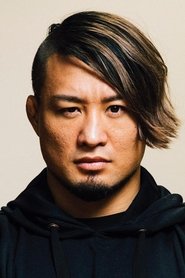
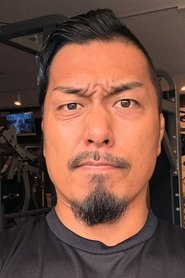
NJPW New Japan Soul 2024: Day 1 begins on June 16, 2024, inside the Hokkaido Prefectural Sports Center in Sapporo, where the night is framed less like a conventional story and more like a pressure cooker of faction warfare, championship ambition, and escalating grudges. The first image is the most understated and, in its own way, the most symbolic: two young men, Masatora Yasuda and Daiki Nagai, step into the ring for the opening kick-off bout, a 10-minute time-limit draw that does not produce a winner but does announce the arrival of NJPW's next generation. The crowd gets a glimpse of raw, unpolished determination rather than a finished spectacle, and the match ends with both trainees still standing, neither able to put the other away. It is a quiet beginning, but it plants the theme of the night immediately: nothing is settled easily, and every advantage has to be fought for.
From there the event shifts into larger, louder, faction-driven combat. United Empire storms into the arena as a unit, bringing Callum Newman, Francesco Akira, Great-O-Khan, Jeff Cobb, and TJP against Katsuya Murashima, Satoshi Kojima, Shoma Kato, Tomoaki Honma, and Tomohiro Ishii. The match feels like a collision of styles and generations, with the veterans trying to absorb the chaos and the younger, more aggressive side of United Empire pressing the action. The finish lands with sharp finality: Francesco Akira scores the pin on Shoma Kato after using the Fireball, giving United Empire an emphatic early victory and making the rest of the locker room feel the weight of their momentum. The pin is not just a win; it is a statement, a flash of heel arrogance and dominance that sets the tone for the faction-heavy night.
The tension deepens when Just 5 Guys and House of Torture collide in a match that carries the familiar stink of deception and spite. DOUKI and Taichi meet Ren Narita and Yoshinobu Kanemaru, and the match unfolds with the grim familiarity of a rivalry that never seems to stay buried. House of Torture tries to drag the contest into its usual murky territory, but Just 5 Guys keep their shape and force the issue. The decisive moment comes when DOUKI traps Yoshinobu Kanemaru in the Jorge Rivera Special, and Kanemaru submits. The tap-out gives Just 5 Guys the victory and leaves House of Torture once again looking like the faction that can create chaos but cannot always control the endgame. No one is physically destroyed, but the humiliation is real; Kanemaru is the one who gives in, and DOUKI's hold becomes the night's first clean submission statement.
House of Torture remains central when the next confrontation pits Hirooki Goto and YOSHI-HASHI of Bishamon against Dick Togo and EVIL. The atmosphere tightens immediately because House of Torture's presence changes every ring segment into a test of patience and endurance. Goto and YOSHI-HASHI fight through the mind games, keep the action grounded, and eventually force the match to resolve the honest way. Goto lands the Shoto on Dick Togo and scores the pinfall, giving Bishamon the win and delivering a small but important rebuke to EVIL's group. In a show built on faction superiority and championship positioning, this is a practical victory that helps keep CHAOS steady against the recurring sabotage of House of Torture.
The card continues to move in layered faction combinations, and Los Ingobernables de Japon make their own mark when Tetsuya Naito and Titan take on TAKA Michinoku and Yuya Uemura of Just 5 Guys. The match carries the signature LIJ rhythm: controlled disorder, moments of teasing calm, and sudden bursts of offense. TAKA Michinoku and Yuya Uemura try to keep the bout organized, but Titan proves too explosive at the decisive moment. He drives in with a Diving Foot Stomp on TAKA Michinoku and gets the pin, preserving LIJ's momentum and reminding the audience that even in a night packed with factions, Naito's side still knows how to steal the center of the room. Tetsuya Naito's presence gives the match a magnetic quality, but it is Titan who closes the scene with the winning impact.
The event then shifts into title territory, where the stakes become visibly heavier. BULLET CLUB War Dogs--Clark Connors and Drilla Moloney--meet TMDK's Kosei Fujita and Robbie Eagles in a championship bout that adds another layer of faction rivalry to the evening. The contest is rough, confrontational, and designed to feel like a fight for territory as much as a title defense or challenge. War Dogs come out of it with the win, and the listing confirms them as the successful side in the title match. The details of every counter and hold are less important than the larger picture: the War Dogs prevail, and the balance of the show begins to tilt even more toward violence and upheaval rather than stability.
Then comes one of the most important turning points of the entire night: HENARE versus Shingo Takagi for the NEVER Openweight Championship. The match has the tension of two wrestlers who know exactly what this title means and who know each other well enough to make every exchange feel personal. Shingo Takagi enters as champion, but the fight is built to make HENARE look increasingly dangerous as the minutes pass. Their battle reaches a brutal peak when HENARE lands a trapping headbutt to the collarbone, a harsh, ugly strike that changes the match's entire emotional temperature. Shingo can no longer recover in time, and HENARE secures the pinfall victory to win the NEVER Openweight Championship. This is a genuine title change and one of the clearest shocks of the evening because it does not merely end a match--it reorders the singles hierarchy of the show. HENARE's win feels decisive and physical, the kind of triumph that leaves a mark long after the bell.
If the NEVER title change is the violent center of the card, the next major chapter is its political center: David Finlay versus SANADA for the IWGP Global Heavyweight Championship. Finlay comes to the match with Gedo at his side, while SANADA is accompanied by DOUKI, Taichi, TAKA Michinoku, and Yuya Uemura. That crowd of allies makes the ring feel crowded before the bout even gets going, and the match develops like a struggle over who owns the room. SANADA, returning from time away in concussion protocol, brings an air of uncertainty and defiance, but Finlay's approach is colder and more vindictive. The contest runs 25:31, a long, grinding confrontation that makes every near fall feel costly. Finlay eventually defeats SANADA, and the official listing confirms that Finlay is the winner in the featured title match. The exact way the title notation is presented varies by source, but the result is unambiguous in narrative terms: Finlay beats SANADA in the night's marquee singles championship bout. It is the kind of win that closes one chapter of a feud while planting the idea that Finlay's control over the Global title scene is growing more dangerous.
The show then moves into its final and most emotionally charged main event-style climax: El Desperado versus SHO inside a steel cage for the IWGP Junior Heavyweight Championship. The cage changes everything at once. It strips away the usual interference, the usual escapes, the usual House of Torture tricks, and turns the match into a sealed conflict where no one can pretend the outcome is anything but absolute. SHO enters as champion, but the steel cage gives Desperado a chance to settle the score without the usual poison surrounding their rivalry. The match goes 28:57, the longest and most punishing chapter of the night, and it becomes a slow-burning battle of endurance, grit, and desperation. Desperado focuses on SHO's arm early, a detail that helps the match feel tactical even as it becomes increasingly violent. The steel walls loom around them like a verdict, and every impact is amplified by the confined space.
As the struggle reaches its peak, Desperado refuses to let SHO escape the story that has been building between them. The champion cannot cheat his way out, cannot rely on interference, and cannot turn the cage into an advantage. Desperado powers through the punishment and finally secures the decisive fall, defeating SHO to win the IWGP Junior Heavyweight Championship. The final bell lands like the release of days of tension. El Desperado stands as champion, SHO is beaten inside the cage, and the show ends with the hard image of one man ascending while another is trapped by the consequences of his own rivalry. It is a definitive ending, not because every feud is resolved, but because the night's most important final answer is unmistakable: the junior heavyweight throne changes hands, the cage is conquered, and New Japan Soul 2024: Day 1 closes on the sight of Desperado leaving the steel enclosure as the new champion.
There are no deaths in this event, no hidden mysteries, and no scripted revelations in the cinematic sense. Instead, the story is told through victories, title changes, and the emotional consequences of each match, with June 16, 2024 in Sapporo serving as the stage where new momentum is created and old power structures begin to crack.







What is the ending?
The ending of NJPW New Japan Soul 2024: Day 1 is a wave of decisive finishes: Boltin Oleg, Toru Yano, and Hiroshi Tanahashi take the NEVER Openweight Six-Man Tag Team Titles from BUSHI, Hiromu Takahashi, and Yota Tsuji, HENARE beats Shingo Takagi to win the NEVER Openweight Title, David Finlay defeats SANADA to retain the IWGP Global Heavyweight Title, and El Desperado defeats SHO in the steel cage to win the IWGP Junior Heavyweight Title.
The final stretch begins after the earlier title matches have already set the night's tension in place. Boltin Oleg, Toru Yano, and Hiroshi Tanahashi finish their challenge against the champion trio of BUSHI, Hiromu Takahashi, and Yota Tsuji, and the title changes hands when Oleg scores the deciding pin on BUSHI with Kamikaze.
Then the focus shifts to the NEVER Openweight Championship, where HENARE and Shingo Takagi push the match into a hard-fought ending. HENARE ultimately gets the winning fall, ending Shingo's reign and leaving HENARE standing with the title after a battle that had been built around their recent unresolved clash.
Next comes the IWGP Global Heavyweight Title match. David Finlay, with Gedo at his side, fights SANADA, who is backed by DOUKI, Taichi, TAKA Michinoku, and Yuya Uemura. The match closes with Finlay defeating SANADA, and Finlay leaves the night still champion while SANADA comes up short after the numbers and pressure around him fail to change the outcome.
The last major scene is the steel cage match for the IWGP Junior Heavyweight Championship. SHO, the champion, is trapped inside with El Desperado, and the match ends with Desperado winning by pinfall, taking the championship from SHO inside the cage. SHO's fate is simple and stark: he loses the title in the cage, while Desperado finishes the night as the new champion.
By the end of the show, the main participants leave in clearly defined positions: Boltin Oleg, Toru Yano, and Hiroshi Tanahashi are champions; HENARE is champion; David Finlay remains champion; El Desperado becomes champion; and the defeated sides--BUSHI, Hiromu Takahashi, Yota Tsuji, Shingo Takagi, SANADA, and SHO--end the night having lost their matches and, in the case of Shingo and SHO, their titles.
Is there a post-credit scene?
There is no evidence in the available results that NJPW New Japan Soul 2024 Day 1 has a post-credit scene. The event listings and match reports describe the opening card and its results, but they do not mention any credits-stinger, after-credits segment, or bonus scene.
If you mean the show's ending instead of a literal post-credit scene, the available coverage indicates the broadcast concluded with the event's final match and post-match developments, not a separate filmed epilogue.
How does the opening Young Lions match between Daiki Nagai and Masatora Yasuda unfold, and what makes their debut significant?
The show opens with a 10-minute time-limit draw between Daiki Nagai and Masatora Yasuda, two new Young Lions making their wrestling debuts. The match is treated as a pure, disciplined initiation: both men fight to prove stamina, composure, and basic ring instincts rather than chase a flashy finish. Nagai's military background and Yasuda's Mexico-born, dojo-trained background are part of the context around the bout, but the key story is that neither man can separate himself before time expires, leaving both with the sober, humbling symbolism of an unfinished first step into New Japan's hierarchy.
What role do the House of Torture and Just Five Guys play in the early tag matches on Day 1?
A major thread of the card is the ongoing hostility between House of Torture and Just Five Guys, especially in the tag match pitting Ren Narita and Yoshinobu Kanemaru against DOUKI and Taichi. The bout centers on cheating tactics, tension, and the sense that both sides are trying to establish momentum in a broader faction war. Rather than a clean athletic showcase, the match is driven by positional conflict: House of Torture leans into underhanded control, while Just Five Guys try to answer with grit and ring discipline.
How is the Bishamon vs. House of Torture tag match structured around Hirooki Goto and YOSHI-HASHI’s rivalry with EVIL and Dick Togo?
The Bishamon tag match with Hirooki Goto and YOSHI-HASHI against EVIL and Dick Togo is built around contrast: Bishamon's compact teamwork and urgency versus House of Torture's disruption and interference. The story is not just who wins the exchange, but whether Goto and YOSHI-HASHI can keep the bout from collapsing into sabotage. That conflict gives the match its emotional shape, with Bishamon trying to wrestle honestly and House of Torture trying to turn the ring into a trap.
What happens in the six-man and multi-man matches involving United Empire, TMDK, and the returning Ryusuke Taguchi?
One of the bigger featured segments of Day 1 is the multi-man scene involving United Empire, where Great-O-Khan, TJP, Francesco Akira, and related partners work through fast-paced faction combinations against New Japan's veteran-heavy teams. The card also includes a notable return for Ryusuke Taguchi, which adds an emotional lift and a veteran presence to the lineup. These matches are less about a single decisive character arc and more about establishing energy, alliances, and the shifting balance of power across the roster through layered tag exchanges and quick momentum swings.
How does the main event title match between SHO and El Desperado develop, and what does it say about their characters?
The main event is a steel cage match for the IWGP Junior Heavyweight Title, where SHO defends against El Desperado in a violently contained setting that strips away escape routes and forces the rivalry into raw physical confrontation. SHO is presented as manipulative and desperate to keep control, while Desperado is framed as relentless and emotionally locked in, determined to break through both the cage and SHO's tactics. The match's structure emphasizes pressure, pain, and escalation, making it the clearest character clash of the show: one man clings to title power, and the other tries to tear that power away through endurance and refusal to yield.
Is this family friendly?
NJPW New Japan Soul 2024: Day 1 is generally not family-friendly for very young children, though it is a pro-wrestling event rather than graphic horror or sexual content. It can still be upsetting for sensitive viewers because of sustained physical combat, loud crowd reactions, and tense heel-vs-face confrontation.
Potentially objectionable or upsetting aspects: - Repeated wrestling strikes, throws, slams, and impact-heavy spots - Dramatic near-injuries and selling that make the action look painful - Aggressive behavior from villain-style wrestlers, including cheating and intimidation - Intense shouting, taunting, and hostile in-ring confrontations - Fire-based or visually threatening attack spots in at least one match segment - Brief scenes of medical concern or real-world injury mentions, which can feel unsettling
If a child already enjoys wrestling and handles staged combat well, this should be mostly manageable. For younger or highly sensitive viewers, supervision is recommended.