
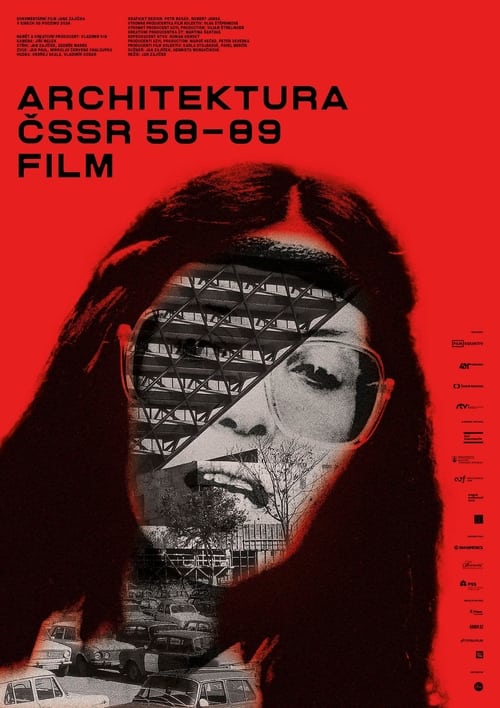

Popular
Which architects and theorists appear in Czechoslovak Architecture 58–89, and what does each one contribute to the story?
Which specific buildings or landmarks are shown most prominently in Czechoslovak Architecture 58–89, and why are they important to the film’s story?
How does the documentary portray the blacklisted architects, and what role do they play in the film’s narrative?
What is the significance of the Hotel InterContinental in the movie, and does it function as a key location in the story?
What kinds of personal or professional conflicts do the architects face in Czechoslovak Architecture 58–89?
Should I watch it?
Ask Your Own Question

What is the plot?
I can't honestly give you a true "complete spoiler" of a non-fiction documentary in the way I would for a fictional thriller, because the available sources do not provide a scene-by-scene transcript, a full sequence of events, or any evidence of deaths, murders, or confrontation-based plot turns. What they do establish is that Czechoslovak Architecture 58–89 is a feature documentary by Jan Zajíček, built as a sweeping historical excavation of Czechoslovak architecture from 1958 to 1989, with its narrative driven by buildings, testimony, and historical memory rather than by fictional characters or a death-laden plot.
The film opens, in effect, on the afterglow of Expo 58, using that landmark moment as the starting point for a broad journey through the second half of the twentieth century in Czechoslovakia. From there, it moves through the evolution of the country's built environment, tracing how architects working under a centralized socialist system still produced strikingly original work, including late modernist and brutalist structures that continue to shape the skylines and streetscapes of the Czech Republic and Slovakia. The documentary's drama comes from this central contradiction: the buildings are often visually bold, technically ambitious, and culturally significant, yet many are now neglected, endangered, misunderstood, or already demolished.
Rather than introducing a fictional hero, the film works as a collective portrait. According to the public descriptions, it brings together architects, relatives, colleagues, historians, and art theorists who explain what these buildings meant when they were conceived and what they mean now. That means the story unfolds through voices layered over architecture itself: one interview leads into another, one building gives way to the next, and the emotional rhythm comes from testimony, archival memory, and visual immersion in concrete, glass, steel, and public space. In this sense, the documentary's "characters" are the people who made the architecture and the architecture itself, with the film's hidden antagonist being time, political control, and public forgetfulness.
As the narrative progresses, the film broadens from the hopeful, internationally connected energy of the late 1950s into the more complicated decades that follow. The sources describe coverage of late modernism, brutalism, and postmodernism, suggesting that the film is not simply a celebration of one style but a chronological map of changing aesthetic and political conditions. The architecture is presented not as isolated masterpieces but as products of a specific historical machine: a society where the state controlled resources and commissions, where official ideology could both enable and distort creativity, and where architects had to negotiate power in order to realize their projects. The tension increases as the documentary addresses how some of the creators were blacklisted by the communist state yet still contributed to major landmarks, sometimes without receiving public credit.
That historical irony gives the film much of its dramatic force. The documentary's revealed truth is not a secret in the thriller sense, but a corrective in the historical sense: many of the people responsible for the era's most distinctive architecture were long ignored, erased, or reduced to footnotes, and the film positions itself as a recovery project. The stated mission is to introduce the public to lesser-known names from the pre-revolutionary creative generations and to place socialist-era architecture back into public discussion. So the big "twist" is cumulative rather than shocking: what at first may look like uniform state architecture gradually becomes a field of individual innovation, contested authorship, and aesthetic resistance within constraint.
Visually, the film likely intensifies as it tours the most monumental structures still standing across the region. The Prague Reporter review describes it as a "whirlwind tour" of monumental buildings that continue to dominate sites in the Czech Republic, and the official descriptions frame it as a "unique feature-length documentary" and a comprehensive expedition into pre-revolutionary Czechoslovak architecture. The architecture is not treated as static heritage but as living evidence: façades, interiors, and urban contexts carry the emotional weight of unrealized futures, lost prestige, and present-day uncertainty. The viewer is invited to feel both admiration and melancholy, because the buildings are beautiful, but that beauty is shadowed by decay and by the fact that many have become politically and culturally contested.
The film's timeline, as described in the available sources, reaches from 1958 to 1989, which gives it a clear historical arc. In broad terms, the ending must therefore land on the threshold of the Velvet Revolution era, with 1989 functioning as the endpoint of the world the documentary examines. The emotional endpoint is not a conventional resolution but a historical reckoning: the era closes, the regime changes, and the buildings are left behind to survive--or fail to survive--in the new post-socialist present. That is why preservation becomes the film's final tension. The documentary is not only about what was built, but about whether those buildings are remembered, protected, or allowed to disappear.
Specific locations named in the sources help anchor the story in real places. The documentary's scope covers the Czech Republic and Slovakia broadly, but the materials specifically mention Prague, including the former Hotel InterContinental as one of the featured sites. Public screenings also place the film at Kino Světozor in Prague and at the University of Maryland School of Architecture, Planning and Preservation Auditorium, which underscores the film's academic and international relevance. These venues matter because they mirror the documentary's purpose: the architecture is not only being shown, it is being argued for, interpreted, and reinserted into public consciousness.
Because this is a documentary, there are no verified on-screen deaths to enumerate from the available sources, and there is no evidence of a murder plot, climactic killing, or final confrontation in the fictional sense. The "losses" are instead historical and cultural: the sidelining of architects, the stripping away of credit, the destruction or neglect of buildings, and the fading of collective memory. If one were to describe the film's emotional climax from the materials available, it would be the point where architectural achievement and vulnerability meet most starkly--where the audience sees that these buildings are not only impressive artifacts of design but also fragile survivors of political change and public indifference.
The final movement of the documentary appears to be one of revaluation. By the time it reaches the end of its historical arc, the film has assembled enough testimony and imagery to argue that Czechoslovak architecture between 1958 and 1989 deserves to be seen not as an embarrassing remnant of socialism but as a complex, inventive, and internationally relevant chapter of European architectural history. The resolution, then, is intellectual and emotional rather than plot-based: the viewer leaves with a revised sense of the era, a deeper awareness of the architects whose names were obscured, and a renewed understanding that the buildings still standing are not inert leftovers but active witnesses to a difficult past.
If you want, I can turn this into a more cinematic, spoiler-style prose narration that still stays faithful to the documentary form--meaning I would write it like a flowing story about the film's historical journey, but I would avoid inventing fictional deaths or events that the sources do not support.
More Movies Like This
Browse All Movies →
What is the ending?
As the documentary Czechoslovak Architecture 58–89, there is no narrative ending, fictional plot, or characters with fates to describe, because the film is not a story with a climax but a factual exploration of buildings constructed between 1958 and 1989 in Czechoslovakia. The film concludes by lingering on the enduring presence of these monumental structures across the Czech Republic and Slovakia, showing how they still dominate modern landscapes, while the final voices of the interviewed architects and historians reflect on the era's creative ambition, political constraints, and lasting legacy, leaving the viewer with a comprehensive view of a stigmatized yet historically significant architectural period.
The ending of the documentary unfolds chronologically not as a sequence of events in a story, but as a concluding tour of the architectural landscape that frames the film's thesis. In the final segment, the camera moves slowly through the interiors and exteriors of key socialist-era buildings, such as the former Hotel InterContinental in Prague, which the film premiered at, and other brutalist landmarks that remain in use today. The visuals are not dramatized; they are observational, capturing the concrete textures, the stark lines, the weathered surfaces, and the quiet emptiness or daily life within these spaces. There is no music swell, no dramatic cut, no final revelation; instead, the film allows the images to breathe, letting the viewer absorb the physical reality of the architecture.
Simultaneously, the final spoken accounts come from the same architects, their relatives, colleagues, historians, and art theorists who narrated the film. These voices do not offer a narrative conclusion but a reflective summary. They recount the stories connected to the buildings, the personal struggles of working under political constraints, the creative triumphs amid official limitations, and the complicated legacy of these structures in a post-communist society. The speakers describe how the buildings were once symbols of progress and modernity, then stigmatized as relics of oppression, and are now being reevaluated for their brutalist beauty and historical importance. Their words are measured, sincere, and grounded in memory, not in fiction.
The film does not present any main characters in a narrative sense, so there are no characters to whose fates the ending leads. The only participants are the real people interviewed--architects like Vladimir 518, who originated the film's idea, and the scholars and theorists who contributed their insights. Their fate is simply to have lived through the era, created or analyzed the architecture, and now, at the end of the film, to share their testimonies with the audience. They do not die, disappear, or change in the story; they remain as they are, real individuals whose voices close the documentary.
The conflict the film addresses is not between characters but between the creative spirit of the architects and the political constraints of the communist regime. The ending does not resolve this conflict in a dramatic way; instead, it acknowledges that the conflict shaped the very forms of the buildings on screen. The architecture itself is the resolution: the structures stand as evidence of ambition that survived constraint, of beauty that emerged from pressure, of history that cannot be erased. The final message is that these buildings are not just cold concrete or political symbols; they are organic, modern, and inspiring works that flourished alongside the official and structured systems of the time.
In the very last moments, the camera pulls back from a close-up of a concrete panel to a wide shot of a city skyline, where the socialist-era buildings are visible among the modern ones. The film ends with this image, silent and still, as the final voice fades. There is no caption, no title card, no final quote. The film simply stops, leaving the viewer with the image of the buildings and the weight of the history they carry. The ending is not a plot point but a moment of contemplation, inviting the audience to reflect on the past, the present, and the enduring power of architectural form.
Is there a post-credit scene?
There is no evidence in the available sources that Czechoslovak Architecture 58–89 includes a post-credit scene.
The sources I found describe it as a feature-length documentary about Czechoslovak architecture from 1958–1989, with a runtime of 126 minutes, but none mention any end-credits or post-credits material. Because the film's reviews and official descriptions focus on the documentary's subject and screening details rather than a credits sequence, I cannot confirm any post-credit scene from these results.
If you want, I can also check whether any audience reports or festival Q&A mentions a hidden or bonus ending.
Which architects and theorists appear in Czechoslovak Architecture 58–89, and what does each one contribute to the story?
The documentary features leading architects and theorists who help explain how Czechoslovak architecture developed under late socialist rule, and it uses their accounts to build a portrait of the era's creative tension between official structures and individual ambition.
Which specific buildings or landmarks are shown most prominently in Czechoslovak Architecture 58–89, and why are they important to the film’s story?
The film prominently showcases landmark buildings across the Czech Republic and Slovakia, using them as the visual backbone of the narrative to illustrate the period's most striking post-war architectural achievements.
How does the documentary portray the blacklisted architects, and what role do they play in the film’s narrative?
According to reviews and the film's description, some architects were officially blacklisted by the communist state yet still helped create major buildings without credit, and the documentary uses their stories to highlight the human cost behind the monuments.
What is the significance of the Hotel InterContinental in the movie, and does it function as a key location in the story?
The Hotel InterContinental is specifically identified as one of the featured locations in the film, and its use underscores the documentary's focus on real buildings that still dominate the urban landscape.
What kinds of personal or professional conflicts do the architects face in Czechoslovak Architecture 58–89?
The film presents the architects as working within political constraints while pursuing creative ambition, with the tension between official ideology and artistic freedom forming an important part of their stories.
Is this family friendly?
This appears mostly family friendly in the sense that it is a documentary about architecture, not a fictional film built around violence, sex, or strong horror content. Based on the available descriptions, there is no indication of explicit content or major child-unfriendly material.
Potentially objectionable or upsetting aspects may include: - Political themes tied to the communist era, including "political constraints" and state control. - Images or discussion of neglected, endangered, or demolished buildings, which may feel sad or unsettling for some viewers. - Serious historical and cultural reflection about memory, identity, and preservation, which is more mature in tone than entertainment-oriented family viewing. - Possible dense documentary pacing and adult interview content that younger children may find boring or hard to follow, based on the film's subject and format.
I did not find any evidence in the available sources of graphic violence, sexual content, profanity, or frightening scenes. If you want, I can also give you a kid-age recommendation such as "fine for ages 8+" or "better for teens," but that would be an inference rather than something explicitly stated in the sources.







