


Popular
Who is Molly in The Monk (2023), and how is she related to Adrian Monk?
How does Griffin die in Mr. Monk’s Last Case, and why does Monk think it may not have been an accident?
Who is Rick Eden in The Monk (2023), and what is his connection to the murder investigation?
What role does Trudy play in Mr. Monk’s Last Case?
How does Monk figure out the trick used to kill Griffin?
Should I watch it?
Ask Your Own Question

What is the plot?
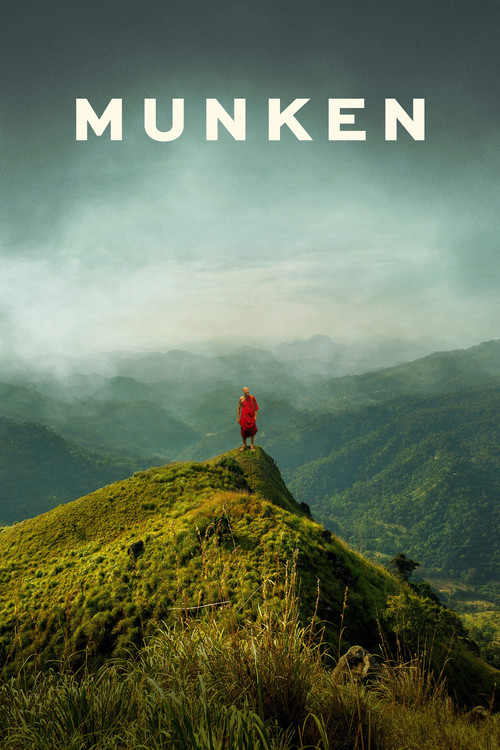
You likely mean The Monk and the Gun (2023), not Mr. Monk's Last Case: A Monk Movie. Set in Bhutan in 2006, the film follows three intertwined threads: a monk sent to find guns, an American collector hunting an antique rifle, and a family caught up in the country's first democratic election. The story builds from quiet absurdity into a tense, ironic confrontation at a stupa ceremony, and it ends with the rifle buried as a symbolic evil rather than used as a weapon.
In the high valleys of Bhutan, in 2006, the country is on the brink of a profound political change. Democracy is coming, but most ordinary people have never voted before, so government officials go village to village staging a mock election to teach citizens what ballots, parties, and political choice even mean. Against this backdrop of cautious national transformation, the film moves between homes, roads, and monastery grounds in Ura, where the old rhythms of Buddhist life meet the restless modern world.
The first thread opens in the monastery above Ura, where a venerable lama worries that the world is changing too fast and that the monastery should be prepared for turbulence. He gives the young monk Tashi an unusual and alarming mission: he must go out and obtain guns. The request is not framed as greed or militancy so much as a grim form of preparedness, as if sacred life itself needs a worldly safeguard before society shifts under everyone's feet. Tashi accepts the task and heads into the world, his youthful face earnest and obedient, carrying the weight of a directive that feels both absurd and ominous.
At the same time, the film introduces Ron Coleman, an American gun collector who arrives in Bhutan with a singular obsession: he wants an antique American Civil War rifle that has somehow ended up in this remote country. He is not there for culture, spirituality, or scenic wonder. He is there for the rifle, and his fixation gives the film its sharpest comic edge because he treats the weapon like a priceless artifact while the Bhutanese characters see it through entirely different moral and symbolic lenses. Because foreigners cannot simply wander Bhutan on their own, Ron hires a local guide, Benji, who serves as interpreter, escort, and increasingly as the sane man trying to keep the whole operation from collapsing.
Ron's hunt leads him to an elderly Bhutanese man who owns the rifle. The old man does not immediately part with it, and Ron must leave to withdraw money from a bank, buying time that changes everything. While Ron is occupied, Tashi arrives and the rifle is given to him as a gift, removing the object from Ron's reach before the deal can be sealed. This is the film's first major pivot: what Ron imagines as a private transaction between collector and seller is interrupted by the logic of Bhutanese ritual, duty, and accident. When Ron returns and learns that the rifle is no longer in the old man's hands, the mood shifts from curiosity to pursuit.
Ron and Benji set off after Tashi through the countryside, the chase unfolding across mountain roads and villages in the bright, dry light of Bhutan. The collector's longing turns suddenly physical; what had been a polished fantasy of acquisition becomes a messy pursuit through real terrain and real people. Tashi, meanwhile, is not acting as a thief in any simple sense. He has been given the rifle, and he carries it as something entrusted, not stolen. When Ron finally confronts him, the two men stand on opposite sides of value and meaning: for Ron, the rifle is a collectible to be returned to the United States; for Tashi, it is caught up in obligations he does not fully control.
The conflict hardens when Ron tries to persuade Tashi to sell the rifle back. Tashi refuses at first, and the film lingers on the awkwardness of the confrontation, letting the tension breathe in the spaces between politeness and exasperation. Ron pushes because he has come too far to leave empty-handed, while Benji tries to mediate in ways that increasingly feel doomed by circumstance. Tashi's calm makes him strangely unmovable, and the rifle becomes a small object carrying huge symbolic weight: power, violence, inheritance, and national transition all seem to sit inside its metal and wood.
While that chase unfolds, the film keeps returning to the election subplot, where ordinary family life is quietly destabilized by politics. Tshomo and Choephel are a married couple whose home life is strained by the country's political awakening. Choephel throws himself into the new democratic process with such enthusiasm that he neglects the emotional and practical needs around him, including the needs of their daughter Yuphel. One of the most telling details is Yuphel's need for a simple eraser, a tiny school supply that becomes a symbol of what the adults are forgetting while they are busy debating the nation's future. The film uses this domestic thread to show that democracy is not only a constitutional event but also a personal disruption, entering homes in the form of confusion, stubbornness, and unmet expectations.
As Ron, Benji, and Tashi circle the rifle, the situation becomes more complicated when the police begin taking an interest in Ron's presence and gun-related activities. The authorities' involvement adds a layer of threat that is bureaucratic rather than violent, but it raises the stakes all the same. Ron is no longer just a collector chasing a rare object; he is now a suspicious foreigner in a country undergoing political transition, and his pursuit of weapons looks increasingly absurd from the outside. The film plays this with a straight face, allowing the comedy to emerge from the collision of intentions: an American obsessed with ownership, a monk instructed to procure guns, and a state trying to teach democracy to people who have never had to vote before.
The story then reveals the deeper purpose behind the rifle storyline. The old lama does not actually want the gun for practical defense or as a tool of violence. Instead, the rifle is intended as a symbol of evil, something that must be ritually buried in the foundation of a new stupa during a ceremony in Ura. This revelation recontextualizes nearly everything that has happened. Ron's chase, the old man's surrender of the weapon, and Tashi's role in carrying it all become part of a religious and symbolic act rather than a literal arms acquisition. What Ron sees as a collectible and what the monk initially receives as a mission are both absorbed into a larger ritual logic that strips the gun of its worldly meaning by placing it into sacred earth.
By the time Ron and Benji make their way back to Ura, the lama has already begun the ceremony celebrating the construction of the new stupa. The atmosphere at the site shifts from comic confusion to ceremonial gravity. The rifle is present, but its fate is no longer in Ron's hands. The lama completes the act he intended from the beginning by burying the rifle in the stupa's foundation, sealing away the object as an emblem of evil rather than preserving it as a relic or returning it to the collector. The visual of the weapon being entombed in sacred architecture gives the film its central paradox: a gun is defeated not by force, but by ritual meaning.
This final sequence becomes the story's main confrontation. Ron arrives too late to reclaim the rifle, and the police are also there, ready to detain him because of his gun-related behavior and the growing suspicion around his activities. The situation seems poised to end in embarrassment or arrest. Yet the film, true to its tone, resolves the crisis through improvisation and misdirection rather than punishment. Benji steps forward and tells the police that the two AK-47s Ron has arranged to have smuggled in from India are not contraband for private use but a donation for the ceremony. It is a daring lie, or at least a highly creative reframing, and it has the effect of turning a potentially criminal act into a cultural offering. Tashi supports this version of events, backing Benji's claim and helping protect Ron from arrest.
The moment is important because it shows how the film repeatedly reassigns meaning: the rifle becomes a ritual object, the assault weapons become ceremonial gifts, and the foreign collector is transformed from suspect to accidental participant in a local spiritual event. Instead of a dramatic showdown with guns drawn, the climax lands in the realm of social performance, where survival depends on who can tell the most convincing story at the right moment. Ron, for all his obsession, is ultimately spared not by force or law but by the willingness of others to fold his folly into a communal narrative.
The final beat is one of the film's most memorable and oddly humorous gestures. In gratitude, the lama gives Ron a large phallus, a ritual gift that crystallizes the movie's mix of sacred symbolism, cultural specificity, satire, and plain surprise. The exchange underlines how completely the film refuses to resolve itself in conventional Western terms. Ron does not get the rifle. He does not get punished in any meaningful way either. Instead, he leaves Bhutan having had his obsession absorbed, mocked, and ritually redirected by a culture that has its own ways of handling danger, tradition, and foreign intrusion.
The family thread also settles without melodrama but with clear emotional weight. Tshomo, Choephel, and Yuphel remain caught in the ordinary consequences of political change, with the election having exposed the fractures in their home life and the child's need for something as small as an eraser standing in for the larger burden of being ignored. The film does not present a big speech or a final reconciliation scene that wipes away all tension. Instead, it leaves the sense that Bhutan's transition into democracy is real but unfinished, and that private lives will continue to absorb the pressure of public transformation long after the ceremonies are over.
There are no deaths in the plot information provided for The Monk and the Gun. No character is killed, and no violent death drives the ending. The film's danger is symbolic, political, and emotional rather than lethal. Its climax depends on misunderstandings, ritual authority, and competing interpretations of the same objects, not on bloodshed.
By the end, the film has fully revealed its central irony: the antique rifle that Ron wants so badly is not the story's true prize at all. The real subject is how a society on the edge of democratic change, modern technology, and global contact negotiates old beliefs and new systems without losing itself. Ron's obsession, Tashi's obedience, the lama's ritual vision, and the family's domestic strain all converge in a final scene where the gun is buried, the police are talked down, and the world continues forward into an uncertain but carefully framed future.
More Movies Like This
Browse All Movies →


What is the ending?
In the end, Monk survives the poisoning, solves Griffin's death, and stops the billionaire's plan. He also learns that Trudy's daughter Molly is alive, and that discovery gives him a new family and a reason to keep living.
In the final stretch of the film, Monk is still recovering from the poison that was meant to kill him. Natalie's accidental exposure helps identify the substance as a synthetic toxin based on ricin, and doctors are able to create an antidote in time to save both Monk and Natalie. The case then moves toward its final reveal, and Monk pieces together the truth: billionaire Rick Eden arranged Griffin's death by manipulating the equipment used in the bungee-jumping incident. When Monk identifies the crime, Eden's plan collapses, and he is arrested for Griffin's murder and the murder of his business partner.
After the case is solved, Monk is left with a different emptiness. The murder that once gave him purpose is no longer there, and he returns to the park intending to die. At that moment, Trudy appears to him in spirit, and Griffin and several other people Monk helped also appear to him. Seeing them reminds Monk that his life has mattered to others. He changes course, chooses to continue living, and decides to return as a consultant.
The fate of the main characters at the end is clear. Monk lives, recovers, and resumes working again. Natalie lives as well after the poison scare and ends up moving in with Monk. Molly learns the truth about her connection to Trudy and becomes part of Monk's life as the daughter he never knew he had. Eden is arrested. Griffin remains dead, since his death was the murder Monk solves.
Is there a post-credit scene?
No. I could not verify any post-credits scene for The Monk (2023); the available result about Mr. Monk's Last Case: A Monk Movie only mentions what happens as the credits roll, not an extra scene afterward.
If you meant the 2023 movie Mr. Monk's Last Case: A Monk Movie, the ending information available says the film closes with a short catch-up on the characters' lives during the credits, including that Natalie had COVID, developed antibodies, and has been donating blood. That is not described as a separate post-credits scene.
Who is Molly in The Monk (2023), and how is she related to Adrian Monk?
Molly Evans is Adrian Monk's stepdaughter, and the movie centers on her wedding and the crisis that follows when her fiancé Griffin dies just before the ceremony.
How does Griffin die in Mr. Monk’s Last Case, and why does Monk think it may not have been an accident?
Griffin dies during a bungee-jumping accident, but Molly believes he was murdered, and Monk delays his own planned suicide to investigate her suspicion and give her closure.
Who is Rick Eden in The Monk (2023), and what is his connection to the murder investigation?
Rick Eden is the billionaire suspect at the center of the case, and the story frames him as the man Griffin was about to expose; Monk ultimately identifies Eden as the person responsible for Griffin's death.
What role does Trudy play in Mr. Monk’s Last Case?
Trudy appears to Monk as a guiding presence in his mind and later helps pull him away from suicide by reminding him of the people he has helped and the difference he has made.
How does Monk figure out the trick used to kill Griffin?
Monk discovers that Griffin's rope was measured with a tampered tape measure, making it six feet too long; the altered measurement caused the fatal miscalculation in the bungee jump.
Is this family friendly?
Mr. Monk's Last Case: A Monk Movie is not especially family-friendly for younger children, mainly because of its mild violence, moderate frightening/intense scenes, and suicide-related content.
Potentially objectionable or upsetting elements for children or sensitive viewers include:
- A suicide theme/contemplation: one parent review notes that a man contemplates suicide, and the film includes a suicide-prevention message at the end.
- A death shown or discussed: the story involves a murder investigation, and parent-review material mentions a man dying in an accident and talk of murder.
- Mild violence/blood: IMDb's parent guide mentions a woman lying in a pool of her own blood.
- Frightening or intense moments: IMDb rates these as moderate, suggesting suspenseful or emotionally tense scenes rather than graphic horror.
- Mild profanity: IMDb lists a few curses, including brief uses of strong language like "shit," "bastard," and "son of a bitch".
- A brief revealing costume shot: IMDb notes a woman walking past in a bikini, though sex/nudity is otherwise listed as none.
Overall, it is probably fine for many teens, especially if they can handle mystery-thriller tension and the suicide subject, but it may be too intense or upsetting for younger children or very sensitive viewers.








