








Popular
Who is Ernest, and why is he haunting the house?
How does Kevin first communicate with Ernest, and why does Kevin trust him?
What is the story behind Ernest’s name and the bowling shirt he wears?
Why do the CIA target Ernest, and what do they want to do with him?
What role does Kevin’s neighbor play in figuring out Ernest’s story?
Should I watch it?
Ask Your Own Question

What is the plot?
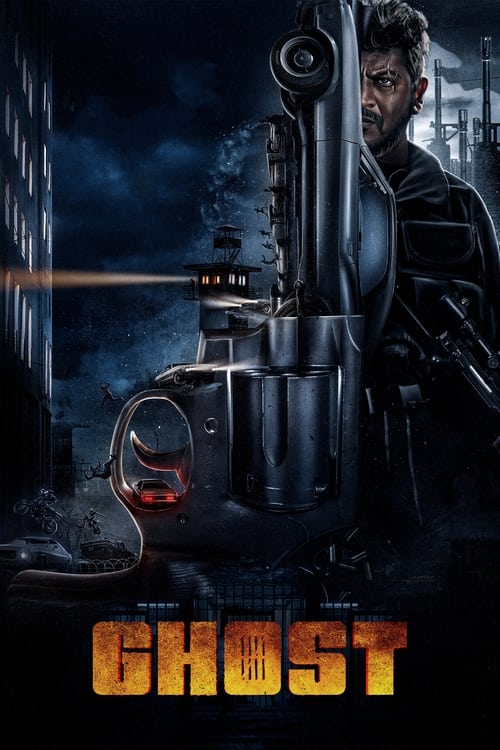
In Ghost (2023), a feared gangster known as Big Daddy storms a central prison in Karnataka with his gang and turns the facility into a sealed battlefield, taking prisoners, prison staff, and former CBI officer Vamana Srinivasan hostage while the outside world scrambles to understand what the hijackers really want. The man placed in charge of breaking the siege is ACP Chengappa, who quickly realizes that the takeover is not a random act of chaos but a carefully engineered move tied to a hidden gold operation, a criminal network, and a secret buried deep inside the prison itself.
The film opens in a state of controlled panic: steel doors slam shut, armed men fan out through the prison corridors, and the anonymous mastermind--known only as Ghost or Big Daddy--exerts absolute control over everyone inside. The prison becomes both a fortress and a trap, its long corridors and barred cells turning into a maze where every shadow can hide a gunman and every shouted order can become a death sentence. Chengappa stands outside the walls as the calm counterweight to the attackers' brutality, but from the start the situation feels stacked against him, because the hijackers have already taken the most dangerous leverage possible: hostages and time.
The first great mystery is the identity of the man behind the mask of "Big Daddy." At the surface, he appears to be a single criminal genius orchestrating the entire siege, but the story keeps pulling back more layers, revealing that the prison hijacking is connected to a concealed cache of gold bars. Those bars were not simply stored there by accident; they are linked to a controversial CBI gold raid, after which Vamana Srinivasan hides the recovered treasure inside the prison. That buried gold becomes the silent engine of the entire plot, giving the hijacking its real purpose and turning the prison into a vault the criminals are determined to crack open.
As Chengappa presses for answers and the prisoners are forced to endure the escalating crisis, the film settles into a brutal cat-and-mouse rhythm. Big Daddy's men tighten their grip, making it clear that they are not interested in a quick exit; they want the gold, and they are willing to turn the prison into a war zone to get it. The hostages are shuffled, threatened, and used as bargaining chips, and the emotional temperature inside the prison rises with every passing minute. Vamana Srinivasan, because he knows the truth about the gold, becomes one of the most important prisoners in the siege, his presence linking the present violence to an older corruption that has now come back to life.
Chengappa, meanwhile, is forced to investigate from outside the prison walls, piecing together the attackers' motives while trying to prevent the entire place from collapsing into mass slaughter. His role is not merely tactical; he becomes the audience's anchor, the only major figure visibly trying to cut through the lies and identify who is really behind the takeover. The tension comes from the fact that the enemies inside know more than they are saying, and the people outside can only guess how much of the prison's hidden history is being weaponized against them.
The first major revelation is that the hijacking is not about simple destruction or a prisoner breakout at all--it is about retrieving the hidden gold. That twist changes the entire meaning of the siege. What initially looks like a standard prison hostage crisis transforms into a theft, a cover-up, and a reckoning with buried corruption all at once. The prison is no longer just a prison; it is a locked chamber containing both men and money, and everyone inside is now a piece in a larger criminal design.
As the pressure mounts, the film reveals that "Big Daddy" is not merely a legend whispered by criminals but a constructed identity tied to a deeper deception. The mastermind is ultimately connected to Dalavayi Muddanna, and the story begins to expose a larger family and inheritance conflict behind the mask of criminal authority. The most important twist arrives when the supposed Dalavayi figure is revealed to be Anand Rao, the son of Rao and Prabhu's elder brother. This is not just a disguise; it is a betrayal wrapped in identity theft, with Anand using the myth of Big Daddy to command fear, manipulate the hijacking, and keep the gold chase moving in his favor.
The disguise itself is one of the film's sharpest details. Anand Rao does not simply impersonate Dalavayi in a vague sense; he uses a prosthetic mask to physically become the face the others expect. That mask matters because it makes the film's central deception tactile and unsettling: the audience is not only watching a criminal lie, but watching a man wear someone else's identity like skin. Every time he appears, the disguise turns the scene into an act of performance, and the prison siege becomes a theater of falsehoods, where the true face of power is literally hidden behind a crafted shell.
The revelation also reshapes the emotional stakes around the criminal network itself. The hijacking is no longer just a hostile takeover by one feared gangster; it becomes a family-linked power struggle in which loyalty, inheritance, and greed intersect with violence. When the story exposes Anand Rao as the real force behind the false Big Daddy persona, the prison lockdown stops feeling like a clean hostage situation and starts feeling like the boiling point of an old private war finally spilling into public view.
One of the most tense moments comes when Dalavayi's son calls Anand Rao while Anand is paying respects to Prabhu and Geetha. The call is not warm or conciliatory; it is a demand, a threat, and a bargaining tactic wrapped together. Dalavayi's son insists that Anand return the gold in exchange for rescuing his team members. In that exchange, the film makes its emotional logic brutally clear: every relationship has become transactional, and even mourning is interrupted by extortion. The funeral-like atmosphere around Prabhu and Geetha is shattered by the phone call, which turns grief into leverage and forces Anand to confront the human cost of the deception he has built.
The confrontation tightens from there. Chengappa continues to push against the siege, while the criminals inside the prison try to exploit every opening, and the truth about the gold, the mask, and the false identity keeps spreading through the conflict like poison. The prison corridors, already claustrophobic, now feel like a collapsing machine. Voices echo off the concrete, doors clang shut, and every new exchange seems to drag another layer of the conspiracy into the light. What had looked like a single criminal act now stands revealed as a chain of betrayals reaching from hidden state corruption to personal family treachery.
The film's final stretch brings all of these threads together into one last confrontation over the gold, the hostages, and the real identity of the man called Ghost. The sources confirm that the ending resolves the prison hijacking by binding together the gold scam, the disguise, and Chengappa's investigation into a final exposed truth. The last major twist is the unmasking of Anand Rao as the imposter operating under the name and aura of Dalavayi Muddanna, which means the criminal legend that seemed so monolithic has actually been a carefully staged masquerade from within. The prison takeover is no longer just an operation to steal wealth; it is the collapse of a false identity built to control fear and bend others to its will.
What the available sources do not fully provide is a verified beat-by-beat casualty count or a complete scene-by-scene record of each death. Because of that, I cannot responsibly name every individual who dies or specify every killer with certainty beyond the violence inherent in the siege and the final showdown. What is clear is that the film sustains a high level of danger throughout the prison crisis, with lethal confrontations forming the backbone of the action and the climax resolving the struggle through force, exposure, and the defeat of the central deception. The narrative is driven less by isolated deaths than by the mounting threat that anyone trapped in the prison could become the next casualty if Chengappa fails to break the siege in time.
In the end, the movie's emotional and structural payoff comes from recognition: the police finally understand that the masked "Big Daddy" is not the person he pretends to be, and the hidden gold operation is brought into the open. The prison, which began as a sealed chamber of hostage terror, becomes the place where buried truth surfaces under extreme pressure. Chengappa's arc resolves through persistence rather than spectacle; he is the officer who keeps pushing until the false story unravels and the real one is exposed. Anand Rao's carefully constructed identity cannot survive once the links between the mask, the gold, and the family conflict are revealed.
The final scenes close the circle begun at the prison takeover: the takeover has been stopped, the criminal secret has been exposed, and the power that once seemed untouchable is stripped of its mystique. The story ends with the siege no longer functioning as a mystery but as a completed crime whose meaning has been decoded. What remains is the sense that the prison was never just a place of confinement--it was the hiding place for greed, betrayal, and a false king wearing another man's face.



What is the ending?
The ending of Ghost (2023) shows Anand exposing the truth behind the prison hijack, getting the hidden gold back into motion, and then facing Dalavayi Muddanna's son in a final confrontation. In the end, the major threats are stopped, and Anand's side closes the case with the stolen gold recovered and his fallen allies honored.
Anand's identity is revealed as the man behind the "Big Daddy" disguise. He had posed as Dalavayi using a prosthetic mask, taken over the prison, and used the operation to uncover the deeper criminal truth surrounding Vamana Srinivasan and Thomas. After Anand exposes them, Vamana and Thomas are arrested.
When the prison crisis is over, Anand pays respects to Prabhu and Geetha. He then receives a call from Dalavayi's son, who demands the return of the gold in exchange for the lives of Anand's team members. Anand leaves with Rao to confront him. That is the final active step in the story as given in the available source material.
For the main characters' fates at the end: - Anand survives, completes the exposure of the conspiracy, and goes to confront Dalavayi's son. - Rao leaves with Anand for the final confrontation. - Vamana Srinivasan is arrested. - Thomas is arrested. - Prabhu and Geetha are dead by the time Anand pays respects to them. - Dalavayi Muddanna's son remains alive at the point where the story ends, still holding the hostage demand over the gold.
If you want, I can also give you a fuller scene-by-scene ending recap in plain narrative prose.
Is there a post-credit scene?
I can't verify a 2023 film titled Ghost from the provided results, so I can't reliably confirm a post-credit scene for that specific movie.
The results do show a different title, Ghost from Power Book II: Ghost, but that is a TV series entry, not a 2023 film, and the available result says a post-credit scene was deleted or not shown in the episode rather than describing a confirmed film scene.
If you meant a different 2023 movie with "Ghost" in the title, send the full title and I can check whether it has a post-credit scene and describe it accurately.
Who is Ernest, and why is he haunting the house?
In We Have a Ghost (2023), Ernest is the ghost the family discovers in their new home, and the story centers on Kevin trying to uncover who he was in life and help him move on. The haunting is not just a spooky backdrop; it becomes the main character mystery that drives Kevin's bond with Ernest and the rest of the plot.
How does Kevin first communicate with Ernest, and why does Kevin trust him?
Kevin is the first family member to really connect with Ernest, and he responds to him as someone lonely and misunderstood rather than as a threat. According to the film description, Kevin feels isolated from his family, especially his father, so Ernest becomes a meaningful companion and confidant for him.
What is the story behind Ernest’s name and the bowling shirt he wears?
The film identifies the ghost as a man wearing a bowling shirt with the name Ernest on it, which is why the family refers to him that way. That detail is one of the central visual identifiers of the character and is part of the mystery Kevin investigates.
Why do the CIA target Ernest, and what do they want to do with him?
Once the family's discovery becomes public, the CIA targets Ernest because they want to capture him and run experiments on him. This turns the story from a simple haunted-house mystery into a pursuit plot, with Kevin and his allies trying to protect Ernest while uncovering his past.
What role does Kevin’s neighbor play in figuring out Ernest’s story?
Kevin teams up with the girl next door to uncover Ernest's mystery and help him cross over. Her involvement expands the investigation beyond the family, giving Kevin another ally in the effort to understand Ernest's past and free him.
Is this family friendly?
If you mean We Have a Ghost (2023), it is generally family-friendly for older kids and teens, but it is not fully "safe for little kids" because it is rated PG-13 for language, some sexual/suggestive references, and violence.
Potentially objectionable or upsetting elements for children or sensitive viewers include: - Some strong language. - Sexual or suggestive references, plus brief flirting and a kiss. - Violence involving police/CIA pursuit, weapons fired, car chases, and crashes. - Frightening supernatural scenes and chaotic crowd/chase moments around the ghost. - A murder is mentioned in the parents' guide, though the film is still described as a light, soft family watch overall.
If you meant the 2023 Indian film Ghost, that is a different movie with a much more intense action-thriller tone, so the family-friendliness would be very different.









