










Popular
What are the three biggest mistakes in the universe that Matti and Sami refer to?
How does Matti's relationship with his father influence his actions throughout the film?
What role does Sami's character play in Matti's journey?
How do Matti and Sami's mistakes impact their friendship?
What is the significance of the adventure they embark on together?
Should I watch it?
Ask Your Own Question

What is the plot?
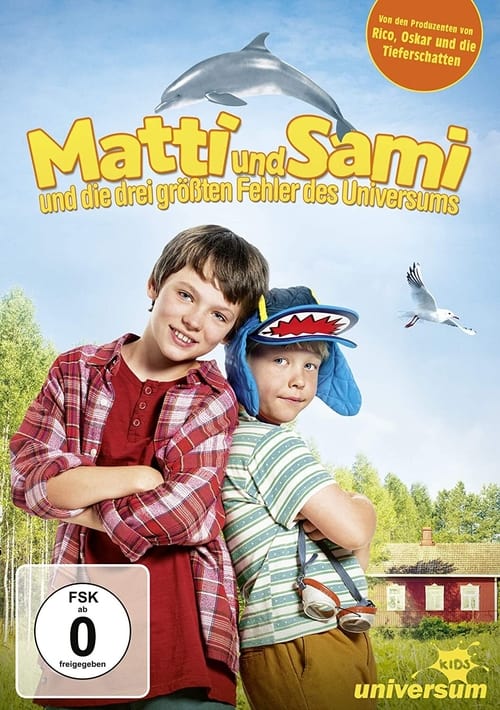
The film opens on a Finnish lakeshore, where a German family sits stranded in the middle of what looks, to ten-year-old Matti like proof that the universe is badly designed. Matti narrates the story himself, and even before the plot begins to move, he frames everything as a dispute: everyone says he is to blame, but he insists he is only trying to fix the mistakes adults keep making. He lives in Germany with his little brother Sami, his German mother Annette, and his Finnish father Sulo, and from the start the household feels tense, tired, and financially squeezed. Annette works in a doctor's office, where she is constantly overworked and stuck dealing with an angry boss, while Sulo spends his days as a bus driver despite dreaming of becoming a video game developer. To Matti, this is the first great proof that something is wrong with the world: his father should be building games, not driving a bus, and the family should already be in Finland, not trapped in Germany by money and disappointment.
Matti's worldview cracks further when he realizes that adults lie all the time. The early collapse begins with small humiliations and then grows into a pattern, until he can no longer tell where truth ends and invention begins. One of the first disappointments comes when he and Sami hear adults talking up a pleasant story that turns out to be false, and the film repeatedly emphasizes how children absorb these lies as if they are instructions for how the universe works. Another key blow lands when Matti discovers that a donation story about endangered animals is not what it seemed; even the charitable, reassuring tales around him can be fabricated or exaggerated. Then comes the more personal betrayal: at dinner with Sulo's Finnish brother, Sulo pretends he has a better job and even claims the family is planning to move to Switzerland, all just to impress his sibling and avoid looking like a failure. In that moment, Matti sees the adult world clearly for the first time: lies are not rare emergencies, but social tools, used casually and selfishly by the people who are supposed to tell the truth.
That realization becomes the turning point. If adults can invent realities whenever it suits them, Matti decides he can do the same in service of something better. He is not lying simply to cause trouble; in his mind, he is correcting the universe, smoothing out the defects that make his parents unhappy and keep his family from becoming the family he imagines they ought to be. He dreams of a summer in Finland, near a lake, with the whole family finally relaxed and whole, and he begins to believe that if a lie can create that future, then the lie is justified. The story gives that impulse a concrete form when Matti gets hold of an official-looking prize notification and alters it so that his mother will believe the family has won a house in Finland. This is the film's decisive deception: Matti is not merely telling a fib at the dinner table, but forging a reality on paper, staging an event that can move the whole family across borders.
The lie works. Annette believes the notice, and suddenly the possibility of a Finnish house by a lake--something the family could never afford on their own--seems to open in front of them like a miracle. What had been only wishful thinking becomes action: the parents pack up, Sami is swept along, and the family heads for Finland. Matti's triumph is not presented as simple mischief; it has the emotional charge of revenge against disappointment, as if the child has finally found a way to bend reality toward what everyone secretly wants. Yet even while the journey begins, the film keeps reminding us that the method is rotten. The lie has momentum, but it is a fragile kind of momentum, built on falsehood, and each scene of movement toward Finland also deepens the sense that the family is walking into a trap of Matti's own making.
Once in Finland, the atmosphere shifts from comic wish fulfillment to anxious unraveling. The family is no longer in control, and the charming dream of a lake house collapses into the fact that they are in the middle of the Finnish wilderness with no money, no place to stay, and no car. The missing car key becomes a small but crucial symbol of how completely they have lost control; it is the practical detail that locks the family into the consequences of the lie. The landscape is beautiful but unforgiving, all open space and distance, and the visual irony is sharp: Matti has brought his family to the country he believes will heal them, only to strand them in a place that makes their vulnerability impossible to ignore. The hope of a house by the lake turns into the reality of being homeless in the middle of nowhere.
At this stage the film's central tensions come fully alive. Annette and Sulo are forced to deal not only with the practical disaster but also with the old emotional wounds the lie has exposed. Their arguments, already simmering in Germany, now sharpen under the pressure of being stranded abroad. The family's financial strain is no longer abstract; it is immediate and physical, embodied in the lack of shelter, the lack of transport, and the lack of any straightforward way out. Matti, who thought he was repairing the family, now has to watch the repair job collapse in front of him. The film's comedy never disappears, but the humor becomes more nervous as everyone is forced to improvise in the ruins of the promise he made.
This is also where Uncle Jussi enters as a possible answer to the crisis. Jussi is the Finnish relative who might help the stranded family, but he is not simply a convenient rescuer; he also carries the burden of long-standing rivalry with Sulo. The film turns that rivalry into part of its emotional structure. Sulo's life in Germany has always been shadowed by what he has not become, and Jussi represents the alternative version of Finnish masculinity and family success that Sulo can never quite escape. When help from Jussi becomes possible, it is not just a logistical solution but a test of pride. The family must face the fact that the lie has not only dragged them into the wilderness; it has also reopened old wounds between brothers, husbands, and fathers who have spent years measuring themselves against one another.
As the pressure mounts, Matti's own role becomes impossible to hide. He has spent much of the story believing that his lie is a noble correction, but once the family is stranded, the lie reveals its real nature: it is selfish, reckless, and devastating to everyone around him. The plot material makes clear that the "three biggest mistakes in the universe" are not cosmic accidents at all, but human choices, especially lies that spiral beyond their original intention. Matti must face the fact that the very thing he used to restore harmony has created the opposite. The emotional core of the film is this confrontation between a child's fantasy of fixing the world and the adult reality that deception always multiplies damage.
The confession comes when the house story can no longer survive contact with reality. Matti's forged winning notice is exposed as a fabrication, and he has to admit that he manipulated the whole family into coming to Finland. The moment carries the force of a true family reckoning. Annette and Sulo are not just angry because they have been tricked; they are forced to confront how much the family's life has already been governed by smaller lies, evasions, and self-protective stories. Matti has revealed one lie, but in doing so he has also made visible the deeper system of dishonesty that runs through the household. His parents' disappointment with their own lives, Sulo's pretenses, Annette's exhaustion, and the children's confusion all come into focus at once.
The film also makes sure that the children's perspective remains central. Sami, the younger brother, is not the architect of any of this; he is caught in it, dependent on the adults and on Matti's choices. His presence keeps the story grounded in the stakes of family trust. Matti may think of himself as a small engineer of destiny, but every step of the lie affects Sami too, dragging him away from safety and into uncertainty. The brothers' relationship becomes one of the quieter emotional threads in the crisis: Sami is not responsible for the deception, yet he must share its consequences. That makes the eventual restoration of trust more delicate, because it is not just parents who need forgiveness, but brothers who have been dragged through the wreckage together.
The final stretch of the story threatens to end in complete failure. The family is stranded, exposed, and exhausted, and the lie that brought them here seems to have destroyed the very dream it was meant to create. Then the film introduces its last major twist: a package arrives from Germany, and inside is the proof that the original prize claim was not entirely false after all. Matti's lottery-style notice has, in the end, led to a real win: the family has actually won a house in Finland. The irony is almost perfect. The child's forgery has been exposed, but the universe, which seemed so hostile and absurd, answers with an unexpected gift. What Matti fabricated as a shortcut to happiness turns out to match a genuine outcome that arrives from outside his control.
This final revelation changes the emotional meaning of everything that came before. The lie is still a lie, and Matti still has to face the damage he caused, but the story refuses simple punishment. Instead, it turns toward reconciliation. The parents, having survived the betrayal and the ordeal, regain enough trust in one another and in their children to move forward together. The brothers also come back to one another, with Sami's innocence and Matti's remorse balancing the damage of the deception. Uncle Jussi's presence, too, becomes part of the broader restoration, since the Finnish side of the family is no longer only a source of rivalry but also a possible home and support. The story's emotional resolution is not that the lie was good, but that the family survives long enough to be given a second chance by a reality that is stranger and kinder than anyone expected.
The last scenes settle into a feeling of ironic relief. The family's biggest mistake has been fully exposed, yet the outcome is unexpectedly hopeful: they do have a real house in Finland, and the promise Matti invented now becomes the future they can actually claim. The lake, which began as a dream image and a symbol of wish fulfillment, becomes the site of a tangible new beginning. Matti's journey ends where he wanted it to begin, but not in the way he planned. He does not conquer the universe by forcing it into obedience; instead, he learns that truth, loss, and accident are tangled together in ways he cannot control. The film closes on that mixture of embarrassment, relief, and possibility, with the family no longer suspended in fantasy or trapped in deception, but standing on the threshold of a real home in Finland, together at last.





What is the ending?
In the ending of "Matti and Sami and the Three Biggest Mistakes in the Universe," Matti and Sami confront their fears and insecurities, ultimately finding resolution in their friendship and family dynamics. They learn valuable lessons about trust, love, and the importance of facing challenges together. The film concludes with a sense of hope and unity among the characters.
As the climax of the film approaches, Matti and Sami find themselves in a tense situation where their earlier misadventures culminate. They are faced with the consequences of their actions, particularly regarding the misunderstandings and conflicts that have arisen throughout their journey. The boys, who have been through a rollercoaster of emotions, are now at a crossroads where they must decide how to move forward.
In a pivotal scene, Matti and Sami sit together, reflecting on their experiences. The weight of their mistakes hangs heavily in the air, but they also recognize the strength of their bond. This moment is filled with vulnerability as they share their fears and aspirations, revealing their internal struggles. Matti, who has often felt overshadowed, expresses his desire to be seen and valued, while Sami grapples with his own insecurities about fitting in and being accepted.
As they navigate their feelings, the boys come to a mutual understanding that their friendship is worth fighting for. They decide to confront the misunderstandings that have caused rifts not only between them but also with their families. This decision marks a turning point in the narrative, showcasing their growth and maturity.
The final scenes depict a heartfelt reconciliation with their families. Matti's parents, who have been concerned about their son's well-being, witness the transformation in their son as he stands up for himself and articulates his feelings. Sami's family, too, recognizes the importance of supporting their son in his endeavors. The emotional exchanges are filled with warmth and sincerity, highlighting the film's themes of love, acceptance, and the importance of communication.
As the story wraps up, the boys are seen together, laughing and enjoying each other's company, symbolizing the strength of their friendship. They have learned that mistakes are a part of life, but it is how they respond to those mistakes that truly matters. The film closes on a hopeful note, with both Matti and Sami looking forward to new adventures, equipped with the knowledge that they can face challenges together.
In summary, the ending of "Matti and Sami and the Three Biggest Mistakes in the Universe" emphasizes the importance of friendship, family, and personal growth. Each character emerges from the experience with a deeper understanding of themselves and their relationships, setting the stage for a brighter future.
Is there a post-credit scene?
In "Matti and Sami and the Three Biggest Mistakes in the Universe," there is no post-credit scene. The film concludes its narrative without any additional scenes or content after the credits roll. The story wraps up with a sense of resolution, focusing on the themes of friendship, family, and the adventures that Matti and Sami experience throughout their journey. The film emphasizes the lessons learned and the growth of the characters, leaving the audience with a satisfying conclusion.
What are the three biggest mistakes in the universe that Matti and Sami refer to?
The three biggest mistakes in the universe that Matti and Sami refer to are the mistakes they believe they have made in their lives, which include not being honest with their feelings, not standing up for themselves, and not taking risks to pursue their dreams.
How does Matti's relationship with his father influence his actions throughout the film?
Matti's relationship with his father is strained, as his father is often dismissive and critical. This lack of support drives Matti to seek validation and approval elsewhere, influencing his decisions and leading him to embark on the adventure with Sami to prove himself.
What role does Sami's character play in Matti's journey?
Sami serves as both a best friend and a catalyst for Matti's growth. His adventurous spirit and unwavering loyalty encourage Matti to confront his fears and insecurities, ultimately helping him to realize the importance of friendship and self-acceptance.
How do Matti and Sami's mistakes impact their friendship?
Matti and Sami's mistakes create tension and misunderstandings between them, leading to moments of conflict and doubt. However, these challenges ultimately strengthen their bond as they learn to communicate openly and support each other through their struggles.
What is the significance of the adventure they embark on together?
The adventure that Matti and Sami embark on serves as a metaphor for their personal growth. It challenges them to face their fears, make difficult choices, and learn valuable life lessons about friendship, courage, and the importance of being true to oneself.
Is this family friendly?
"Matti and Sami and the Three Biggest Mistakes in the Universe" is generally considered a family-friendly film, aimed at a younger audience. However, there are a few scenes and themes that might be potentially objectionable or upsetting for children or sensitive viewers:
-
Family Struggles: The film explores themes of family dynamics, including misunderstandings and conflicts between parents and children, which may resonate with some viewers on a deeper emotional level.
-
Emotional Turmoil: Characters experience moments of sadness, disappointment, and frustration, particularly related to their aspirations and relationships, which could be intense for younger viewers.
-
Mild Peril: There are scenes that involve characters facing challenges and obstacles that may create a sense of tension or worry, though these are generally resolved positively.
-
Social Issues: The film touches on themes of friendship, acceptance, and the challenges of fitting in, which may evoke feelings of empathy or discomfort in some viewers.
Overall, while the film contains some emotional depth and challenges, it is crafted to be suitable for family viewing, with a focus on adventure and personal growth.








