




























Popular
What are the circumstances that lead to Aryan's ability to fly?
How does the character of the doctor, Gabor, evolve throughout the film?
What role does the border patrol officer play in Aryan's story?
How does the film depict the relationship between Aryan and Gabor?
What challenges do Aryan and Gabor face while trying to escape?
Should I watch it?
Ask Your Own Question

What is the plot?
Sorry, we aren't able to watch and write up a full detailed plot yet. Check back in a few days.
More Movies Like This
Browse All Movies →


What is the ending?
In the ending of "Jupiter's Moon," the main character, Aryan, is pursued by authorities but ultimately escapes. He uses his ability to fly to evade capture, while the fate of the other characters, including the doctor, is left ambiguous.
As the film approaches its conclusion, the tension escalates. Aryan, a young refugee with the extraordinary ability to levitate, finds himself on the run from the police after a series of events that have led to chaos and violence. The doctor, who has been helping him, is caught in the crossfire of the conflict between the authorities and Aryan's desperate bid for freedom.
In the final scenes, Aryan is cornered by the police, who are intent on capturing him. The doctor, who has developed a bond with Aryan, tries to intervene but is ultimately powerless against the overwhelming force of the law. As Aryan takes to the skies, he experiences a moment of liberation, soaring above the chaos below. This act of flight symbolizes his escape not just from the physical danger but also from the oppressive circumstances of his life as a refugee.
The film concludes with Aryan disappearing into the clouds, leaving the audience with a sense of uncertainty about his future. The doctor, having witnessed Aryan's miraculous ability, is left to grapple with the implications of what he has seen and the moral complexities of their journey together. The fate of the authorities remains unresolved, as they are left to ponder the implications of their pursuit of Aryan.
In this way, the ending encapsulates the themes of hope, freedom, and the struggle against systemic oppression, while leaving the characters' futures open to interpretation.
Is there a post-credit scene?
In the movie "Jupiter's Moon," there is no post-credit scene. The film concludes its narrative without any additional scenes or content after the credits roll. The story wraps up with the main characters' arcs resolved, focusing on the themes of hope, escape, and the search for freedom amidst the backdrop of a refugee crisis. The ending leaves viewers with a sense of contemplation about the characters' futures, but it does not include any further scenes or revelations after the credits.
What are the circumstances that lead to Aryan's ability to fly?
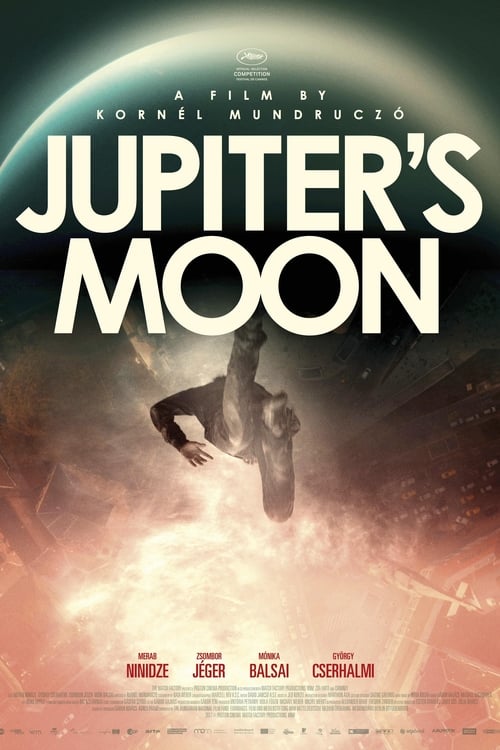
Aryan, a young refugee from Syria, gains the ability to fly after being shot by a border patrol officer while trying to escape to Hungary. The traumatic experience triggers his latent supernatural power, allowing him to defy gravity.
How does the character of the doctor, Gabor, evolve throughout the film?
Gabor, a disillusioned doctor, initially appears cynical and detached from his work. However, as he becomes involved with Aryan, he experiences a transformation, driven by a sense of responsibility and a desire to protect the boy. His journey reflects a rekindling of hope and purpose.
What role does the border patrol officer play in Aryan's story?
The border patrol officer, who shoots Aryan, represents the harsh realities faced by refugees. His actions set off a chain of events that not only grant Aryan his powers but also complicate the narrative, as he becomes a figure of both fear and conflict in Aryan's quest for safety.
How does the film depict the relationship between Aryan and Gabor?
The relationship between Aryan and Gabor evolves from one of mere convenience to a deep bond. Gabor initially sees Aryan as a means to regain his lost sense of purpose, but as they face various challenges together, they develop a father-son dynamic, filled with moments of vulnerability and mutual support.
What challenges do Aryan and Gabor face while trying to escape?
Aryan and Gabor encounter numerous challenges, including evading law enforcement, navigating the complexities of refugee life, and dealing with the moral dilemmas posed by Aryan's powers. Their journey is fraught with tension, as they must constantly adapt to survive in a world that is often hostile to them.
Is this family friendly?
"Jupiter's Moon," directed by Kornél Mundruczó, is not considered family-friendly due to several potentially objectionable or upsetting scenes. Here are some aspects that may be concerning for children or sensitive viewers:
-
Violence and Death: The film contains scenes of violence, including police brutality and the aftermath of violent confrontations, which may be distressing.
-
Immigration Themes: The narrative revolves around refugees and their struggles, depicting harsh realities that may be difficult for younger audiences to understand.
-
Emotional Trauma: Characters experience significant emotional distress, including loss and despair, which could be upsetting for sensitive viewers.
-
Dark Themes: The film explores themes of survival, hope, and the human condition in the face of adversity, which may be heavy for younger audiences.
-
Intense Situations: There are moments of intense suspense and fear, particularly related to the protagonist's escape from danger, which could be frightening.
Overall, the film's mature themes and intense scenes make it more suitable for adult audiences.








