


















Popular
What role does the cat play in Cinderella's life?
How does Cinderella's relationship with her stepmother evolve throughout the film?
What challenges does Cinderella face at the royal ball?
How does the cat help Cinderella overcome her obstacles?
What is the significance of the magical elements introduced by the cat?
Should I watch it?
Ask Your Own Question

What is the plot?
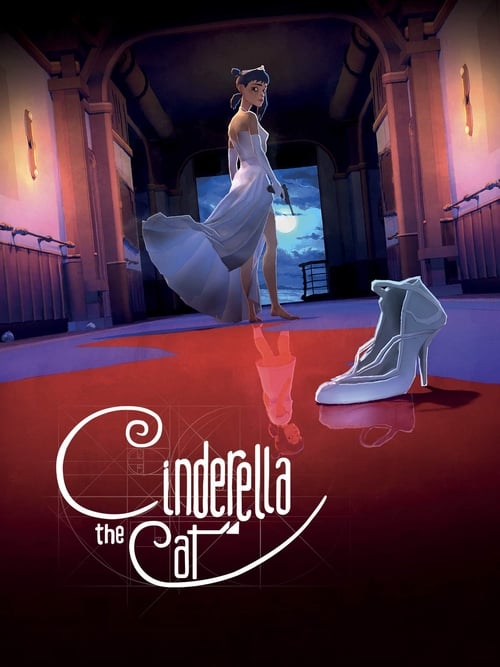
In a dystopian near-future Naples, the story of Cinderella the Cat unfolds aboard the colossal, high-tech ship Megaride, anchored in the city's decaying harbor. The year is unspecified, but the atmosphere is one of urban decay and looming corruption, a city caught between the dreams of technological rebirth and the grip of organized crime.
Vittorio Basile, a wealthy scientist and visionary shipowner, is the first to appear. He has created a revolutionary holographic technology embedded in the Megaride that records and projects everything that happens on the ship, transforming it into a living digital archive--a memory bank for the city itself. Basile's dream is to turn Naples' harbor into a futuristic technological hub, with the Megaride as its shining centerpiece. His vision is one of hope amid the urban decay, a beacon of progress and memory preservation.
Beside him is his three-year-old daughter, Mia, a silent and observant child whose quiet presence belies her profound emotional depth. Mia is deeply attached to her father, absorbing the world around her with wide, watchful eyes. Vittorio is about to marry Angelica Carannante, a voluptuous and ambitious singer, mother to five daughters and a young son named Luigi. Angelica's charm masks a darker allegiance: she is secretly involved with Salvatore Lo Giusto, known as O' Re or The King, a ruthless Camorra boss and drug lord who controls much of Naples' criminal underworld.
On the day of the wedding, the fragile balance shatters. As Vittorio stands ready to wed Angelica, Salvatore emerges from the shadows and murders him coldly, eliminating the only obstacle to his criminal ambitions and securing Angelica's loyalty. The murder is brutal and swift--a calculated act of power. Mia witnesses this trauma, and the shock renders her mute, sealing her silence as a symbol of her loss and isolation.
With Vittorio gone, Angelica assumes control over the Megaride and Mia's life. The ship, once a symbol of progress, begins its descent into moral decay. Angelica transforms it into a sleazy brothel, a den of corruption that mirrors the city's own fall. Mia, now a mute teenager, is treated as a servant by Angelica and her cruel daughters, who mockingly call her Gatta Cenerentola--"Cinderella the Cat"--for her habit of crawling through the ship's ducts and hidden passages like a feline. These secret tunnels become Mia's refuge, her only sanctuary from the abuse and neglect she endures daily.
For fifteen years, Mia lives in this oppressive environment, enduring psychological and physical torment. Angelica's daughters are trained to be cabaret performers, living lives of false glamour, while Mia remains invisible, a ghost among them. Luigi, Angelica's son, occupies an ambiguous role within the household, neither fully protector nor aggressor, adding to the complex family dynamics aboard the Megaride.
Meanwhile, Salvatore's criminal empire grows. He develops a scheme to smuggle cocaine concealed in shoes, using the Megaride as a hub for his illicit operations. His return to the ship as Mia's eighteenth birthday approaches signals a new threat. Salvatore feigns kindness toward Mia, but his true intent is to coerce her into signing a contract that will transfer her inheritance--the Megaride and the harbor--to him, consolidating his power over Naples.
Angelica, consumed by jealousy and ambition, fears Mia's impending inheritance and conspires with her daughters to eliminate her stepdaughter. Their hatred culminates in a plot to kill Mia, driven by the desire to secure their own control over the ship and the city's criminal future.
Amid this darkness, a beacon of hope emerges in the form of Primo Gemito, a policeman and old acquaintance of Mia. Primo represents law and order, a potential savior who confronts the forces of corruption. His arrival sets the stage for a climactic confrontation aboard the Megaride.
As the tension escalates, the ship's holographic archive--a technological marvel created by Vittorio Basile--begins to reveal the buried truths. The recordings expose Salvatore and Angelica's conspiracy to murder Vittorio, unmasking their treachery and greed. The Megaride itself becomes a witness to justice, its memory preserving the evidence needed to confront the darkness.
The final confrontation is violent and intense. Salvatore's ambitions clash with Primo's determination to protect Mia and uphold justice. Angelica's jealousy fuels her desperation, leading to a deadly showdown among the ship's shadowy corridors and glittering, yet decaying, halls.
In a powerful moment, Mia breaks her silence. No longer the mute victim, she confronts her oppressors with newfound strength and resolve. Her voice, long suppressed, becomes a symbol of resistance and survival. With Primo's help, she escapes the cycle of abuse and exploitation that has defined her life.
The Megaride, once a vessel of hope and progress, is left behind as a relic of corruption and broken dreams. Mia steps into a new future, embodying the possibility of redemption and renewal for Naples itself. The film closes on a note of cautious optimism, blending traditional Neapolitan music with the promise of change. Mia's story, a modern fable of good versus evil, becomes a testament to resilience against oppression and the enduring power of memory.
Throughout the narrative, the characters' fates are starkly drawn: Vittorio Basile is murdered by Salvatore Lo Giusto; Angelica Carannante's complicity in this crime and her subsequent cruelty mark her as a villain consumed by ambition; Salvatore's return and schemes threaten to enslave Mia, but he is ultimately confronted and opposed by Primo Gemito; Mia herself, though deeply scarred, survives and triumphs, breaking free from the chains of her past.
The Megaride's holographic technology serves as a crucial narrative device, preserving the truth and enabling justice. The ship's hidden ducts and passages symbolize Mia's resilience and adaptability, allowing her to navigate a hostile world unseen.
In the end, Cinderella the Cat is a dark, noir fairy tale set against the backdrop of a futuristic Naples, where technology and tradition collide, and where a young girl's silent strength challenges the forces of corruption that seek to consume her city.









What is the ending?
In the ending of "Cinderella the Cat," the main characters come together to resolve their conflicts. Cinderella, the cat, helps her friends find happiness and freedom. The villain, the evil stepmother, is defeated, and the story concludes with a sense of harmony and friendship among the characters.
As the final act unfolds, we find ourselves in the grand hall of the castle, where the tension is palpable. Cinderella, the cat, has gathered her friends--an assortment of animals who have been wronged by the stepmother. They are determined to confront her and reclaim their lives. The atmosphere is charged with a mix of fear and hope as they prepare for the showdown.
The scene shifts to the stepmother's lair, where she is plotting her next move. She is surrounded by her minions, who are equally sinister. The stepmother's motivations are clear; she seeks to maintain her power and control over Cinderella and her friends. Her eyes glint with malice as she devises a plan to thwart Cinderella's efforts.
Back at the castle, Cinderella and her friends make their way through the dark corridors, their hearts racing with anticipation. They know that this confrontation could change everything. As they approach the stepmother, they are filled with a mix of determination and trepidation. Cinderella, embodying courage, leads the charge, her tail held high.
The confrontation is intense. The stepmother, realizing that her reign of terror is coming to an end, lashes out with fury. She attempts to use her magic to trap Cinderella and her friends, but they stand united, drawing strength from their bond. The animals rally around Cinderella, their loyalty shining through as they face the stepmother together.
In a climactic moment, Cinderella uses her cleverness and resourcefulness to outsmart the stepmother. With a swift maneuver, she turns the stepmother's own magic against her, causing her to be ensnared in her own traps. The stepmother's power crumbles, and she is left powerless, her minions scattering in fear.
As the dust settles, the castle is filled with a sense of relief and joy. Cinderella and her friends celebrate their victory, embracing one another in a heartfelt display of camaraderie. The bonds they have forged through their struggles are now stronger than ever. They realize that true happiness comes from friendship and standing up for one another.
In the final scenes, we see Cinderella and her friends enjoying their newfound freedom. They explore the castle, which has transformed from a place of oppression to one of joy and laughter. The animals play together, their spirits lifted, while Cinderella watches with a smile, her heart full.
The story concludes with a poignant moment as Cinderella reflects on her journey. She has not only helped herself but has also empowered her friends to find their own happiness. The camera pans out, showing the castle bathed in sunlight, symbolizing a new beginning for all. The fate of the main characters is clear: Cinderella has emerged as a leader, the stepmother is defeated and stripped of her power, and the friends have found their place in a world where they can thrive together.
Is there a post-credit scene?
In "Cinderella the Cat," there is indeed a post-credit scene that adds a whimsical touch to the film's conclusion. After the main credits roll, the scene opens in a vibrant, sunlit garden filled with colorful flowers and playful butterflies. Cinderella, the cat, is seen lounging on a sun-drenched windowsill, her fur glistening in the warm light.
As she stretches and yawns, a mischievous glint sparkles in her eyes. Suddenly, she spots a group of mice scurrying across the garden, and her playful instincts kick in. With a swift leap, she bounds off the windowsill, her movements graceful and agile. The camera follows her as she playfully chases the mice, who squeak in alarm and dart in different directions.
The scene captures the essence of Cinderella's character--her playful spirit and her ability to find joy in the simplest of moments. As she chases the mice, the atmosphere is filled with laughter and lightheartedness, showcasing her carefree nature. The scene ends with Cinderella pausing, looking back at the audience with a cheeky expression, as if inviting them to join in her playful adventures.
This post-credit moment reinforces the film's themes of friendship and fun, leaving viewers with a smile and a sense of warmth as they exit the theater.
What role does the cat play in Cinderella's life?
In 'Cinderella the Cat', the cat serves as a magical companion to Cinderella, providing her with comfort and support during her difficult times. The cat has a unique ability to communicate with Cinderella, offering her advice and encouragement as she navigates her challenges.
How does Cinderella's relationship with her stepmother evolve throughout the film?
Cinderella's relationship with her stepmother is initially one of oppression and disdain. The stepmother is cruel and dismissive, treating Cinderella as a servant. As the story progresses, Cinderella's resilience and kindness begin to shine through, leading to moments of confrontation where she stands up for herself, ultimately showcasing her growth and determination.
What challenges does Cinderella face at the royal ball?
At the royal ball, Cinderella faces several challenges, including the pressure to impress the prince while dealing with her stepmother's attempts to sabotage her. The magical transformation provided by the cat allows her to attend, but she must navigate the complexities of social expectations and her own insecurities, all while trying to make a genuine connection with the prince.
How does the cat help Cinderella overcome her obstacles?
The cat plays a crucial role in helping Cinderella overcome her obstacles by using its magical abilities to assist her in various situations. From providing her with a beautiful dress for the ball to offering wise counsel during moments of doubt, the cat acts as both a mentor and a source of strength, empowering Cinderella to believe in herself.
What is the significance of the magical elements introduced by the cat?
The magical elements introduced by the cat serve to highlight themes of hope and transformation in Cinderella's life. These elements not only provide a whimsical escape from her harsh reality but also symbolize the inner strength and potential that Cinderella possesses. The magic acts as a catalyst for her personal growth, allowing her to realize her dreams and aspirations.
Is this family friendly?
"Cinderella the Cat," produced in 2017, is generally considered a family-friendly film. However, there are a few scenes and aspects that might be potentially objectionable or upsetting for children or sensitive viewers:
-
Themes of Abandonment: The story includes elements where characters face abandonment or neglect, which could be emotionally distressing for younger viewers.
-
Conflict and Rivalry: There are scenes depicting rivalry and conflict between characters, which may involve some tension or mild confrontations that could be unsettling.
-
Mild Scary Moments: Certain scenes may feature darker visuals or situations that could be perceived as scary, particularly for very young children.
-
Emotional Struggles: Characters experience feelings of sadness, loneliness, and frustration, which might resonate deeply and evoke empathy but could also be heavy for sensitive viewers.
-
Mild Humor: Some humor may involve slapstick or mild peril, which could be interpreted differently by various audiences.
Overall, while the film is designed for a family audience, these elements may require parental guidance for younger children or those who are particularly sensitive to emotional themes.









