













Popular
What is the significance of the painting that Fujiko Mine is after in the movie?
How does Fujiko's relationship with Lupin evolve throughout the film?
What role does the character of Zenigata play in the story?
What are the main obstacles Fujiko faces in her quest for the painting?
How does the film explore Fujiko's past and its impact on her character?
Should I watch it?
Ask Your Own Question

What is the plot?
Sorry, we aren't able to watch and write up a full detailed plot yet. Check back in a few days.
More Movies Like This
Browse All Movies →




What is the ending?
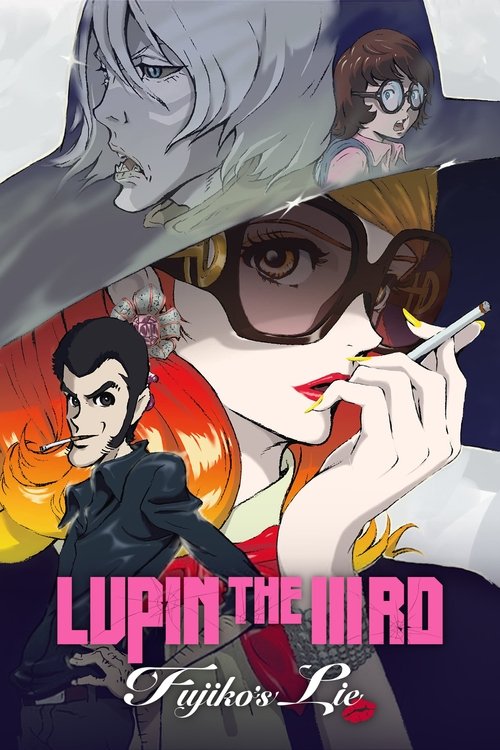
In the ending of "Lupin the IIIrd: Fujiko's Lie," Fujiko Mine confronts her past and the truth about her mother, leading to a dramatic showdown with the antagonist, who has been manipulating events from the shadows. The film concludes with Fujiko embracing her identity, while Lupin and his crew continue their adventures, leaving the door open for future escapades.
As the climax unfolds, Fujiko finds herself in a tense confrontation with the main antagonist, who reveals the truth about her mother's fate and the lies that have shaped her life. The emotional weight of this revelation hits Fujiko hard, as she grapples with feelings of betrayal and the desire for closure. The scene is charged with tension, as the antagonist taunts her with the knowledge of her past, pushing her to the brink.
In a moment of clarity, Fujiko realizes that she must confront her own demons. She fights back, showcasing her cunning and resourcefulness, traits that have defined her character throughout the film. The battle is not just physical; it is a struggle for her identity and autonomy. As she overcomes the antagonist, there is a palpable sense of liberation, as if she is shedding the weight of her past.
Meanwhile, Lupin, Jigen, and Goemon are engaged in their own escapades, trying to support Fujiko from a distance. Their camaraderie is evident as they navigate through various obstacles, showcasing their loyalty to Fujiko. In the end, they reunite, and there is a moment of understanding and acceptance among them. Lupin, with his characteristic charm, reassures Fujiko that her past does not define her, and they share a brief but meaningful connection.
The film concludes with Fujiko standing strong, having faced her past and emerged victorious. The final scenes depict her walking away from the chaos, a symbol of her newfound strength and independence. Lupin and his crew, ever the adventurers, are ready to embark on their next journey, leaving the audience with a sense of hope and anticipation for what lies ahead.
In summary, Fujiko's journey culminates in her acceptance of her identity, while Lupin and his friends remain steadfast in their loyalty, setting the stage for future adventures. Each character's fate is intertwined with the themes of identity, loyalty, and the quest for truth, leaving a lasting impact on the narrative.
Is there a post-credit scene?
In "Lupin the IIIrd: Fujiko's Lie," there is indeed a post-credit scene that adds a layer of intrigue to the film's conclusion. After the credits roll, the scene opens with a dimly lit room where a mysterious figure is seen observing a series of photographs. The camera slowly zooms in on the images, revealing various characters from the film, including Fujiko Mine, Lupin III, and other familiar faces from the franchise.
As the figure leans closer, their identity remains obscured, but a sense of foreboding fills the air. The figure speaks softly, hinting at a deeper plot that intertwines with the events of the film, suggesting that the story is far from over. The scene ends with a close-up of the figure's hand, which holds a small, ornate key, leaving viewers with a tantalizing sense of mystery and the promise of future adventures.
This post-credit moment serves to reinforce the themes of deception and hidden motives that permeate the film, while also teasing potential developments in the ongoing saga of Lupin and his companions.
What is the significance of the painting that Fujiko Mine is after in the movie?
The painting, titled 'The Last Supper,' is central to the plot as it is believed to hold a secret that can lead to immense wealth and power. Fujiko's desire to obtain it is driven by her need to prove herself and escape her past, showcasing her complex relationship with greed and identity.
How does Fujiko's relationship with Lupin evolve throughout the film?
Fujiko's relationship with Lupin is marked by tension and attraction. Initially, she uses him as a means to an end, but as the story progresses, her feelings become more complicated. She grapples with trust and betrayal, ultimately revealing her vulnerabilities and the depth of her feelings for him.
What role does the character of Zenigata play in the story?
Inspector Zenigata serves as both an antagonist and a comic relief in the film. His relentless pursuit of Lupin adds tension to the narrative, but he also provides moments of levity. His motivations are driven by a sense of duty and a desire to capture Lupin, which complicates his interactions with Fujiko.
What are the main obstacles Fujiko faces in her quest for the painting?
Fujiko encounters several obstacles, including rival thieves, law enforcement, and her own past traumas. Each challenge forces her to confront her motivations and the lengths she is willing to go to achieve her goals, highlighting her resilience and cunning.
How does the film explore Fujiko's past and its impact on her character?
The film delves into Fujiko's backstory, revealing her troubled childhood and the events that shaped her into the cunning thief she is. This exploration adds depth to her character, illustrating how her past influences her decisions and relationships, particularly with Lupin.
Is this family friendly?
"Lupin the IIIrd: Fujiko's Lie" is not considered family-friendly and contains several elements that may be objectionable or upsetting for children or sensitive viewers. Here are some aspects to be aware of:
-
Violence: The film features scenes of gunfights, physical confrontations, and bloodshed, which may be intense for younger audiences.
-
Sexual Content: There are suggestive themes and scenes that involve nudity and sexual situations, particularly related to the character Fujiko Mine, which may not be appropriate for children.
-
Dark Themes: The narrative explores themes of betrayal, manipulation, and the darker sides of human nature, which can be unsettling.
-
Mature Language: The dialogue includes strong language and adult conversations that may not be suitable for younger viewers.
-
Psychological Tension: The film delves into complex emotional states, including trauma and deception, which may be difficult for sensitive viewers to process.
Overall, the film's mature content and themes make it more suitable for an adult audience.








