
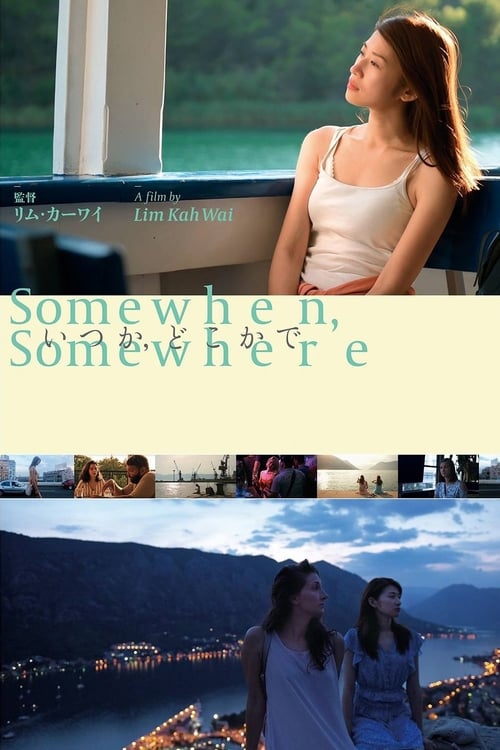





Popular
How does the setting influence the mood and tone of the film?
How does Mia's relationship with her father evolve throughout the film?
What role does the mysterious figure play in Mia's journey?
What is the significance of the time travel element in Somewhen, Somewhere?
What are the key moments that lead to Mia's transformation by the end of the film?
Should I watch it?
Ask Your Own Question

What is the plot?
Sorry, we aren't able to watch and write up a full detailed plot yet. Check back in a few days.








What is the ending?
In the ending of "Somewhen, Somewhere," the main character, a young woman named Mia, confronts her past and the choices she has made. She finds herself at a crossroads, ultimately deciding to embrace her future rather than remain trapped in her memories. The film concludes with Mia stepping into a new beginning, symbolizing hope and renewal.
As the final act unfolds, the scene opens with Mia standing alone in a dimly lit room, surrounded by remnants of her past. The air is thick with nostalgia and regret as she gazes at old photographs scattered across a table. Each image captures moments of joy and sorrow, reflecting the complexity of her relationships, particularly with her estranged father, who has been a significant figure in her life. The weight of her memories presses down on her, and she feels the pull of her past, which has haunted her throughout the film.
In the next scene, Mia receives a phone call from her father, who has been trying to reach out to her. The conversation is tense; she can hear the desperation in his voice as he apologizes for the mistakes he made when she was a child. Mia's internal conflict is palpable as she grapples with her feelings of anger and longing for connection. She hesitates, torn between the desire to forgive and the fear of being hurt again. The camera captures the flicker of emotions across her face, highlighting her struggle.
As the call ends, Mia takes a deep breath, her resolve beginning to solidify. She steps outside into the crisp evening air, the sky painted with hues of orange and purple as the sun sets. This moment serves as a visual metaphor for her transition; the fading light represents the end of one chapter in her life. She walks through the streets of her neighborhood, each step echoing her determination to move forward. The sounds of the city surround her, a reminder of the life that continues beyond her personal struggles.
In a pivotal scene, Mia arrives at a small park where she used to play as a child. The swings creak gently in the breeze, and she sits on one, allowing herself to reflect on her journey. Here, she recalls the laughter and innocence of her youth, juxtaposed with the pain of her family's disintegration. Tears well in her eyes, but they are not solely of sorrow; they are also of release. This moment signifies her acceptance of her past, acknowledging that while it has shaped her, it does not have to define her future.
The climax of the film occurs when Mia decides to reach out to her father. She picks up her phone once more, her fingers trembling as she dials his number. The tension builds as she waits for him to answer. When he does, the conversation is tentative but filled with a sense of hope. Mia expresses her desire to meet, to talk face-to-face, and to begin the process of healing. This decision marks a significant turning point for her character, showcasing her growth and willingness to confront her fears.
The film concludes with Mia standing at the edge of the park, looking out at the horizon. The sun has fully set, but the stars begin to twinkle in the night sky, symbolizing new possibilities. As she walks away from the park, a sense of peace washes over her. The final shot lingers on her face, a mixture of apprehension and optimism, as she steps into the unknown future.
In the end, Mia's journey is one of self-discovery and resilience. She chooses to embrace her future, leaving behind the shadows of her past. The fate of her father remains uncertain, but the film leaves viewers with a sense of hope that reconciliation is possible. Mia's decision to reach out signifies a willingness to heal, not just for herself but for the fractured relationships that have defined her life. The film closes on a note of renewal, emphasizing the importance of facing one's past to forge a brighter future.
Is there a post-credit scene?
In the movie "Somewhen, Somewhere," there is indeed a post-credit scene that adds an intriguing layer to the narrative. After the credits roll, the screen fades back in to reveal a quiet, dimly lit café. The atmosphere is serene, with soft jazz music playing in the background.
In this scene, we see the protagonist, a young woman named Mia, sitting alone at a table, her expression contemplative. She stares out the window, lost in thought, as rain begins to fall outside, creating a rhythmic patter against the glass. The camera slowly zooms in on her face, capturing the mix of hope and uncertainty in her eyes.
Suddenly, the door to the café swings open, and a figure enters, shaking off an umbrella. It's a man, whose face is partially obscured by shadows. As he approaches Mia, the tension in the air is palpable. Mia looks up, her heart racing, and for a moment, time seems to stand still. The man takes a seat across from her, and they share a long, meaningful gaze, suggesting a connection that transcends their previous encounters.
The scene ends with Mia smiling softly, a flicker of recognition in her eyes, hinting at the possibility of new beginnings and the intertwining of their fates. The screen fades to black, leaving the audience with a sense of lingering mystery and the idea that their story is far from over. This post-credit moment encapsulates the film's themes of time, connection, and the choices that shape our lives.
How does the setting influence the mood and tone of the film?
The setting of Somewhen, Somewhere, which oscillates between vibrant urban landscapes and desolate, dreamlike environments, significantly influences the mood and tone of the film. The contrasting visuals reflect Mia's emotional state, with the bustling city representing her chaotic life and the serene, empty spaces symbolizing her introspection and longing for peace.
How does Mia's relationship with her father evolve throughout the film?
Mia's relationship with her father is central to the emotional core of the film. Initially, there is a palpable distance between them, stemming from unresolved issues and past traumas. As Mia travels through time, she gains insights into her father's struggles and sacrifices, leading to moments of vulnerability and connection that ultimately help her understand and forgive him.
What role does the mysterious figure play in Mia's journey?
The mysterious figure, known as The Guide, plays a pivotal role in Mia's journey. This enigmatic character appears at critical junctures, offering cryptic advice and nudging Mia towards self-discovery. The Guide embodies the themes of fate and choice, challenging Mia to confront her fears and embrace the consequences of her actions.
What is the significance of the time travel element in Somewhen, Somewhere?
The time travel element in Somewhen, Somewhere serves as a crucial narrative device that allows the protagonist, a young woman named Mia, to confront her past and make choices that affect her present. As she navigates through different timelines, the emotional weight of her decisions becomes evident, showcasing her internal struggle with regret and the desire for redemption.
What are the key moments that lead to Mia's transformation by the end of the film?
Key moments that lead to Mia's transformation include her encounters with pivotal figures from her past, such as her younger self and her father. Each interaction forces her to confront her fears and regrets, culminating in a powerful scene where she must make a choice that defines her future. This journey of self-reflection and acceptance ultimately allows Mia to embrace her identity and move forward with hope.
Is this family friendly?
"Somewhen, Somewhere" is a film that explores complex themes and emotional depths, which may not be suitable for all children or sensitive viewers. Here are some potentially objectionable or upsetting aspects:
-
Emotional Turmoil: The film delves into themes of loss, grief, and existential questioning, which may be heavy for younger audiences to process.
-
Intense Relationships: There are scenes that depict strained family dynamics and conflicts that could be distressing, particularly for children who may not understand the nuances of adult relationships.
-
Visual Imagery: Some scenes may contain visual elements that evoke a sense of unease or discomfort, reflecting the characters' internal struggles.
-
Mature Themes: The narrative touches on concepts of time, memory, and regret, which might be abstract and challenging for younger viewers to grasp.
-
Isolation and Loneliness: The portrayal of characters experiencing profound loneliness and isolation could resonate negatively with sensitive individuals.
Overall, while the film is rich in storytelling and emotional depth, its themes and scenes may require parental guidance for younger audiences.