
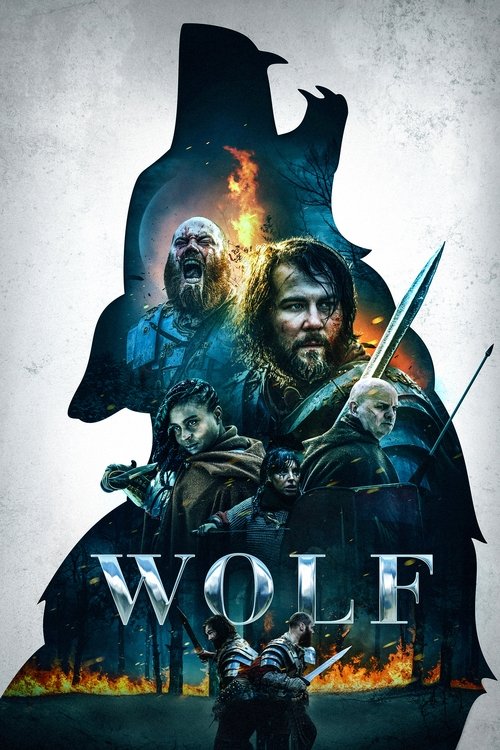










Popular
What motivates the main character, Jacob, to embrace his identity as a wolf?
How does Jacob's relationship with his family evolve throughout the film?
What role does the character of the therapist play in Jacob's journey?
How does the film depict the community of individuals who identify as wolves?
What are the key moments that lead Jacob to fully accept his wolf identity?
Should I watch it?
Ask Your Own Question

What is the plot?
Sorry, we aren't able to watch and write up a full detailed plot yet. Check back in a few days.
More Movies Like This
Browse All Movies →








What is the ending?
In the ending of the movie "Wolf," the protagonist, a young man named Jacob, fully embraces his identity as a wolf. He undergoes a transformation that leads him to a final confrontation with the people around him, culminating in a poignant moment of acceptance and understanding of his true self.
As the film draws to a close, Jacob is seen in a forest, having shed his human constraints. He howls at the moon, embodying the essence of a wolf. The film ends on a note of liberation, suggesting a deep connection to his true nature.
As the final act of "Wolf" unfolds, the atmosphere is thick with tension and anticipation. The scene opens in a dense, shadowy forest, where the moonlight filters through the branches, casting an ethereal glow on the ground. Jacob, the protagonist, stands at the edge of a clearing, his heart racing as he feels the pull of his true identity. The transformation he has been grappling with throughout the film reaches its zenith here.
In this moment, Jacob is no longer the conflicted young man who struggled with societal expectations and his own instincts. Instead, he is fully immersed in the essence of a wolf. His body language shifts; he moves with a newfound grace and confidence, embodying the wild spirit he has longed to embrace. The camera captures the intensity in his eyes, reflecting a mix of freedom and primal instinct.
As he howls at the moon, the sound reverberates through the forest, a haunting yet beautiful call that echoes his acceptance of his identity. This moment is not just a personal victory; it symbolizes a broader theme of self-acceptance and the struggle against societal norms. Jacob's howl is a declaration of his true self, a rejection of the constraints that have held him back.
The scene transitions to a group of people who have been searching for Jacob, concerned for his well-being. They arrive at the edge of the forest, their expressions a mix of worry and confusion. They call out for him, but their voices are swallowed by the night. The tension builds as they venture deeper into the woods, unaware of the transformation that has taken place.
As they reach the clearing, they spot Jacob, now fully in his wolf form. The group is taken aback, their initial shock quickly turning to fear. They see not just a creature but a representation of everything they have failed to understand about Jacob. In this moment, the film highlights the conflict between societal expectations and individual identity. The people around him are unable to reconcile the boy they once knew with the wolf he has become.
Jacob, sensing their fear, does not approach them with aggression. Instead, he stands tall, embodying both the strength and vulnerability of his new identity. The tension in the air is palpable as the group grapples with their emotions--fear, confusion, and a dawning realization of Jacob's journey.
In a poignant climax, Jacob lets out another howl, this time softer, almost inviting. It is a moment of connection, a bridge between his past and his present. The group, still hesitant, begins to understand that this transformation is not a loss but a reclamation of Jacob's true self. They see the beauty in his wildness, the freedom he has found in embracing who he truly is.
As the scene fades, Jacob remains in the clearing, a silhouette against the moonlit sky, embodying the spirit of the wolf. The film concludes with a sense of liberation, leaving the audience with a powerful image of acceptance and the importance of embracing one's true nature.
In the end, Jacob's fate is one of transformation and acceptance. He has shed the constraints of his previous life and embraced his identity as a wolf, finding freedom in his true self. The other characters, while initially fearful, are left to reflect on their understanding of identity and acceptance, marking a significant shift in their perceptions. The film closes on this note of liberation, emphasizing the journey of self-discovery and the courage it takes to embrace one's true nature.
Is there a post-credit scene?
The movie "Wolf," produced in 2019, does not have a post-credit scene. The film concludes its narrative without any additional scenes or content after the credits roll. The story wraps up with a focus on the main themes and character arcs, leaving the audience with a sense of closure regarding the events that transpired throughout the film.
What motivates the main character, Jacob, to embrace his identity as a wolf?
Jacob, the protagonist, is deeply conflicted about his identity throughout the film. His motivation to embrace his identity as a wolf stems from a profound sense of alienation and a longing for acceptance. He feels a strong connection to the wolf persona, which represents freedom and a primal instinct that he struggles to reconcile with societal norms. This internal battle drives him to seek out a community of others who share his feelings, ultimately leading him to embrace his true self.
How does Jacob's relationship with his family evolve throughout the film?
Jacob's relationship with his family is strained from the beginning, as they struggle to understand his unique identity. Initially, his parents are concerned and confused by his behavior, leading to tension and conflict. As Jacob becomes more entrenched in his wolf identity, his family's inability to accept him creates a rift. However, there are moments of vulnerability where Jacob's parents express their love, showcasing their desire to understand him, even as they grapple with their own fears and misconceptions.
What role does the character of the therapist play in Jacob's journey?
The therapist serves as a pivotal figure in Jacob's journey, representing both a source of guidance and a point of contention. Initially, the therapist attempts to help Jacob navigate his feelings of isolation and confusion, encouraging him to explore his identity in a safe environment. However, as Jacob's connection to his wolf identity deepens, the therapist's more conventional approach clashes with Jacob's need for acceptance of his true self. This tension highlights the struggle between societal expectations and personal truth.
How does the film depict the community of individuals who identify as wolves?
The film portrays the community of individuals who identify as wolves as a sanctuary for those like Jacob, who feel marginalized by society. This group is depicted with a sense of camaraderie and understanding, where members share their experiences and support one another in embracing their identities. The community is characterized by rituals and gatherings that celebrate their wolf-like traits, creating a vivid contrast to the outside world that often misunderstands or rejects them. This sense of belonging becomes crucial for Jacob as he navigates his journey.
What are the key moments that lead Jacob to fully accept his wolf identity?
Key moments that lead Jacob to fully accept his wolf identity include his initial encounters with the wolf community, where he feels an overwhelming sense of belonging for the first time. Additionally, a pivotal scene occurs when Jacob participates in a transformative ritual that allows him to connect with his primal instincts, solidifying his acceptance. The culmination of these experiences, along with the emotional support from his peers, empowers Jacob to embrace his identity fully, marking a significant turning point in his character arc.
Is this family friendly?
"Wolf," produced in 2019, is not considered family-friendly due to its mature themes and content. The film explores complex and often dark emotional states, which may be unsettling for children or sensitive viewers.
Potentially objectionable or upsetting aspects include:
-
Animalistic Behavior: The film delves into themes of identity and transformation, featuring characters who exhibit animalistic traits, which may be disturbing for some viewers.
-
Isolation and Loneliness: The protagonist experiences profound feelings of isolation and struggle with their identity, which could evoke strong emotional responses.
-
Intense Emotional Scenes: There are moments of intense emotional conflict and distress that may be difficult for younger audiences to process.
-
Physical Altercations: The film may contain scenes of physical confrontation or aggression that could be alarming.
-
Themes of Mental Health: The exploration of mental health issues and the characters' struggles with their identities may be heavy and complex for younger viewers.
Overall, the film's exploration of identity and the human condition is profound but may not be suitable for children or those sensitive to such themes.







