









Popular
What is the relationship between the two brothers in My Brother's Keeper?
How does Sam's past influence his actions in the film?
What pivotal event causes a rift between the brothers?
How does the film portray the theme of sacrifice between the brothers?
What role does the family dynamic play in the brothers' relationship?
Should I watch it?
Ask Your Own Question

What is the plot?
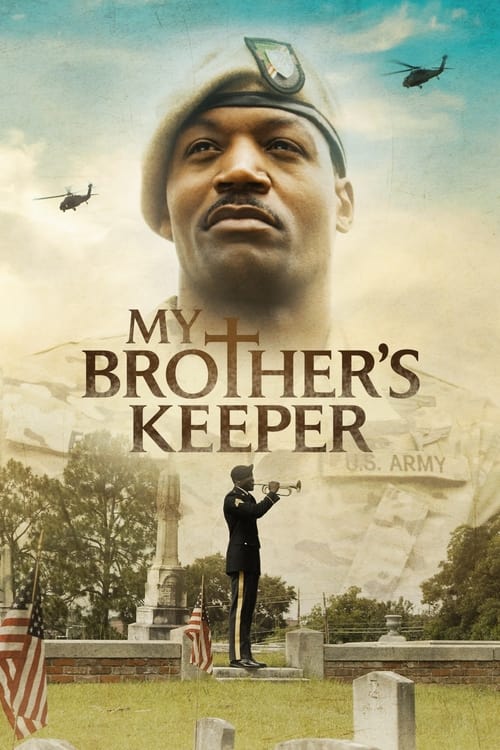
My Brother's Keeper opens with SFC Travis Fox already broken by war, and the film wastes no time showing that his homecoming is not a relief but another battlefield. Travis is an Army Ranger in his sixth combat deployment with his best friend, SFC Ron "Preach" Pearcy, when disaster strikes overseas: Preach and his entire Ranger platoon are killed in a deadly ambush, described in the film's summary as an IED attack. The loss hits Travis like a physical blow. He survives, but he comes home carrying the weight of everybody who did not. From the beginning, his grief is fused with guilt, and the story makes it clear that this is not just about mourning a friend; it is about a man who feels he should have died with him.
When Travis returns to his hometown, the atmosphere is immediately thick with unfinished business. He is there to settle the affairs of his parents, who died two years earlier in a car accident. That domestic grief becomes the second wound in the story, and the film ties it to a small but emotionally loaded object: a necklace his mother was wearing the day she died. The necklace was a gift from Travis, something intimate and personal, and the fact that it is missing from her belongings becomes a mystery he cannot ignore. The search for it gives him a concrete mission at a time when his inner life is collapsing. He is looking for an object, but what he really wants is a reason to believe his family's story still makes sense.
The hometown itself is not peaceful. Travis comes back to find it under the grip of a ruthless drug kingpin who pressures local business leaders for money and holds power through fear. The film uses that criminal presence to raise the stakes around Travis's homecoming, because the people he once knew are now trapped in a corrupt, dangerous system. One of the most important people caught in that web is Travis's childhood friend Donnie Berry. Donnie is hiding a secret from Travis, and that secret is serious enough that it gives the kingpin leverage over him. Travis, still raw from war and family loss, is pulled into Donnie's problems almost before he has time to process his own.
As Travis starts moving through town, every place feels charged with memory. He is no longer the man he was before deployment; the film emphasizes his disorientation, flashbacks, and emotional volatility as symptoms of PTSD. His suffering is not presented as abstract. It shows up as fear, anger, guilt, and a sense that his body has come home while his mind remains trapped in combat. That inner fracture grows sharper as he tries to make sense of his parents' deaths and the missing necklace. The necklace becomes more than a keepsake. It becomes proof that something about his mother's final moments is still hidden from him.
The emotional turning point comes when Travis begins to receive help from Dr. Tiffany Roberts, a church counselor who offers him both practical support and spiritual guidance. Tiffany is calm where Travis is storming, and she becomes the first person to consistently push him toward honesty about what he is feeling. Their conversations frame the story's central conflict as more than just trauma or mystery; it is also about faith. Travis has to decide whether he believes he is abandoned by God or whether the pain he is carrying can be faced without losing himself. Tiffany does not magically fix him. Instead, she helps him admit how deeply he is unraveling and forces him to confront the possibility that healing will require surrender rather than control.
Meanwhile, the pressure around Donnie intensifies. Travis learns that his childhood friend is entangled in something far darker than he first understood. Donnie has been keeping a devastating secret hidden for years, and that secret is tied to both the kingpin's control and Travis's own sense of betrayal. The revelation hits Travis at the worst possible time, because he is already fighting to keep his own mind from collapsing. Donnie's hidden truth threatens not only their friendship but Travis's faith in people and in the order of the world. The film builds this tension carefully: the missing necklace, the criminal threats, the buried family truth, and the war trauma all begin to converge until Travis can no longer tell which pain is coming from the past and which is happening in front of him.
As the story moves toward its climax, Travis's life spirals. His PTSD becomes harder to contain, and he starts to feel that he is losing the battle inside himself. The film's summary makes clear that he even begins to consider the unthinkable, which gives the final act its heaviness and urgency. This is the point where the external mystery and internal crisis fully merge. The missing necklace is no longer just about his mother. It is part of a larger truth about what happened in his family and how much of his life has been shaped by secrets he never knew were there. Donnie's silence becomes unbearable because it is now tied to Travis's ability to survive the emotional collapse he is experiencing.
The truth behind the necklace is eventually revealed, along with the devastating secret Donnie has been hiding. The available plot material does not support a scene-by-scene reconstruction of every confession and every confrontation, but it is clear that the hidden reality is enough to shake Travis's entire understanding of his parents' deaths, his friendship with Donnie, and his own future. The film treats this revelation as a spiritual and emotional rupture. What Travis thought he was searching for--a necklace--turns out to be tied to the much larger question of how much pain can be carried before it destroys a person. The secret does not simply embarrass or surprise him; it threatens the fragile faith he has begun to rebuild.
The final movement of the film resolves around Travis's decision to keep living. Dr. Tiffany Roberts' influence proves crucial here, because through her support Travis starts to seek real help rather than continuing to suffer in silence. The film's ending is not about miraculous instant recovery. Instead, it shows a man beginning to choose healing, even though he is not fully healed. Travis acknowledges the depth of his trauma and accepts that he needs support for his mind as well as his spirit. That choice gives the ending its emotional release: the war did not end when he came home, but he no longer faces it alone.
By the end, the story has revealed all of its central wounds. Ron "Preach" Pearcy is dead in combat, killed in the ambush that wipes out his Ranger platoon. Travis's parents are dead from the car accident two years earlier. The missing necklace belonged to his mother and was last seen with her on the night she died. Donnie Berry's secret is finally exposed and changes the meaning of everything Travis believed about his return home. The drug kingpin's intimidation and control have framed the danger around him, but the deepest conflict is inside Travis himself, in the struggle between guilt and survival. The last emotional note is one of difficult hope: Travis does not emerge untouched, but he does begin to reclaim his faith, face his PTSD, and move toward a future that is no longer defined entirely by death.









What is the ending?
In the ending of "My Brother's Keeper," the story culminates in a tense confrontation that leads to a tragic resolution. The main character, who has been grappling with the weight of family loyalty and personal sacrifice, ultimately makes a choice that impacts everyone involved. The film concludes with a sense of unresolved tension, leaving the audience to reflect on the complexities of brotherhood and the consequences of choices made in desperate circumstances.
As the final act unfolds, we find ourselves in a dimly lit warehouse, the air thick with tension. The protagonist, Alex, stands at the center, his face a mask of determination mixed with fear. He has been driven to this moment by a series of events that have tested his loyalty to his brother, Jake, who has been embroiled in a dangerous situation. The stakes are high, and the weight of their shared past hangs heavily in the air.
Scene by scene, the tension escalates. Alex receives a frantic call from Jake, who is cornered by a group of menacing figures. The urgency in Jake's voice is palpable, filled with desperation and a plea for help. Alex's heart races as he grapples with the decision to intervene, knowing that doing so could put him in grave danger. He recalls their childhood, the bond they shared, and the promises made to always protect one another. This internal conflict is mirrored in his physical state; he paces back and forth, his hands trembling as he weighs the risks.
As Alex arrives at the warehouse, he is met with a stark contrast to the memories of laughter and safety from their youth. The atmosphere is charged with hostility, and the shadows seem to loom larger than life. He spots Jake, visibly shaken and surrounded by the antagonists. The sight of his brother in peril ignites a fierce protective instinct within him. Alex's resolve hardens, and he steps forward, ready to confront the danger head-on.
The confrontation is intense. Words are exchanged, filled with accusations and threats. Alex stands firm, his voice steady despite the chaos around him. He tries to reason with the men, but the situation quickly spirals out of control. In a moment of desperation, Jake attempts to escape, leading to a frantic chase through the warehouse. The camera captures the frantic energy, the sound of footsteps echoing against the concrete walls, and the palpable fear in Jake's eyes.
In a heart-stopping moment, Alex makes a split-second decision to protect Jake at all costs. He confronts the leader of the antagonists, a figure shrouded in menace, and a physical altercation ensues. The fight is brutal, showcasing Alex's determination and the lengths he is willing to go for his brother. However, the odds are stacked against him, and the struggle culminates in a tragic turn of events.
As the dust settles, the aftermath is devastating. Alex lies on the ground, injured but alive, while Jake, witnessing the sacrifice, is left in shock. The emotional weight of the moment is heavy; Jake realizes the true cost of their bond and the lengths to which Alex has gone to protect him. The camera lingers on Jake's face, capturing the turmoil of guilt and sorrow as he cradles his brother, the realization of their fractured lives dawning upon him.
In the final scenes, we see the brothers' relationship irrevocably changed. Alex, though alive, is left with physical and emotional scars that will take time to heal. Jake, burdened by the consequences of their choices, is left to navigate a world where the lines of loyalty and sacrifice have blurred. The film closes on a somber note, emphasizing the complexities of brotherhood, the weight of choices made in desperation, and the enduring impact of familial bonds. The screen fades to black, leaving the audience to ponder the intricate dynamics of love, sacrifice, and the haunting echoes of their shared past.
Is there a post-credit scene?
In the movie "My Brother's Keeper," there is no post-credit scene. The film concludes with a poignant resolution that encapsulates the emotional journey of the characters, particularly focusing on the bond between the brothers and the lessons learned throughout their struggles. The ending leaves the audience with a sense of closure, emphasizing themes of family, forgiveness, and the importance of support in times of hardship. As the credits roll, viewers are left to reflect on the narrative without any additional scenes or revelations.
What is the relationship between the two brothers in My Brother's Keeper?
The two brothers, Jake and Sam, share a deep bond that is tested throughout the film. Jake, the older brother, is protective and often takes on the role of caretaker for Sam, who struggles with personal demons and a troubled past. Their relationship is characterized by a mix of love, loyalty, and the weight of family expectations.
How does Sam's past influence his actions in the film?
Sam's past is marked by trauma and mistakes that haunt him, leading to a sense of guilt and a struggle for redemption. His internal conflict drives many of his decisions, as he grapples with the desire to prove himself to Jake and the fear of repeating past failures.
What pivotal event causes a rift between the brothers?
A pivotal event occurs when Sam makes a reckless decision that endangers both himself and Jake. This incident not only strains their relationship but also forces them to confront their unresolved issues, leading to a dramatic confrontation that reveals their vulnerabilities.
How does the film portray the theme of sacrifice between the brothers?
The theme of sacrifice is portrayed through Jake's willingness to put his own dreams on hold to support Sam. This is highlighted in several key scenes where Jake prioritizes Sam's well-being over his own, showcasing the depth of their bond and the emotional toll it takes on him.
What role does the family dynamic play in the brothers' relationship?
The family dynamic is crucial in shaping the brothers' relationship. Their parents' expectations and the pressure to uphold family honor create tension, influencing their interactions. The film explores how these familial pressures impact their choices and ultimately their connection to one another.
Is this family friendly?
"My Brother's Keeper," produced in 2021, is a drama that explores themes of family, loyalty, and the complexities of relationships. While the film is centered around emotional and heartfelt storytelling, it does contain some elements that may be considered objectionable or upsetting for children or sensitive viewers.
-
Themes of Loss and Grief: The film deals with the emotional aftermath of loss, which may be heavy for younger audiences or those sensitive to themes of death and mourning.
-
Family Conflict: There are scenes depicting intense family disagreements and conflicts that may be distressing, showcasing the strain that difficult circumstances can place on relationships.
-
Emotional Turmoil: Characters experience significant emotional struggles, including feelings of guilt, regret, and despair, which may be intense for some viewers.
-
Substance Abuse: There are references to substance abuse issues that may be portrayed in a serious light, potentially uncomfortable for younger viewers.
-
Violence: While not graphic, there may be moments of tension or implied violence that could be unsettling.
Overall, while the film carries a strong message about family and support, its emotional weight and some thematic elements may not be suitable for all children or sensitive individuals.








