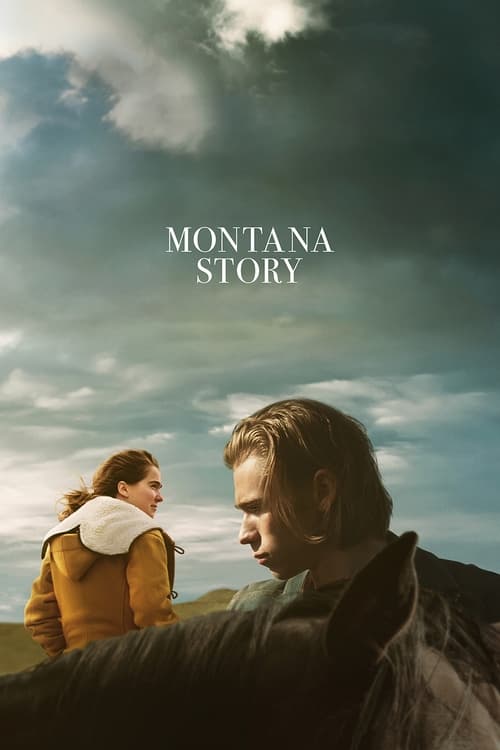








Popular
What is the relationship between the main characters, Cal and Erin?
What is the significance of the family ranch in the story?
How does Cal cope with his father's condition throughout the film?
What role does the setting of Montana play in the characters' development?
How does Erin's character evolve throughout the film?
Should I watch it?
Ask Your Own Question

What is the plot?
Sorry, we aren't able to watch and write up a full detailed plot yet. Check back in a few days.

What is the ending?
In the ending of "Montana Story," the siblings, Cal and Erin, confront their past and their father's legacy. Cal decides to let go of the family ranch, while Erin finds a sense of closure. The film concludes with a poignant moment of reconciliation between them, symbolizing their emotional journey and the healing of old wounds.
As the final act unfolds, the scene opens with Cal standing in the expansive, rugged landscape of Montana, the sun setting behind the mountains, casting a warm glow over the land. He is grappling with the weight of his decisions regarding the family ranch, which has been a source of pain and conflict. The air is thick with tension as he reflects on his father's legacy and the burden it has placed on him.
Erin arrives, her expression a mix of determination and vulnerability. She has come to confront her brother about their father's deteriorating health and the implications for their future. The siblings engage in a heartfelt conversation, revealing their deep-seated emotions and unresolved issues. Erin expresses her desire to move forward, while Cal struggles with the idea of letting go of the ranch that has defined their family.
As they talk, the camera captures the vastness of the Montana landscape, emphasizing the isolation they both feel. The dialogue is raw and honest, filled with moments of silence that speak volumes about their shared history. Erin's voice trembles as she recounts memories of their childhood, the joy and pain intertwined in their experiences. Cal listens, his face a mask of conflict, torn between loyalty to his father and the need to break free from the past.
In a pivotal moment, Cal reveals his decision to sell the ranch, a choice that shocks Erin. She reacts with a mix of anger and sadness, fearing that this decision will erase their family's history. However, as they continue to talk, the tension begins to dissipate. They start to understand each other's perspectives, and the conversation shifts from confrontation to a deeper connection.
The scene transitions to a quiet moment where they sit together on the porch of the family home, the sun dipping below the horizon. The warmth of the fading light envelops them, symbolizing the possibility of healing. Cal and Erin share a moment of silence, both lost in their thoughts, but now united in their shared experience. They acknowledge the pain of their father's choices but also recognize the strength they have found in each other.
As the film draws to a close, Cal and Erin make a pact to support each other moving forward, regardless of the changes that lie ahead. The final shot lingers on their faces, a mixture of relief and hope, as they look out over the land that has shaped their lives. The camera pulls back, revealing the vast Montana landscape once more, a testament to their journey and the new path they are ready to forge together.
In the end, Cal decides to embrace a future free from the weight of their father's legacy, while Erin finds closure in their shared memories. The film concludes with a sense of renewal, highlighting the importance of family bonds and the possibility of healing from past wounds.
Is there a post-credit scene?
Montana Story does not have a post-credit scene. The film concludes its narrative without any additional scenes after the credits roll, focusing instead on the emotional resolution of the characters' journeys throughout the story. The ending encapsulates the themes of reconciliation and healing, leaving the audience with a sense of closure regarding the characters' arcs.
What is the relationship between the main characters, Cal and Erin?
Cal and Erin are estranged siblings who reunite in Montana after a long period of separation. Their relationship is strained due to past family trauma and unresolved issues stemming from their father's illness and the family's ranching legacy.
What is the significance of the family ranch in the story?
The family ranch serves as a central symbol in the film, representing both the characters' shared history and the burdens of their familial obligations. It is a place of conflict, nostalgia, and ultimately, a setting for reconciliation as Cal and Erin confront their past.
How does Cal cope with his father's condition throughout the film?
Cal struggles with his father's deteriorating health, feeling a mix of anger, guilt, and helplessness. His emotional journey involves grappling with his father's legacy and the weight of responsibility that comes with caring for him, which leads to moments of introspection and vulnerability.
What role does the setting of Montana play in the characters' development?
The vast and rugged landscape of Montana reflects the internal struggles of the characters. The isolation and beauty of the environment serve as a backdrop for their emotional confrontations, allowing them to reconnect with their roots and each other amidst the challenges they face.
How does Erin's character evolve throughout the film?
Erin begins as a character burdened by her past and her complicated feelings towards her family. As the story progresses, she confronts her fears and insecurities, ultimately finding strength in her connection to Cal and the land, leading to a deeper understanding of herself and her place in the family.
Is this family friendly?
"Montana Story," produced in 2022, is a drama that explores complex family dynamics and emotional struggles. While it is not explicitly a family-friendly film, it does not contain overtly graphic content. However, there are several potentially objectionable or upsetting aspects that may affect children or sensitive viewers:
-
Themes of Grief and Loss: The film delves into heavy themes surrounding the death of a family member, which may be emotionally challenging for younger audiences.
-
Family Conflict: There are intense emotional confrontations between characters that may be distressing, showcasing deep-seated familial issues and unresolved tensions.
-
Depictions of Illness: The film includes scenes that portray the physical and emotional toll of illness, which could be upsetting for some viewers.
-
Emotional Turmoil: Characters experience significant emotional pain, including feelings of regret, anger, and sadness, which may resonate deeply and evoke strong feelings.
-
Isolation and Loneliness: The narrative explores feelings of isolation, which may be difficult for sensitive viewers to engage with.
Overall, while "Montana Story" is a poignant exploration of family and personal struggles, its emotional weight and mature themes may not be suitable for all audiences, particularly children.