


















































Popular
What are some of the key moments in Ennio Morricone's career highlighted in the film?
How does the film portray Morricone's relationship with directors?
What personal challenges did Ennio Morricone face throughout his life as depicted in the film?
How does the film illustrate Morricone's creative process when composing music?
What role does Morricone's family play in the documentary?
Should I watch it?
Ask Your Own Question

What is the plot?
Sorry, we aren't able to watch and write up a full detailed plot yet. Check back in a few days.



What is the ending?
In the ending of "Ennio," the film culminates in a poignant reflection on the life and legacy of Ennio Morricone, showcasing his profound impact on the world of music and cinema. The film concludes with a celebration of his work, featuring tributes from various filmmakers and musicians, as well as a final montage of his iconic scores.
As the credits roll, the audience is left with a sense of reverence for Morricone's artistry and the emotional depth he brought to film music, underscoring the themes of creativity, passion, and the enduring power of music.
As the film "Ennio" approaches its conclusion, the narrative shifts into a reflective tone, capturing the essence of Ennio Morricone's life and his monumental contributions to film music. The final scenes unfold with a series of interviews and testimonials from renowned directors and musicians who have been profoundly influenced by Morricone's work.
Scene by scene, the film transitions into a montage that highlights the emotional weight of Morricone's scores. The screen fills with clips from his most famous films, such as "The Good, the Bad and the Ugly," "Once Upon a Time in America," and "Cinema Paradiso." Each clip is accompanied by Morricone's evocative music, which resonates deeply with the audience, evoking nostalgia and admiration.
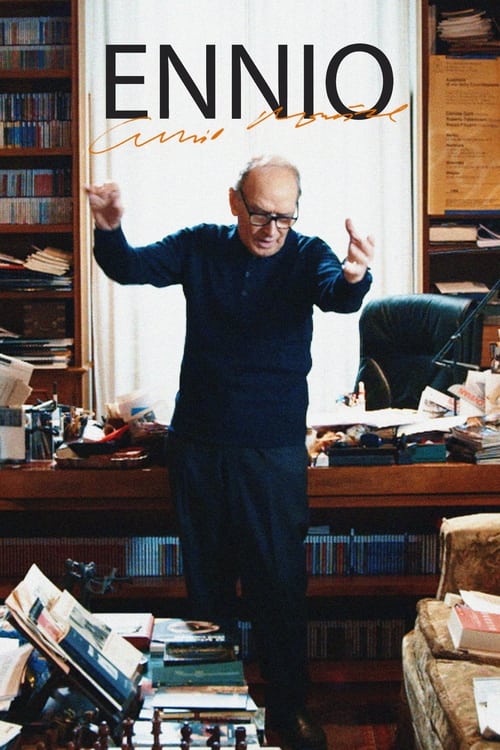
In one poignant moment, a director recalls the first time he heard Morricone's score, describing how it transformed his understanding of film music. The camera captures the director's emotional response, his eyes glistening with tears as he speaks about the power of Morricone's compositions to elevate storytelling. This scene is interspersed with visuals of Morricone conducting orchestras, his passion evident in every gesture, as he brings his music to life.
The film then shifts to a more personal reflection, showcasing Morricone's family and friends. They share intimate anecdotes about his dedication to his craft, revealing the man behind the music. A close-up of Morricone's wife, who speaks tenderly about their life together, adds a layer of warmth and humanity to the narrative. Her voice trembles with emotion as she recounts how his music was not just a profession but a vital part of their shared existence.
As the final credits begin to roll, the screen fills with a montage of Morricone's most iconic scores, each accompanied by scenes from the films they belong to. The audience is treated to a symphony of sound and imagery, a celebration of a legacy that transcends time. The music swells, and the visuals become increasingly powerful, leaving viewers with a profound sense of loss and gratitude for the artistry of Ennio Morricone.
In the closing moments, the film emphasizes the universal language of music, illustrating how Morricone's work continues to resonate with audiences around the world. The final shot lingers on a grand concert hall filled with people, all united in their appreciation for Morricone's genius. The screen fades to black, leaving behind a lasting impression of a life dedicated to the beauty of sound and the emotional connections it fosters.
Ultimately, the fate of Ennio Morricone is one of enduring legacy. Though he has passed, his music lives on, continuing to inspire and evoke emotions in generations to come. The film encapsulates the essence of his journey, celebrating not just his achievements but the profound impact he had on the art of film music and the hearts of those who experienced it.
Is there a post-credit scene?
The movie "Ennio," produced in 2022, does not feature a post-credit scene. The film concludes its narrative without any additional scenes or content after the credits roll. Instead, it focuses on the life and legacy of the legendary composer Ennio Morricone, showcasing his profound impact on film music through a series of interviews, archival footage, and musical excerpts. The film wraps up with a reflective tone, celebrating Morricone's artistry and the emotional resonance of his work, leaving the audience with a sense of closure regarding his remarkable journey.
What are some of the key moments in Ennio Morricone's career highlighted in the film?
The film chronicles pivotal moments in Ennio Morricone's career, including his early work in the 1960s with director Sergio Leone on iconic films like 'A Fistful of Dollars' and 'The Good, the Bad and the Ugly.' It showcases how Morricone's innovative use of sound and music transformed the Western genre, emphasizing his unique ability to blend orchestral music with unconventional instruments.
How does the film portray Morricone's relationship with directors?
The film delves into Morricone's collaborations with various directors, particularly his long-standing partnership with Sergio Leone. It captures the deep mutual respect and creative synergy between them, illustrating how Morricone's scores were integral to the emotional depth of Leone's films. The documentary also touches on his work with other notable directors like Bernardo Bertolucci and Quentin Tarantino, showcasing the evolution of his style and the impact of these relationships on his music.
What personal challenges did Ennio Morricone face throughout his life as depicted in the film?
The film reveals personal challenges Morricone faced, including the struggle for recognition in a competitive industry and the pressure of living up to his own high standards. It also touches on his feelings of isolation and the emotional toll of his creative process, providing insight into how these challenges influenced his music and personal life.
How does the film illustrate Morricone's creative process when composing music?
The documentary provides an intimate look at Morricone's creative process, showcasing him at work in the studio. It highlights his meticulous attention to detail, his use of unconventional sounds, and his ability to evoke emotion through music. Interviews with Morricone reveal his thoughts on inspiration, collaboration, and the importance of understanding the narrative of the films he scores.
What role does Morricone's family play in the documentary?
Morricone's family is featured prominently in the documentary, providing personal anecdotes and insights into his life outside of music. Their reflections reveal the support system that helped him navigate his career, as well as the sacrifices made by both Morricone and his family in pursuit of his artistic ambitions. This familial perspective adds depth to the understanding of Morricone as not just a composer, but as a husband and father.
Is this family friendly?
"Ennio," the 2022 documentary about the legendary film composer Ennio Morricone, is generally suitable for a wide audience, including families. However, there are a few aspects that might be considered objectionable or upsetting for children or sensitive viewers:
-
Discussion of Death: The film touches on themes of mortality, particularly in relation to Morricone's reflections on his life and the loss of loved ones, which may be heavy for younger viewers.
-
Emotional Interviews: Some interviews with Morricone and those close to him may evoke strong emotions, including sadness and nostalgia, as they discuss personal experiences and the impact of his work.
-
Historical Context: The documentary includes references to historical events and conflicts that may be distressing, such as war and violence, which are often depicted in the films for which Morricone composed music.
-
Mature Themes: There are discussions about the complexities of the film industry, including competition and personal struggles, which may be more suitable for older children or teens.
Overall, while the film is a celebration of Morricone's life and work, the emotional depth and some thematic elements may require parental guidance for younger viewers.








