




Popular
How does the relationship between Alex and his mentor, Sarah, evolve throughout the film?
What motivates the main character, Alex, to pursue his dreams despite repeated failures?
What role does the character of Jake play in Alex's journey, and how does he influence the plot?
What specific failures does Alex experience that shape his character development?
How does the climax of the film reflect Alex's internal struggles and growth?
Should I watch it?
Ask Your Own Question

What is the plot?
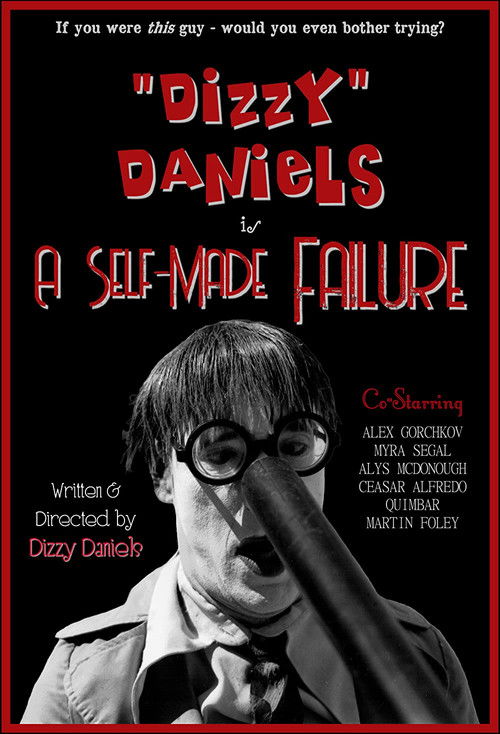
Dizzy Daniels is already a man running on fumes when the story opens: a chronic loser with a squeegee in his hand, a half-broken life in his pockets, and the city of Montreal looking at him like he is one more nuisance on the sidewalk. He spends his days cleaning windshields at street corners, hustling for scraps, and trying to stay one step ahead of the shame that clings to him. Then, in one filthy burst of bad luck, everything begins to collapse. A convenience store robber tears away from the scene in an escape car, Dizzy wipes down the vehicle without realizing what he has touched, and suddenly the police decide he is the man they want. Officer Alexandre A. Piggins, a corrupt Montreal police officer, does not merely mishandle the situation--he becomes one of the engines of Dizzy's destruction, taking the money Dizzy needs to survive and deepening the trap around him. From that moment on, Dizzy is no longer just poor and unlucky; he is actively being pushed under. The city becomes a machine that misreads him, swallows him, and spits him back out in pieces.
The first blow lands at home. Dizzy cannot pay his rent, and the pressure of the missing money turns into a simple, humiliating fact: he is out. His landlady throws him from the apartment, and the door that once separated him from the street slams shut behind him. The eviction is not a dramatic twist so much as a brutal confirmation of how far he has fallen. The apartment, once the last fragile sign of normal life, is gone. He stands in the aftermath with nowhere to go, while the city noise keeps flowing around him as if nothing has changed. In the same opening stretch, his girlfriend Mary sees the wreckage of his life and breaks up with him, leaving Dizzy not just homeless but also alone. The sequence makes his collapse feel total: money, shelter, love, dignity--all removed in quick succession.
From there, the film keeps tightening the noose with grim slapstick momentum. Dizzy is not the sort of character who can cleanly hit bottom and then start rebuilding. Instead, every attempt to recover turns into another humiliation. He is forced onto the street, and the sidewalks that once served as his workplace become the place where he now sleeps, scavenges, and drifts. He looks through newspapers for jobs, trying to pretend that a new path is still possible, but the effort has the sad, temporary feel of someone assembling a life out of damp paper. The newspapers suggest a man trying to think forward; the streets suggest a man being erased in real time.
At one point, the pressure becomes so overwhelming that Dizzy tries to take his own life. The film treats this not as a solemn, fixed ending but as part of its escalating absurdity: even his attempt at self-destruction fails, and instead of release he gets dragged deeper into trouble with the law. The detail matters because it shows how completely the universe of the film refuses him any clean exit. Even despair does not work. Even death will not take him. He survives only to be misread again, chased again, and trapped again.
As his situation worsens, Dizzy falls into the kind of street-level survival that gives the film its bleak comic edge. He scavenges food from dumpsters and alleyways, reduced to eating what the city discards. The visual is raw and humiliating: a man once just trying to make rent now rifling through trash for a meal, his body moving with the cautious, practiced reflexes of someone who has learned that hunger is louder than pride. The streets around him feel crowded but indifferent, lit by the hard glow of urban night and the bureaucratic violence of a police force that seems to exist mainly to misunderstand him.
The crucial revelation comes later and reframes everything. Dizzy eventually realizes that he has been mistakenly identified as a thief. The film lets that misunderstanding fester for a long time before making it explicit, so that his chaos feels self-generated until the truth finally clicks into place. The turning point arrives in one of the story's most ironical and bitterly funny gags: Dizzy is hired to paste up his own wanted posters across the city. The city suddenly becomes a hall of mirrors. He is literally carrying his own criminal image from wall to wall, participating in the public campaign to catch the very person standing in front of the paper. When the realization lands, it is not just a plot twist but an emotional collapse--a moment where the entire system's stupidity becomes visible at once. Dizzy understands, finally, that the authorities and everyone else have been chasing the wrong man.
That poster sequence turns the film from a story of bad luck into one of grotesque injustice. The wanted notices are not merely signs; they are the public face of his ruin. They convert him into an object, a caricature, a criminal legend. The reward attached to his capture--$500,000 for "Wanted Dead or Alive"--raises the stakes around him and explains why the city suddenly feels more dangerous, more frantic, and more predatory. He is no longer just dodging embarrassment or arrest; he is being hunted as if his life has become a prize. The irony is savage: the man who has been trying all along to prove himself innocent only discovers that innocence has not protected him from being monetized, mislabeled, and pursued.
Officer Alexandre A. Piggins remains the story's most visible face of corruption, the one who takes Dizzy's money and helps set the entire collapse in motion. His role is not simply to be a bad cop in the abstract, but to embody the way authority turns contempt into consequence. Piggins does not care about truth; he cares about control and convenience. His actions help transform Dizzy from a low-level street worker into a fugitive figure. That makes every later confrontation feel poisoned from the start, because the initial lie has already spread through the system. By the time Dizzy is carrying posters of himself through the city, the damage is no longer one man's mistake--it is institutional, social, and irreversible.
Mary's breakup deepens the emotional wound. She is not written as a villain; rather, she is part of the human fallout of a man whose life has become impossible to share. When she leaves, the film closes another door, and Dizzy becomes more solitary, more desperate, more defined by his own public humiliation. The breakup works as a quiet counterpoint to the louder police absurdity: one is personal rejection, the other systemic persecution, and together they squeeze the last warmth out of his life. The apartment eviction, the loss of Mary, the theft of his money, the false accusation, the suicide attempt, the street scavenging, the wanted posters--each one lands like another piece of him being stripped away.
The tension builds toward the film's final comic catastrophe as Dizzy continues moving through the city under the shadow of the warrant and the reward. The wanted-poster reveal makes the ending feel less like a conventional resolution and more like a terrible punchline held just long enough to become tragic. The city has publicly declared him guilty while the truth remains buried under bureaucracy and noise. The last major movement of the story is Dizzy's recognition that his life has been hijacked by a mistake so absurd it almost feels engineered by fate. He has been living as a ruined man, but now he knows the ruin is also a lie.
No deaths are confirmed in the available story material, and the film's violence is primarily social, financial, and institutional rather than fatal. That absence matters because it leaves Dizzy alive at the center of an increasingly cruel joke. He does not die; he endures. He does not get a clean redemption; he gets recognition of the fraud done to him. The ending, as the available plot information shows, culminates in the revelation that he has been mislabeled and in the bitter irony of his own wanted poster job, which becomes the story's emblem of humiliation and misdirection.
By the end, Dizzy stands as the film's fully crushed but still moving center: a man who starts as a pathetic squeegee cleaner, loses his money to a corrupt officer, is mistaken for a criminal, loses his home, loses his girlfriend, fails to end his own life, eats from dumpsters, and finally discovers that the city has been chasing the wrong person all along. The final emotional effect is one of exhausted absurdity. Nothing in his life has been fixed, and the film does not pretend otherwise. Instead, it leaves him inside the contradiction at its core: innocent, ruined, visible everywhere on paper, and still somehow alive in the streets that tried to erase him.









What is the ending?
In the ending of "A Self-Made Failure," the protagonist, Alex, confronts his past mistakes and seeks redemption. He reconciles with his estranged father, leading to a heartfelt moment of forgiveness. Meanwhile, his best friend, Jamie, finds the courage to pursue her dreams, and they both realize the importance of support and understanding in their lives. The film concludes with Alex taking a step towards a new beginning, symbolizing hope and personal growth.
As the final act unfolds, the scene opens in a dimly lit café where Alex sits alone, staring at a half-empty cup of coffee. The weight of his past failures hangs heavily on his shoulders. He reflects on the choices that led him to this moment, feeling a mix of regret and determination. The camera captures the flickering candlelight, casting shadows that mirror his internal struggle.
Suddenly, the door swings open, and Jamie enters, her face a mixture of excitement and apprehension. She approaches Alex, and they engage in a heartfelt conversation. Jamie reveals that she has decided to pursue her passion for art, a dream she had shelved for too long. Alex, initially hesitant, feels a surge of pride for his friend. This moment marks a turning point for both characters, as they begin to understand the importance of following their dreams.
The scene shifts to a park where Alex's father, Robert, is seen sitting on a bench, lost in thought. The camera zooms in on his weathered face, revealing the pain of estrangement from his son. Alex approaches cautiously, his heart racing. The tension is palpable as they exchange awkward greetings. Robert's eyes reflect years of disappointment, but Alex takes a deep breath and speaks from the heart, expressing his desire to mend their fractured relationship.
As they talk, the dialogue reveals their shared vulnerabilities. Robert admits his own failures as a father, and Alex shares the burden of his past mistakes. The emotional weight of their conversation builds, and the camera captures the tears welling in both men's eyes. In a powerful moment of reconciliation, they embrace, symbolizing forgiveness and the possibility of a fresh start.
The final scene transitions to a vibrant art gallery where Jamie's work is being showcased. The atmosphere is filled with laughter and applause as friends and family admire her creations. Alex stands at the entrance, a proud smile on his face, watching Jamie thrive. This moment signifies not only her success but also the strength of their friendship.
As the credits begin to roll, the camera pans out, showing Alex stepping outside into the sunlight, a renewed sense of purpose in his stride. He glances back at the gallery, where Jamie is surrounded by admirers, and he realizes that while the journey to self-acceptance is ongoing, he is no longer alone. The film closes on a hopeful note, emphasizing the themes of redemption, friendship, and the courage to embrace one's true self.
Is there a post-credit scene?
In the movie "A Self-Made Failure," produced in 2022, there is indeed a post-credit scene that adds an intriguing layer to the narrative.
As the credits roll, the screen fades to black before transitioning to a dimly lit room filled with scattered papers and a flickering computer screen. The camera slowly zooms in on a figure hunched over the desk, their face obscured by shadows. The sound of frantic typing fills the air, creating a sense of urgency and tension.
The figure pauses, glancing nervously over their shoulder, revealing a familiar face--one of the supporting characters who had been a minor antagonist throughout the film. Their expression is a mix of determination and anxiety, hinting at a deeper plan that was not fully explored in the main storyline.
Suddenly, the character leans back in their chair, a smirk creeping across their face as they pull up a document titled "Project Rebirth." The screen displays a series of names and dates, suggesting a new scheme that could potentially upend the protagonist's hard-won success. The character mutters to themselves, "This isn't over yet," before the screen cuts to black, leaving the audience with a sense of foreboding and anticipation for what might come next.
This post-credit scene effectively sets the stage for potential future conflicts and character developments, reinforcing the themes of ambition and the consequences of one's actions that permeate the film.
How does the relationship between Alex and his mentor, Sarah, evolve throughout the film?
Initially, Sarah serves as a guiding figure for Alex, providing him with valuable insights and encouragement. However, as Alex's failures mount, their relationship becomes strained. Sarah's frustration with Alex's stubbornness leads to a pivotal confrontation where she challenges him to confront his fears, ultimately strengthening their bond as they work together to redefine his approach to success.
What motivates the main character, Alex, to pursue his dreams despite repeated failures?
Alex, a young aspiring entrepreneur, is driven by a deep-seated desire to prove himself to his estranged father, who has always dismissed his ambitions as unrealistic. This emotional conflict fuels his determination, leading him to take risks that often result in failure, yet he remains hopeful that each setback will bring him closer to success.
What role does the character of Jake play in Alex's journey, and how does he influence the plot?
Jake, Alex's childhood friend, represents a contrasting perspective on success. While Alex is ambitious and idealistic, Jake is pragmatic and content with a stable job. His skepticism about Alex's dreams serves as a source of tension, pushing Alex to question his choices. Ultimately, Jake's support during Alex's lowest moments becomes crucial, highlighting the importance of friendship in the face of adversity.
What specific failures does Alex experience that shape his character development?
Throughout the film, Alex faces a series of failures, including a failed startup that collapses due to poor financial planning and a disastrous pitch to investors that leaves him humiliated. Each setback forces him to confront his weaknesses, such as his impulsiveness and lack of preparation, leading to significant growth as he learns to embrace failure as a stepping stone rather than an endpoint.
How does the climax of the film reflect Alex's internal struggles and growth?
In the climax, Alex faces a critical decision during a high-stakes presentation where he must choose between sticking to his original flawed plan or adapting based on the lessons learned from his failures. This moment encapsulates his internal struggle between fear of failure and the desire for success. Ultimately, he chooses to be authentic and transparent about his journey, which resonates with the audience and marks a turning point in his character development.
Is this family friendly?
"A Self-Made Failure," produced in 2022, contains several themes and scenes that may be considered objectionable or upsetting for children or sensitive viewers.
-
Emotional Turmoil: The protagonist experiences significant emotional struggles, including feelings of inadequacy and failure, which may resonate deeply and evoke sadness.
-
Conflict and Tension: There are scenes of family conflict that depict arguments and misunderstandings, which could be distressing for younger viewers.
-
Depictions of Failure: The film explores the concept of personal and professional failure, which may be challenging for children to understand and could lead to feelings of anxiety or discomfort.
-
Mature Themes: The narrative touches on themes of self-worth, societal expectations, and the pressure to succeed, which may be heavy for a younger audience.
-
Isolation: The protagonist often feels isolated and misunderstood, leading to moments of loneliness that could be upsetting for sensitive viewers.
While the film ultimately carries a message of resilience and personal growth, the emotional weight of these scenes may not be suitable for all children.