
















Popular
Why is Manu so determined to get Meera married before he marries Salabha?
What is the secret about Meera that Manu keeps discovering during his attempts to find her a groom?
How does Salabha’s family status affect Manu’s relationship with her?
Who is Meera’s intended groom, and why does Manu consider him a suitable match?
How do Manu, Meera, and their mother Ushamma function within the family conflict?
Should I watch it?
Ask Your Own Question

What is the plot?
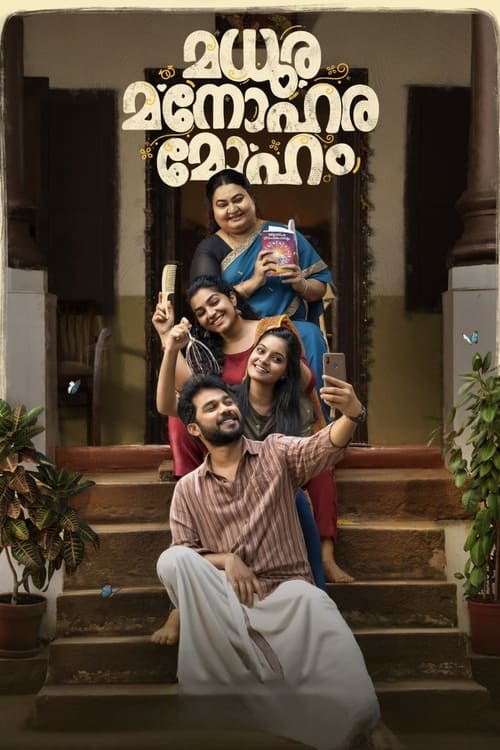
In Kumbazha, inside the old Kalluvelil Tharavad, the Mohan family lives under the watchful eye of tradition, reputation, and an almost suffocating sense of caste pride. The story opens on a small domestic crisis that immediately reveals the family's emotional temperature: Ushamma, the widowed mother of the house, anxiously waits because her teenage daughter is late coming home, while Meera Mohan behaves with a calm, almost irritating nonchalance, and Manu Mohan is already trying to manage the situation before it turns into a scandal. The house feels alive with judgment even before anyone raises their voice; every room seems to carry the weight of what the neighbors might think, and Ushamma's fear is not just about a daughter who is delayed, but about the possibility that the family's carefully maintained image is slipping out of her hands.
The Mohans are introduced as a traditional Nair family in Pathanamthitta, and the first thing the film quietly stresses is how each family member's role is already tied to status. Mohan, the father, is already dead, and his absence shapes the household like a blank space around which everyone else has had to arrange their lives. Because Mohan has died, Manu receives his father's government post and becomes a second-grade overseer in the Public Works Department in Pathanamthitta, a job that gives him the respectable public identity he so badly wants to preserve. He is also newly selected as secretary of the Kumbazha Saraswati Vilasam Nair Service Society Karayogam, a position that matters to him not merely as civic responsibility but as social currency. Meera, the second child, is presented as the supposedly dependable one: a final-year M.Com student at Catholicate College who also runs tuition classes at home, and whose disciplined image has convinced her mother that she is the one quietly carrying the family. Malu, the youngest, is an engineering student and the family's most modern voice, a contrast to Ushamma's orthodoxy.
At first, the household runs on assumptions. Manu is in love with Salabha, the daughter of Indrasena Kurup, the president of the local Nair community organisation, and he wants desperately to make himself worthy of her and of her father's approval. His romance is not simply a private desire; it is entangled with the family's caste-conscious social world, where being accepted by the right people matters almost as much as love itself. Manu's ambition to rise further within the community explains why he keeps pressing himself into local association work and public respectability. Salabha, in this setup, is more than a girlfriend; she is the gateway to a better social future, but only if Manu can appear flawless before her family.
The first crack in this idealized life comes when Manu's colleague and friend Jose Oommen accidentally sees Meera with a man she has not introduced to the family. At first, the discovery is merely unsettling, because everyone, including Manu, has taken Meera for the "good" daughter: mature, responsible, and well-disciplined. But the shock is not only that Meera has a boyfriend; it is that the woman the family thought they knew may have been living a life far richer and more secretive than the one they had assigned to her. Manu initially tries to absorb the information as though it is an embarrassment that can be managed quietly, and for a moment the film uses his confusion to expose the fragile way families build certainty out of habit.
That certainty collapses further when Manu learns that Meera is not involved with just one man. The revelation widens into the far more destabilizing possibility that she has been seeing multiple men, and the family's image of her as a restrained, morally legible daughter begins to disintegrate. The film's tension changes shape here: it is no longer about whether Meera has a secret, but about how much of the family's understanding of her is built on wishful ignorance. Manu becomes trapped between brotherly protectiveness, personal humiliation, and the urgent need to contain the damage before it touches his own future with Salabha. The discovery is especially painful because he has based so much of his own sense of order on the belief that his sister is the one person in the house who can be trusted to keep the family's reputation intact.
From here, the story turns into a satire of the marriage market. Instead of confronting the complexity of Meera's private life directly, Manu decides the easiest path is to find a groom for her and force the situation back into the socially acceptable shape of an arranged marriage. The irony is thick: the same man who wants his love marriage with Salabha to be accepted is willing to subject his sister's life to the old machinery of caste, reputation, and family negotiation in the hope that it will solve the problem he cannot emotionally handle. This contradiction is one of the film's sharpest points, because it reveals how even educated, outwardly modern people can reproduce the very traditions they privately resent when those traditions benefit them.
As Manu begins searching for a groom, the matrimonial process itself becomes a stage for the story's comedic and uncomfortable reversals. The search is not portrayed as a neutral practical task; it becomes a mechanism of surveillance, filtering, and concealment. The family wants a solution that preserves dignity, but every new candidate raises the possibility that Meera's hidden life will be exposed in a more humiliating way. The marriage plan also turns into a tool for social performance, because the family is no longer simply trying to marry off a daughter, but trying to repair a public image that feels increasingly brittle. In this sense, the film is less about whether Meera will marry than about whether the family can survive the knowledge that their carefully preserved moral narrative is false.
The film's third-act movement grows out of these contradictions. The more Manu tries to find a suitable groom, the more he is forced to confront the possibility that he never really understood Meera at all. Each new piece of information complicates his judgment. What initially looked like one secret relationship expands into a pattern that he cannot easily categorize, and the shock comes not only from the facts themselves but from the collapse of his authority as the brother who believes he knows what is best for everyone. He is constantly pulled in opposite directions: he wants to protect the family, protect Salabha, protect his own standing in the Nair community, and somehow protect Meera too, even though the act of protecting her is becoming indistinguishable from controlling her.
The film also keeps exposing the household's hidden hypocrisy. Ushamma, who appears to be the guardian of morality, is also deeply superstitious and rigid in her caste beliefs, clinging to the structures that give her a sense of order. Yet her certainty is repeatedly undermined by the reality unfolding in her own house. Meera's private life does not fit the role assigned to her, and the family's attempt to maintain moral superiority becomes increasingly absurd against the evidence of their own insecurity. Malu, the youngest sibling, stands as a small but important counterpoint to all this, because the film lets the audience feel a different generational energy through her--less invested in appearances, less frightened of social convention, and more alert to the family's double standards.
As the situation escalates, the movie keeps emphasizing how little the family can afford to say openly. Conversations become cautious, indirect, and loaded with implication. Manu's colleague Jose Oommen functions as a practical witness to the unraveling, the man who keeps accidentally pulling back the curtain on what the family would rather not see. His role matters because he is not just comic relief; he is the narrative's bridge between private truth and public consequence. Through him, the audience understands how quickly gossip and observation can destabilize a home that depends on secrecy. Meanwhile, the local community context remains in the background like a pressure chamber: the NSS association, the status of its office-bearers, and the politics of social belonging all feed into the fear that any personal flaw will become a communal embarrassment.
The emotional peak builds when Manu is forced to sit with the fact that Meera's behavior cannot be reduced to the neat categories he wants to impose on it. The film does not present her as a simple rebel or a simple victim; instead, it uses the confusion around her to expose the distance between how families imagine their daughters and how daughters actually live. That is why the discovery hurts so much: it is not just that Meera has hidden relationships, but that the whole household has been living inside a story they wrote about her, and she has been quietly living another one beside it. The deeper twist is less about a single person than about the family structure itself--its need to divide women into respectable and irreproducible categories, while excusing men's own contradictions as practical compromise.
The final stretch revolves around the consequences of this discovery and the attempted marriage arrangement, which the reviews indicate becomes the mechanism through which the film delivers its biggest comic and social payoff. The "unexpected truth" about the family's lives has already shattered the foundation, and now the story pushes toward the point where everyone's hidden intentions are forced into the open. The notion that "all admirers attend the wedding" suggests that the ending weaponizes the social form of marriage itself, turning it into a gathering place for the very people whose presence exposes the absurdity of the family's plans. Rather than allowing the situation to settle into quiet domestic reform, the film leans into satire: desire, status, and family strategy collide in public, and the attempts to control the narrative only make the truth more visible.
By the end, the family is no longer pretending that Meera can be smoothly fitted into the image they had prepared for her. The movie's resolution comes through the wedding-centered climax, in which the consequences of Meera's relationships and the family's caste-driven marriage logic all converge. The broad shape of the ending is clear: the family tries to manage the fallout by forcing an orderly social conclusion, but the truth has already done its damage, and the comedy lies in watching respectable people scramble to preserve dignity after the mask has slipped. Manu's own romance with Salabha remains bound to this broader social environment, and his need to look acceptable before her father remains part of the tension right through the end. What changes is his certainty. He begins as the brother who believes he can solve everything by arranging it properly, but he ends as a man confronted by the limits of family authority and the impossibility of controlling other people's inner lives.
No new deaths occur in the story beyond the already established death of Mohan, Ushamma's husband and the family's patriarch. His absence is the quietest but most important fact in the household, because it leaves Manu carrying both the practical and symbolic weight of the father's role. The film never treats Mohan's death as a dramatic on-screen event in the available material, but his status as the late patriarch explains why Manu has inherited responsibility so early and why the family structure is so heavily dependent on him. In that sense, even the dead continue shaping the plot: Mohan's absence helps create the social conditions that make Manu so desperate for control, and that desperation helps drive the entire marriage crisis.
The final scenes settle into a recognition that the Mohan family's real crisis is not simply Meera's love life, but the mismatch between their public righteousness and private messiness. The house in Kumbazha, which once appeared to be an orderly traditional home, is revealed as a place full of compromise, double standards, and silently competing desires. Manu's efforts to maintain caste propriety and family honor are undercut by the fact that the people closest to him are not symbols but complicated human beings with secrets of their own. The ending leaves the family altered, not purified: the truth has not restored innocence, but it has made denial impossible. The last impression is of a household that has been forced to look at itself honestly, even if that honesty arrives wrapped in comedy, embarrassment, and a wedding that was supposed to solve everything but instead exposes how much was broken from the beginning.







What is the ending?
The film ends with Meera's secret being revealed to her family and with the family's carefully built plan for her marriage collapsing. Manu, after learning the truth, still stands by her, and the story closes on the uneasy but honest reality that he and the others now know her far better than they did before.
Here is the ending in a short, simple narrative form:
Meera's hidden life comes out in the open, and the people around her are shocked. Manu, who had tried to arrange her marriage and protect the family's image, is forced to face the truth. In the end, the family does not return to the old comfort of ignorance; instead, they are left changed by what they have learned.
Now the expanded ending in chronological, scene-by-scene narrative form:
The final stretch begins after Manu has already become deeply unsettled by what he has learned about Meera. He had been trying to find a groom for her, believing he understood her as a responsible, settled younger sister, but the truth he uncovers destroys that assumption.
As the marriage arrangement moves forward, the family treats the chosen man, Jeevan Raj, as the proper answer to Meera's future. Meera's family assumes this marriage will resolve the tension around her life and restore order in the household. Manu, who has taken responsibility for the matter, is still carrying the burden of what he thinks is his duty to protect both Meera and the family's standing.
Then the decisive revelation comes. On the night of the wedding, Jeevan Raj confesses all his secrets to Meera. This is the moment when the ending turns away from the family's assumptions and into the consequences of truth. The private facts that had been hidden inside Meera's life are no longer containable, and the marriage that was supposed to settle everything instead exposes how little the family actually knew.
After the revelation, the emotional center of the ending shifts to Manu. He is shaken, but he does not turn away from Meera. The film leaves him in the position of a brother who has discovered that the sister he thought he knew was living a reality far more complicated than he imagined. His fate at the end is not death or separation, but a forced maturity: he remains with the family, altered by what he has learned, and still bound to Meera even after the shock.
Meera's fate is likewise left within the family, but under a changed understanding. She is not erased from the story or abandoned by it; instead, the ending places her truth at the center of the family's life. The film closes with her no longer protected by silence, and no longer reduced to the image her family had built around her.
Jeevan Raj's fate is tied directly to the confession scene. He is no longer just the groom chosen to complete the arrangement; he becomes the person whose hidden reality triggers the final collapse of the family's assumptions. The ending leaves him as part of the truth that Meera and Manu must now face, not as the simple happy solution the family expected.
Ushamma, the mother, is left confronting the gap between her belief in family honor and the reality now exposed. She had accepted the image of Meera as a dutiful daughter, and the ending denies her that certainty. Her fate is to remain in the same household, but in a house where the emotional structure has been broken open.
The film's final movement, then, is not a neat reconciliation. It is the collapse of certainty. The family goes from believing they understood Meera to being forced to accept that they did not, and that truth changes the meaning of every earlier decision they made about her life.
Is there a post-credit scene?
There is no reliable evidence in the available sources that Madhura Manohara Moham has a post-credit scene. The sources I found describe the film's premise and plot setup, but none mention an extra scene after the credits.
If you want, I can also help check whether the film has a mid-credits or end-credits scene based on viewer reports and reviews.
Why is Manu so determined to get Meera married before he marries Salabha?
Manu's urgency comes from his own marriage plans and his belief that his elder sister Meera must be settled first before he can proceed with his relationship with Salabha. The film frames this as both a family expectation and a practical obstacle in the middle of a conservative household.
What is the secret about Meera that Manu keeps discovering during his attempts to find her a groom?
The story repeatedly reveals to Manu that his seemingly straightforward understanding of Meera is incomplete, and he becomes confused when he learns the same kind of hidden truth about her more than once. The film centers this mystery as the key source of tension around Meera's character.
How does Salabha’s family status affect Manu’s relationship with her?
Salabha is the daughter of the president of the local community association, and Manu tries to impress her father by joining the association and becoming its secretary. Their relationship is also strained by the fact that both families are opposed to inter-caste marriage.
Who is Meera’s intended groom, and why does Manu consider him a suitable match?
One of the men Manu tries to arrange for Meera is Disney James, a studio owner, after Manu believes he has found a proper match based on what he thinks he knows about her. This match becomes part of the film's comic and dramatic buildup around Meera's concealed life.
How do Manu, Meera, and their mother Ushamma function within the family conflict?
Ushamma is portrayed as a strong, orthodox mother holding the family together, while Manu is caught between romance and family duty, and Meera is the character around whom the hidden truth and marriage pressure revolve. Their sibling bond and household dynamics drive the film's plot more than any external event.
Is this family friendly?
Yes -- it is generally described as a family entertainer, but it is not completely free of mature or sensitive material. Reviews characterize it as a light comedy-drama aimed at family audiences, while also noting humor and themes that may be awkward or uncomfortable for some viewers.
Potentially objectionable or upsetting aspects for children or sensitive viewers may include:
- Caste/social hypocrisy themes and criticism of conservative mindsets, which may be upsetting or confusing for younger children.
- Gender/female-focused scrutiny and a "questionable lens" noted by one review, which suggests some scenes may be uncomfortable in how they treat the female lead.
- Cringe or awkward comedic moments, described as "possible cringe moments" and scenes that could feel more effective or embarrassing when watched with family.
- Family conflict and tension around relationships and household expectations, though the film is still described as warm overall.
- Romantic or matchmaking-related humor, which appears central to the story and may include situations that are more suitable for older children than very young ones.
If you want, I can also give a very brief age-suitability estimate such as "safe for kids / better for teens / family-watchable with caution."








