


















Popular
How does Emma first become involved in the murder investigation at the Breakers, and what exactly does she witness at the ball?
Why is Brady arrested, and what is Emma trying to prove about him?
Who is Cornelius Vanderbilt’s secretary, and why is that character important to the murder?
What is the significance of the railroad expansion plans in the story?
Who is Derek, and how does he fit into Emma’s investigation?
Should I watch it?
Ask Your Own Question

What is the plot?
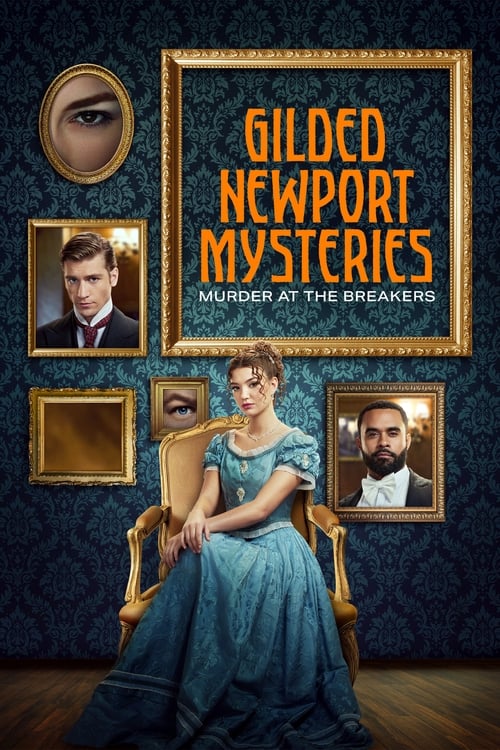
In July 1895, Newport, Rhode Island glitters with wealth, heat, and hidden motives as the New York elite fill the seaside town for a season of balls, garden parties, and yacht races. At the center of that glittering world is Emma Vanderbilt-Cross, a fearless twenty-one-year-old writer for the women's pages of the Newport Observer, working from inside the very society she is supposed to cover. She is not simply watching the rich from a distance; she is part of their world by blood, with family ties to the Vanderbilts, yet she is also earning her own living and chafing against the narrow expectations of the column she is assigned to write. Emma wants to write about more than dresses and debutante gossip, but the society pages are where her editor keeps her, so she moves through Newport's most exclusive spaces with the practiced ease of someone who belongs and does not belong at the same time.
The summer's most important social event is a ball at The Breakers, the Vanderbilt mansion, where the house itself looms as a symbol of power, privilege, and carefully guarded secrets. The atmosphere is all polished silver, candlelight, silk, and whispered strategy, with every smile hiding some private calculation. Emma attends with the duty of a society reporter, taking in the room like a journalist even as she is expected to behave like a proper young woman of her class. She sees the elite performing their rituals of wealth, but beneath the glamour the evening is already charged with tension, because she is carrying family complications into the room with her. Her half-brother Brady has been mixed up in trouble before the murder even happens, and the sources indicate he has been tied to papers stolen from Cornelius Vanderbilt's safe. That theft hangs over the night like a fuse waiting to be lit.
The central crime strikes at The Breakers during the ball, when Emma witnesses a death connected to the mansion's upper rooms and balcony. The movie synopsis states simply that she sees a murder at a mansion in Rhode Island and is pulled into the investigation when her brother is arrested. The book-based synopsis gives the sharper mechanics: a man's body falls from the balcony of Cornelius Vanderbilt's bedroom, and Brady is found nearby, apparently unconscious, with a bottle of bourbon and a candlestick beside him. The scene is instantly incriminating. The fall from the balcony is violent and theatrical, a plunging interruption to the ballroom's elegance, and the image of Brady sprawled close to the blood and wreckage makes him look guilty before anyone has time to ask questions. The visual contrast is brutal: below, wealth and music; above, a body tumbling out of a room that should have been private and secure. The initial assumption is almost unavoidable--Brady must have been involved.
Emma's world narrows in an instant. The murder is not just a crime in Newport; it is a family catastrophe. According to the available sources, the victim is Alvin Godard, whose murder case is explicitly discussed in cast material. Emma refuses to believe that her half-brother is a murderer, even though his past is messy enough to make suspicion plausible. The synopsis from the book review says she believes that, for all Brady's trouble, he is "no murderer." That belief becomes the emotional engine of the story. She does not merely want the truth; she needs it, because the truth is the only thing that can save Brady from trial and likely ruin.
The official investigation falls to Jesse Whyte, the detective on the case. He is the lawman Emma can approach because she knows him well enough to speak to him directly, and the cast discussion suggests she turns to him for help and advice as she sorts through suspects. Their relationship creates one of the story's main investigative pressures: Jesse works from evidence and procedure, while Emma operates through access, intuition, and social intelligence. She is able to move in and out of rooms that the police cannot reach so easily, and she uses that advantage to begin tracing how the death, the stolen papers, and Brady's presence at the scene might fit together. Emma's role at the Newport Observer gives her an acceptable excuse to ask questions, but her real motive is personal, urgent, and dangerous.
Very quickly, the investigation broadens beyond the obvious question of who pushed or forced Alvin Godard off the balcony. The available synopsis points to a new railroad deal as one possible motive behind the murder, suggesting the case is entangled with business interests and high-stakes financial maneuvering. That revelation changes the shape of the story. This is no longer just a drunken argument gone wrong in a rich man's bedroom; it is a potential collision between elite family power and outside commercial pressure. The papers stolen from Cornelius Vanderbilt's safe become especially important here, because they suggest that someone thought the documents were valuable enough to steal, hide, or use as leverage. Their exact contents are not spelled out in the sources, but their presence is enough to show that the death is connected to information, not merely personal animosity.
Emma starts probing both the gilded world of the Vanderbilts and the working-class circles around Newport, because the sources specifically describe her using her access to the wealthy "400" families as well as working class locals to reach the truth. That dual movement is crucial. The rich have secrecy, status, and motive; the locals have observation, memory, and the freedom to say what the powerful will not. Emma crosses those lines repeatedly, gathering fragments that do not seem meaningful alone but begin to form a pattern when held together. The tension rises because every conversation risks exposing how deep the lies go. Someone clearly wanted the stolen papers, someone clearly wanted control, and someone was willing to kill to keep the truth buried.
At the same time, Emma's personal vulnerability remains front and center. Brady is in trouble, and the sources indicate that after his arrest Emma even visits him in jail. That visit is important emotionally because it confirms how frightened Brady is and how badly the situation has crushed him. He is no longer merely a suspicious man in a drawing room; he is a trapped family member behind bars, looking terrified and desperate as his sister tries to keep faith in him. His fear reinforces Emma's determination. If she fails, he may be tried for murder and punished for a crime she believes he did not commit.
As Emma pushes deeper, she discovers that Derek matters more than he first appears to. The cast discussion says Derek has a mysterious past and that his history is part of what draws Emma's interest. More importantly, he has information about the case that he believes might help her. That makes Derek one of the story's key pressure points: he is a possible ally, but he is also carrying his own secrets, and secrets in this story are never benign. Emma has to decide whether he is trustworthy, whether his past connects him to the death, and whether his willingness to talk is an act of conscience or self-protection. The mystery expands again here, because the film is not just about one murder but about how hidden identities and concealed loyalties distort the truth.
The emotional and investigative momentum intensifies as Emma and Jesse continue to sort through the competing possibilities. Brady's presence at the scene is damning, but the story keeps suggesting that the obvious explanation is incomplete. The stolen papers from Cornelius Vanderbilt's safe keep pointing toward a motive larger than a family argument. The rumor of a railroad deal suggests financial stakes high enough to make powerful people dangerous. Derek's knowledge suggests there are still undisclosed connections between the dead man, the Vanderbilt household, and perhaps other figures moving through Newport's summer society. And Emma's own access--through both her job and her family name--puts her at the center of a web she cannot simply step away from.
The investigation reaches its most dangerous phase as Emma tries to assemble a timeline from the night of the ball. The sources confirm the setting: The Breakers, the ball, the balcony, the bedroom, the safe, the stolen papers, Brady near the body. From those pieces, the story builds its suspense. Someone has been in Cornelius Vanderbilt's private space. Someone has removed or wanted documents. Someone has ended up dead after a fall from the balcony. And someone has arranged for Brady to be the man left behind with the weapon-like objects and the bourbon that make the scene look drunken and culpable. The body language of the crime is itself a lie, a staged mess designed to produce the wrong answer.
Emma's role as a journalist becomes more than background texture here; it is how she moves through the world and how she thinks. The Newport Observer has her writing the society pages, but what she really does is observe people, note their silences, and read the hidden meanings in every polished exchange. That skill lets her see what others miss. At the same time, her family connection makes the investigation painful, because every clue that helps her also threatens to implicate someone she knows. The emotional tone is not detached sleuthing but increasingly urgent family defense. She is trying to rescue Brady while the walls of Newport's elite social order close around the case.
The sources do not provide a full scene-by-scene transcript of the final confrontation, but they do make clear that the ending solves the central murder mystery and clears Brady from the path to trial. By the time the truth comes out, Emma has connected the death to the stolen papers and the larger scheme behind the apparent accident or assault at The Breakers. The person responsible for Alvin Godard's death is exposed, and the murder is shown to be tied to the hidden financial and personal conflicts simmering beneath Newport's shining surface. Whatever role Derek's past and information play in the final revelation, his secret history is part of the machinery that helps Emma break open the case. The clues that once made Brady look guilty are reinterpreted in the light of the full story.
The climax resolves the central question: Brady is not the killer, and the evidence that seemed to point to him is revealed as misleading or incomplete. Emma's belief in him proves correct. Jesse Whyte, working through the case with her, gets the benefit of the truth she has dug out from social rooms, private conversations, and the divided world of Newport itself. The ballroom, once a place of dazzling public performance, becomes the starting point of exposure, and the house that served as a symbol of privilege turns into the site where that privilege is morally stripped bare. The betrayal at the heart of the murder is not only personal but structural: money, reputation, and access have all been used to conceal a death and frame the wrong man.
The final movement of the story restores order, but only after the lie has been fully uncovered. The murder case is solved, Brady is spared the fate that threatened him, and Emma's determination proves stronger than the social forces trying to contain her. The ending leaves her in the position she has been fighting to claim all along: not just as a Vanderbilt relative or a society-page writer, but as a woman who can see through the performance of power and expose the truth underneath it. The last impression is one of hard-won clarity emerging from glittering deception. Newport's summer season goes on, but the glamour no longer feels innocent, because Emma now knows exactly what it can hide.
More Movies Like This
Browse All Movies →





What is the ending?
At the end, Emma exposes the real killer, Brady is cleared, and the danger around the Vanderbilt household is resolved. The final movement of the story ties the murder to the secret maneuvering over money, power, and the railroad deal, and Emma's persistence is what breaks the case open.
The ending unfolds in a careful chain of revelations. Emma keeps pressing her investigation after Brady is arrested, because she knows he was in the wrong place at the wrong time and that the murder was connected to the stolen papers and the tension inside the Vanderbilt circle. She follows the clues through the mansion, the family's servants and associates, and the conflict over the railroad plans, steadily narrowing the field of suspicion. As the truth comes into focus, the person responsible for the killing is identified, and the accusation against Brady falls away. The murder victim, Cornelius Vanderbilt's financial secretary, is confirmed dead, and the case centers on why those papers mattered and who stood to gain from them. Brady's fate is that he is no longer the murderer, and the story ends with his name effectively cleared. Emma's fate is that she remains the driving force of the investigation, vindicated for trusting her own judgment in a world that keeps trying to push her aside.
If you want, I can also give you a more detailed scene-by-scene ending recap with each main character's final position laid out one by one.
Is there a post-credit scene?
There is no reliable indication from the available sources that Gilded Newport Mysteries: Murder at the Breakers has a post-credit scene. The film is listed as a 1 hour 30 minute Hallmark TV movie, but the search results available here do not mention any end-credits extra scene or teaser.
If you want, I can also help determine whether the movie has a mid-credits stinger, a sequel setup, or any final-scene epilogue that might be mistaken for a post-credit scene.
How does Emma first become involved in the murder investigation at the Breakers, and what exactly does she witness at the ball?
Emma Vanderbilt-Cross, a society-page writer in 1895 Newport, is drawn into the case when she witnesses a murder while attending a ball at the Vanderbilt mansion, the Breakers. Her involvement begins immediately from that moment, and the story centers on her moving from observer to investigator as she tries to understand what she saw.
Why is Brady arrested, and what is Emma trying to prove about him?
Emma's half-brother Brady is arrested after the killing, and she begins investigating because she wants to prove his innocence. One source specifies that the accusation is tied to the murder of Cornelius Vanderbilt's financial secretary, and that the case may involve stolen railroad expansion plans.
Who is Cornelius Vanderbilt’s secretary, and why is that character important to the murder?
The murdered man is Cornelius Vanderbilt's financial secretary, which makes him central to the case because his death is tied to a possible railroad deal or stolen railroad expansion plans. The sources frame him as the key victim whose killing triggers both Brady's arrest and Emma's investigation.
What is the significance of the railroad expansion plans in the story?
The railroad expansion plans are presented as a possible motive for the murder, with one source asking whether the killing is connected to the new railroad deal or to something personal within the family. Another source says Brady is accused in connection with an attempt to steal those plans, making them a major plot element.
Who is Derek, and how does he fit into Emma’s investigation?
Derek is a character with a mysterious past whose hidden history draws Emma's interest. According to the cast discussion, he also has information about the case that he believes may help Emma, which suggests he becomes an important ally or possibly a complicated source of clues during her investigation.
Is this family friendly?
Yes -- it is generally family friendly, especially by TV-movie standards, with a TV-PG rating and IMDb parental-guide listings noting no sex/nudity, mild violence/gore, mild profanity, moderate alcohol/drugs/smoking, and mild frightening/intense scenes.
Potentially objectionable or upsetting elements for children or sensitive viewers may include: - A murder investigation and related suspense, which may feel tense or upsetting. - Mild violence associated with the mystery/crime premise. - Mild profanity, though not described as strong or frequent. - Moderate alcohol use / smoking, likely reflecting the 1895 high-society setting. - Mild frightening scenes, which could include suspenseful moments, concern for characters, or discovery-related tension.
If you want, I can also give a more specific "safe for what ages?" recommendation based on this rating and tone.








