
















Popular
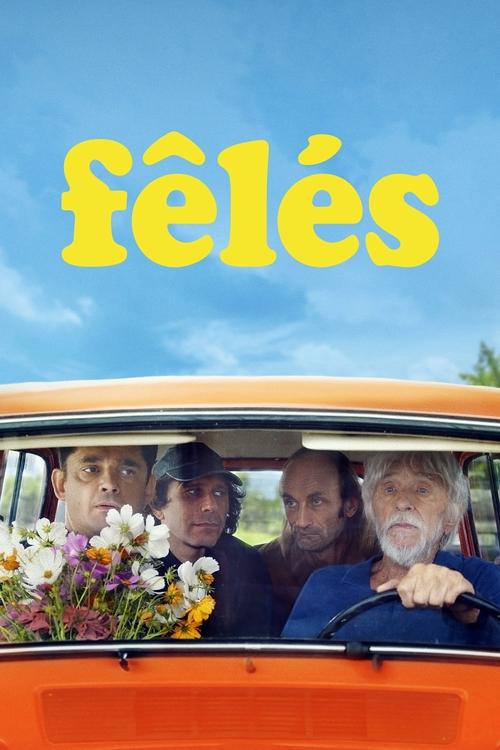
What is Pierre’s role in L’Arc-en-ciel, and why is he so determined not to leave it?
Why does the mayor want to take over L’Arc-en-ciel, and what exactly is she planning to do with the property?
Who are the other key members of the community at L’Arc-en-ciel, and what roles do they play?
How do the residents of L’Arc-en-ciel try to raise the money to keep the house?
What happens to the people at L’Arc-en-ciel when the struggle to save the house gets worse?
Should I watch it?
Ask Your Own Question

What is the plot?
In 1980 Madrid, film director Enrique Goded struggles to find his next project when a nervous man appears unannounced at his office. The visitor claims the name Ignacio Rodríguez, says he was Enrique's schoolfriend and first love, and presents a short manuscript titled "The Visit" along with a request: Enrique should make the story into a film and cast him in the starring role. The man now gives his public name as Ángel Andrade and carries himself like a performer confident he deserves the spotlight. Enrique reads the manuscript at once and finds it unsettling and irresistible; the text recreates episodes from their shared childhood at a Catholic boarding school while spinning a later, partly fictionalized account of a reunion between the two men years after they leave the school.
The manuscript's outer frame takes place in 1977 and puts center stage a transgender nightclub performer who calls herself Zahara; her birth name, the text asserts, is Ignacio. In this version of events Zahara hatches a scheme to rob a rich, drunken admirer at a hotel. Stealthing into the man's room, she expects to find a stranger; instead she finds Enrique Serrano, the boy from her youth. Zahara does not simply steal from him--she strips his dignity in his sleep, an act that awakens old wounds. After that encounter she returns to the seminary where she grew up to confront the priest who molested her decades earlier, a man named Father Manolo. Zahara demands a ransom of one million pesetas in exchange for halting the book's publication, a sum she claims she needs to pay for gender reassignment surgery.
Within the 1977 frame the manuscript slides into a deeper flashback to 1964, to the boys' boarding school where Ignacio is a ten-year-old with a clear treble voice that makes him stand out in the choir. Father Manolo, who serves as both school principal and the literature teacher, notices Ignacio with predatory intensity. Ignacio falls in love with a fellow student, Enrique Serrano; the two boys begin to seek each other out. They slip into the local cinema and, in the dark, touch one another furtively. Their intimacy does not remain secret for long. That same night Father Manolo finds them together. He rages at their behavior and uses his authority to mete out punishment. Ignacio pleads for Enrique's safety, offering himself to Manolo's will to spare his friend; Manolo accepts the offer and molests Ignacio. Still, he expels Enrique from the school, sending the two boys into sharply separate lives.
Back in 1977, Zahara's manuscript describes how the memory of Manolo's abuse and the shame of the expulsion leave her bitter and vengeful. She plans to blackmail the ex-priest, demanding a large payment in return for silence about both the abuse and the manuscript. Zahara's threat is blunt: pay up, or the story goes public. The narrative shows Zahara trying to manage her precarious existence as a drag artist and a drug user, moving through the Madrid nightlife with a mixture of bravado and desperation. Her attempt to extract money from Manolo becomes the pivot of the tale: she wants the funds for surgery and to escape the life that grinds her down.
After reading the manuscript in his office, Enrique grows fascinated but wary of Ángel's insistence on playing Zahara. He cannot shake the feeling that the man sitting before him is not the Ignacio he once loved. Doubt pushes him to travel to Ortigueira, a coastal town in Galicia, where he tells Ángel he must verify the man's identity with Ignacio's mother. There, the woman receives Enrique politely and, with a face creased by grief, informs him a fact that refutes Ángel's claim: Ignacio has been dead for four years. The man who visited Enrique in Madrid has lied about being Ignacio; he is actually Ignacio's younger brother, Juan. Enrique returns to the city with the knowledge concealed in his mind, curious to see how far Juan will go with his deception.
Enrique decides, without revealing what he has learned, to cast Ángel--Juan--as Zahara anyway. He rationalizes the decision as an artistic experiment, something to test the boundaries of performance and truth. On the set, Juan adopts the Zahara persona with a mix of theatricality and rawness, and an intimacy develops between director and actor. Enrique and Juan embark on a sexual relationship; the director reworks the screenplay as they go, altering its end. Where the manuscript leaves Zahara alive and bargaining, Enrique rewrites the climax so that Father Manolo murders Zahara instead of giving in to her blackmail. He stages a brutal death scene in which Manolo dispatches Zahara, making the film's finale a violent retribution rather than a negotiation.
When the camera stops running after the filmed murder, Juan breaks down. He weeps uncontrollably, sobs that rupture the cool detachment he had maintained until that moment. Enrique watches him and allows the moment to pass, but the on-set collapse primes the production for a confrontation that arrives soon after. The man who once taught at the seminary appears on the set unexpectedly: Father Manolo has long since left the priesthood and now calls himself Manuel Berenguer. He approaches Enrique privately and confesses that the altered ending in the script comes frighteningly close to the truth.
Berenguer's confession unspools history with the bluntness of a man seeking exoneration. He tells Enrique that Ignacio--called Zahara in the drag world--did attempt to blackmail him in real life, and that the effort leaned as heavily on sex and drugs as on threats. Ignacio had become addicted to heroin. Berenguer admits he fell for Juan, Ignacio's younger brother; he describes a sexual relationship with Juan that began while Ignacio still lived. As the illicit triangle intensifies, both Juan and Berenguer come to regard Ignacio as an obstacle. Berenguer claims Juan supplied a sample of very pure heroin; Berenguer himself administered it to Ignacio, coaxing him to inject. Ignacio shoots up and overdoses; he dies on the spot. After that death the relationship between Berenguer and Juan collapses. Berenguer wants to maintain their affair but Juan cuts off contact. Berenguer says he lived with the memory and the guilt, unable to reconcile what he did.
Juan's behavior after Ignacio's death becomes clearer in Berenguer's account. Years later Juan arrives on Enrique's film set under the name Ángel Andrade, pushing a narrative that collides with both truth and lie. When Berenguer sees Juan on the set he warns him to stop following him; Juan swears he will kill Berenguer if he keeps pursuing him. Berenguer replies that he will never let Juan go, speaking with a fatalistic certainty that unsettles Enrique. The confession deepens Enrique's understanding of the layers of manipulation that surround his production: the manuscript, the on-set romance, the rewritten ending, and now a real murder told as if it were part of a script.
Confronted with these revelations, Juan goes to Enrique's apartment to apologize for the combined deception and for whatever role he played in Ignacio's death. He brings with him a letter, folded and stained, that had been addressed to Enrique and left unfinished in Ignacio's last hours. Ignacio had been composing the note when he died; Juan lays the letter on Enrique's table and tells him the line Ignacio was typing before he lost consciousness: "I think I have succeeded..." Enrique reads those words and cannot parse whether the sentence meant relief, triumph, or a cry for help. He refuses Juan's excuses and shuts the door on him, leaving Juan to depart angry and defeated.
After the film's production completes and the picture is released to the public, both Enrique and Ángel experience bursts of professional success. The film raises their profiles: Enrique finds acclaim as a director and Ángel, whose real name is Juan though he is billed as Ángel Andrade, moves into prominent acting work. For a time the two men ride the film's momentum. Yet fame proves mercurial. By the 1990s Ángel's career suffers fluctuations and he drifts toward television roles rather than the cinema glory he once hoped for. His life remains entangled in the past he cannot sever.
Berenguer, bereft and bitter, becomes a nuisance to Ángel. He leverages what he knows about Ignacio's death and the tangled relationships to blackmail Ángel, demanding money and threatening exposure. The harassment escalates into a cycle of threats that Ángel will not tolerate forever. One night, driven by rage and fear, Ángel kills Manuel Berenguer in a hit-and-run. He drives his car into the ex-priest on a dark street and accelerates away, ending Berenguer's life with a single act of vehicular violence and then fleeing the scene. The killing is a decisive final contact between the men and closes the loop of complicity and retribution that began decades earlier.
The film's epilogue traces the aftermath in practical terms. Enrique keeps directing and his reputation grows. Ángel returns to television work, a path that offers steady employment but falls short of the cinematic prominence he once sought. Juan, as Ángel, never fully escapes the scandal and the criminal act that concluded his relationship with Berenguer. Ignacio remains dead; the circumstances of his overdose and the role both Juan and Berenguer played in it become part of the dark history that the film both dramatizes and profits from. The last image the story leaves is a ledger of consequences: a director celebrated for his art, a performer whose career bears the scars of scandal, a priest who leaves the cloth and dies appealed through violence, and a brother's suicide-by-overdose that anchors the tragedies the film both retells and profits from. The narrative closes on the facts of what has happened--the meetings, the betrayals, the blackmail, the overdose, the hit-and-run--with no reconciliation offered on screen, only the record of actions and the final deaths that resolve the tangled relationships.






What is the ending?
The ending of Fêlés is about the group's struggle to save L'Arc-en-ciel from closure, and it resolves around Pierre and the other residents standing together against the threat to their home.
In a short, simple narrative form: Pierre's house of support is under threat, the residents band together, and they fight to keep it alive. The ending leaves the place and its people defined by solidarity rather than defeat.
In a fuller chronological narrative, the film ends with the association still at the center of the conflict. L'Arc-en-ciel in Marmande is introduced as a real community place that shelters people "violentée[s] par la vie," and when eviction threatens, the members organize around Pierre, the founder, to try to save the house.
Pierre, elderly and deeply attached to the place he created, is the emotional center of the final struggle. The residents and supporters rally around him, and the story focuses on the effort to protect the building that has become their shared refuge. The film's ending does not describe a dramatic external twist; instead, it closes on the community's collective push to preserve the home and the fragile stability it represents.
For the main characters at the end of the story: - Pierre remains the founder and anchor of L'Arc-en-ciel, still tied to the place he built. - The residents remain united around the association, relying on one another for support. - The threat of eviction is the central conflict they are trying to prevent from destroying their community.
If you want, I can also give you a more detailed scene-by-scene ending summary focused on the final act, but the available source material does not provide a highly specific beat-by-beat account of the last scenes.
Is there a post-credit scene?
I could not verify a post-credit scene for Fêlés (2024) from the available sources, so I can't reliably describe one. The search results confirm the film's existence and release date, but they do not include a credits breakdown or any source stating that a post-credits or mid-credits scene is present.
If you want, I can help you determine this another way by checking more targeted coverage, but based on the sources provided, there is no confirmed post-credit scene information for Fêlés.
What is Pierre’s role in L’Arc-en-ciel, and why is he so determined not to leave it?
Pierre is the founder and emotional center of L'Arc-en-ciel in Marmande, the association that shelters people who are rebuilding their lives after psychiatric trauma or other hard experiences. He resists moving because he sees the house as the heart of the community and, in one account, stays faithful to the memory of Louise, his late wife, who helped create it with him.
Why does the mayor want to take over L’Arc-en-ciel, and what exactly is she planning to do with the property?
The mayor moves to requisition or sell the property so it can become a parking lot requested by a contractor, which puts the home's future at risk. This is the trigger for the group's effort to raise money and save the building.
Who are the other key members of the community at L’Arc-en-ciel, and what roles do they play?
Several residents and supporters become important in the fight to save the house, including Évelyne, described as an influential member of the community, and Jean, a former lawyer who has found refuge there. Other named participants in the fundraising and survival effort include Daniel the doctor who supports the place, Ricardo, who proposes crowdfunding, and residents such as Chantal, Mathieu, Mona, Fred, Patrick, and Célaine.
How do the residents of L’Arc-en-ciel try to raise the money to keep the house?
They first try to sell their own small productions, but that does not bring in enough money. Ricardo then suggests crowdfunding, and Célaine makes a blunt, socially sharp video that spreads online and brings in money, although it is spent too quickly; afterward, Ricardo and others resort to small scams to keep the effort going.
What happens to the people at L’Arc-en-ciel when the struggle to save the house gets worse?
As the fundraising effort becomes more desperate, the group is shaken by pressure from the authorities and by the consequences of Ricardo's schemes. One account says one of Pierre's protégés suffers a breakdown or crisis, the police stop the scams, and the residents are ultimately forced to face the possibility that they will have to move.
Is this family friendly?
Fêlés (2024) does not appear to be a strongly family-friendly film for young children, but it is also not described as explicit or highly intense. IMDb's parental guide rates the film's sexual content and alcohol/drug/tobacco content as "none," with violence and frightening/intense scenes both marked "low," and it lists the French certification as "Tous publics".
Potentially upsetting or objectionable aspects for children or sensitive viewers may include: - Mild violence or distressing situations: the film involves people who have been "wounded by life" and facing hardship, so the tone may include emotional strain and some tense moments. - Low-intensity scary or tense scenes: IMDb flags "scenes frightening and of great intensity" as low, suggesting some moments may feel emotionally heavy rather than frightening in a horror sense. - Themes of vulnerability and instability: the story centers on a community support setting for psychologically fragile people, which may be emotionally sensitive for viewers who are affected by mental-health themes. - Threat of displacement/closure: the central conflict involves a threatened eviction/closure of the community space, which can create sustained stress even without graphic content.
Based on the available information, it seems suitable for many older children or family viewing, especially if they can handle serious social-drama themes, but it may be less suitable for very young or especially sensitive children.








