









Popular
What role does the character of the hitman play in the story?
What motivates Donal to seek revenge throughout the film?
How does Donal's relationship with his mother influence his actions?
How does the setting of rural Ireland contribute to the film's atmosphere?
What is the significance of the final confrontation between Donal and the criminals?
Should I watch it?
Ask Your Own Question

What is the plot?
Sorry, we aren't able to watch and write up a full detailed plot yet. Check back in a few days.
What is the ending?
In the ending of "Bad Day for the Cut," Donal, the protagonist, confronts the people responsible for his mother's death. After a violent showdown, he ultimately avenges her by killing the main antagonist, but he is left emotionally scarred and isolated. The film concludes with Donal walking away from the chaos, a man changed forever by the events that unfolded.
Now, let's delve into the ending in a more detailed narrative fashion.
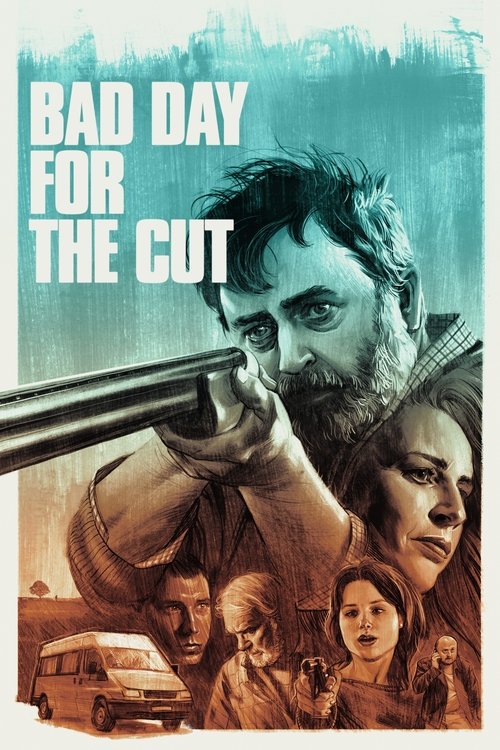
As the climax of the film unfolds, Donal finds himself in a dilapidated warehouse, the air thick with tension and the remnants of violence. He has tracked down the men responsible for his mother's murder, a group deeply entrenched in the criminal underworld. The dim lighting casts long shadows, emphasizing the grim reality of the situation. Donal, fueled by rage and grief, enters the space with a determined yet haunted expression, his heart pounding in his chest.
Inside, he confronts the main antagonist, a man named Frank, who has been orchestrating the events that led to his mother's death. The atmosphere is charged with animosity as Donal and Frank exchange words, revealing the depths of betrayal and loss. Donal's voice trembles with emotion, a mix of sorrow and fury, as he recounts the pain inflicted upon him and his family. Frank, smug and dismissive, underestimates Donal's resolve, believing he can manipulate the situation to his advantage.
The confrontation escalates into a brutal fight. Donal, despite his initial hesitation, taps into a primal instinct for survival and vengeance. The camera captures the raw intensity of the struggle, showcasing the physicality of their clash. Donal's face is a mask of determination, his eyes reflecting the pain of his past and the weight of his mother's memory. He fights not just for revenge but to reclaim a sense of justice that has been stripped from him.
In a pivotal moment, Donal gains the upper hand. He overpowers Frank, and the scene is visceral, filled with the sounds of struggle and the heavy breathing of both men. As Donal stands over Frank, the emotional weight of the moment crashes down on him. He is not just avenging his mother; he is confronting the darkness that has enveloped his life. With a final, decisive act, he kills Frank, a moment that is both cathartic and devastating. The camera lingers on Donal's face, capturing the mix of relief and sorrow that washes over him.
After the confrontation, the film shifts to a quieter scene. Donal walks away from the warehouse, the weight of his actions heavy on his shoulders. The streets are empty, mirroring his sense of isolation. He is a man transformed, marked by the violence he has endured and enacted. The emotional toll is evident in his gait; he moves forward, but the light in his eyes has dimmed. The world around him feels different, as if he is now an outsider looking in.
In the final moments, the film leaves viewers with a haunting image of Donal walking away, a solitary figure against the backdrop of a fading sunset. The journey he has undertaken has irrevocably changed him, and the audience is left to ponder the cost of vengeance and the scars it leaves behind.
As for the fates of the main characters: Donal survives but is left emotionally scarred, having lost his mother and his innocence. Frank, the antagonist, meets his end at Donal's hands, a fitting conclusion to his reign of terror. The other characters, including those who aided Frank, are left in the wake of the chaos, their fates intertwined with the violence that has unfolded. The film closes on a note of somber reflection, emphasizing the profound impact of loss and the complexities of human emotion in the face of tragedy.
Is there a post-credit scene?
In "Bad Day for the Cut," there is no post-credit scene. The film concludes its narrative without any additional scenes after the credits roll. The story wraps up with the main character, Donal, having gone through a harrowing journey of revenge and self-discovery, leaving the audience with a sense of closure regarding his fate and the consequences of his actions throughout the film. The absence of a post-credit scene emphasizes the finality of Donal's journey and the emotional weight of his experiences.
What role does the character of the hitman play in the story?
The hitman serves as a significant antagonist in the film, representing the dark underbelly of the criminal world that Donal is drawn into. His cold, calculating demeanor contrasts sharply with Donal's emotional turmoil, and their encounters heighten the tension as Donal confronts the violent reality of his quest for revenge.
What motivates Donal to seek revenge throughout the film?
Donal's motivation for revenge is deeply rooted in the brutal murder of his mother, which he discovers was not a random act of violence but part of a larger conspiracy involving a drug operation. His grief and anger drive him to uncover the truth and seek justice for her death.
How does Donal's relationship with his mother influence his actions?
Donal's relationship with his mother is central to his character. He is portrayed as a devoted son who has lived a quiet life caring for her. Her murder shatters his world, and the emotional bond they shared fuels his determination to avenge her, showcasing his internal struggle between his peaceful nature and the violent path he must take.
How does the setting of rural Ireland contribute to the film's atmosphere?
The rural Irish setting plays a crucial role in establishing the film's atmosphere, with its stark landscapes and isolated communities reflecting Donal's internal conflict. The contrast between the serene countryside and the violent events that unfold creates a sense of unease, emphasizing the hidden darkness within seemingly quiet lives.
What is the significance of the final confrontation between Donal and the criminals?
The final confrontation is significant as it represents the culmination of Donal's journey from a passive, grieving son to an active agent of vengeance. This moment is charged with emotional intensity, as Donal faces the very people responsible for his mother's death, forcing him to confront not only his desire for revenge but also the moral implications of his actions.
Is this family friendly?
"Bad Day for the Cut" is not considered family-friendly due to its mature themes and graphic content. Here are some potentially objectionable or upsetting aspects that may occur:
-
Violence: The film contains several scenes of intense violence, including physical confrontations and gunfights that may be disturbing to younger viewers.
-
Murder: There are depictions of murder and the aftermath, which can be graphic and unsettling.
-
Strong Language: The dialogue includes frequent use of strong profanity, which may not be suitable for children.
-
Themes of Revenge: The central theme revolves around revenge and the emotional turmoil associated with loss, which can be heavy and distressing.
-
Substance Abuse: There are references to alcohol and drug use, which may be inappropriate for younger audiences.
-
Emotional Trauma: Characters experience significant emotional pain and trauma, which could be upsetting for sensitive viewers.
Overall, the film deals with dark and complex themes that may not be appropriate for children or those who are sensitive to violence and emotional distress.









