





Popular
Should I watch it?
Ask Your Own Question

What is the plot?
Sorry, we aren't able to watch and write up a full detailed plot yet. Check back in a few days.







What is the ending?
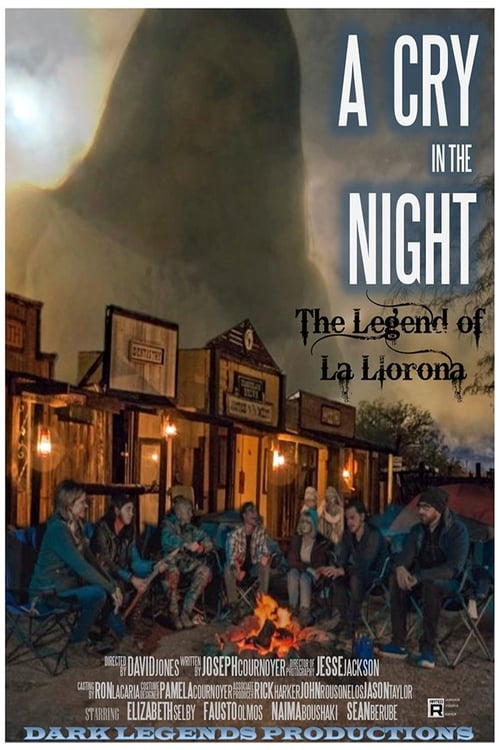
In the ending of "A Cry in the Night: The Legend of La Llorona," the protagonist, a mother named Maria, confronts the spirit of La Llorona to save her children. After a tense battle, she manages to break the curse and free La Llorona from her torment. The film concludes with Maria and her children safe, but the haunting legacy of La Llorona lingers.
As the climax approaches, the scene shifts to a dark, misty forest where Maria, filled with determination and fear, searches for her children who have been taken by La Llorona. The atmosphere is thick with tension, the air heavy with the sound of distant weeping that echoes through the trees. Maria's heart races as she recalls the stories of La Llorona, a spirit doomed to wander the earth, eternally mourning her lost children.
In a moment of desperation, Maria reaches a clearing where she finds her children trapped in a spectral realm, surrounded by the ghostly figure of La Llorona. The spirit, with her long, flowing hair and tattered white dress, emanates a sorrowful yet terrifying presence. Maria's maternal instincts surge as she calls out to her children, her voice trembling with both fear and love.
As she approaches, La Llorona turns her gaze towards Maria, her eyes filled with a mix of rage and sorrow. Maria, understanding the pain that drives La Llorona, pleads with her, expressing empathy for the spirit's tragic past. This moment of connection is pivotal; Maria's compassion begins to break through La Llorona's anger.
The confrontation escalates as La Llorona unleashes her powers, creating a whirlwind of water and shadows that threatens to engulf Maria and her children. Maria, fueled by her love, stands firm, refusing to let fear dictate her actions. She confronts La Llorona, revealing the truth about her own children and the love that binds them.
In a climactic moment, Maria reaches out to La Llorona, offering forgiveness and understanding. The spirit, momentarily taken aback, hesitates as memories of her own lost children flood her mind. This emotional confrontation allows La Llorona to confront her own grief, and in a moment of vulnerability, she begins to dissolve into a mist, her sorrow lifting.
As La Llorona fades, the spectral realm begins to collapse, and Maria quickly gathers her children, pulling them close. They escape the collapsing world just in time, emerging back into the safety of the forest. The air is now calm, the haunting cries of La Llorona replaced by the gentle rustle of leaves.
In the final scenes, Maria and her children embrace, tears of relief streaming down their faces. They are safe, but the experience has changed them. Maria looks back at the forest, a mixture of sadness and understanding in her eyes, knowing that while they have escaped, the legend of La Llorona will continue to echo in the hearts of those who hear her story.
The film concludes with a lingering shot of the forest, a reminder of the pain and loss that La Llorona represents, and the enduring strength of a mother's love. Maria, now a symbol of resilience, walks away with her children, their bond stronger than ever, but the shadow of La Llorona remains, a testament to the complexities of love and loss.
Is there a post-credit scene?
In the movie "A Cry in the Night: The Legend of La Llorona," there is no post-credit scene. The film concludes its narrative without any additional scenes or content after the credits roll. The story wraps up with a sense of resolution regarding the characters' struggles against the haunting presence of La Llorona, leaving the audience with the emotional weight of the tale without further elaboration or cliffhangers.
What is the backstory of La Llorona in the film?
In 'A Cry in the Night: The Legend of La Llorona', La Llorona is depicted as a tragic figure who drowned her children in a fit of rage and despair after being betrayed by her husband. This act of desperation leads to her eternal torment, as she is doomed to wander the earth, weeping for her lost children and seeking revenge on those who remind her of her pain.
How does the main character, a mother, become involved with La Llorona?
The main character, a mother named Anna, becomes involved with La Llorona when her own child is targeted by the spirit. As La Llorona seeks to claim children to fill the void left by her own, Anna must confront her fears and the supernatural threat to protect her family, leading her on a harrowing journey to uncover the truth behind the legend.
What role does the priest play in the story?
In the film, a priest serves as a crucial ally to Anna, providing guidance and insight into the nature of La Llorona. He is knowledgeable about the folklore and the rituals needed to confront the spirit. His character embodies faith and hope, as he helps Anna navigate the terrifying events and offers her a way to combat the malevolent force.
What are the key moments that showcase La Llorona's powers?
Key moments that showcase La Llorona's powers include her ability to manipulate water, creating floods and storms that threaten Anna's family. Additionally, she can appear as a ghostly figure, instilling fear and despair in her victims. These manifestations highlight her tragic past and the depth of her sorrow, making her a formidable and haunting presence throughout the film.
How does the film depict the relationship between Anna and her child?
The film portrays a deep bond between Anna and her child, emphasizing her fierce maternal instincts. Anna's love for her child drives her actions and decisions, showcasing her determination to protect her from La Llorona's grasp. Their relationship is filled with tender moments, underscoring the stakes of the supernatural threat they face together.
Is this family friendly?
"A Cry in the Night: The Legend of La Llorona" is not considered family-friendly due to its themes and content. The film includes several potentially objectionable or upsetting aspects that may affect children or sensitive viewers:
-
Supernatural Horror Elements: The presence of La Llorona, a ghostly figure associated with tragedy and loss, creates a tense and frightening atmosphere throughout the film.
-
Violence and Threats: There are scenes that depict violence or threats against characters, which can be distressing, especially for younger audiences.
-
Emotional Trauma: The film explores themes of grief, loss, and parental fear, which may resonate deeply and evoke strong emotional responses.
-
Dark Themes: The narrative delves into themes of death and the consequences of past actions, which may be unsettling for some viewers.
-
Intense Scares: Jump scares and suspenseful moments are prevalent, designed to elicit fear and anxiety.
These elements contribute to a mature tone that may not be suitable for children or those who are sensitive to horror themes.