
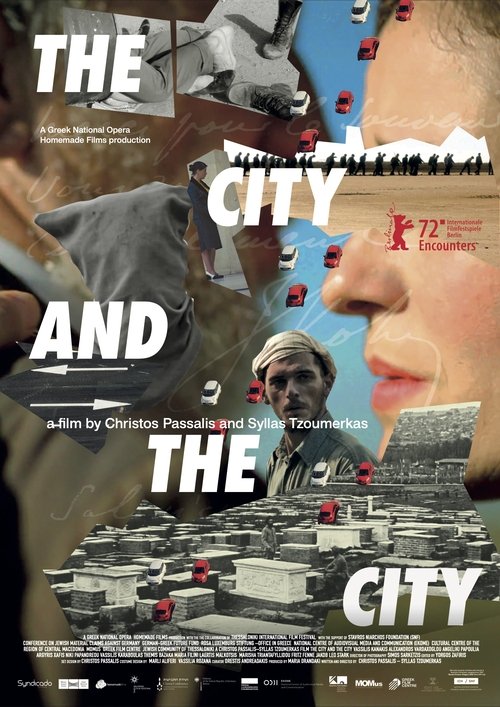








Popular
What is the significance of the two cities, Besźel and Ul Qoma, in the story?
Who is Inspector Tyador Borlú and what drives his investigation?
What role does the Breach play in the narrative?
How does the character of Mahalia Geary influence the plot?
What is the relationship between Borlú and his partner, and how does it evolve?
Should I watch it?
Ask Your Own Question

What is the plot?
Sorry, we aren't able to watch and write up a full detailed plot yet. Check back in a few days.




What is the ending?
In the ending of "The City and the City," Inspector Tyador Borlú uncovers the truth behind the murder case he has been investigating. He confronts the complexities of the two cities, Besźel and Ul Qoma, and the political tensions that define them. Ultimately, he makes a choice that leads to a significant personal sacrifice, and the film concludes with a sense of unresolved tension regarding the future of the cities and their inhabitants.
As the final act unfolds, we find Inspector Tyador Borlú in a dimly lit interrogation room, grappling with the weight of his discoveries. The atmosphere is thick with tension as he pieces together the connections between the murder victim, Mahalia Geary, and the political machinations that have plagued both cities. His internal conflict is palpable; he is torn between his duty as a police officer and the moral implications of the truth he has unearthed.
In a pivotal scene, Borlú confronts the shadowy figures who have been manipulating events from behind the scenes. The stark contrast between the two cities is visually represented as he moves between the streets of Besźel, where the architecture is crumbling and the atmosphere is heavy with despair, and the vibrant, bustling streets of Ul Qoma, filled with life and color. This juxtaposition serves to highlight the stark divisions that exist not only geographically but also within the hearts of the characters.
As Borlú delves deeper, he learns that Mahalia was involved in a project that threatened the delicate balance between the two cities. The revelation hits him hard; he realizes that her death was not just a random act of violence but a calculated move in a larger game of power. The emotional weight of this realization drives Borlú to confront his own beliefs about the cities and his role within them.
In the climax, Borlú faces a moral dilemma: to uphold the law as he has always done or to take a stand against the oppressive forces that govern the cities. He chooses the latter, leading to a dramatic confrontation with the authorities. The tension escalates as he is forced to make a choice that will change his life forever. In a heart-wrenching moment, he sacrifices his position and safety to expose the truth, knowing full well the consequences that await him.
The film concludes with Borlú standing at the border between Besźel and Ul Qoma, a symbolic representation of his internal struggle. The camera lingers on his face, capturing the mix of determination and sorrow as he contemplates the future. The fate of the cities hangs in the balance, and while Borlú has taken a stand, the resolution remains ambiguous. The final shot leaves viewers with a lingering sense of uncertainty, reflecting the complexities of identity, loyalty, and the human condition in a divided world.
As the credits roll, we are left to ponder the fates of the main characters: Borlú, now a fugitive in his own land, has chosen truth over safety; Mahalia Geary's legacy continues to haunt the cities; and the political landscape remains fraught with tension, suggesting that the struggle between Besźel and Ul Qoma is far from over. The film closes on a note of unresolved conflict, emphasizing the ongoing challenges faced by those who dare to challenge the status quo.
Is there a post-credit scene?
In the 2022 adaptation of "The City and the City," there is no post-credit scene. The film concludes with a sense of resolution, focusing on the aftermath of the central investigation and the implications of the events that transpired. The narrative wraps up the character arcs and themes of duality and separation that permeate the story, leaving the audience with a contemplative ending rather than a teaser for future developments. The absence of a post-credit scene reinforces the film's exploration of the complexities of identity and belonging within the divided cities of Besźel and Ul Qoma.
What is the significance of the two cities, Besźel and Ul Qoma, in the story?
The two cities, Besźel and Ul Qoma, are central to the narrative, representing not just physical locations but also the complexities of identity, culture, and political tension. The citizens of each city are conditioned to 'unsee' the other, creating a surreal atmosphere where the boundaries between the two are both rigid and fluid. This duality is crucial as it shapes the characters' interactions and the unfolding mystery.
Who is Inspector Tyador Borlú and what drives his investigation?
Inspector Tyador Borlú is the protagonist, a dedicated and somewhat jaded detective in Besźel. His investigation into the murder of a young woman leads him to confront the intricate and often dangerous relationship between the two cities. Borlú is motivated by a deep sense of duty and a personal connection to the case, which forces him to navigate the treacherous political landscape and the psychological toll of the cities' separation.
What role does the Breach play in the narrative?
The Breach is a mysterious and powerful enforcement agency that maintains the separation between Besźel and Ul Qoma. Its presence looms over the investigation, instilling fear in the characters and serving as a constant reminder of the consequences of crossing the boundaries. The threat of the Breach adds tension to Borlú's quest for truth, as he must balance his pursuit of justice with the risk of being punished for 'seeing' too much.
How does the character of Mahalia Geary influence the plot?
Mahalia Geary is a key figure in the investigation, initially appearing as a victim whose murder sparks the entire narrative. As Borlú delves deeper, he uncovers layers of her life that reveal her connections to both cities and the political undercurrents at play. Geary's character serves as a catalyst for Borlú's transformation, pushing him to confront his own beliefs about the cities and the nature of reality.
What is the relationship between Borlú and his partner, and how does it evolve?
Borlú's relationship with his partner, who is also a detective, is complex and fraught with tension. Initially, they share a professional camaraderie, but as the investigation progresses, differing views on the cities' politics and the nature of their work create friction. This dynamic reflects Borlú's internal struggle as he grapples with loyalty, duty, and the moral implications of their investigation, ultimately leading to a reevaluation of their partnership.
Is this family friendly?
The City and the City, produced in 2022, contains several elements that may not be suitable for children or sensitive viewers. Here are some potentially objectionable or upsetting aspects:
-
Violence: The film includes scenes of crime and violence, which may be intense or disturbing for younger audiences.
-
Death: There are themes surrounding murder and loss, with characters dealing with the aftermath of violent events.
-
Dark Themes: The narrative explores complex themes such as political corruption, societal division, and existential dread, which may be heavy for children.
-
Emotional Distress: Characters experience significant emotional turmoil, including grief and betrayal, which could be upsetting for sensitive viewers.
-
Surreal Elements: The film's unique setting and the concept of two cities existing in the same physical space may be confusing or unsettling for younger audiences.
Overall, while the film presents a thought-provoking narrative, its darker themes and mature content may not be appropriate for all viewers.







