



















































Popular
What challenges does the main character face in balancing her job and family responsibilities?
How does Julie's relationship with her children evolve throughout the film?
What specific events lead to Julie's desperation in securing her job?
How does the setting of the film impact Julie's daily life and decisions?
What role does the theme of sacrifice play in Julie's character development?
Should I watch it?
Ask Your Own Question

What is the plot?
Sorry, we aren't able to watch and write up a full detailed plot yet. Check back in a few days.









What is the ending?
In the ending of "Full Time," the protagonist, Julie, faces a critical moment as she struggles to reach her job interview amidst a transportation strike. After a series of harrowing events, she finally arrives at the interview, but the outcome remains uncertain as she grapples with her responsibilities as a mother and her aspirations for a better life.
As the film approaches its conclusion, we see Julie's journey unfold in a series of tense and emotional scenes.
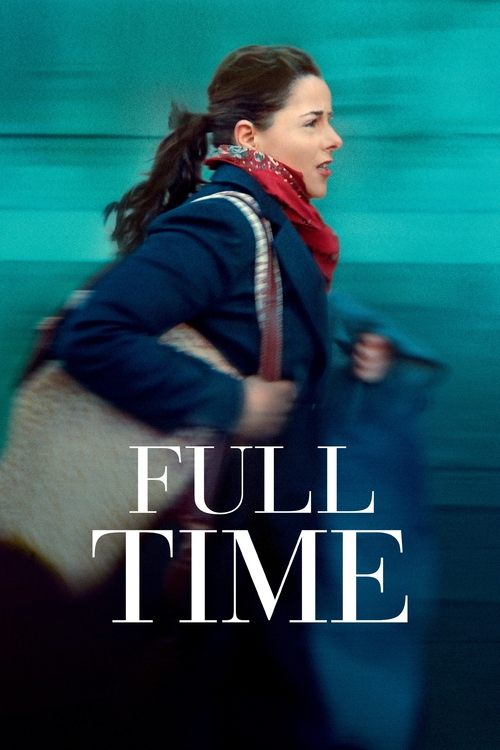
The final act begins with Julie, played by Laure Calamy, racing against time. The city is paralyzed by a transportation strike, and she is desperate to make it to a crucial job interview that could change her life. The stakes are high; she is a single mother, and her current job is not enough to support her two children. The camera captures her frantic energy as she navigates the chaos of the city, her face a mixture of determination and anxiety.
Scene by scene, we witness her struggles. She attempts to catch a bus, but it is overcrowded and passes her by. The frustration is palpable as she watches her chances slip away. In a moment of desperation, she decides to take a taxi, but the driver is uncooperative, and she is left feeling helpless. The tension builds as she realizes that time is running out.
As she finally manages to secure a ride, the camera focuses on her face, revealing the internal conflict she faces. She is torn between her responsibilities as a mother and her desire for a better future. Flashbacks of her children, their needs, and her sacrifices play in her mind, heightening the emotional stakes. The ride is fraught with tension, and the viewer can feel her urgency as she pleads with the driver to hurry.
Upon arriving at the interview location, Julie rushes inside, her heart racing. The scene shifts to the interview room, where she is greeted by a panel of interviewers. The atmosphere is formal, and the contrast between her chaotic journey and the composed setting is stark. As she sits down, the camera captures her vulnerability; she is visibly shaken but tries to project confidence. The interviewers ask her questions, and she responds, her voice steady despite the turmoil she has just experienced.
The film culminates in a moment of uncertainty. As the interview concludes, Julie leaves the building, her expression a mix of hope and apprehension. The audience is left to ponder the outcome of her efforts. The final scenes show her walking through the city, her children's faces flashing in her mind, symbolizing her motivation and the weight of her responsibilities.
In the closing moments, the film does not provide a clear resolution regarding her job prospects. Instead, it emphasizes the ongoing struggle of balancing work and family life. Julie's fate remains ambiguous, reflecting the reality many face in their pursuit of stability and fulfillment. The film ends with her walking away, embodying resilience and the relentless pursuit of a better life, leaving viewers to contemplate the challenges that lie ahead for her and her family.
Is there a post-credit scene?
The movie "Full Time," produced in 2022, does not have a post-credit scene. The film concludes its narrative without any additional scenes or content after the credits roll. The focus remains on the intense and emotional journey of the protagonist, Julie, as she navigates the challenges of her life and the pressures of her job while trying to maintain her responsibilities as a mother. The ending leaves viewers with a sense of resolution regarding her struggles, emphasizing the themes of perseverance and sacrifice that run throughout the film.
What challenges does the main character face in balancing her job and family responsibilities?
The main character, Julie, struggles to maintain her job as a housekeeper while also caring for her two children. The film portrays her frantic attempts to juggle her demanding work schedule with the needs of her family, highlighting her emotional turmoil as she faces the pressure of financial instability and the fear of losing her job.
How does Julie's relationship with her children evolve throughout the film?
Julie's relationship with her children is central to the narrative. Initially, she is often preoccupied with work, leading to moments of guilt and distance. As the story progresses, her determination to provide for them deepens her bond, showcasing her love and sacrifices, especially during moments of crisis when she must choose between work obligations and being present for her children.
What specific events lead to Julie's desperation in securing her job?
Julie faces a series of setbacks, including a sudden change in her work schedule and the threat of layoffs at her job. A pivotal moment occurs when she is informed that her position may be at risk due to budget cuts, pushing her to take drastic measures to prove her worth and secure her employment, which heightens her sense of urgency and desperation.
How does the setting of the film impact Julie's daily life and decisions?
The film is set in a bustling urban environment, which amplifies Julie's sense of isolation and urgency. The contrast between her chaotic work life and her home life creates a palpable tension. The city's relentless pace serves as a backdrop to her struggles, emphasizing her feelings of being overwhelmed and the constant pressure to keep up with both her job and her family.
What role does the theme of sacrifice play in Julie's character development?
Sacrifice is a recurring theme in Julie's journey. Throughout the film, she makes numerous personal sacrifices, such as missing important moments with her children and neglecting her own needs, to ensure their well-being. This theme is intricately woven into her character development, showcasing her resilience and the lengths she is willing to go to provide for her family, ultimately leading to moments of self-reflection and growth.
Is this family friendly?
"Full Time," produced in 2022, is a tense drama that explores the struggles of a single mother trying to balance her demanding job and her responsibilities at home. While the film is not explicitly designed for children, it does not contain overtly graphic content. However, there are several aspects that may be objectionable or upsetting for children or sensitive viewers:
-
Emotional Stress: The protagonist experiences significant emotional turmoil as she navigates financial instability and the pressures of single parenthood, which may be distressing for younger viewers.
-
Tense Situations: The film features scenes of high tension, including moments of anxiety related to job security and the challenges of commuting, which could be unsettling.
-
Conflict and Frustration: There are instances of conflict, both in personal relationships and in the workplace, that may depict frustration and desperation, potentially resonating negatively with sensitive audiences.
-
Socioeconomic Struggles: The portrayal of poverty and the struggle to provide for a family can be heavy themes that might be difficult for children to understand or process.
-
Parental Strain: The protagonist's struggles with balancing work and family life may evoke feelings of sadness or concern regarding parental responsibilities and the impact on children.
Overall, while "Full Time" does not contain explicit violence or adult themes, its emotional weight and the depiction of real-life struggles may not be suitable for younger audiences or those who are particularly sensitive to such issues.







