































Popular
How does Will first get involved in the arrest of Jewish families in Nazi-occupied Antwerp?
What is Will's relationship with Lode, and how does it shape the story?
Who is Yvette, and why does she matter to Will's decisions?
Who is Chaim Litzke, and what role does his home play in the story?
What does Gregor Schnabel do, and how does he affect Will and the resistance efforts?
Should I watch it?
Ask Your Own Question

What is the plot?
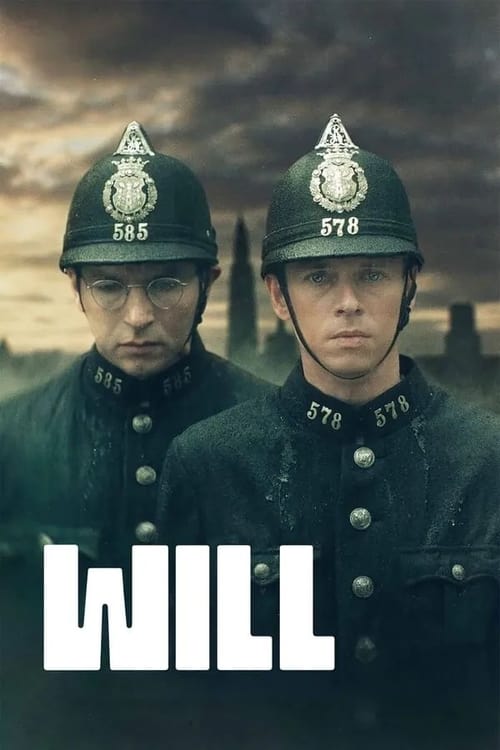
Wil (2023) opens in Nazi-occupied Antwerp in 1942, where two young auxiliary policemen, Wil and Lode, are trying to survive by doing whatever keeps them out of trouble and alive one more day. Wil is the more visibly conflicted of the pair, while the city around them has already become a machine of fear, surveillance, and routine cruelty. The film quickly makes clear that every choice is poisoned: obedience may preserve life, but resistance can mean death.
Wil and Lode are first shown drifting through their duties under occupation, and the daily pressure on them is immediately tied to the wider machinery of Nazi control. They patrol the Jewish neighborhoods of Antwerp, where every street feels haunted by what has already been taken from the people who live there. The film establishes its central moral trap early: the young officers are not heroic resistance fighters, but men in uniform serving an evil system while secretly searching for a way to keep some shred of conscience intact.
That tension tightens when they encounter Feldgendarm, one of their senior officers, during patrol duty. Feldgendarm orders Wil and Lode to join him in raiding a Jewish household, forcing them directly into the violent structure they have been trying to navigate from the edges. The raid is not just another assignment; it is a grim turning point because it pulls Wil into closer proximity with the machinery of persecution and makes it impossible for him to pretend he is untouched by what the occupation is doing.
The story's moral pressure then becomes personal and dangerous. At a police gathering, Gregor manipulates Wil into drinking an entire bottle of vodka, exploiting his vulnerability and pushing him toward a catastrophic mistake. Drunk and compromised, Wil blurts out the location of the Feldgendarm's body in front of a bar full of German soldiers, exposing just how fragile his position is. The moment lands like a dropped match in dry grass: Wil has not just made a mistake, he has placed himself under suspicion in a system where suspicion can become execution without warning.
The film's plot darkens further when Feldgendarm dies, and the next day Wil and Lode continue their duties as if nothing has happened, even though the police have filed a missing person report for him. Because they are the only officers patrolling the area, others begin to suspect that they know something about Feldgendarm's disappearance, but no one can accuse them outright without proof. The tension here is procedural and psychological at once: Wil is trapped not only by what he has done, but by the fact that the truth is half-hidden and therefore more dangerous than a direct confession.
Trying to save himself, Wil turns to Chaim, his father's old friend. Chaim admires Wil as an artist and has been asking him to paint a portrait, which gives their relationship a false warmth that masks the transaction underneath. Wil agrees to paint the portrait, and in exchange Chaim promises to help him deal with the Feldgendarm problem. What appears at first to be a quiet, almost intimate human connection is actually another exchange of survival for compromise, another bargain made under pressure.
As the story shifts into Chaim's side of the arrangement, Wil's double life becomes even more unstable. Chaim discovers that there is a Jewish family hidden in the safe room at his house. Annoyed to find Jews living safely under his nose, he brandishes his gun and moves to kill them. The scene becomes suddenly intimate and brutal: the home, which should be a refuge, becomes a murder site in an instant.
Before Chaim can fire, a young woman from the hidden family kills him by slitting his throat; she has been concealing a knife under her skirt the entire time. This death is one of the film's sharpest reversals, because the person assumed to be defenseless proves capable of resistance, and the supposed protector becomes the dead aggressor. Chaim's death also removes one of Wil's attempted lifelines, leaving him even more exposed to the consequences of the occupation and the lies he has been telling to stay alive.
The movie then expands from survival politics into open moral collapse. Wil's efforts to remain useful and invisible do not protect him from the escalating violence around him; instead, they keep drawing him deeper into the system. Gregor continues to manipulate the situation, and the Nazis' control becomes more blatant as they use fear, alcohol, and rumor to isolate anyone who might be wavering. The atmosphere is one of suffocation, with every conversation carrying the threat of exposure.
At the same time, the story begins to reveal the human costs of resistance and collaboration in parallel. The Jewish family Wil and Lode have been helping is not safe merely because they are hidden; they are living under constant threat, and the film makes clear that survival itself is an active, precarious struggle. The family's presence in the safe room becomes one of the key revelations in the plot, and the fact that they have remained hidden under the occupiers' noses gives the story a brittle, desperate energy.
Gregor's power over Wil grows more explicit when he later confronts him again about the murder investigation. Gregor reveals that he knew what Wil has been up to from the start, collapsing Wil's illusion that he has been operating with any real secrecy. The revelation is devastating because it means Wil's moves toward self-preservation have been watched all along, and his decisions have been less a clever balancing act than a staged performance inside a trap.
Gregor then gives Wil a cruel offer: betray the resistance and help the Nazis, and he may be spared. Wil takes the proposal to Yvette, but she refuses without hesitation, making clear that she would rather die than betray the Resistance. Wil hands over a fake location anyway while letting her believe he is telling the truth, a deception that reveals how far he has drifted into cowardice and moral ruin. This is one of the film's central twists: the man trying to survive by avoiding commitment now becomes part of the very betrayals he fears.
As the final act builds, Wil's choices become irreversible. On the night of the raid, he collaborates with the other officers as they drag people from their homes and force them into trucks. The scene is grimly mechanical, all boots, shouting, and doors ripped open in the dark. When Wil and Lode knock on one apartment door, they find that the residents have chosen to end their own lives rather than be sent to the concentration camps. That discovery hangs over the rest of the film like smoke: in this world, even death can feel like the only form of agency left.
Wil's role in the roundup is especially painful because he is not merely witnessing oppression anymore; he is helping carry it out. As he places two young children inside the truck, he sees a horrified Yvette watching him from a distance. Her gaze becomes a judgment he cannot escape, because she can see exactly what he has become in order to survive. Wil chases her to the train tracks, and the scene shifts from public violence to intimate despair.
On the tracks, Wil is forced to watch helplessly as Yvette throws herself in front of a moving train. Her death is the film's most devastating emotional rupture, because it is not only an act of self-destruction but a final refusal to submit to betrayal and occupation. Wil does not kill her directly, but his deception and collaboration lead her to this end, making her death one of the film's central moral consequences. The image of the train arriving as she steps into its path seals the film's sense that history is moving with unstoppable force, crushing anyone who cannot or will not get out of the way.
By this point, the film has made clear that every attempt to survive has exacted a cost. Wil has been humiliated, manipulated, and drawn into the machinery of genocide, while the people around him have paid with their lives. Feldgendarm is dead after the earlier turmoil around his body and disappearance. Chaim dies when the hidden Jewish woman slits his throat. Yvette dies by suicide on the train tracks after witnessing the roundup. The Jewish residents in the apartment choose death over deportation, though the film treats their deaths as a collective tragedy rather than dwelling on any individual fatal moment. The sources do not describe any deaths beyond these, and the film's emphasis remains on the moral destruction that precedes or accompanies them.
The ending does not offer redemption in any simple sense. Instead, it lands on Wil's voiceover, which reflects that when something so horrid happens, the only thing to do is move on, because there is no other choice. The line is chilling precisely because it does not sound like healing; it sounds like emotional survival after complete collapse. Wil's final state is not heroic and not triumphant. He remains alive, but only by surrendering much of what he might have hoped to preserve in himself.
The final scene leaves him inside the aftermath of his decisions, with the occupation still in force and the cost of survival written all around him. The film closes on the bleak understanding that collaboration is not just a political act but a spiritual corrosion, and that resistance, when crushed, can leave people with nothing but memory and endurance. Wil survives, but the ending makes clear that survival itself is no victory here; it is simply the last available movement in a world designed to strip meaning from every other choice.






What is the ending?
In the ending of Will (2023), Wil chooses to protect himself and Lode by cooperating with the Nazi raid, and Yvette is left to face the horror alone. She runs to the train tracks and dies by stepping in front of an oncoming train, while Wil is forced to watch from a distance.
Wil survives the night, but he does so after helping carry out the roundup of Jews, and the film closes with him accepting that there is no way to undo what has happened.
At the end of the story, the main fates are these: - Wil survives, but he is left marked by his choice to collaborate. - Yvette dies by suicide in front of a train after seeing the raid unfold. - Lode survives alongside Wil after joining the raid.
Wil and Lode move through the final stretch of the film under Gregor's pressure, because Gregor has made it clear that cooperation is the only path to stay alive. Wil gives Yvette a false address for the raid, believing that this will keep her away from danger, and he also keeps Lode close so they can get through the night together. That choice does not save the people Wil had hoped to protect; instead, Gregor's men carry out the arrests anyway, and the raid becomes a massacre.
Scene by scene, the ending unfolds like this.
Gregor tightens his control over Wil and Lode and makes the terms plain: if they want to survive, they must take part in the operation against the Jews. Wil understands that refusing would put him and Lode in immediate danger, so he submits. Before the raid begins, he gives Yvette the wrong location, trying to steer her away from where the arrests will happen.
When the trucks and officers move into the neighborhood, Wil is there among them, taking part in the roundup. Doors are opened, families are dragged out, and children are forced into the trucks as the operation advances from one home to the next. In one apartment, the residents have already chosen death over deportation, and Wil and Lode find the aftermath of that choice.
As the raid continues, Wil sees Yvette at a distance. She has come into view in time to witness what is happening, and she realizes the full scale of the violence. Wil moves after her, but by then the situation is beyond rescue. Yvette runs toward the train tracks, and with the raid and its brutality pressing in around her, she throws herself in front of an approaching train.
Wil watches this from nearby and cannot stop it. He is left standing with the knowledge that his attempt to survive has not prevented the destruction around him. The film ends with Wil alive, Lode alive, and Yvette dead, with the raid completed and the cost of their choices fixed in place.
Is there a post-credit scene?
There is no widely documented or officially recognized feature‑length film titled WILL released in 2023 that includes a post‑credits scene. Major film databases, post‑credits‑scene catalogs, and entertainment sources do not list a 2023 movie by that exact title with a confirmed post‑credits sequence. It is possible the title is misspelled, misremembered, or refers to a short film, regional release, or project not covered in mainstream references. As of current public information, the 2023 film titled WILL does not have a known post‑credits scene.
How does Will first get involved in the arrest of Jewish families in Nazi-occupied Antwerp?
Will and his friend Lode are serving as auxiliary police officers in occupied Antwerp when a German Feldgendarm orders them to arrest a Jewish family on their first patrol. They hesitate, but they follow the order because they are powerless to resist the German soldier, and that moment pulls Will into the machinery of persecution that drives the rest of the story.
What is Will's relationship with Lode, and how does it shape the story?
Lode is Will's close friend and fellow auxiliary policeman, and the two are bound together by their shared survival inside the occupation. Their relationship becomes even more important because Lode's sister Yvette distrusts Will, while the three of them are gradually forced into the same moral crisis as they try to protect the Jewish family they first encountered.
Who is Yvette, and why does she matter to Will's decisions?
Yvette is Lode's sister, and she becomes emotionally central to Will because he is drawn to her while also trying to prove where his loyalties lie. Her growing distrust of him adds pressure to his choices, and her horror at his later actions shows how deeply his compromises affect the people around him.
Who is Chaim Litzke, and what role does his home play in the story?
Chaim Litzke is the man whose home becomes a hiding place for the Jewish family that Will and his allies try to protect. His house is the practical center of their rescue efforts, since Will, Lode, Yvette, and the local resistance use it as a shelter while German investigations intensify.
What does Gregor Schnabel do, and how does he affect Will and the resistance efforts?
Gregor Schnabel is the German officer leading intensified investigations, and his pressure forces Will to become more deceptive and strategic. Will manipulates information to misdirect a raid, showing how Schnabel's pursuit pushes the characters from uneasy cooperation into active resistance and survival tactics.
Is this family friendly?
No--if you mean the 2023 film WILL, I can't reliably confirm family-friendliness from the search results provided because they appear to reference other movies, not a 2023 film titled WILL. The safest answer is that I do not have enough verified information to say it is family friendly.
If you want a cautionary, non-spoiler screening approach for children or sensitive viewers, I'd recommend treating it as potentially not suitable until you can verify its exact rating and content details. For family viewing, the main things to check are: - Violence or peril - Scary or intense scenes - Language - Alcohol, drugs, or smoking - Sexual content or suggestive material - Death, grief, or other heavy emotional themes
If you share the film's country, director, or cast, I can help identify the exact 2023 movie titled WILL and give a more accurate kid-suitability assessment without spoilers.







