





Popular
Should I watch it?
Ask Your Own Question

What is the plot?
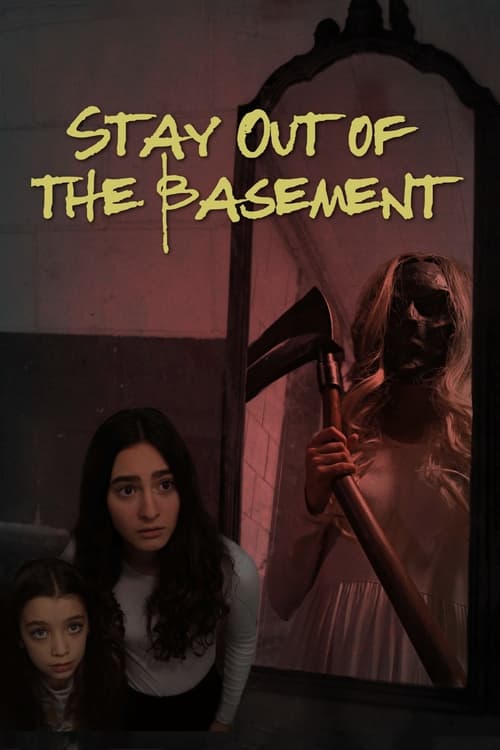
Fourteen-year-old Mackenzie arrives at a remote countryside house with the sense that she is stepping into something already sick with grief and secrets, and the night only deepens that feeling as she meets lonely little Peyton and realizes the girl's home is not merely eerie but actively hostile. The film is framed as a babysitting job, but almost immediately it becomes clear that Mackenzie is entering a story that began before she got there, one tied to a mysterious Woman in White and to the warning that gives the movie its title: stay out of the basement.
At the beginning, the house feels isolated enough to swallow sound. Mackenzie is there because she needs money, and the job seems simple enough at first: watch Peyton, keep her calm, get through the night. But the atmosphere is wrong from the moment Mackenzie steps inside. Peyton is withdrawn and uneasy, and the house carries the weight of recent trouble; one source places the family's backstory around a recent suicide and the sense that something supernatural has followed them home, while another notes that the haunting is linked to earlier events involving Liz, Peyton's mother, and a move away and back again that leaves the family trapped in the aftermath of trauma. As Mackenzie settles in, she starts noticing signs that the house is not simply old or creepy, but inhabited by something that is watching, waiting, and pressuring the family from within the walls.
The suspense grows around the basement, which functions like a locked wound in the center of the house. The title's warning is not subtle, and the story keeps pushing the characters toward that forbidden space. In the broader tradition referenced by the available sources, the basement is where the hidden truth lives, and in this film that truth is connected to the Woman in White and to whatever happened earlier to this family and to the town. Mackenzie begins hearing enough from Peyton to understand that the little girl knows more than she can safely say. Peyton is lonely, frightened, and drawn to Mackenzie in the way children are when an adult presence finally feels steady, but even their growing bond is shadowed by the fact that Peyton's world is already contaminated by fear. Mackenzie, who initially treats the job as temporary and practical, slowly becomes emotionally invested in protecting Peyton from whatever is stalking the house.
The first major shift comes when the haunting stops being abstract and starts behaving like a plan. The sources do not provide a full scene-by-scene record, but they do make clear that Mackenzie and Peyton are pushed into investigating the disturbance together, turning the night into a search for what is actually happening in the house. Their investigation appears to center on the basement and on the strange presence associated with the Woman in White, a figure that is described in the trailer materials as the core supernatural force of the story. As the two girls try to make sense of the escalating activity, the movie's emotional current changes from uneasy babysitting drama to a more urgent survival story. The house no longer feels merely haunted; it feels deliberately arranged to conceal a wound that will not stay buried.
A key thread in the background involves Liz, who appears to be central to the earlier trauma that haunts the household now. One review excerpt suggests that Liz and Peyton have moved back to town and that the film's mystery is told partly from Peyton's perspective and partly from Liz's, with Mackenzie drawn into the consequences of an incident that happened before the story begins. That framing implies a layered structure in which the present-night haunting is not random but the continuation of an older event, one whose emotional damage has already spread through the family. The appearance of the Woman in White, then, is not just a scare tactic but the embodiment of unresolved guilt, death, or supernatural attachment. The house becomes a place where the past keeps forcing its way into the present.
The tension tightens as Mackenzie gets closer to the truth and the supernatural activity grows more aggressive. The sources establish that the film is part of a "two-chapter story" centered on the Woman in White, which suggests that the horror is not confined to a single night's encounter but tied to a larger mythology around the town. Even without a complete transcript of every scene, the available material makes it clear that the basement is the focal point of the mystery and that the girls' investigation brings them closer to whatever is trapped or festering there. The atmosphere would be one of dim hallways, whispered fears, and the sense that the house itself is trying to keep them away from the truth.
As the pressure mounts, the narrative reaches the point where the haunting must explain itself. The review material indicates that the film's danger is not just a ghostly figure, but a chain of repercussions from a prior incident, including the possibility that the entity could be connected to Liz's death or to a spirit in the town, with the review even raising a question about whether a haunted spirit or a goddess is responsible for the terror. That uncertainty underscores the movie's central twist: the supernatural force is not simply random evil but a presence tied to local history and family trauma. In a full narrative reading, this is the moment when every strange sound and fearful glance recontextualizes the earlier scenes. Peyton's anxiety is no longer just the fear of a child; it is the fear of someone living inside a secret she cannot contain.
The climax comes when the truth behind the house and the haunting can no longer remain hidden. Mackenzie and Peyton confront the supernatural force at the heart of the story, and the danger centers on the basement as the place where the entity's influence is strongest. The available sources do not provide a trustworthy, detailed account of each physical confrontation or all exact deaths in the film, and they do not support a reliable claim about a definitive body count. What they do support is that the movie resolves its immediate crisis through an understanding of the haunting's origin and by forcing the characters to face the presence connected to the house rather than continuing to flee from it. The emotional climax, then, is less about action spectacle than about fear collapsing into recognition: the thing in the house is tied to earlier pain, and the girls are finally close enough to see that pain for what it is.
Because the sources are incomplete, the exact final sequence cannot be reconstructed with certainty from the provided material alone. What can be said is that the film closes on the idea that the basement contains the source of the haunting and that the story's warning is both literal and symbolic. The title phrase becomes the last and most important lesson of the night: the basement is where the secret lives, where the past refuses burial, and where the supernatural force has been waiting to be discovered. The ending appears to leave the audience with the sense that the haunting has been confronted, but not cleanly erased, and that the town's history around the Woman in White remains larger than the single babysitting job that brought Mackenzie into it.
What the available sources do not let us verify is a complete roster of deaths, the exact mechanics of every confrontation, or the precise final image of the film. They do, however, firmly establish the story's core movement: Mackenzie enters a strange house to babysit Peyton, discovers that the home is entangled with a larger supernatural tragedy, is drawn into investigating the Woman in White, and is forced toward the basement where the family's hidden horror and the haunting's origin are concentrated.









What is the ending?
Mackenzie goes back into the house and the story reveals that the haunting is tied to the Woman in White, the masked figure connected to the basement. In the end, Liz is shown to be deeply involved with the entity, Peyton is left at the center of the haunting, and the film closes on the idea that the threat is still not fully gone.
Now, in the final stretch, the film draws Mackenzie deeper into the truth behind the house. She discovers that Liz has been hiding the real nature of what is happening, and the masked woman's presence is no longer just a shadow in the basement but something tied to the family itself.
Scene by scene, the ending unfolds like this:
Mackenzie starts to sense that the house is not behaving normally. She notices that the basement is wrong, including stairs that lead back up into the house in a way that should not be there, and that detail makes her realize the place does not work the way a normal house should.
She goes to Peyton, and Peyton is glad to see her. Liz also appears, and Mackenzie notices a bandage on Liz's fingers. That small detail makes Mackenzie understand that Liz is the woman wearing the mask.
The film then cuts to a flashback showing Liz going into the woods to confront the entity. This is the moment where the story shifts from simple haunting to the suggestion that Liz has been dealing with the Woman in White directly for some time.
As the climax continues, Haley finds Liz's car on the road and goes looking for her in the woods. Haley reaches Liz sitting at the ritual-like stands and asks her to accept help for Peyton's sake. Liz is found in a broken, isolated state, and the scene makes clear that she is no longer simply a frightened mother figure but someone entangled with the haunting itself.
From the material available, the ending leaves the following character fates:
Mackenzie survives the night, but her discovery does not bring clean resolution; she is left having uncovered the truth about the house and the Woman in White.
Peyton remains connected to the haunting at the end of the story, with the film emphasizing that she is central to the entity's attachment to the house.
Liz's fate is tied to the woods confrontation and to her connection with the masked figure; the ending shows her as involved with the entity rather than simply victimized by it.
The Woman in White remains the central surviving threat, because the ending does not present a complete defeat of the haunting.
If you want, I can also give you the ending in an even shorter plain-language version, or a fuller scene-by-scene recap of the entire film.
Is there a post-credit scene?
Yes. The movie ends with an end-credits stinger that is framed as a "Chapter 1" tease, rather than a full extra scene.
The available recap does not spell out a separate post-credits payoff scene in detail, but it does indicate the credits arrive abruptly after the ending and that the film explicitly labels something in the credits as "Chapter 1," which is the main post-credit element viewers mention. In other words, the "postcredit scene" is less a bonus narrative sequence and more a teaser/title-card style setup for a continuation.
If you want, I can also give you the full ending of the film scene by scene, including what leads into the credits.
Why does Mackenzie take the babysitting job with Peyton?
Mackenzie takes the job because she is a 14-year-old babysitter looking for work, and the premise centers on her being hired to watch Peyton, a lonely young girl living in a house where something sinister may be happening. The story's tension comes from Mackenzie entering the home expecting a routine babysitting night and instead uncovering unsettling behavior and supernatural danger tied to Peyton's household.
Who is Peyton, and why is she alone in the house?
Peyton is the young girl Mackenzie is hired to babysit, and she is described as lonely, which is a major part of the story's setup. The available plot descriptions do not fully explain Peyton's full backstory in the results, but they do show that her isolation in the home is central to the mystery Mackenzie investigates.
What is wrong with Peyton’s mother in the story?
Peyton's mother is portrayed as behaving in a disturbed or frightening way, and Mackenzie begins to suspect that the mother is connected to the sinister presence in the house. One recap describes the mother as mentally unbalanced, while another synopsis suggests a darker supernatural attachment to the woman after she encounters a ghost or haunting force.
What is the Woman in White, and how does she connect to the family?
The Woman in White is presented as the mysterious supernatural figure driving the haunting in the story, and the trailer explicitly describes the film as being based around her. The plot materials suggest she is attached to Peyton's mother after a previous encounter and is now influencing events around the house and the town.
What happened to Peyton’s mother in the woods?
According to the plot summaries, Peyton's mother was found wandering in the woods near some kind of ritual altar after the family had moved away and then returned weeks later. The recap indicates that this event is tied to her being lured by a ghost that became attached to her, which helps explain why the haunting centers on the home afterward.
Is this family friendly?
Not really family-friendly overall. Although some viewers describe Stay Out of the Basement (2023) as "kid-friendly" in its presentation, it is still a horror film with violence and children-in-jeopardy content, so it is better suited to older teens and adults than to young children.
Potentially objectionable or upsetting elements may include: - A sinister presence / haunted-house atmosphere that is meant to be scary and suspenseful. - Children in danger or threatened situations, which can be especially upsetting for sensitive viewers. - Violence; one source explicitly labels it as involving violence. - Dark supernatural imagery and haunting themes, including a malevolent spirit tied to the home. - Mental-health-related distress and unsettling behavior around a parent figure, according to one viewer review. - Woods / ritual-like imagery and creepy occult-style implications mentioned in a synopsis/review.
If you want, I can also give you a very short "parent guide" style rating for age appropriateness, such as "safe for 10+ / 13+ / 16+."