







Should I watch it?
Ask Your Own Question

What is the plot?
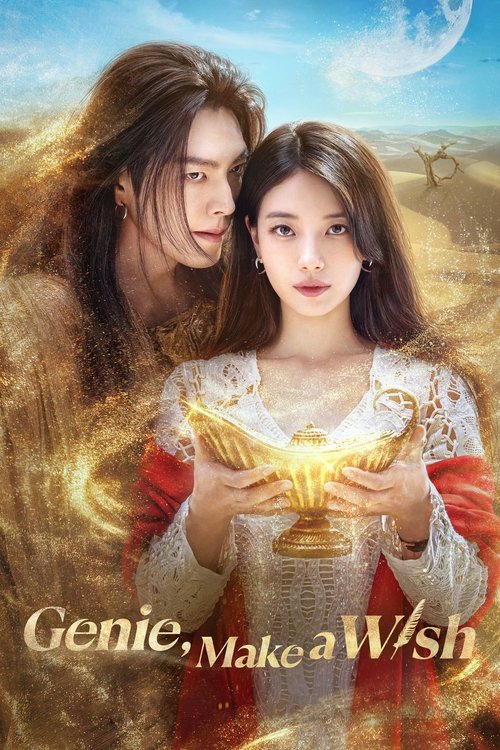
Iblis begins as a genie who believes human beings are greedy and corruptible, and he makes a deal with God that he will prove that theory by tempting mortals with three wishes; if he ever meets a truly selfless human, he will be punished with a fate worse than hell and erased. His theory is shattered centuries ago by a dying enslaved girl in Goryeo who uses all three wishes entirely for other people, and God seals Iblis inside his lamp for 983 years.
Nearly a thousand years later, Iblis is released and finds Ki Ka-young, a car mechanic in Dubai who has been described as a psychopath and someone who cannot feel guilt, but who has been forced into a rigid life by her grandmother's rules and the village around her. Iblis realizes she is the reincarnation of the Goryeo girl who imprisoned him, and he wants revenge while also hoping to prove that she can be corrupted like everyone else.
Ka-young and Iblis form a bargain built around a public test of humanity. Ka-young makes her first wish that Iblis must grant wishes to the next five people he meets, and she sets the condition that if most of those people use the wishes selfishly, she will concede and let Iblis kill her; if most of them act selflessly, then she wins and Iblis dies instead.
The first wave of wish-takers begins, and each person's desire is revealed through the consequences of what they ask for. The story repeatedly uses these wish episodes to show people being tested by greed, fear, longing, and ordinary human weakness, while Iblis watches for proof that selfishness is the rule rather than the exception.
As the wager continues, Ka-young's own life remains tightly controlled by the habits drilled into her by her grandmother, Oh Pan-geum, who has spent years forcing structure into her violent impulses and keeping her from hurting others. The villagers' effort to raise her "normally" is part of why she is able to live in society at all, even though she remains emotionally detached and socially difficult.
Iblis and Ka-young keep colliding as their bet escalates into open emotional conflict. He pushes toward vengeance and domination; she pushes back by treating the contest like a logic problem and refusing to give him the emotional reaction he wants. Their clashes are not just verbal, because the central question of the story is whether her lack of guilt makes her less human or simply differently broken.
As the wish trial progresses, the people around them are drawn deeper into the conflict, and the series reveals that some of the characters who initially appear selfish are capable of unexpectedly generous choices. Those reversals matter because they steadily undermine Iblis's belief that humans inevitably choose desire over compassion.
Ka-young eventually reaches the point where she no longer wants to merely survive under rules or prove a point in the wager. Her final wish is not for power, wealth, or safety, but to feel the full range of human emotions for one day before she dies, which is a decisive turn away from the cold, controlled life she has been living.
Before the ending, the story reveals more of the long history binding Ka-young and Iblis together, including the fact that they were lovers across a millennium and that their present-day meeting is entangled with past loss, erased memory, and unfinished revenge. This backstory reframes their hostility as part of a cycle that has been shaping both of them for centuries.
Ka-young's decision to ask for human feeling triggers the emotional collapse that ends her life. After Irem restores her memory of Iblis, Ka-young dies from exposure and a broken heart, with the story presenting her death as the consequence of finally opening herself fully to grief, love, and loss at the end of her wish.
Iblis is left devastated by her death, and the final stretch resolves the supernatural conflicts surrounding the wish system and the characters tied to it. The story indicates that Ka-young's death and selfless final wish break the old pattern that had bound Iblis's fate, and the larger cosmic terms of his punishment are undone.
The ending then shifts into reunion imagery: Ka-young is reborn as a genie herself, and she and Iblis are shown together again, free of the authority that once trapped or judged them, now sharing a new existence side by side.
The final state of the story is that Iblis and Ka-young reunite after the devastation of the plot, and the ending presents them living on beyond the rules that defined their conflict, with the supernatural order reset around their relationship rather than their punishment.





What is the ending?
In the ending of Genie, Make a Wish, Ka-young makes her final wish to feel human emotion for one day, and that wish leads to her death after she is overwhelmed by grief and loss. Iblis is killed by Ejllael, but Ka-young is reborn as a genie, and the two are reunited at the end.
Ka-young's grandmother Pan-geum dies first, and Ka-young is left unable to fully feel the depth of that loss until her final wish gives her human emotion. Iblis fears Ka-young will use her last wish to save him, because doing so would fulfill the condition that frees him from his wager but also place him at Ejllael's mercy. When Ka-young finally asks only to feel what humans feel, Iblis bows his head and grants the wish, even though it costs him his own life when Ejllael kills him. After that, Ka-young wanders the desert carrying the weight of Pan-geum's sacrifice and her own restored feelings, and after Irem returns her memory of Iblis, she dies from exposure and heartbreak. Ka-young is then reborn as a jinniya, and Iblis is also brought back so that they can meet again on Earth as immortal genies.
Scene by scene, the ending unfolds like this:
Ka-young is first struck by Pan-geum's death, and the loss lands on her with a force she cannot previously fully grasp because she has lived without normal emotional depth. She calls for Iblis, but he stays away from her, afraid she will spend her last wish on something selfish to save him rather than on herself. When they finally come face to face, Ka-young makes her final wish: she wants to feel the full depth of human emotion for one day before she dies. The wish is granted, and Iblis is effectively proven wrong about her humanity, but the price is that his own fate is sealed.
Ejllael then kills Iblis. Ka-young is left alone in the desert, now fully feeling grief, love, and the shock of what has happened around her. Irem later restores her memory of Iblis, and after that restoration she dies from exposure and a broken heart. The story then turns to rebirth: Ka-young returns as a genie, and Iblis also returns so the two can remain together. Min-ji survives the ending and later returns to Dubai to witness the final genie imagery, while Pan-geum is described as continuing to watch over them from above.
Is there a post-credit scene?
No, there is no postcredit scene for the 2025 TV show "Genie, Make a Wish." The series concludes with the final death of the main characters, Ka-young and Iblis (the Genie), which directly fulfills the Goryeo girl's third wish that they would protect each other until the end, with no additional footage shown after the credits.
Ka-young dies from exposure and a broken heart after her memory of Iblis is restored, while Iblis is killed by Ejllael immediately after granting her selfish wish to feel the full depth of human emotion for one day, an act that validates Iblis's hypothesis about humanity, breaks his bet with God, and humbles him before a human. The narrative ends with Ka-young wandering the desert, overwhelmed by the weight of her grandmother's sacrifice and her friend's loyalty, before she succumbs, with no scene appearing after the credits roll.
Is this family friendly?
No -- based on its official ratings, Genie, Make a Wish is not family-friendly for children; Netflix lists it as TV-MA, and IMDb also labels it TV-MA.
Potentially objectionable or upsetting elements for children or sensitive viewers include:
- Violence and physical harm: viewer comments mention slapping, pushing people off buildings, and other violent or threatening moments.
- Dark or disturbing tone shifts: some viewers describe parts of the series as becoming "darkly disturbing" rather than staying light fantasy.
- Mature romantic content: IMDb's episode information mentions a first kiss and romantic pursuit, indicating on-screen romantic intimacy.
- Supernatural/demonic themes: the series centers on a genie figure associated with Iblis and uses fantasy elements that some viewers found blasphemous or culturally sensitive.
- Emotional intensity: the premise involves a woman with emotional detachment and a genie with strong emotional swings, which may create heavy or unsettling interpersonal conflict.
- Possible references to a child in distress: one viewer explicitly flagged scenes involving a child in certain scenarios as upsetting.
If you want, I can also give you a very short parent-style content guide for whether it's suitable for teens, older teens, or adults only.