






































Popular
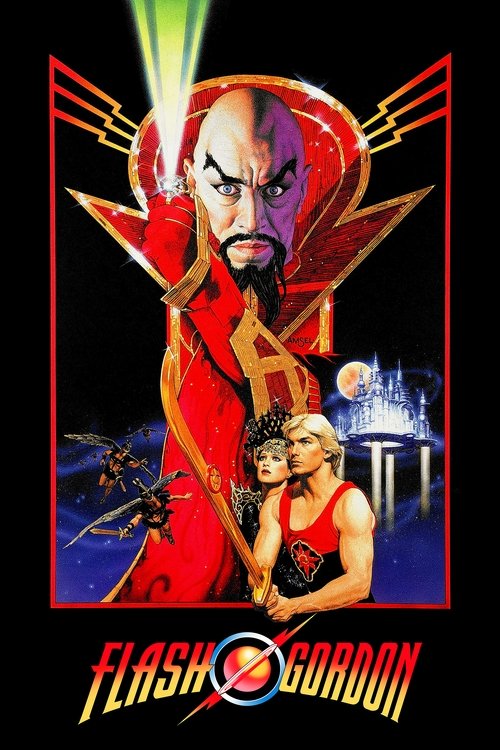
What is the significance of the character Ming the Merciless in Flash Gordon?
How does Flash Gordon first encounter Dale Arden?
What role does Dr. Hans Zarkov play in the story?
What are the challenges Flash Gordon faces in the arena?
How does the relationship between Flash Gordon and Ming evolve throughout the film?
Should I watch it?
Ask Your Own Question

What is the plot?
Sorry, we aren't able to watch and write up a full detailed plot yet. Check back in a few days.
More Movies Like This
Browse All Movies →

What is the ending?
In the ending of the 1980 film "Flash Gordon," Flash, Dale, and Dr. Zarkov confront Emperor Ming in a final battle. They manage to defeat him, leading to the destruction of his palace and the liberation of Mongo. Flash and Dale share a moment of triumph, and the film concludes with a sense of hope and adventure.
Now, let's delve into the ending in a more detailed narrative fashion.
As the climactic battle unfolds, Flash Gordon, played by Sam J. Jones, finds himself in the heart of Ming's palace, a grand and ominous structure filled with vibrant colors and elaborate designs that reflect the tyrannical rule of Emperor Ming. Flash, fueled by determination and the love for Dale Arden, stands resolute against the forces of Ming, who is portrayed by Max von Sydow with a chilling charisma.
In a tense confrontation, Flash, Dale, and Dr. Hans Zarkov, played by Topol, rally together to face Ming. The trio has been through harrowing experiences, and their bond has strengthened. Flash, embodying the hero archetype, is driven by a desire to save not only Dale but also the inhabitants of Mongo from Ming's oppressive reign. Dale, portrayed by Melody Anderson, is equally motivated, her courage shining through as she stands by Flash's side, ready to fight for their freedom.
The battle escalates as they navigate through the palace, encountering various traps and minions of Ming. The visual spectacle is heightened by the film's distinctive art style, with vibrant costumes and elaborate sets that create a fantastical atmosphere. The stakes are high, and the tension palpable as they confront Ming's forces.
In a pivotal moment, Flash faces Ming directly. The Emperor, with his sinister smile, underestimates Flash's resolve. A fierce struggle ensues, showcasing Flash's bravery and quick thinking. With the help of Zarkov's inventions and Dale's resourcefulness, they manage to outsmart Ming. The confrontation culminates in a dramatic showdown where Flash ultimately defeats Ming, leading to the Emperor's downfall.
As Ming is vanquished, the palace begins to crumble around them, symbolizing the end of his tyrannical rule. The vibrant colors of the palace fade, replaced by chaos as the inhabitants of Mongo rise against their oppressor. Flash, Dale, and Zarkov escape just in time, witnessing the destruction of Ming's empire. The visual effects, though dated, convey a sense of liberation and hope as the oppressive structures of Ming's reign collapse.
In the aftermath, Flash and Dale share a moment of triumph, their faces illuminated by the light of a new dawn. They stand together, united not just as lovers but as heroes who have fought for a greater cause. Zarkov, ever the scientist, reflects on the adventure they have shared, hinting at the possibility of future explorations and adventures.
The film concludes with a sense of optimism, as Flash, Dale, and Zarkov look towards the horizon, ready for whatever challenges may come next. The final scene leaves the audience with a lingering sense of adventure, encapsulating the spirit of the film. Flash Gordon, the unlikely hero, has not only saved the day but has also forged unbreakable bonds with his companions, embodying the themes of courage, love, and the fight against tyranny.
Is there a post-credit scene?
The movie "Flash Gordon" produced in 1980 does not have a post-credit scene. The film concludes with a climactic battle against the evil Emperor Ming and a resolution that sees Flash, Dale, and Dr. Zarkov escaping Ming's clutches. After the final confrontation, the story wraps up without any additional scenes or teasers during or after the credits. The ending focuses on the triumph of the heroes and their return to Earth, leaving no further narrative threads to explore in a post-credit sequence.
What is the significance of the character Ming the Merciless in Flash Gordon?
Ming the Merciless is the primary antagonist in Flash Gordon, representing tyranny and oppression. He is the ruler of the planet Mongo and seeks to conquer Earth, showcasing his power through ruthless tactics. His character embodies the classic villain archetype, with a grandiose appearance, including his elaborate costumes and menacing demeanor. Ming's motivations are driven by a desire for control and domination, making him a formidable foe for Flash and his allies.
How does Flash Gordon first encounter Dale Arden?
Flash Gordon first encounters Dale Arden on a plane when they are both passengers. As the plane experiences turbulence, Flash, a charming and confident football player, tries to reassure Dale, who is visibly frightened. Their chemistry is immediate, and Flash's protective nature shines through as he comforts her. This moment sets the stage for their partnership as they are soon thrust into a battle against Ming after their plane crashes and they are captured.
What role does Dr. Hans Zarkov play in the story?
Dr. Hans Zarkov is a brilliant but eccentric scientist who believes that Earth is under threat from an alien force. His character serves as the catalyst for the adventure, as he constructs a rocket ship to travel to Mongo. Zarkov's motivations stem from his desire to save humanity, despite being dismissed by others as a madman. His quirky personality and determination add a layer of humor and intellect to the narrative, and he becomes an essential ally to Flash and Dale in their quest.
What are the challenges Flash Gordon faces in the arena?
In the arena, Flash faces a series of brutal challenges designed by Ming to entertain his subjects and eliminate threats. One notable challenge is the fight against the monstrous creature known as the Beast Man, where Flash must rely on his physical prowess and quick thinking to survive. The arena scenes are visually striking, filled with vibrant colors and dramatic music, heightening the tension. Flash's determination to fight for his friends and his refusal to back down showcase his bravery and heroism.
How does the relationship between Flash Gordon and Ming evolve throughout the film?
The relationship between Flash Gordon and Ming the Merciless evolves from initial confrontation to a personal vendetta. Flash's defiance against Ming's tyranny ignites a fierce rivalry, as Ming sees Flash as a significant threat to his rule. Throughout the film, their encounters are charged with tension, showcasing Flash's courage and Ming's malevolence. As Flash rallies his allies and challenges Ming's authority, their conflict becomes increasingly personal, culminating in a climactic showdown that tests both characters' resolve.
Is this family friendly?
The 1980 film "Flash Gordon" is generally considered a family-friendly adventure, but it does contain some elements that may be objectionable or upsetting for children or sensitive viewers. Here are a few aspects to consider:
-
Violence and Action: There are several scenes of combat and action, including battles with laser guns and physical confrontations. While not graphic, the violence may be intense for younger viewers.
-
Mild Language: The film includes some mild swearing and suggestive dialogue that may not be suitable for very young children.
-
Scary Creatures: The film features various alien creatures and characters, some of which may be frightening or unsettling, particularly for sensitive viewers.
-
Dark Themes: The overarching theme of a tyrannical ruler and the struggle against oppression may be heavy for younger audiences to fully grasp.
-
Romantic Elements: There are romantic undertones and suggestive situations, particularly involving the character of Dale Arden, which may not be appropriate for all children.
-
Visual Style: The film's unique visual style, including psychedelic effects and surreal imagery, may be disorienting or confusing for some viewers.
Overall, while "Flash Gordon" is an adventurous and colorful film, parents may want to consider these elements when deciding if it is suitable for their children.








