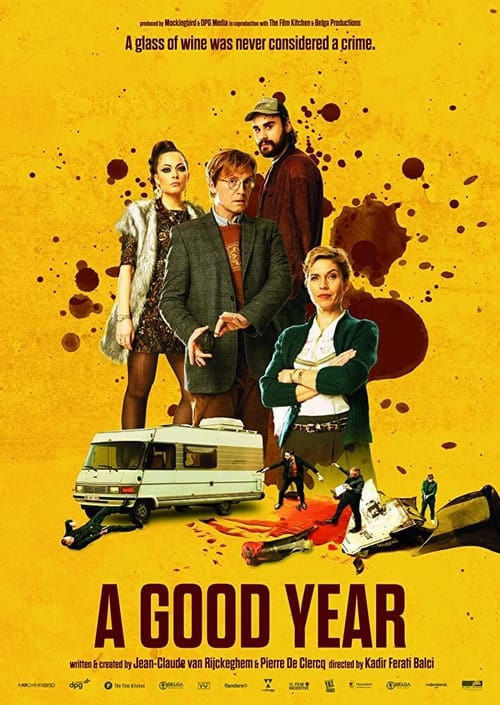









Popular
What motivates the main character, Max Skinner, to return to his family's vineyard in France?
How does Max's relationship with his childhood friend, Fanny, evolve throughout the series?
What role does the vineyard play in Max's character development?
How does the arrival of the American investor impact Max's plans for the vineyard?
What challenges does Max face in adapting to life in Provence after his return?
Should I watch it?
Ask Your Own Question

What is the plot?
In the opening scenes of "A Good Year," we are introduced to Max Skinner, a successful London-based investment banker. He is portrayed as a driven and somewhat ruthless character, focused solely on his career. Max receives news that his estranged uncle, Henry Skinner, has passed away, leaving him a vineyard in Provence, France. Initially, Max is indifferent to the news, viewing the vineyard as a mere asset to be sold for profit.
Max travels to France to assess the property, arriving at the picturesque vineyard, which is surrounded by lush landscapes and sun-drenched hills. Upon his arrival, he is met with a sense of nostalgia and memories of his childhood spent there. He explores the vineyard, noting its dilapidated state and the potential for profit. However, he is also confronted by the emotional weight of his uncle's legacy and the memories tied to the place.
As Max begins to consider selling the vineyard, he encounters a woman named Fanny Chenal, who is the local restaurant owner. Fanny is vibrant and passionate about the region, and she challenges Max's intentions regarding the vineyard. Their initial interactions are filled with tension, as Fanny is skeptical of Max's commitment to preserving the vineyard's heritage. Despite their differences, there is an undeniable chemistry between them.
Max's plans to sell the vineyard are complicated when he discovers that his uncle had a deep connection to the land and had intended for it to remain in the family. This revelation stirs conflicting emotions within Max, as he grapples with the idea of honoring his uncle's wishes versus his desire for financial gain. He begins to feel a sense of responsibility towards the vineyard and the community surrounding it.
As Max spends more time in Provence, he becomes increasingly enchanted by the lifestyle and the beauty of the region. He attends local events, meets the townspeople, and starts to appreciate the slower pace of life. His relationship with Fanny deepens, and they share moments of vulnerability and connection, revealing their pasts and dreams. Max begins to question his life choices and the relentless pursuit of wealth.
A turning point occurs when Max learns that the vineyard is in dire financial straits, and he must make a decision about its future. He faces pressure from his colleagues in London, who are eager for him to return and continue his high-powered career. However, Max is torn between his old life and the new possibilities that the vineyard represents. He starts to envision a future where he can restore the vineyard and create a legacy of his own.
In a pivotal scene, Max decides to host a wine-tasting event at the vineyard to attract potential buyers. The event is a mix of chaos and charm, showcasing the vineyard's potential. However, during the event, Max realizes that he does not want to sell the vineyard after all. He feels a profound connection to the land and the people, and he understands that this place holds the key to his happiness.
As the story progresses, Max confronts his past, including his strained relationship with his father and the choices that led him to prioritize work over personal fulfillment. He has a heartfelt conversation with Fanny, where they both express their fears and hopes for the future. This moment solidifies their bond and sets the stage for Max's ultimate decision.
In the climax of the story, Max faces a final confrontation with his colleagues in London, who are frustrated with his indecision. He stands firm in his choice to keep the vineyard, rejecting the corporate world that once defined him. This decision is met with mixed reactions, but Max feels liberated and at peace with his choice.
The series concludes with Max fully embracing his new life in Provence. He and Fanny are seen working together on the vineyard, symbolizing a fresh start and a commitment to building a future together. The final scenes capture the beauty of the vineyard and the joy of community, leaving viewers with a sense of hope and renewal.





What is the ending?
In the ending of "A Good Year," the main character, Max Skinner, comes to terms with his life choices and decides to embrace a simpler, more fulfilling existence in Provence. He reconciles with his past and finds love with Fanny, ultimately choosing to stay in the vineyard rather than return to his old life in London.
As the story unfolds towards its conclusion, we find Max Skinner, a successful but jaded London banker, grappling with the inheritance of his late uncle's vineyard in Provence. Initially, he views the vineyard as a mere asset to be sold for profit. However, as he spends time in the picturesque landscape, he begins to reconnect with his childhood memories and the essence of life that he had long forgotten.
In the final scenes, Max faces a pivotal moment when he learns that the vineyard is not just a financial opportunity but a place filled with love, history, and potential. He has a heartfelt conversation with Fanny, the local woman who has captured his heart. Their relationship deepens as they share their dreams and aspirations, revealing a mutual desire for a life that is rich in experiences rather than material wealth.
As the sun sets over the vineyard, casting a golden hue over the landscape, Max makes the decision to reject the corporate world he once thrived in. He chooses to stay in Provence, embracing the vineyard and the life it offers. This decision signifies a profound transformation in Max, as he realizes that true happiness lies not in financial success but in love, connection, and a simpler way of living.
The final moments of the show depict Max and Fanny walking hand in hand through the vineyard, symbolizing a new beginning. The camera pans out, capturing the beauty of the landscape and the promise of a future filled with hope and love. Max's journey from a cynical banker to a man who values relationships and the beauty of life encapsulates the essence of the story, highlighting the importance of personal growth and the choices that define us.
In summary, Max Skinner chooses to embrace a new life in Provence with Fanny, leaving behind his old life in London, while the vineyard becomes a symbol of his transformation and newfound happiness.
Is there a post-credit scene?
In the 2020 TV show "A Good Year," there is no post-credit scene. The series concludes its narrative without any additional scenes after the credits roll. The final moments of the show wrap up the character arcs and themes explored throughout the series, leaving viewers with a sense of closure regarding the characters' journeys and the resolutions of their conflicts. The focus remains on the emotional growth and transformations of the main characters, rather than teasing future developments or additional content.
What motivates the main character, Max Skinner, to return to his family's vineyard in France?
Max Skinner, a successful London-based investment banker, is initially motivated to return to his family's vineyard in Provence after the death of his uncle Henry. He sees this as an opportunity to sell the property for a profit, but as he spends time there, he begins to reconnect with his past and the simpler joys of life.
How does Max's relationship with his childhood friend, Fanny, evolve throughout the series?
Max's relationship with Fanny starts off as a casual acquaintance, but as they spend more time together, their bond deepens. Fanny challenges Max's materialistic views and helps him rediscover the beauty of life in Provence, leading to a romantic connection that forces Max to confront his feelings and priorities.
What role does the vineyard play in Max's character development?
The vineyard serves as a catalyst for Max's transformation. Initially viewing it merely as a financial asset, he gradually comes to appreciate its emotional significance and the memories tied to it. This shift in perspective reflects his internal struggle between his corporate ambitions and a desire for a more fulfilling life.
How does the arrival of the American investor impact Max's plans for the vineyard?
The arrival of the American investor, who is interested in purchasing the vineyard, complicates Max's plans. Initially, Max sees this as a way to secure his financial future, but as he becomes more attached to the vineyard and its legacy, he must grapple with the decision of whether to sell or preserve his family's heritage.
What challenges does Max face in adapting to life in Provence after his return?
Max faces several challenges in adapting to life in Provence, including the cultural differences, the physical demands of vineyard management, and his own reluctance to let go of his fast-paced London lifestyle. These challenges force him to confront his values and ultimately lead to significant personal growth.
Is this family friendly?
"A Good Year," produced in 2020, is generally considered family-friendly, but it does contain some elements that may be sensitive for children or more sensitive viewers. Here are a few aspects to consider:
-
Mild Language: There are instances of mild profanity that may not be suitable for younger audiences.
-
Emotional Themes: The show explores themes of loss, regret, and personal growth, which may be heavy for some viewers, particularly children.
-
Romantic Situations: There are romantic subplots that include mild suggestive content, which may not be appropriate for all ages.
-
Conflict and Tension: Some scenes involve interpersonal conflict that could be upsetting, including arguments and emotional confrontations.
-
Family Dynamics: The portrayal of complex family relationships may resonate differently with viewers, potentially evoking strong emotions.
Overall, while the show is not overtly inappropriate, parents may want to preview it to determine its suitability for their children.