


Popular
What is Tevye's main conflict throughout the story?
How does Tevye react to his daughters' choices in husbands?
What role does the character of the Fiddler play in the story?
What is the significance of the character Golde in Tevye's life?
How does the village of Anatevka change throughout the film?
Should I watch it?
Ask Your Own Question

What is the plot?
In the early dawn of 1905, in the small Jewish village of Anatevka, Russia, a humble milkman named Tevye begins his day with a prayerful hymn to tradition. The camera sweeps across the modest wooden homes, the dusty streets, and the villagers going about their daily routines, setting a tone of quiet resilience. Tevye, a man deeply rooted in Jewish customs, introduces himself as both narrator and protagonist, sharing his world where tradition governs every aspect of life. He lives with his wife Golde and their five daughters, each approaching the age of marriage, in a time when arranged marriages are the norm and the outside world is beginning to stir with revolutionary ideas.
Tevye's love for tradition is palpable, yet he is about to face challenges that will test his faith and resolve. Early on, a man with a newspaper arrives in the village, reading aloud about revolutionary movements sweeping across Russia, a harbinger of the political upheaval to come. The village's insular peace is fragile, balanced precariously between the old ways and the winds of change.
The story's first major tension arises around Tevye's eldest daughter, Tzeitel. Traditionally, Tevye has arranged for her to marry Lazar Wolf, the wealthy butcher, a match that promises security but little affection. Lazar Wolf is a formidable man, and his imposing presence is felt even before the marriage negotiations begin. However, Tzeitel harbors a secret love for Motel Kamzoil, the timid and humble tailor of the village. Motel lacks the stature and wealth of Lazar, but he possesses a quiet dignity and a steadfast heart.
When Tevye learns of Motel's courage--how he stands up for himself despite his meekness--he begins to reconsider. In a pivotal scene, Tevye confronts Motel, initially dismissive, but moved by Motel's earnestness and Tzeitel's sincere love, he reluctantly gives his consent. Yet, Tevye worries about breaking the news to Golde, his wife, fearing her resistance to such a match. To ease her fears, Tevye fabricates a prophetic dream: he tells Golde that he dreamed Tzeitel was destined to marry Motel and that the ghost of Lazar Wolf's dead wife, Fruma Sarah, would rise from her grave to curse Tzeitel if she marries the butcher. This supernatural warning terrifies Golde, who quickly agrees that Tzeitel must marry Motel. This moment is both humorous and poignant, illustrating Tevye's willingness to bend truth to preserve harmony and tradition in his family.
The wedding of Tzeitel and Motel is a joyous occasion, full of laughter and celebration, but it is soon overshadowed by the arrival of a group of Russian peasants who ride into Anatevka to perform a violent demonstration of power. The wedding festivities are abruptly disrupted as the mob tramples wedding gifts, smashes tables, and sets buildings ablaze. Perchik, a young revolutionary who has won the heart of Tevye's second daughter, Hodel, tries to defend the village but is subdued by the Czar's men with a candlestick holder, suffering a concussion. The scene is chaotic and brutal, a stark contrast to the earlier joy, and it marks the beginning of the end for the village's peaceful existence.
Perchik is no ordinary suitor. A passionate Marxist revolutionary, he challenges the village's traditions openly. At a wedding celebration, he boldly crosses the gender barrier by dancing with Hodel, defying the strict separation between men and women. This act symbolizes the growing tension between old customs and new ideals. Tevye is initially furious when Hodel reveals her love for Perchik and their intention to marry without his permission. Yet, moved by their devotion, he eventually relents, though the political dangers loom large.
Weeks later, the harsh realities of the revolution catch up with Perchik. He is arrested in Kiev and exiled to Siberia, a fate that devastates Hodel. In a heartrending farewell, she decides to leave Anatevka to join him in exile, embodying the sacrifices demanded by love and conviction.
Meanwhile, Tevye's third daughter, Chava, falls in love with Fyedka, a Russian Christian youth who protects her from harassment by other Russian boys. Their interfaith relationship is the ultimate challenge to Tevye's beliefs. When Chava and Fyedka arrive to inform Tevye of their plans to marry and move to Krakow, Poland, Tevye's reaction is one of profound heartbreak and anger. He cannot accept a marriage outside the Jewish faith and declares Chava dead to him, severing their bond. This confrontation is the emotional climax of Tevye's personal struggle, revealing the limits of his tolerance and the deep pain caused by cultural betrayal.
As these personal dramas unfold, the external threat to Anatevka intensifies. The Russian authorities, represented by the local Constable, deliver a grim ultimatum: the Jewish villagers have three days to pack up and leave their homes. This forced expulsion is a devastating blow, transforming the story from a family saga into a communal tragedy. The villagers gather in shock, singing the mournful song "Anatevka," reflecting on their miserable yet beloved town and the impossibility of leaving.
In the days that follow, the community prepares to scatter across the globe. Tevye and his family pack their belongings, facing an uncertain future. Yente, the matchmaker whose role has diminished as the daughters assert their independence, plans to emigrate to Jerusalem, bidding farewell to Golde with a warm embrace. Lazar Wolf, the butcher, despite his gruff demeanor, decides to move to Chicago to live with his former brother-in-law, whom he detests but acknowledges with resigned humor that "a relative is a relative."
Hodel departs to join Perchik in Siberia, embodying the sacrifices of love and loyalty. Chava and Fyedka leave for Krakow, though Tevye coldly ignores their farewell, underscoring the emotional rift between father and daughter.
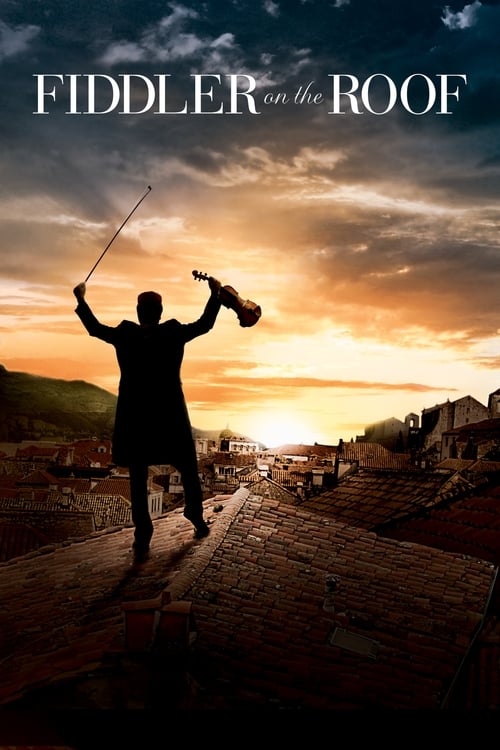
In the film's final moments, Tevye spots the fiddler--a symbolic figure representing Jewish resilience and tradition--playing on a rooftop as the villagers begin their exodus. Together, Tevye and the fiddler walk down the road, the silhouettes of the departing villagers fading into the distance. The fiddler's music lingers, a haunting reminder of the enduring spirit of a people uprooted but unbroken.
Throughout the narrative, Tevye wrestles with three loves: his devotion to tradition, his love for his daughters, and his faith in God. He learns to bend with the changing times--accepting his daughters' marriages to Motel and Perchik--but draws an unyielding line at Chava's interfaith union. The story closes on a note of bittersweet endurance, as the community faces exile with courage, carrying their cultural identity into an uncertain future. No main character dies physically in the film; rather, the deaths are symbolic--the death of tradition, the death of home, and the death of familial bonds strained by change. The pogrom and forced expulsion serve as the brutal external forces that shatter the village's world, leaving Tevye and his family to navigate the painful path forward.
More Movies Like This
Browse All Movies →
What is the ending?
At the end of "Fiddler on the Roof," Tevye and his family face the harsh realities of life as they are forced to leave their home in Anatevka due to anti-Semitic persecution. Tevye's daughters, Tzeitel, Hodel, and Chava, have each chosen their own paths in love, leading to a rift with Tevye. The film concludes with Tevye and his family departing the village, carrying their belongings, while the fiddler plays a haunting melody.
As the story unfolds towards its conclusion, we find ourselves in Anatevka, where the atmosphere has shifted dramatically. The once vibrant village is now overshadowed by the threat of expulsion. Tevye, played by Topol, grapples with the changes in his family and the world around him. His daughters have made choices that defy tradition, and he struggles to reconcile his love for them with his adherence to customs.
The first significant scene in this final act occurs when Tevye learns that the authorities have ordered the Jewish community to leave Anatevka. This news is devastating, and Tevye's internal conflict deepens. He has already faced the challenge of accepting Tzeitel's marriage to Motel, a poor tailor, and Hodel's choice to marry Perchik, a revolutionary. However, Chava's decision to marry Fyedka, a non-Jewish man, has created a rift that Tevye cannot easily mend.
In a poignant moment, Tevye confronts Chava, expressing his heartbreak over her choice. He feels betrayed, and in a moment of anguish, he disowns her, declaring that she is no longer his daughter. Chava, heartbroken, leaves with Fyedka, and Tevye is left to grapple with the loss of his daughter and the weight of his traditions.
As the community prepares to leave, we see the villagers packing their belongings, a scene filled with sorrow and nostalgia. Tevye's family gathers, and he tries to maintain a sense of hope amidst the despair. Tzeitel and Motel are now married and expect a child, while Hodel and Perchik are determined to continue their fight for a better future, even if it means being apart for a time.
The final moments of the film are marked by a sense of bittersweet acceptance. Tevye, with his family by his side, walks away from Anatevka, carrying the weight of his past and the uncertainty of the future. The fiddler, a symbol of tradition and resilience, plays a haunting melody as they leave, underscoring the themes of loss and the enduring spirit of the Jewish people.
As they depart, Tevye reflects on the changes that have taken place, both in his family and in the world around him. The film closes with the image of the fiddler, representing the continuity of life and culture, even in the face of adversity. The fate of each main character is intertwined with the broader narrative of survival and adaptation, leaving the audience with a poignant reminder of the struggles faced by those who seek to balance tradition with change.
Is there a post-credit scene?
The movie "Fiddler on the Roof," produced in 1971, does not have a post-credit scene. The film concludes with a poignant ending that encapsulates the themes of tradition, family, and change. After Tevye and his family face the upheaval of their lives due to the changing social landscape and the expulsion from their village, the final moments focus on Tevye and his daughters as they prepare to leave Anatevka. The film ends with Tevye walking away with his family, reflecting on the loss of their home and the uncertain future ahead, leaving the audience with a sense of both sorrow and resilience. The absence of a post-credit scene emphasizes the weight of the story's conclusion and the enduring impact of the characters' journeys.
What is Tevye's main conflict throughout the story?
Tevye's main conflict revolves around his struggle to maintain his traditional values and way of life in the face of changing social norms and pressures. As a Jewish milkman in the small village of Anatevka, he grapples with the marriages of his daughters, who choose partners based on love rather than the arranged marriages he believes are essential to their culture.
How does Tevye react to his daughters' choices in husbands?
Tevye experiences a range of emotions as each of his daughters chooses to marry for love rather than following the traditional customs. Initially, he is shocked and resistant, particularly with Tzeitel's choice of Motel, a poor tailor, and later with Hodel's decision to marry Perchik, a revolutionary. His internal struggle is marked by moments of doubt, anger, and ultimately, a reluctant acceptance of their choices, reflecting his deep love for his daughters.
What role does the character of the Fiddler play in the story?
The Fiddler serves as a symbolic figure throughout the film, representing the connection between tradition and change. He appears at key moments, often playing music that reflects Tevye's emotional state and the shifting dynamics of the village. The Fiddler's presence underscores the themes of resilience and the struggle to maintain one's identity amidst upheaval.
What is the significance of the character Golde in Tevye's life?
Golde, Tevye's wife, is a pragmatic and strong-willed woman who embodies the traditional values of their community. Her relationship with Tevye is complex; while they have an arranged marriage, their bond deepens over time. Golde's reactions to the changes in their daughters' lives and her interactions with Tevye highlight the tension between tradition and modernity, as she often serves as a grounding force for Tevye.
How does the village of Anatevka change throughout the film?
The village of Anatevka undergoes significant changes as the story progresses, reflecting the broader societal shifts occurring in early 20th-century Russia. The arrival of outsiders and the increasing influence of revolutionary ideas challenge the villagers' way of life. This culminates in the expulsion of the Jewish community from Anatevka, symbolizing the loss of tradition and the harsh realities faced by the characters, particularly Tevye and his family.
Is this family friendly?
"Fiddler on the Roof" (1971) is generally considered family-friendly, but it does contain some themes and scenes that may be challenging for children or sensitive viewers. Here are a few potentially objectionable or upsetting aspects:
-
Poverty and Struggle: The film portrays the hardships of a Jewish family living in Tsarist Russia, including scenes of economic struggle and social injustice.
-
Discrimination and Anti-Semitism: There are references to anti-Semitic attitudes and actions, including a scene where the community faces the threat of eviction and violence.
-
Marriage and Family Conflict: The film explores the tension between tradition and change, leading to conflicts within the family, particularly regarding marriage choices. This may be emotionally intense for some viewers.
-
Death and Loss: There are moments that deal with loss and the impact of death on the family, which can be poignant and may evoke strong emotions.
-
Cultural and Religious Tensions: The film addresses the struggles of maintaining cultural identity in the face of external pressures, which may be complex for younger viewers to fully grasp.
While these elements contribute to the film's depth and emotional resonance, they may require parental guidance for younger audiences.








