
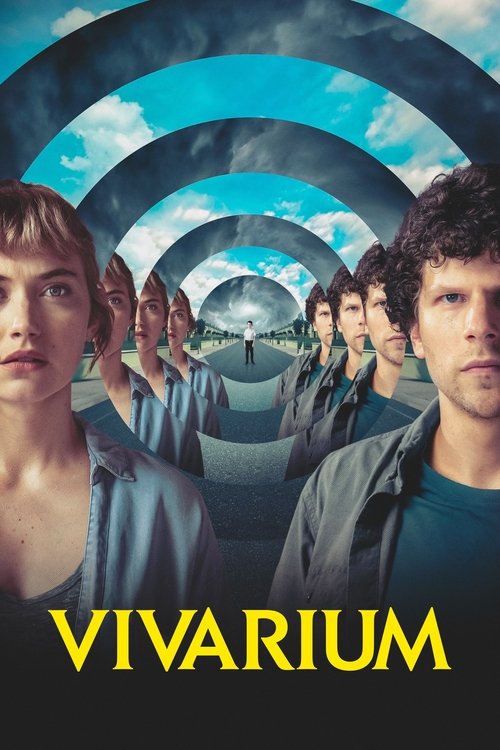












Popular
What is the significance of the house in Vivarium?
How does the couple, Gemma and Tom, react to their situation in the house?
What role does the child play in the story?
What happens to Tom when he tries to escape the neighborhood?
How does Gemma's attitude towards the child change throughout the film?
Should I watch it?
Ask Your Own Question

What is the plot?
Sorry, we aren't able to watch and write up a full detailed plot yet. Check back in a few days.
More Movies Like This
Browse All Movies →







What is the ending?
In the ending of "Vivarium," Tom is ultimately consumed by the cycle of the artificial world, while Gemma is left to confront the reality of their situation alone. Tom attempts to escape but is trapped in the labyrinthine neighborhood, and Gemma is forced to care for the child they were given, who grows rapidly and becomes increasingly demanding. The film concludes with Gemma's realization of her entrapment, as she is left to face the consequences of their choices in a never-ending cycle of despair.
As the film approaches its conclusion, the atmosphere within the artificial neighborhood grows increasingly oppressive. Tom and Gemma, having been trapped in this surreal environment, are struggling to cope with their situation. The once vibrant colors of the houses now seem dull and lifeless, mirroring the couple's dwindling hope.
Scene 1: Tom's Desperation Tom, feeling the weight of their confinement, decides to take matters into his own hands. He attempts to escape the neighborhood, driven by a desperate need for freedom. He walks through the eerily identical streets, each house a mirror of the last, and begins to feel the futility of his efforts. No matter how far he walks, he finds himself back at the same spot, the same house, the same unyielding reality. His frustration mounts, and he screams into the void, but the silence that follows only deepens his despair.
Scene 2: Gemma's Isolation Meanwhile, Gemma is left alone to care for the child they were given, a strange and demanding creature that grows at an alarming rate. The child, with its unsettling mimicry of human behavior, becomes a source of both fascination and horror for Gemma. She tries to connect with it, but the child's needs are insatiable, and it becomes increasingly clear that it is not a normal child. Gemma's emotional state deteriorates as she realizes that her nurturing instincts are being exploited in this twisted scenario.
Scene 3: The Child's Transformation As the child matures, it begins to exhibit more complex behaviors, often mocking Tom and Gemma. It demands attention and care, but its actions are devoid of genuine affection. The child's rapid growth symbolizes the relentless passage of time within the confines of the neighborhood, and Gemma feels the weight of her responsibilities crushing her spirit. She becomes increasingly resentful of the child, recognizing it as a product of their captivity rather than a source of joy.
Scene 4: Tom's Final Attempt In a moment of desperation, Tom confronts the child, demanding to know what it wants. The child, with an unsettling calmness, reveals its true nature, suggesting that it is a part of the system that has ensnared them. Tom's realization that they are merely pawns in a larger game drives him to a breaking point. He attempts to escape once more, but this time, he is met with a finality that leaves him hopeless.
Scene 5: The Cycle Continues In the film's climax, Tom is ultimately consumed by the very environment that has entrapped them. He is unable to break free from the cycle, and his fate is sealed as he becomes another lost soul within the labyrinth. Gemma, left alone, is forced to confront the reality of her situation. She is now the sole caretaker of the child, who continues to grow and demand more from her. The film closes with Gemma's resigned acceptance of her fate, as she realizes that she is trapped in an endless loop of caregiving and despair.
The final scenes leave Gemma in a state of emotional turmoil, reflecting the film's themes of entrapment, the nature of parenthood, and the loss of individuality. The neighborhood remains unchanged, a stark reminder of their plight, as Gemma continues to navigate her existence within this artificial world, forever bound to the child that symbolizes their lost freedom.
Is there a post-credit scene?
The movie "Vivarium," produced in 2019, does not have a post-credit scene. The film concludes with its final moments, leaving the audience with a sense of ambiguity and contemplation about the themes of entrapment and the cyclical nature of life. After the credits roll, there are no additional scenes or content that follow. The story ends on a note that emphasizes the surreal and unsettling experience of the characters, particularly focusing on the implications of their situation within the artificial environment of the housing development.
What is the significance of the house in Vivarium?
The house in Vivarium is a surreal, labyrinthine structure that symbolizes entrapment and the monotony of suburban life. It is designed to be identical in every aspect, reflecting the couple's growing sense of isolation and despair as they realize they cannot escape its confines.
How does the couple, Gemma and Tom, react to their situation in the house?
Gemma and Tom initially try to maintain a sense of normalcy, but as time passes, their reactions shift from curiosity to frustration and despair. Gemma becomes increasingly nurturing towards the strange child they are forced to raise, while Tom grows resentful and desperate to escape, leading to a rift in their relationship.
What role does the child play in the story?
The child, who is raised by Gemma and Tom, is a strange and unsettling figure that embodies their entrapment. He grows rapidly and exhibits bizarre behavior, reflecting the couple's deteriorating mental states. The child serves as a constant reminder of their inability to escape the cycle of life imposed upon them.
What happens to Tom when he tries to escape the neighborhood?
When Tom attempts to escape the neighborhood, he finds himself trapped in a loop, unable to leave. Each time he drives away, he ends up back at the same house, which emphasizes the futility of their situation and the inescapable nature of their confinement.
How does Gemma's attitude towards the child change throughout the film?
Gemma's attitude towards the child evolves from initial reluctance and confusion to a complex mix of maternal instinct and despair. As she becomes more involved in caring for him, she struggles with her feelings of attachment and the realization that he represents their captivity, leading to a deep internal conflict.
Is this family friendly?
"Vivarium," produced in 2019, is not considered family-friendly and contains several potentially objectionable or upsetting elements that may affect children or sensitive viewers.
-
Existential Themes: The film explores heavy themes such as entrapment, the monotony of suburban life, and the loss of control, which may be difficult for younger audiences to understand or process.
-
Disturbing Imagery: There are unsettling visuals, including the surreal and claustrophobic nature of the housing development, which can evoke feelings of anxiety and discomfort.
-
Violence and Threats: The film includes moments of implied violence and threats, particularly as the characters struggle with their situation, which may be distressing.
-
Childlike Character: The presence of a childlike character who exhibits unsettling behavior can be disturbing, as it raises questions about identity and humanity.
-
Emotional Distress: The characters experience significant emotional turmoil, including despair, frustration, and hopelessness, which may be upsetting for sensitive viewers.
-
Isolation: The theme of isolation is prevalent, showcasing the characters' feelings of being trapped, which can resonate negatively with those who have experienced similar feelings.
Overall, the film's tone and content are more suited for mature audiences due to its psychological and existential nature.






