








Popular
What are the main character's motivations throughout the series?
How does the relationship between Dr. Sokolov and Nurse Elena evolve?
What is the significance of the mysterious patient that arrives in episode 3?
How does the hospital's financial crisis impact the characters' decisions?
What role does the character of Dr. Ivanov play in the series?
Should I watch it?
Ask Your Own Question

What is the plot?
In the opening scene of "13 Klinicheskaya," we are introduced to the main character, Dr. Anna Sokolova, a dedicated and compassionate physician working in a psychiatric hospital. The atmosphere is tense as Anna navigates the daily challenges of her job, dealing with patients who exhibit a range of mental health issues. She is particularly focused on a new patient, Alexei, who has been admitted under mysterious circumstances. His arrival stirs curiosity and concern among the staff.
As Anna begins her assessment of Alexei, she learns that he was found wandering the streets, disoriented and confused. His backstory is revealed through fragmented flashbacks, showing glimpses of a traumatic event that led to his current state. Anna feels a strong urge to help him, sensing that there is more to his story than what he initially reveals. This connection drives her to dig deeper into his past.
Meanwhile, the hospital is facing internal strife, with the head psychiatrist, Dr. Viktor Petrov, pushing for more aggressive treatment methods that Anna disagrees with. Tensions rise as Anna confronts Viktor about his approach, advocating for a more empathetic and patient-centered care model. This conflict sets the stage for a power struggle within the hospital, highlighting the differing philosophies on mental health treatment.
As Anna continues to work with Alexei, she discovers that he has been experiencing vivid hallucinations and paranoia. One night, during a particularly intense episode, Alexei confides in Anna about a dark figure he believes is following him. This revelation deepens Anna's commitment to helping him, and she begins to suspect that his hallucinations may be linked to a traumatic event involving a former patient who died under suspicious circumstances.
The plot thickens when Anna uncovers evidence suggesting that the hospital has been involved in unethical practices, including experimental treatments on patients without their consent. She finds old medical records that indicate a cover-up related to the death of the former patient, which connects to Alexei's fears. This discovery puts Anna in a precarious position, as she must decide whether to confront the administration or protect her career.
As Anna gathers more information, she faces increasing pressure from Viktor, who warns her to stop her investigation. He threatens her job security, but Anna is undeterred. She secretly reaches out to a journalist, hoping to expose the hospital's wrongdoings. This decision marks a turning point in the narrative, as Anna risks everything for the truth.
In a climactic sequence, Anna confronts Viktor in his office, presenting her findings and demanding accountability for the hospital's actions. The confrontation escalates, leading to a heated argument where Viktor reveals his own troubled past and justifications for his methods. Anna stands her ground, fueled by her desire to protect her patients and uphold ethical standards in medicine.
The tension reaches a breaking point when Alexei's condition deteriorates, and he becomes increasingly agitated. During a particularly chaotic night shift, he escapes from his room, leading to a frantic search throughout the hospital. Anna, driven by her concern for Alexei's safety, leads the staff in the search, showcasing her leadership and commitment to her patients.
In the final act, Anna finds Alexei in a secluded part of the hospital, where he is on the verge of a breakdown. She manages to calm him down, using the trust they have built to guide him back to safety. This moment of connection is pivotal, as it reinforces Anna's role as a healer and protector.
The story culminates in a dramatic showdown when Anna decides to go public with her findings. She holds a press conference, revealing the hospital's unethical practices and the truth about the former patient's death. The fallout is immediate, with the hospital facing scrutiny from the media and regulatory bodies. Viktor's position is threatened, and Anna's bravery inspires other staff members to come forward with their own experiences.
In the closing scenes, we see the aftermath of Anna's revelations. The hospital undergoes significant changes, and Anna is recognized for her courage. Alexei begins to show signs of recovery, and their bond remains strong. The series ends on a hopeful note, with Anna reflecting on the challenges she faced and the importance of compassion in healing, setting the stage for potential future developments in her career and personal life.






What is the ending?
In the ending of "13 Klinicheskaya," the main characters confront their personal demons and the consequences of their actions. The hospital, which has been a backdrop for their struggles, becomes a symbol of both healing and trauma. The series concludes with a sense of resolution for some characters, while others face uncertain futures.
As the final episodes unfold, the tension escalates within the hospital. The staff and patients are forced to confront the reality of their situations. Dr. Alexey, who has been battling his own moral dilemmas, makes a pivotal decision that impacts the lives of those around him. He chooses to stand up against the corrupt practices that have plagued the institution, risking his career but ultimately seeking redemption.
Meanwhile, nurse Daria, who has been a source of support for many, faces a personal crisis that leads her to reevaluate her life choices. In a poignant moment, she decides to leave the hospital, seeking a fresh start away from the pain and memories that haunt her.
The series culminates in a dramatic confrontation between the hospital administration and the staff, where the truth about unethical practices is revealed. This moment serves as a turning point, leading to a restructuring of the hospital and a renewed focus on patient care.
In the final scenes, we see the characters moving forward. Dr. Alexey is seen volunteering at a community clinic, embodying his commitment to healing. Daria, now in a new city, finds solace in her new job, hinting at a hopeful future. The series closes with a montage of the characters, each on their own path, symbolizing the ongoing journey of healing and self-discovery.
As the final episodes of "13 Klinicheskaya" unfold, the atmosphere within the hospital grows increasingly tense. The camera pans through the dimly lit corridors, capturing the weight of unspoken fears and unresolved conflicts. The staff, weary from the emotional toll of their work, gather in the break room, where hushed conversations reveal their growing discontent with the hospital's administration.
Dr. Alexey, a dedicated physician grappling with his own ethical dilemmas, stands at the center of this turmoil. His brow furrows as he listens to his colleagues express their frustrations. The stakes are high; the hospital has been embroiled in scandals involving patient neglect and financial corruption. Alexey feels the pressure mounting, torn between his loyalty to his colleagues and his moral compass.
In a pivotal scene, Alexey confronts the hospital director, a man whose charm masks a ruthless ambition. The confrontation is charged with emotion, as Alexey lays bare the injustices he has witnessed. The director, dismissive and condescending, attempts to intimidate Alexey into silence. But Alexey, fueled by a newfound resolve, refuses to back down. This moment marks a turning point for him, as he embraces the idea of standing up for what is right, despite the personal risks involved.
Meanwhile, nurse Daria, who has been a steadfast presence for both patients and staff, faces her own crisis. The camera captures her in a quiet moment, staring out of a window, lost in thought. Memories of her past flood her mind--moments of joy intertwined with deep sorrow. The weight of her experiences becomes unbearable, prompting her to reconsider her future at the hospital. In a heartfelt conversation with a close friend, she expresses her desire to leave, seeking a fresh start away from the pain that has become too familiar.
As the series progresses, the tension culminates in a dramatic meeting where the staff confront the administration. The room is filled with a palpable sense of urgency as Alexey and his colleagues present evidence of the hospital's unethical practices. The atmosphere is electric, with emotions running high. The administration, caught off guard, attempts to deflect blame, but the staff stands united, demanding accountability. This confrontation serves as a cathartic release for the characters, who have long felt powerless.
In the aftermath, the hospital undergoes significant changes. The camera captures the bustling activity of a restructured facility, now focused on patient care and ethical practices. Alexey is seen volunteering at a community clinic, his demeanor transformed. He interacts warmly with patients, embodying the compassion that initially drew him to medicine. This scene symbolizes his commitment to healing, both for himself and those he serves.
Daria, now in a new city, is shown in a bright, sunlit office, where she begins her new job. Her smile reflects a sense of hope and renewal, a stark contrast to the shadows of her past. The montage of scenes showcases the characters moving forward, each on their own path of healing and self-discovery.
As the series draws to a close, the final shot lingers on the hospital, now a place of light and hope. The camera pulls back, revealing the bustling activity within, a testament to the resilience of the human spirit. The screen fades to black, leaving the audience with a sense of closure, yet acknowledging the ongoing journey of each character.
Is there a post-credit scene?
In the 2022 series "13 Klinicheskaya," there is indeed a post-credit scene that adds an intriguing layer to the narrative.
As the credits roll, the screen fades to black before transitioning to a dimly lit hospital corridor. The camera slowly pans down the hallway, revealing flickering fluorescent lights that cast an eerie glow. The atmosphere is thick with tension, and the sound of distant beeping machines echoes softly.
Suddenly, the scene shifts to a small, cluttered office within the hospital. Papers are strewn across the desk, and a single lamp casts a warm light over a figure hunched over a file. It's Dr. Alexey, one of the central characters, who has been grappling with the moral dilemmas of his profession throughout the series. His face is etched with fatigue, but there's a spark of determination in his eyes.
As he flips through the file, the camera zooms in on the contents, revealing a series of photographs and medical reports that hint at a deeper conspiracy within the hospital. The documents are marked with red stamps labeled "CONFIDENTIAL," and the photographs depict patients with unusual symptoms that have not been addressed in the main storyline.
Dr. Alexey's expression shifts from concern to resolve as he mutters to himself, "I need to find out the truth." He stands up abruptly, knocking over a cup that spills coffee across the desk, but he doesn't seem to notice. The urgency in his movements suggests that he is about to embark on a dangerous investigation that could unravel everything he thought he knew about the hospital.
The scene ends with a close-up of the file, the camera lingering on a particular photograph that shows a shadowy figure in the background, hinting at a larger threat looming over the hospital. The screen fades to black once more, leaving viewers with a sense of anticipation and dread about what lies ahead for Dr. Alexey and the secrets of 13 Klinicheskaya.
What are the main character's motivations throughout the series?
The main character, Dr. Alexey Sokolov, is driven by a deep desire to save lives and make a difference in the medical field. His past experiences, including the loss of a patient due to negligence, fuel his determination to uphold the highest standards of care. This internal conflict often leads him to clash with hospital administration and ethical dilemmas, as he prioritizes patient welfare over bureaucratic constraints.
How does the relationship between Dr. Sokolov and Nurse Elena evolve?
Initially, Dr. Sokolov and Nurse Elena have a professional but strained relationship, marked by misunderstandings and differing approaches to patient care. As the series progresses, they face various challenges together, including a critical case that tests their skills and teamwork. This shared experience fosters mutual respect and admiration, leading to a deeper emotional connection, where they begin to confide in each other about their personal struggles and aspirations.
What is the significance of the mysterious patient that arrives in episode 3?
The mysterious patient, who arrives with an undiagnosed condition, serves as a catalyst for the unfolding drama in episode 3. As the medical team struggles to identify the illness, it reveals the limitations of their knowledge and the pressure of time. This case not only tests their medical skills but also exposes underlying tensions within the team, particularly between Dr. Sokolov and the head of the department, who prioritizes reputation over patient care.
How does the hospital's financial crisis impact the characters' decisions?
The hospital's financial crisis creates a tense atmosphere, forcing characters to make difficult choices. Dr. Sokolov finds himself at odds with hospital management, who push for cost-cutting measures that compromise patient care. This conflict drives him to take risks, such as seeking alternative funding sources and advocating for patients' needs, which puts him at risk of disciplinary action. The crisis also affects Nurse Elena, who struggles with job security and the moral implications of the decisions being made.
What role does the character of Dr. Ivanov play in the series?
Dr. Ivanov serves as both a mentor and a rival to Dr. Sokolov. His character embodies the traditional, conservative approach to medicine, often clashing with Sokolov's innovative methods. Throughout the series, Ivanov's skepticism challenges Sokolov to defend his choices, while also providing moments of guidance that reveal Ivanov's own vulnerabilities and fears about the changing landscape of healthcare.
Is this family friendly?
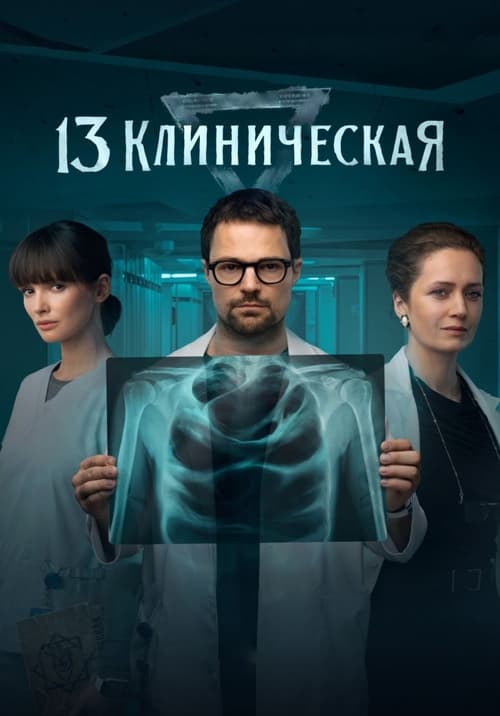
"13 Klinicheskaya," produced in 2022, is a drama series that delves into the lives of medical professionals and patients within a hospital setting. While the show offers a deep exploration of human emotions and relationships, it does contain several elements that may not be suitable for children or sensitive viewers.
-
Medical Procedures: The series features graphic depictions of surgeries and medical emergencies, which may be unsettling for younger audiences or those sensitive to medical imagery.
-
Emotional Trauma: Characters often confront intense emotional situations, including grief, loss, and personal struggles, which can be heavy and distressing.
-
Conflict and Tension: There are scenes of interpersonal conflict among staff and patients, which may include heated arguments or confrontations that could be upsetting.
-
Mental Health Issues: The show addresses themes of mental illness, including depression and anxiety, which may be triggering for some viewers.
-
Death and Dying: The series does not shy away from the realities of death, including the impact on families and friends, which can be a sensitive topic.
Overall, while "13 Klinicheskaya" offers a compelling narrative, its mature themes and emotional depth may not be appropriate for all audiences, particularly children.