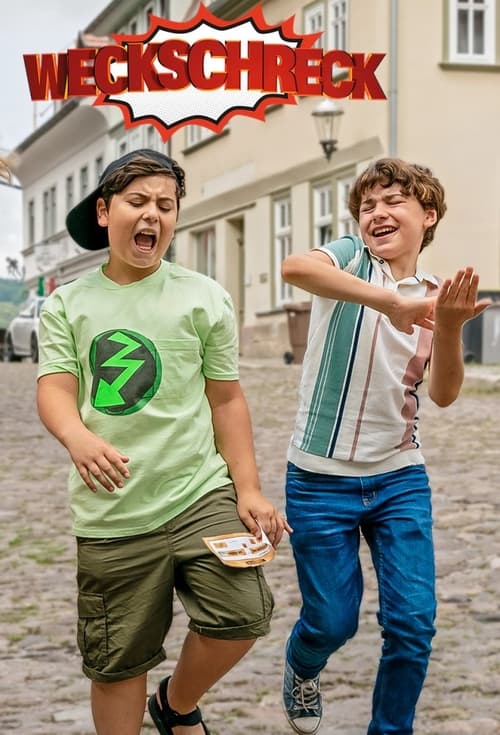








Popular
What motivates the main character, Max, to confront his fears throughout the series?
How does the character of Lena influence Max's development in the series?
What role does the mysterious book play in the plot of Weckschreck?
How does the relationship between Max and his parents evolve throughout the series?
What are the key challenges Max faces in the episode titled 'The Fear of Failure'?
Should I watch it?
Ask Your Own Question

What is the plot?
In the opening scene of "Weckschreck," we are introduced to the protagonist, Max, a young man in his late twenties who is struggling with the pressures of adulthood. He lives in a small, cluttered apartment filled with remnants of his childhood, showcasing his reluctance to let go of the past. Max's internal conflict is evident as he navigates his mundane job at a local convenience store, where he feels trapped and unfulfilled. His interactions with customers are often awkward, highlighting his social anxiety and desire for connection.
One day, while working the night shift, Max encounters a mysterious old man named Herr Schmidt, who enters the store and begins to share cryptic stories about a magical object known as the "Weckschreck." This object, according to Herr Schmidt, has the power to grant its possessor the ability to confront their fears and reshape their reality. Intrigued yet skeptical, Max dismisses the old man's tales but feels a lingering curiosity about the Weckschreck.
Later that week, Max's life takes a turn when he discovers a strange, ornate box hidden in the attic of his apartment building. Inside, he finds the Weckschreck, a small, intricately designed trinket that seems to pulse with energy. As he holds it, he feels an overwhelming sense of nostalgia and longing for a simpler time. Driven by a mix of excitement and trepidation, Max decides to keep the Weckschreck, hoping it might help him escape his current life.
As Max begins to experiment with the Weckschreck, he discovers that it allows him to relive moments from his past. He first uses it to revisit a childhood birthday party, where he feels the joy and innocence he once had. However, each time he uses the Weckschreck, he becomes increasingly detached from reality, struggling to differentiate between past and present. His friends, including his best friend Lena, notice his erratic behavior and express concern, but Max brushes them off, convinced that he is on the brink of a breakthrough.
Max's obsession with the Weckschreck deepens, leading him to neglect his job and relationships. He begins to isolate himself, spending hours lost in memories. One night, he decides to confront a painful memory involving his estranged father, hoping to find closure. As he relives the moment, he is overwhelmed by emotions, leading to a confrontation with his younger self. This encounter forces Max to confront his unresolved feelings of abandonment and anger, but instead of finding peace, he becomes more entangled in his past.
The turning point occurs when Max's repeated use of the Weckschreck starts to have unintended consequences. He begins to experience glitches in reality, where elements from his memories bleed into the present. One day, while at work, he sees a vision of his childhood friends, who had long since drifted apart. This hallucination causes a scene in the store, alarming customers and leading to his boss reprimanding him. Feeling cornered, Max decides to use the Weckschreck one last time to fix everything.
In a climactic sequence, Max attempts to rewrite a pivotal moment from his past involving a failed friendship with Lena. As he activates the Weckschreck, the boundaries of time and space warp around him, and he finds himself in a chaotic blend of memories and reality. He confronts Lena in a surreal landscape that shifts between their childhood playground and their current lives. The emotional intensity peaks as Max realizes that he cannot change the past without facing the consequences of his actions.
In the final moments, Max is forced to make a choice: to continue living in the past or to embrace the present and the future. He ultimately decides to let go of the Weckschreck, understanding that true growth comes from facing his fears rather than escaping them. As he relinquishes the trinket, the memories begin to fade, and he finds himself back in his apartment, surrounded by the clutter of his life but with a newfound clarity.
The series concludes with Max reaching out to Lena, apologizing for his behavior and expressing a desire to reconnect. The final scene shows them meeting at a café, where they share a genuine conversation, hinting at the possibility of rebuilding their friendship. Max's journey of self-discovery culminates in a sense of hope and acceptance, leaving behind the weight of his past as he steps into a more uncertain but promising future.






What is the ending?
In the ending of "Weckschreck," the main character, Max, confronts his fears and insecurities, leading to a resolution with his estranged father. The climax occurs during a family gathering where long-standing tensions are addressed. Ultimately, Max finds a sense of closure and acceptance, while his father begins to understand the impact of his actions. The series concludes with a hopeful note, suggesting the possibility of reconciliation and new beginnings.
As the final episode unfolds, the scene opens in the warm, inviting living room of Max's childhood home, where family members gather for a long-awaited reunion. The atmosphere is thick with unspoken words and unresolved feelings. Max, visibly anxious, fidgets with his hands, his internal struggle evident as he prepares to face his father, who has been largely absent from his life.
The camera pans to his father, Klaus, who sits on the couch, his expression a mix of regret and defiance. The tension in the room is palpable, as relatives exchange glances, sensing the impending confrontation. Max takes a deep breath, steeling himself for the moment he has both dreaded and anticipated.
As the gathering progresses, small talk fills the air, but Max's mind races. He recalls moments from his childhood, the laughter overshadowed by his father's harsh words and emotional distance. The flashbacks are interspersed with the present, highlighting the stark contrast between the joy of family and the pain of abandonment.
Finally, the moment arrives. Max stands up, his voice trembling but resolute. He addresses Klaus directly, expressing the hurt and confusion that have plagued him for years. The room falls silent, all eyes on the two men. Klaus, taken aback, struggles to respond, his own emotions bubbling to the surface. He begins to apologize, his voice cracking as he acknowledges his failures as a father.
Max listens, his heart racing. He sees the sincerity in Klaus's eyes, a flicker of hope igniting within him. The conversation deepens, revealing layers of misunderstanding and regret. Klaus shares his own struggles, the pressures he faced that led to his emotional unavailability. The vulnerability in his voice resonates with Max, who realizes that his father is not just a figure of disappointment but a flawed human being.
As they continue to talk, the tension in the room begins to dissipate. Family members, once mere spectators, start to engage, sharing their own stories of pain and reconciliation. The atmosphere shifts from one of hostility to understanding, as the walls built over years begin to crumble.
In a pivotal moment, Max reaches out, placing a hand on Klaus's shoulder. This simple gesture signifies a breakthrough, a willingness to forgive and move forward. Klaus, overwhelmed, tears up, and the two share a heartfelt embrace. The camera captures this moment, a poignant symbol of healing and the complexities of familial love.
The episode concludes with a montage of the family enjoying the rest of the gathering, laughter echoing through the house. Max and Klaus are seen sharing a quiet moment, a newfound bond forming between them. The final shot lingers on Max's face, a mixture of relief and hope, as he realizes that while the past cannot be changed, the future holds the promise of connection and understanding.
As the credits roll, viewers are left with a sense of closure for Max and Klaus, both having taken significant steps toward healing. The series ends on a hopeful note, emphasizing the importance of communication, vulnerability, and the possibility of redemption within family relationships.
Is there a post-credit scene?
In the 2022 series "Weckschreck," there is indeed a post-credit scene that adds an intriguing layer to the narrative.
As the credits roll, the screen fades to black before transitioning to a dimly lit room filled with various gadgets and tools scattered across a workbench. The camera slowly pans to reveal the show's protagonist, Max, hunched over a peculiar contraption. His brow is furrowed in concentration, and there's a flicker of determination in his eyes.
Max is tinkering with a device that resembles a mix between a remote control and a vintage radio. The soft whirring of machinery fills the air, and the faint glow of lights on the device casts an eerie ambiance. As he adjusts a dial, a series of static noises emanate from it, and he leans in closer, his expression shifting from focus to surprise.
Suddenly, the device emits a loud beep, and a holographic image of a mysterious figure appears above it. The figure is shrouded in shadows, making it difficult to discern their identity. They speak in a distorted voice, hinting at a larger conspiracy that ties back to the main plot of the series. "You've only scratched the surface, Max. There's much more at stake than you realize," they say ominously.
Max's eyes widen, a mix of fear and curiosity washing over him. The scene ends with him reaching out towards the hologram, as if trying to grasp the implications of this new revelation. The screen cuts to black, leaving viewers with a sense of anticipation and a multitude of questions about what lies ahead in the story. This post-credit scene effectively sets the stage for potential future conflicts and deepens the overarching mystery of "Weckschreck."
What motivates the main character, Max, to confront his fears throughout the series?
Max, a timid and anxious young man, is driven by a deep-seated desire to break free from the constraints of his overprotective upbringing. His journey begins when he discovers a hidden talent for storytelling, which becomes a catalyst for his transformation. Each episode presents him with challenges that force him to face his fears, such as public speaking and social interactions, ultimately revealing his internal struggle between wanting to please his family and pursuing his own identity.
How does the character of Lena influence Max's development in the series?
Lena, a spirited and adventurous girl, serves as a pivotal influence in Max's life. Her fearless approach to life contrasts sharply with Max's cautious nature. Throughout the series, Lena encourages Max to step out of his comfort zone, pushing him to take risks and embrace new experiences. Her unwavering support and belief in his potential help him to gradually build confidence, leading to significant moments of personal growth.
What role does the mysterious book play in the plot of Weckschreck?
The mysterious book, discovered by Max in an old bookstore, acts as a magical guide that reveals hidden truths about his fears and aspirations. Each chapter he reads corresponds to a specific challenge he faces in his life, providing him with insights and lessons that help him navigate his journey. The book's whimsical illustrations and cryptic messages serve as both a source of inspiration and a reflection of Max's internal struggles, ultimately guiding him toward self-discovery.
How does the relationship between Max and his parents evolve throughout the series?
Initially, Max's relationship with his parents is strained due to their overprotectiveness, which stifles his independence. As the series progresses, pivotal moments force them to confront their own fears and insecurities. Through heartfelt conversations and shared experiences, they begin to understand the importance of allowing Max to forge his own path. This evolution is marked by emotional scenes where they express vulnerability, leading to a more supportive and trusting dynamic.
What are the key challenges Max faces in the episode titled 'The Fear of Failure'?
In 'The Fear of Failure,' Max grapples with the pressure of an upcoming storytelling competition that he feels unprepared for. The episode showcases his internal conflict as he battles self-doubt and anxiety. Key challenges include a disastrous rehearsal where he forgets his lines, leading to a moment of humiliation. However, with Lena's encouragement and the wisdom from the mysterious book, Max learns to embrace imperfection and ultimately delivers a heartfelt story that resonates with the audience, marking a significant turning point in his character arc.
Is this family friendly?
"Weckschreck," produced in 2022, is a family-oriented show that primarily targets a younger audience. However, it does contain some scenes and themes that may be considered objectionable or upsetting for children or sensitive viewers.
-
Mild Scares: The show features moments designed to create suspense or fright, including spooky settings and unexpected surprises that could be startling for younger viewers.
-
Emotional Conflict: Characters experience emotional turmoil, such as feelings of jealousy, fear, or sadness, which may resonate deeply and could be upsetting for sensitive children.
-
Mild Language: There are instances of mild language that may not be suitable for all audiences, depending on parental discretion.
-
Thematic Elements: The show explores themes of loss and change, which might be challenging for younger viewers to process.
-
Physical Comedy: Some scenes involve slapstick humor that could be perceived as violent or inappropriate, depending on the context and execution.
Overall, while "Weckschreck" is designed to be entertaining for families, these elements may warrant parental guidance for younger or more sensitive viewers.