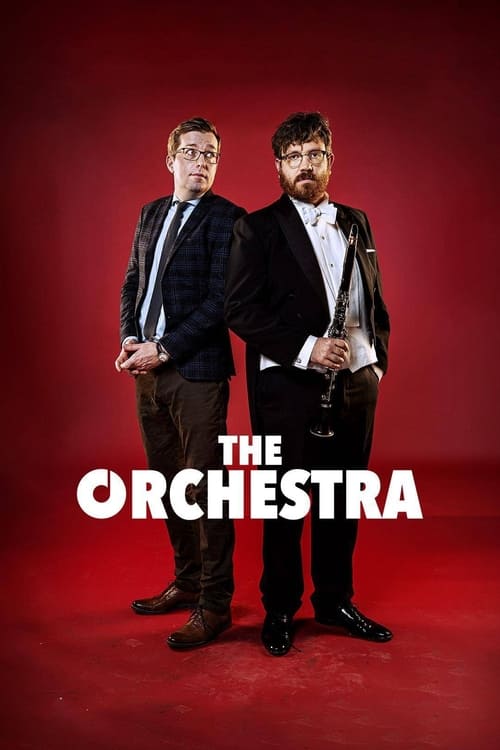









Popular
What challenges does the main character face in their journey to become a conductor?
How does the relationship between Clara and her mentor evolve throughout the series?
What role does the orchestra itself play in the development of the characters?
What specific events lead to the climax of Clara's journey in the series?
How do the personal lives of the orchestra members impact their performances?
Should I watch it?
Ask Your Own Question

What is the plot?
In the opening scene of "The Orchestra," we are introduced to the main character, Clara, a talented but struggling conductor in a prestigious orchestra. The camera pans over a grand concert hall filled with an audience eagerly awaiting the performance. Clara stands nervously at the podium, her hands trembling slightly as she prepares to lead the orchestra. The tension is palpable as she takes a deep breath and raises her baton, signaling the start of the symphony. As the music swells, Clara's passion and dedication shine through, but her insecurities are evident as she glances at the musicians, seeking their approval.
Following the performance, Clara receives mixed feedback from the orchestra members and the conductor, Maestro Anton. While some praise her energy, others express doubts about her leadership skills. This criticism weighs heavily on Clara, who feels the pressure to prove herself. In a private moment, she confides in her best friend, Mia, about her fears of not being taken seriously in a male-dominated field. Mia encourages her to embrace her unique style and not to shy away from her vision.
As Clara prepares for the upcoming competition to become the orchestra's permanent conductor, she faces a significant challenge: Maestro Anton announces that he will be retiring soon and that the competition will be fierce. Clara's determination grows, and she begins to work tirelessly, spending late nights practicing and refining her interpretation of the pieces. During this time, she also develops a budding romance with a talented violinist, Leo, who supports her ambitions and provides emotional comfort.
The competition day arrives, and Clara is filled with a mix of excitement and anxiety. She watches as her fellow competitors take the stage, each showcasing their unique styles. When it's her turn, Clara steps up with renewed confidence. She conducts with passion, pouring her heart into the music. The orchestra responds to her energy, and the performance is met with enthusiastic applause. However, Clara notices that Maestro Anton seems unimpressed, which leaves her feeling uncertain about her chances.
After the competition, the judges deliberate, and Clara anxiously awaits the results. When the announcement is made, she is devastated to learn that she did not win the position. Instead, another conductor, who is more traditional in style, is chosen. Clara feels crushed and questions her abilities. In a moment of vulnerability, she confronts Maestro Anton, expressing her disappointment and frustration. He reveals that he saw potential in her but believes she needs to find her own voice rather than conforming to expectations.
Determined to prove herself, Clara decides to organize an independent concert featuring her vision of the orchestra's music. She reaches out to her fellow musicians, and despite initial hesitations, they agree to support her. Clara pours her heart into the preparations, selecting pieces that resonate with her and reflect her unique style. As the concert date approaches, she faces numerous challenges, including logistical issues and doubts from some musicians about her leadership.
On the night of the concert, Clara stands backstage, her heart racing. She takes a moment to collect herself, recalling the support of her friends and the journey that brought her here. As she steps onto the stage, the audience's anticipation is palpable. Clara conducts with fervor, and the orchestra responds beautifully, creating a magical atmosphere. The performance is a resounding success, and the audience erupts in applause, giving Clara the validation she desperately sought.
In the aftermath of the concert, Clara receives an unexpected call from a prominent music festival, inviting her to conduct a special performance. This opportunity reignites her passion and ambition. She realizes that her journey is just beginning, and she is ready to embrace her identity as a conductor. The series concludes with Clara standing confidently at the podium, ready to lead the orchestra into a new era, filled with hope and determination.








What is the ending?
In the ending of "The Orchestra," the main characters come together for a final performance that symbolizes their growth and reconciliation. The conductor, who has faced personal and professional challenges, finds a renewed sense of purpose. The musicians, each dealing with their own struggles, unite to create a powerful musical experience that reflects their journey. The performance culminates in a standing ovation, signifying not just their success as an orchestra but also their individual triumphs over adversity.
As the final act unfolds, the atmosphere in the concert hall is electric, filled with anticipation. The camera pans over the audience, capturing their eager faces, while the orchestra members take their places on stage. The conductor stands at the front, a mix of determination and vulnerability etched on his face. He takes a deep breath, recalling the tumultuous journey that brought them to this moment.
The first notes of the symphony resonate through the hall, and the musicians pour their hearts into the performance. Each character's backstory plays out in the music; the flutist, who struggled with self-doubt, plays with newfound confidence, her fingers dancing over the keys as she locks eyes with the conductor, who nods in encouragement. The cellist, who had faced personal loss, channels his grief into a hauntingly beautiful solo, his bow gliding over the strings with raw emotion.
As the symphony progresses, the tension builds. The conductor, once plagued by insecurities, now leads with authority, guiding the orchestra through complex passages. The camera captures the sweat on his brow, the intensity in his gaze, and the way he connects with each musician, fostering a sense of unity. The audience is captivated, their applause swelling with each crescendo.
In a pivotal moment, the orchestra reaches a climactic point in the piece. The musicians, now fully in sync, share glances of understanding and camaraderie. The flutist and cellist exchange smiles, a silent acknowledgment of their growth and the bonds they've formed. The conductor raises his baton high, signaling the final notes, and the music swells to a breathtaking finish.
As the last note hangs in the air, silence envelops the hall for a brief moment before an eruption of applause breaks out. The audience rises to their feet, cheering and clapping, a testament to the power of their performance. The conductor, overwhelmed with emotion, wipes a tear from his eye, realizing that they have not only succeeded as an orchestra but have also healed individually.
In the aftermath of the performance, the musicians gather backstage, their faces glowing with pride and relief. The flutist embraces the conductor, thanking him for believing in her. The cellist shares a heartfelt moment with his fellow musicians, expressing gratitude for their support during his darkest times. Each character reflects on their journey, acknowledging the challenges they faced and the strength they found within themselves and each other.
As the credits roll, the final scene shows the orchestra members leaving the concert hall, their laughter echoing in the night. They walk together, united by their shared experience, ready to face whatever comes next, embodying the themes of resilience, community, and the transformative power of music.
Is there a post-credit scene?
In the 2022 series "The Orchestra," there is indeed a post-credit scene that adds an intriguing layer to the narrative.
As the credits roll, the screen fades to black before transitioning to a dimly lit rehearsal room. The camera pans slowly across the empty chairs and music stands, the faint sound of a distant violin echoing in the background. The atmosphere is thick with anticipation and nostalgia, evoking the hard work and passion that the musicians poured into their performances throughout the series.
Suddenly, the door creaks open, and a figure steps inside--it's the conductor, visibly weary yet determined. He walks to the center of the room, where a single spotlight illuminates him. He takes a deep breath, his expression a mix of resolve and vulnerability. The conductor picks up a baton that rests on the podium, and as he raises it, the scene shifts to a montage of the orchestra members, each engaged in their own lives, reflecting on the journey they've shared.
The montage captures moments of joy, struggle, and growth, highlighting the bonds formed between the musicians. As the images flash by, the conductor's voiceover begins, expressing his hopes for the future of the orchestra and the importance of their collective journey. He speaks of the challenges they faced and the music that united them, hinting at new projects and collaborations on the horizon.
The scene concludes with the conductor lowering the baton, a determined smile on his face, as the screen fades to black once more. The final words echo in the silence: "This is just the beginning." This post-credit scene leaves viewers with a sense of hope and excitement, suggesting that the story of the orchestra and its members is far from over.
What challenges does the main character face in their journey to become a conductor?
The main character, a young and ambitious musician named Clara, faces numerous challenges on her journey to become a conductor. Initially, she struggles with self-doubt and the pressure of living up to her family's legacy in music. As she navigates the competitive world of orchestral music, she encounters resistance from traditionalists who believe a woman should not lead an orchestra. Clara also grapples with her own insecurities, particularly when she is compared to her mentor, a renowned male conductor. These internal and external conflicts drive her to prove herself, leading to moments of both triumph and vulnerability.
How does the relationship between Clara and her mentor evolve throughout the series?
Clara's relationship with her mentor, Maestro Anton, begins with admiration and respect. Initially, he sees her potential but is hesitant to fully support her due to his own biases and the traditional views of the music world. As the series progresses, Clara's determination and talent begin to break down Anton's reservations. Their dynamic shifts from a teacher-student relationship to one of mutual respect, as Anton learns to appreciate Clara's unique perspective and innovative ideas. This evolution is marked by pivotal moments where Clara stands up for herself, challenging Anton to reconsider his views on leadership and gender in music.
What role does the orchestra itself play in the development of the characters?
The orchestra serves as a microcosm of the larger societal issues the characters face, reflecting themes of collaboration, conflict, and personal growth. Each musician in the orchestra has their own backstory and struggles, which intertwine with Clara's journey. For instance, a seasoned violinist named Marco grapples with feelings of obsolescence as younger musicians join the ensemble. His interactions with Clara help him rediscover his passion for music and mentorship. The orchestra's rehearsals and performances become a backdrop for character development, showcasing how teamwork and shared goals can lead to personal transformation and unity.
What specific events lead to the climax of Clara's journey in the series?
The climax of Clara's journey is marked by a high-stakes competition where she must conduct a major symphony in front of a panel of esteemed judges. Leading up to this moment, Clara faces a series of setbacks, including a public confrontation with a rival conductor who undermines her confidence. Additionally, she experiences a personal crisis when her family pressures her to abandon her dreams for a more conventional career. As the competition approaches, Clara finds herself at a crossroads, torn between her aspirations and the expectations placed upon her. The climax unfolds during the performance, where Clara must channel her fears into a powerful interpretation of the symphony, ultimately proving her worth as a conductor.
How do the personal lives of the orchestra members impact their performances?
The personal lives of the orchestra members significantly impact their performances, creating a rich tapestry of emotional depth within the story. For example, a cellist named Elena is dealing with a recent breakup, which affects her focus and emotional expression during rehearsals. Her struggle is palpable, as her colleagues notice her distraction, leading to tension within the group. Conversely, a flutist named David finds inspiration in his new relationship, which enhances his playing and brings a sense of joy to the ensemble. These personal dynamics create a ripple effect, influencing the overall cohesion and energy of the orchestra during performances, highlighting how individual experiences can resonate within a collective artistic endeavor.
Is this family friendly?
"The Orchestra," produced in 2022, is a drama that explores the intricate dynamics of a symphony orchestra, focusing on the personal and professional lives of its members. While the show is primarily centered around music and artistic expression, it does contain some elements that may be considered objectionable or upsetting for children or sensitive viewers.
-
Emotional Turmoil: Characters experience intense emotional struggles, including anxiety, jealousy, and personal loss, which may be distressing for younger audiences.
-
Conflict and Rivalry: There are scenes depicting rivalry among musicians, leading to heated arguments and confrontations that could be uncomfortable for some viewers.
-
Themes of Failure and Rejection: Characters face the pressures of performance and the fear of failure, which may resonate deeply with sensitive individuals.
-
Personal Relationships: The show delves into complex relationships, including romantic tensions and betrayals, which might be difficult for younger viewers to understand.
-
Depictions of Stress: The high-stakes environment of the orchestra can lead to scenes of stress and breakdowns, showcasing the toll that artistic pursuit can take on individuals.
Overall, while "The Orchestra" is not overtly graphic or violent, its emotional depth and mature themes may require parental guidance for younger viewers.