




















Popular
What is the significance of the color red in The Giver?
How does Jonas's relationship with The Giver evolve throughout the film?
What role does Fiona play in Jonas's journey?
What memories does Jonas receive from The Giver, and how do they impact him?
What is the significance of the Ceremony of Twelve in the story?
Should I watch it?
Ask Your Own Question

What is the plot?
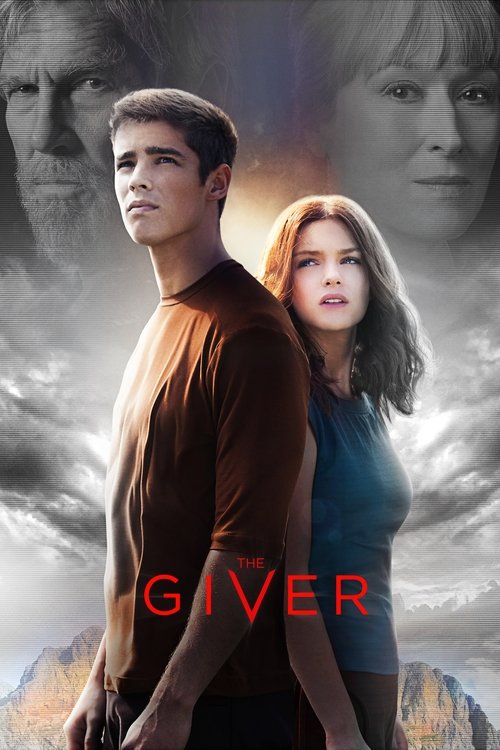
In the sterile, monochromatic expanse of the Community--a vast, enclosed utopia forged from the ashes of "the Ruin," a cataclysmic war that shattered the old world--eighteen-year-old Jonas glides silently on his bicycle through identical housing units under a perpetually gray sky. Every citizen wears the same tunics, follows the same routines, and receives daily injections that suppress emotions, desires, and the chaos of individuality. Colors do not exist here; choices do not exist. Sameness reigns supreme, enforced by constant surveillance from towering speakers and drones that hum overhead like watchful eyes. Jonas shares an artificial family unit with his mother, a stern judge named Jonas's Mother (played with icy precision by Katie Holmes), his father, a gentle Nurturer named Jonas's Father (Alexander Skarsgård's warm yet oblivious demeanor masking deeper conformity), and his younger sister, Lily, who chatters excitedly about her upcoming advancement to Nine at the Ceremony of Twelve.
Jonas's days blur into anticipation with his two closest friends: the compassionate Fiona, with her soft features and quiet curiosity, assigned to the Nurturing Center alongside his father, and the playful Asher, always quick with a joke that never quite lands in their emotionless world. As the Ceremonies of Twelve approach--a grand ritual in the vast Auditorium where holographic projections of the Chief Elder preside--they wonder aloud about their future assignments. "What if we all get Caretaker of the Old?" Asher quips during a volunteer shift at the Nurturing Center, where newothers--genetically engineered infants--are weighed and assessed for viability. Jonas watches Gabe, a fussy newother who fails his tests, marked for release, his tiny cries echoing faintly before the injections silence them.
The Ceremony unfolds under the Auditorium's domed ceiling, thousands of citizens seated in precise rows. Lily receives her bicycle as a Nine, beaming with programmed pride. Assignments proceed alphabetically: Fiona is named Birthmother--no, reassigned to Nurturer for her nurturing aptitude. Asher becomes Recreation Director. Tension coils as Jonas's name is skipped. Whispers ripple. The Chief Elder's holographic form, stern and authoritative with Meryl Streep's commanding presence, pauses. "Jonas," she intones, her voice amplified across the hall. The crowd falls silent. "You have been selected... because of your capacity to see beyond." No assignment, but a selection--the rarest honor. The community rises, chanting "Jonas... Jonas..." in a hypnotic whisper that builds like a wave, sending chills through him. In the front row, the current Receiver of Memory--an elderly man known only as the Giver (Jeff Bridges, his face etched with the weight of forgotten worlds)--watches with grim intensity.
Jonas ascends alone to the Giver's austere annex atop the community's central tower, a sanctuary of books and artifacts from a lost era. Pale sunlight filters through vast windows overlooking the fenced Boundary. "Do you love me?" the Giver asks abruptly during their first session, his hand on Jonas's. Jonas hesitates--love is a word without meaning here--then nods. The Giver withdraws his touch. "Precisely as I thought. It was settled before you were born." He explains: he alone holds all humanity's memories pre-Sameness, transmitting them through touch to shield the Community from pain, war, joy, love. "The worst part of holding the memories is not the pain. It's the loneliness of it. Memories need to be shared."
Training begins. The Giver's palm presses Jonas's back, flooding him with visions. First, a sun-warmed hill of lush green grass, red apples gleaming--color erupts into Jonas's sight. He gasps, seeing the apple's crimson hue linger even after the memory fades. Joy surges, then war: soldiers charging through mud, rifles blazing, blood spraying in vivid scarlet. Hunger gnaws as skeletal figures beg in streets. Love blooms in a family's embrace, a first kiss under fireworks. Pain sears--a sunburn's agony, a child's broken leg. Jonas writhes, eyes widening to permanent color vision, his world fracturing into reds, blues, yellows against the Community's grayscale.
Days blur into weeks. Jonas's father brings Gabe home temporarily, the newother still underweight and crying. In secret, Jonas touches Gabe, sharing a memory of swaying on a boat, soothing him to sleep. Their bond deepens; Gabe's eyes sparkle with faint recognition. Fiona notices Jonas's changes--his lingering gazes, the way he sees her hair flicker auburn. During a Recreation shift, Asher goofs off, reprimanded for imprecision, but Jonas feels a spark of irritation, then amusement--emotions he hides.
Deeper memories reveal horrors. The Giver transmits Rosemary's story--his own daughter, the prior Receiver-in-training, selected ten years ago. Young, vibrant Rosemary absorbed love, then grief, war, until overwhelmed. "She chose release," the Giver whispers, voice cracking. Jonas learns the truth: release is euthanasia, a lethal injection administered lovingly by Nurturers. Rosemary injected herself in despair, her final memory one of unbearable pain. The Giver's eyes glisten--tears, another forbidden sensation.
Jonas rebels subtly. He stops his daily injection by snagging an apple from the dispenser, letting the syringe pierce fruit instead of flesh. Emotions flood unchecked: he craves Fiona. In a hidden corner of the park at dusk, he confesses, "I see things differently now. Colors. Feelings." Fiona trembles, "What if it's too much?" Their lips meet in a tentative, electric kiss--soft, urgent, the first in their colorless lives. She pulls back, conflicted. "I don't know how I feel about... feelings."
Rule-breaking escalates. Jonas lies to his mother: "We just sit in chairs. We don't talk." She frowns, sensing defiance. The Chief Elder summons the Giver, her hologram flickering sternly. "Jonas breaks rules. Precision of language falters. Why?" The Giver retorts, "The girl had a name. Rosemary." Tension crackles; she warns of repeating history.
In their next session, the Giver unveils "Plan for Sameness", the founding blueprint--a leather-bound tome with maps. Their Community nestles within a vast plateau, ringed by cliffs and desert. Beyond Asher's rock formation lies the Boundary of Memory, a snowy ridge where memories are contained. "Theory holds: if the Receiver crosses it with memories intact, they flood back to everyone. Chaos returns. Choice. Pain. But also... life." Jonas's eyes blaze. "Then we free them."
The plan forms. Gabe, failing at the Nurturing Center, is scheduled for release tomorrow--euthanized by Jonas's father. "Take him," the Giver urges. "Inject him with memories; he'll survive the journey." Jonas nods, resolve hardening. Tension mounts as drones buzz closer, surveillance tightening. Jonas shares glimpses with Fiona: a memory of snowfall, her face alight with wonder. Asher senses the shift, joking uneasily, "You're weird now, man."
Night falls. Curfew chimes. Jonas slips from his unit, heart pounding, colors vivid under moonlight. He races to the Nurturing Center, past sleeping newothers, to Gabe's crib. Fiona intercepts him, whispering, "You're breaking everything." She helps distract a guard, stealing Gabe, who coos softly. "Go," she urges, fear etching her face. Jonas kisses her fiercely--"I love you"--and flees on a stolen motorcycle, Gabe bundled against his chest, engine roaring into the forbidden wilderness beyond the community's fence.
Dawn breaks as alarms wail. Jonas's Mother and Asher report him missing to the Chief Elder. Chaos ripples: citizens murmur, injections falter. Fiona is caught aiding, dragged before the Elders. Condemned to release for treason. In the release room--a sterile chamber with a padded table--Jonas's Father prepares the syringe, his face a mask of duty. "It's for the greater good," he murmurs to Fiona, strapped down, tears--real tears--streaming.
High in the Giver's annex, he confronts the Chief Elder. Touching her hologram--impossible, yet memories surge through the link. Visions of Rosemary flood her: laughter, then screams. "Free them!" the Giver pleads, voice thunderous. "Sameness stole our souls!" She recoils, unmoved. "Freedom? People make bad choices. War. Ruin. We chose safety." Their standoff builds, her security drones converging.
Meanwhile, Asher, promoted to Surveillance, pilots a sleek drone across barren plains. The Chief Elder's voice crackles: "Find Jonas. Lose him." Euphemism for murder--drone armaments primed with tranquilizers, then blades. Asher spots them: Jonas and Gabe, motorcycle sputtering in the scorching desert, heat waves distorting the horizon. Jonas looks up, pleading through the lens, "Asher! Trust me! Let us go--see beyond!" Asher hesitates, fingers hovering. Memories Jonas shared flicker in his mind--laughter, brotherhood. The drone nets them, hoisting into the sky. Jonas shouts, "Remember who you are!" Asher's face crumples. In a wrenching pivot, he releases the net over a rushing river. Jonas and Gabe plummet, splash, survive--swept downstream. Queried later, Asher lies smoothly: "I followed orders. He's lost."
Fiona's release looms. Jonas's Father raises the syringe, her eyes locked on his. Back in the Community, the Giver broadcasts memories wider--love, loss--cracks forming in the collective numbness.
Jonas and Gabe battle onward. Desert yields to jagged canyons, then foothills blanketed in unnatural snow--the Boundary nears. Cold bites, Jonas's strength ebbs. He collapses in drifts, Gabe wailing, frost riming their lashes. Vision blurs, then sharpens: a sled, crimson and gold, just as in the Giver's first joyful memory. With desperate heave, Jonas straps Gabe aboard, climbs, pushes off. Wind howls as they rocket downhill, cliffs blurring, momentum surging toward the precipice.
They cross--the Boundary shatters. Memories explode outward like a psychic supernova, flooding the Community. Colors bloom everywhere; emotions crash in waves. Citizens gasp, weep, embrace. In the release room, Jonas's Father falters, syringe dropping. He sees Fiona's fear, feels love for his son--stops short, unstrapping her. Fiona lives. The Chief Elder screams as chaos engulfs the tower, her control fracturing. Asher grins, colors dancing in his eyes. Lily hugs her parents, true tears flowing.
Jonas tumbles from the sled into deep snow, bruised but alive, Gabe giggling beside him. Smoke curls from a chimney ahead--a wooden house aglow in a winter village, Elsewhere. Carolers' voices drift: "Silent night, holy night..." Real music, harmony, choice. Jonas smiles, scooping Gabe. "We did it," he whispers. Voiceover echoes: back home, people swear they hear music--or an echo of it. He approaches the door, light spilling warm, the world alive with possibility.
No one dies in this final push--only Rosemary, ten years prior, by her own hand via release (euthanasia, self-administered); Gabe is spared execution; Fiona survives as memories return, halting her would-be release by Jonas's Father; Asher defies orders without fatality. The Giver endures, his burden lifted. The Community awakens, forever changed. Jonas knocks, door opens to embrace.








What is the ending?
In the ending of "The Giver," Jonas escapes the community with the baby Gabriel, who is at risk of being "released." As they flee, Jonas experiences the harsh realities of the outside world, including cold and hunger. He ultimately reaches a snowy landscape and finds a house filled with warmth and music, suggesting hope and freedom. The film concludes ambiguously, leaving the fate of the community and its inhabitants uncertain.
Now, let's delve into the ending in a detailed narrative fashion:
As the climax of the story unfolds, Jonas, having received the memories of the world from The Giver, realizes the depth of emotion and experience that his community has sacrificed for the sake of sameness and control. The tension escalates when he learns that Gabriel, the infant he has grown to love, is scheduled for "release," a euphemism for euthanasia. This revelation ignites a fierce determination within Jonas to save Gabriel.
In a pivotal scene, Jonas makes the decision to escape the community, believing that if he can reach the outside world, he can save Gabriel and bring back the memories to the people. He sneaks out of his home under the cover of night, clutching Gabriel tightly in his arms. The atmosphere is thick with tension as he navigates through the sterile, colorless streets of the community, which are now imbued with a sense of foreboding. The absence of color symbolizes the lack of emotion and vibrancy in their lives.
As Jonas and Gabriel flee, they encounter the harsh realities of the world outside the community. The landscape shifts from the controlled environment of the community to the wild, untamed beauty of nature. Jonas feels the biting cold of the wind and the crunch of snow beneath his feet, sensations he has never experienced before. Each step away from the community is a step into the unknown, filled with both fear and exhilaration.
The journey is fraught with challenges. Jonas struggles against the elements, feeling the weight of responsibility for Gabriel's safety. He experiences hunger and exhaustion, yet his resolve strengthens with each passing moment. The bond between Jonas and Gabriel deepens, as Jonas reflects on the love and warmth he has come to understand through the memories shared with The Giver.
In a poignant moment, Jonas and Gabriel find themselves in a snowy landscape, where Jonas collapses from fatigue. As he lies in the snow, he recalls the memories of warmth and love, which fuel his determination to keep going. He imagines a place filled with color, music, and joy, a stark contrast to the grayness of the community they left behind.
As they continue their journey, Jonas hears music in the distance, a sound that symbolizes hope and freedom. He pushes through the pain and exhaustion, driven by the vision of a better life for Gabriel and himself. The film captures this moment with a sense of urgency and beauty, as the music swells, echoing the emotions Jonas has come to cherish.
In the final scenes, Jonas and Gabriel reach a house that radiates warmth and light. The imagery is striking, filled with vibrant colors and the sounds of laughter and music. This moment serves as a powerful contrast to the sterile environment of the community. Jonas's face reflects a mixture of relief and hope, as he realizes that they have escaped the confines of their previous lives.
The film concludes ambiguously, leaving viewers with a sense of uncertainty about the fate of the community Jonas left behind. The Giver, who remains in the community, watches as the memories of the past begin to fade from the minds of the people. The final shot of Jonas and Gabriel, surrounded by warmth and music, suggests a new beginning, but the fate of the community and its inhabitants remains unresolved.
In summary, Jonas's journey culminates in a desperate escape that symbolizes the struggle for freedom and the importance of human connection. The fates of the main characters are intertwined with the themes of love, sacrifice, and the quest for a more vibrant existence. Jonas and Gabriel find hope in their escape, while The Giver remains in the community, holding onto the memories that could one day awaken the people to the richness of life they have forsaken.
Is there a post-credit scene?
The movie "The Giver," produced in 2014, does not have a post-credit scene. After the credits roll, there are no additional scenes or content that follow. The film concludes with the resolution of its central narrative, focusing on Jonas's journey and the choices he makes to bring change to his community. The absence of a post-credit scene allows the audience to reflect on the themes of memory, emotion, and individuality that are central to the story.
What is the significance of the color red in The Giver?
In The Giver, the color red symbolizes the vibrancy of emotions and experiences that the community has suppressed. When Jonas first sees the color red, it represents his awakening to the depth of feelings and the beauty of the world around him, contrasting sharply with the monochrome existence of his society.
How does Jonas's relationship with The Giver evolve throughout the film?
Jonas's relationship with The Giver begins as one of curiosity and respect. As Jonas receives memories and experiences the depth of human emotion, he grows increasingly dependent on The Giver for guidance. Their bond deepens as Jonas learns about love, pain, and the complexities of life, ultimately leading to a shared understanding of the importance of choice and individuality.
What role does Fiona play in Jonas's journey?
Fiona serves as a pivotal character in Jonas's emotional development. Initially, she represents the innocence and simplicity of their community. As Jonas begins to experience deeper feelings, he realizes his love for Fiona, which becomes a catalyst for his desire to break free from the constraints of their society. Her eventual assignment as a caregiver highlights the community's control over personal relationships.
What memories does Jonas receive from The Giver, and how do they impact him?
Jonas receives a range of memories from The Giver, including the joy of love, the pain of loss, the beauty of nature, and the horrors of war. Each memory profoundly impacts Jonas, awakening his emotions and leading him to question the values of his society. The memories of love and joy inspire him to seek a more meaningful existence, while the painful memories reveal the cost of their utopian lifestyle.
What is the significance of the Ceremony of Twelve in the story?
The Ceremony of Twelve is a crucial turning point in the film, marking the transition from childhood to adulthood for the community's youth. During this ceremony, Jonas is selected as the new Receiver of Memory, a role that sets him apart from his peers and signifies the beginning of his journey toward self-discovery. This event highlights the rigid structure of their society and the weight of the responsibilities that come with Jonas's new role.
Is this family friendly?
The Giver, produced in 2014, presents a thought-provoking narrative that may not be entirely suitable for younger audiences or sensitive viewers. Here are some potentially objectionable or upsetting aspects:
-
Emotional Distress: The film explores themes of loss, grief, and the absence of genuine emotions, which may be unsettling for children. Characters grapple with the weight of their choices and the consequences of living in a controlled society.
-
Violence and Death: There are scenes that depict the concept of "release," which is a euphemism for euthanasia in the community. This is portrayed in a way that may be disturbing, as it involves the termination of individuals who do not conform to societal norms.
-
Isolation and Loneliness: The protagonist, Jonas, experiences profound isolation as he begins to understand the depth of human emotions and the stark reality of his community's choices. This emotional journey may resonate deeply and evoke feelings of sadness.
-
Dystopian Elements: The film presents a dystopian society where individuality is suppressed, and the lack of color and emotion can create a bleak atmosphere. The portrayal of a controlled environment may be unsettling for some viewers.
-
Parental Relationships: The dynamics between Jonas and his parents can be complex, as they are part of a society that prioritizes conformity over emotional connections. This may lead to confusion or discomfort regarding familial love and understanding.
These elements contribute to a narrative that, while rich in themes of choice and freedom, may be challenging for younger audiences to fully comprehend or process.








