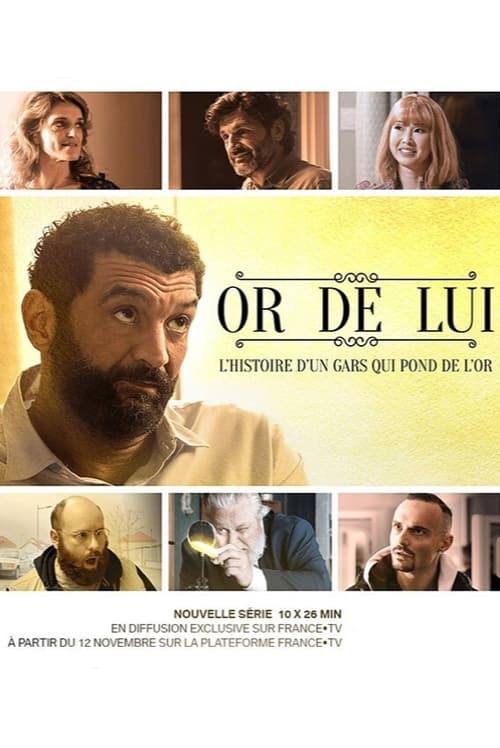







Popular
What role does the supporting character play in the protagonist's journey?
What are the key turning points in the plot that affect the protagonist's decisions?
What motivates the main character's quest for revenge in Or de lui?
How does the relationship between the protagonist and the antagonist evolve throughout Season 1?
How does the setting influence the character dynamics in Or de lui?
Should I watch it?
Ask Your Own Question

What is the plot?
In the opening scene of "Or de lui," we are introduced to the protagonist, a young woman named Clara, who is struggling to make ends meet while working at a small café in a bustling city. Clara is depicted as a dreamer, often lost in her thoughts about a better life. One day, while serving customers, she meets a mysterious man named Victor, who seems to have an air of confidence and charm. Their initial interaction is brief but leaves Clara intrigued.
As the days pass, Clara and Victor's paths cross more frequently. Victor begins to visit the café regularly, and their conversations grow deeper. Clara learns that Victor is an artist, passionate about his work but also burdened by a troubled past. He shares stories of his struggles, which resonate with Clara, who feels a connection to his artistic spirit. This budding relationship brings Clara a sense of hope and excitement, contrasting with her mundane life.
However, Clara's life takes a turn when she discovers that Victor is involved in a secretive world of underground art dealing. One evening, while visiting Victor's studio, she accidentally stumbles upon a hidden room filled with stolen artworks. Shocked and conflicted, Clara confronts Victor about his activities. He reveals that he is trying to escape his past and make a name for himself in the art world, but he is also aware of the risks involved. Clara is torn between her feelings for Victor and her moral compass, leading her to question whether she can trust him.
As Clara grapples with her emotions, she decides to distance herself from Victor, believing that his lifestyle is too dangerous. However, Victor's charm and passion draw her back in, and they share a passionate kiss, reigniting their connection. This moment of intimacy complicates Clara's feelings, and she finds herself increasingly involved in Victor's world, despite her reservations.
The plot thickens when Clara learns that Victor is being pursued by a ruthless art dealer named Marco, who wants to reclaim the stolen artworks. Marco's menacing presence looms over Victor, and Clara realizes that their lives are in danger. In a tense confrontation, Marco threatens Victor, demanding the return of the stolen pieces. Clara witnesses the fear in Victor's eyes, and her protective instincts kick in. She decides to help Victor, believing that together they can find a way out of this mess.
Clara and Victor devise a plan to return the stolen artworks to their rightful owners, hoping to clear Victor's name and escape Marco's wrath. They embark on a series of clandestine meetings with art collectors and gallery owners, navigating the treacherous world of art theft. During this time, Clara's character evolves; she becomes more assertive and resourceful, driven by her love for Victor and her desire to do the right thing.
As they work together, Clara and Victor's relationship deepens, but the pressure from Marco intensifies. In a climactic scene, Marco confronts them at an art exhibition where they plan to return the stolen pieces. A tense standoff ensues, with Marco demanding the artworks and threatening violence. Clara, fueled by adrenaline and desperation, steps forward to protect Victor, revealing her knowledge of the situation to the crowd. This bold move catches Marco off guard, and in the chaos, Victor manages to escape with Clara.
In the aftermath, Clara and Victor find themselves on the run, hiding from Marco's men. They seek refuge in a remote cabin, where they share their fears and dreams, solidifying their bond. However, the threat of Marco still looms large, and they know they cannot stay hidden forever. Clara's internal struggle continues as she weighs her love for Victor against the dangers of their situation.
The season culminates in a final confrontation with Marco, who tracks them down to the cabin. In a tense showdown, Clara and Victor fight back, using their wits and determination to outsmart Marco and his men. The scene is filled with suspense as they navigate through the cabin, using the environment to their advantage. Clara's bravery shines as she takes decisive action, ultimately leading to Marco's defeat.
In the closing moments of the season, Clara and Victor emerge victorious but aware that their journey is far from over. They decide to leave the city behind and start anew, embracing the uncertainty of their future together. The season ends on a hopeful note, with Clara and Victor driving away, ready to face whatever challenges lie ahead, united by their love and resilience.








What is the ending?
In the ending of "Or de lui," the main characters face the consequences of their choices, leading to a dramatic resolution. The protagonist, who has been on a journey of self-discovery and conflict, ultimately confronts the antagonist, resulting in a tense showdown. The story concludes with a sense of closure for some characters, while others are left with unresolved issues, hinting at the complexities of their relationships and the impact of their decisions.
As the final episode unfolds, the atmosphere is thick with tension. The protagonist, Alex, stands at the edge of a cliff overlooking the ocean, reflecting on the tumultuous events that have led him here. The sun sets, casting a golden hue over the landscape, symbolizing both an ending and a new beginning. He is haunted by memories of his past, particularly the choices that have estranged him from his family and friends.
Scene 1: The Confrontation Alex receives a call from his estranged brother, Marco, who has been a source of conflict throughout the season. Marco demands to meet, and Alex, filled with a mix of anxiety and determination, agrees. The scene shifts to a secluded area where the brothers meet. The air is charged with unspoken words and unresolved anger. Marco accuses Alex of abandoning their family, while Alex counters with accusations of Marco's reckless behavior. Their heated exchange reveals deep-seated emotions, showcasing their fractured relationship.
Scene 2: The Turning Point As the argument escalates, Alex's internal struggle becomes evident. He grapples with feelings of guilt and resentment, torn between his desire for reconciliation and the pain of their shared past. In a moment of vulnerability, Alex reveals his own struggles with identity and the pressure he felt to conform to family expectations. This revelation softens Marco's stance, and for the first time, they begin to understand each other's perspectives.
Scene 3: The Resolution The tension reaches a climax when a sudden storm brews, mirroring the emotional turmoil between the brothers. As rain pours down, they are forced to seek shelter together. In this moment of vulnerability, they share stories from their childhood, reminiscing about happier times. The storm outside becomes a metaphor for their tumultuous relationship, but as they find common ground, the storm begins to subside. They embrace, signaling a tentative reconciliation.
Scene 4: The Aftermath The final scenes depict the aftermath of their confrontation. Alex returns home, where he is greeted by his mother, who has been anxiously waiting for news. The emotional reunion is bittersweet, as Alex realizes the impact of his choices on his family. He vows to make amends, promising to be more present in their lives. Meanwhile, Marco, having found a sense of closure, decides to pursue his own path, indicating a newfound independence.
Scene 5: The Open Ending The series concludes with a montage of the characters moving forward. Alex is seen volunteering at a local community center, helping others who struggle with similar issues. Marco is shown starting a new job, symbolizing his commitment to change. The final shot lingers on the ocean, calm and serene, suggesting that while the past cannot be changed, the future holds the potential for healing and growth.
In the end, each character's fate reflects their journey throughout the season. Alex embraces his role within the family, seeking redemption, while Marco steps into his own identity, free from the shadows of their past. The story closes on a note of hope, emphasizing the importance of understanding, forgiveness, and the complexities of familial bonds.
Is there a post-credit scene?
In "Or de lui," Season 1, there is indeed a post-credit scene that adds an intriguing layer to the narrative.
As the credits roll, the screen fades to black before transitioning to a dimly lit room filled with shadows. The camera slowly pans across a table cluttered with various artifacts and documents, hinting at a deeper mystery. A single spotlight illuminates a gold pendant, the same one that has been a significant symbol throughout the season, representing both wealth and the burdens it carries.
Suddenly, a figure enters the frame, their face obscured by the darkness. They reach for the pendant, fingers brushing against its surface, and a look of determination crosses their face. The tension in the air is palpable, suggesting that this character has a hidden agenda connected to the main storyline.
As they turn to leave, a voice echoes from the shadows, asking, "Are you ready to take the next step?" The figure pauses, a flicker of uncertainty crossing their features, before they respond with a resolute, "I have to. It's time to reclaim what's mine."
The scene cuts to black, leaving viewers with a sense of anticipation and questions about this new character's intentions and how they will intertwine with the existing plot. This post-credit moment effectively sets the stage for potential conflicts and alliances in future seasons, enhancing the overall intrigue of the series.
What role does the supporting character play in the protagonist's journey?
The supporting character serves as both a confidant and a moral compass for the protagonist. They provide emotional support and guidance, often challenging the protagonist's darker impulses, which adds complexity to their relationship and highlights the protagonist's internal struggle.
What are the key turning points in the plot that affect the protagonist's decisions?
Key turning points include the discovery of a hidden truth about the antagonist's past, a betrayal from a close ally, and a pivotal moment where the protagonist must choose between vengeance and forgiveness. Each of these moments forces the protagonist to reevaluate their motivations and the consequences of their actions.
What motivates the main character's quest for revenge in Or de lui?
The main character, driven by a deep sense of betrayal and loss, embarks on a quest for revenge after the tragic death of a loved one. This loss is compounded by the realization that those he trusted were involved in the betrayal, fueling his desire to seek justice and retribution.
How does the relationship between the protagonist and the antagonist evolve throughout Season 1?
Initially, the protagonist views the antagonist as a mentor figure, but as the truth unfolds, their relationship deteriorates into one of animosity. The protagonist's feelings shift from admiration to hatred, culminating in intense confrontations that reveal the depths of their conflict.
How does the setting influence the character dynamics in Or de lui?
The gritty urban landscape serves as a backdrop that mirrors the characters' emotional turmoil. The contrasting environments, from the dark alleys where deals are made to the opulent settings of betrayal, enhance the tension between characters and reflect their internal conflicts, shaping their interactions and decisions.
Is this family friendly?
"Or de lui," season 1, produced in 2021, contains several themes and scenes that may not be suitable for children or sensitive viewers. Here are some potentially objectionable aspects:
-
Emotional Turmoil: The show delves into complex family dynamics, including themes of betrayal, loss, and emotional conflict, which may be distressing for younger audiences.
-
Conflict and Tension: There are scenes of intense arguments and confrontations between characters that can create a tense atmosphere, potentially upsetting for sensitive viewers.
-
Depictions of Grief: The series explores the impact of loss on family members, showcasing characters dealing with grief in various ways, which may be heavy for some viewers.
-
Mature Themes: The narrative touches on adult themes such as infidelity and moral dilemmas, which may not be appropriate for children.
-
Visual and Emotional Intensity: Certain scenes may include strong emotional reactions, such as crying or anger, which could be overwhelming for younger viewers.
Overall, while the show has rich storytelling and character development, its emotional depth and mature themes may require parental discretion for younger audiences.