









Popular
What are the key events that lead to the climax of the series?
How does the setting influence the characters' actions and decisions?
What motivates the main character, Anna, throughout the series?
What role does the character of Viktor play in Anna's journey?
How does the relationship between Anna and her father evolve over the course of the series?
Should I watch it?
Ask Your Own Question

What is the plot?
In the opening scenes of "Тонкие материи," we are introduced to the protagonist, a young woman named Alina, who is struggling with the recent loss of her mother. The story begins in a small, dimly lit apartment where Alina is seen going through her mother's belongings, filled with a mix of sorrow and nostalgia. She discovers a mysterious box containing her mother's journals, which hint at a hidden past and a world beyond the ordinary.
As Alina reads through the journals, she learns about her mother's involvement in a secretive organization that explored the boundaries of reality and consciousness. This revelation ignites Alina's curiosity and determination to uncover the truth about her mother's life and the organization. She decides to visit her mother's old friends, hoping to gather more information. The first friend she meets is Viktor, an enigmatic figure who seems to know more than he lets on. Their conversation is tense, filled with unspoken truths, and Viktor warns Alina to stay away from the organization, hinting at dark consequences.
Despite Viktor's warning, Alina's desire for answers drives her to seek out the organization, which is revealed to be called "The Weavers." She discovers that they are conducting experiments on the thin boundaries between different dimensions and realities. Alina manages to infiltrate one of their meetings, where she witnesses a demonstration of their work. The atmosphere is charged with excitement and fear as members discuss the potential of accessing alternate realities. Alina is both fascinated and terrified, feeling a pull towards the unknown.
During her time with The Weavers, Alina meets a fellow member named Alex, who becomes her ally. Alex is charismatic and passionate about the organization's goals, and he shares with Alina his own experiences with the experiments. They form a bond, and Alina begins to trust him, confiding in him about her mother's past. However, Alex's motivations are not entirely clear, and there are moments of doubt about his true intentions.
As Alina delves deeper into the organization, she learns about a specific experiment that went horribly wrong, resulting in the disappearance of several members. This incident is shrouded in mystery, and Alina becomes determined to uncover what really happened. She discovers that her mother was involved in this experiment, and the more she learns, the more she feels a connection to her mother's legacy.
The tension escalates when Alina and Alex decide to conduct their own unauthorized experiment, hoping to access an alternate reality. They prepare meticulously, gathering the necessary equipment and setting up in a secluded location. The atmosphere is thick with anticipation as they initiate the experiment. As they delve into the unknown, they experience a series of vivid and disorienting visions, revealing glimpses of alternate lives and realities. However, the experiment quickly spirals out of control, leading to chaotic and frightening consequences.
In the aftermath of the failed experiment, Alina and Alex find themselves in a precarious situation, facing the wrath of The Weavers' leadership. They are confronted by Viktor, who reveals that he has been monitoring their activities and is deeply concerned about the dangers they are exposing themselves to. A confrontation ensues, with Viktor trying to convince Alina to abandon her quest for knowledge and return to safety. Alina, fueled by her desire to understand her mother's choices, refuses to back down.
The climax of the story occurs when Alina discovers a hidden chamber within the organization's headquarters, containing remnants of past experiments and the truth about her mother's fate. In this chamber, she finds a recording left by her mother, explaining the risks of their work and the sacrifices made in the name of exploration. The emotional weight of this discovery hits Alina hard, as she grapples with feelings of betrayal and admiration for her mother's courage.
In the final act, Alina must make a choice: to continue down the path of exploration, risking her own safety and sanity, or to walk away from the organization and the dangerous knowledge it holds. After a tense internal struggle, she decides to confront the leadership of The Weavers, demanding accountability for the past and a reevaluation of their methods. This confrontation leads to a dramatic showdown, where Alina stands her ground against the powerful figures within the organization.
The story concludes with Alina emerging from the chaos, forever changed by her experiences. She has gained a deeper understanding of her mother's legacy and the complexities of the human desire to explore the unknown. The final scenes depict Alina walking away from the organization's headquarters, a mix of determination and sorrow on her face, as she steps into a future that is uncertain but filled with possibility.

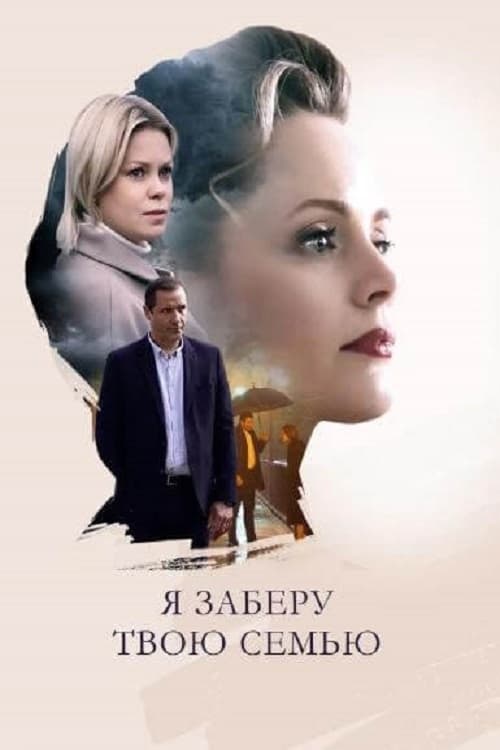







What is the ending?
In the ending of Тонкие материи, the main characters confront their intertwined fates, leading to a resolution that brings closure to their personal struggles and relationships. The story culminates in a dramatic confrontation that forces each character to face their truths, ultimately leading to a bittersweet conclusion.
As the final episodes unfold, we see the characters grappling with their choices and the consequences of their actions. The emotional weight of their past decisions hangs heavily in the air, creating a tense atmosphere. The climax occurs during a pivotal confrontation where long-standing conflicts come to a head. Each character's motivations are laid bare, revealing their vulnerabilities and desires.
In the end, some characters find a sense of peace and resolution, while others are left to deal with the aftermath of their choices. The fates of the main characters are intertwined, reflecting the complex nature of their relationships and the impact of their decisions on one another.
As the final act of Тонкие материи begins, the scene opens in a dimly lit room, where the tension is palpable. The air is thick with unspoken words as the main characters gather for what feels like a reckoning. The camera pans across their faces, capturing the anxiety and determination etched into their expressions. Each character is acutely aware that this moment could change everything.
The first to speak is Alexei, his voice trembling yet resolute. He confronts the group about the lies and secrets that have festered among them. His eyes dart around the room, searching for understanding and perhaps forgiveness. The weight of his past decisions hangs over him, and he struggles to articulate the guilt that has plagued him. The others listen, their expressions a mix of anger, sadness, and empathy.
Next, we see Maria, who has been silently absorbing the tension. Her internal conflict is evident as she wrestles with her feelings for Alexei and the betrayal she feels from the group. As she finally speaks, her voice is steady but laced with emotion. She reveals her own struggles, the sacrifices she has made, and the pain of feeling isolated despite being surrounded by friends. The camera captures the tears welling in her eyes, a testament to her vulnerability.
The confrontation escalates as Dmitry, who has been brooding in the corner, finally interjects. His anger boils over, and he accuses Alexei of being selfish, of not considering the impact of his actions on others. The tension in the room reaches a breaking point, and the characters begin to argue, their voices overlapping in a cacophony of hurt and frustration. Each accusation cuts deep, revealing the raw emotions that have been buried for too long.
As the argument reaches its peak, a sudden silence falls over the room. The characters, now breathless from their outburst, look at one another, realizing the depth of their shared pain. It is in this moment of vulnerability that they begin to understand each other. The camera captures the shift in their expressions, from anger to a tentative understanding.
In the aftermath of the confrontation, the characters begin to reconcile. They share their fears and hopes, slowly rebuilding the trust that had been shattered. The scene shifts to a montage of moments where they support one another, highlighting their growth and the strength of their bonds. Laughter breaks through the tension as they reminisce about happier times, and the atmosphere lightens.
As the series draws to a close, we see each character finding their own path. Alexei, having faced his demons, decides to leave the group to pursue a new life, seeking redemption and a fresh start. Maria, empowered by her newfound clarity, chooses to focus on her own dreams, stepping away from the shadows of her past. Dmitry, having learned the value of vulnerability, begins to open up to the possibility of love, hinting at a budding relationship with another character.
The final scene captures the group together one last time, sharing a bittersweet farewell. The camera lingers on their faces, filled with a mix of hope and sadness. As they part ways, the screen fades to black, leaving the audience with a sense of closure yet an understanding that life continues, with all its complexities and uncertainties. The fates of the characters reflect the themes of growth, forgiveness, and the enduring nature of human connections, even in the face of adversity.
Is there a post-credit scene?
In the TV show Тонкие материи, produced in 2020, there is indeed a post-credit scene that adds an intriguing layer to the narrative.
As the credits roll, the screen fades to black before transitioning to a dimly lit room filled with various scientific equipment and papers scattered across a table. The camera slowly pans to reveal a figure hunched over a microscope, their face obscured by shadows. The atmosphere is tense, underscored by a low, pulsating hum of machinery.
The figure straightens up, and as the light catches their features, it becomes clear that it is one of the supporting characters, a scientist who had previously been skeptical about the main characters' theories. Their expression is one of intense focus and determination, hinting at a newfound resolve.
They turn to a large screen on the wall, which displays complex data and images related to the show's central themes of alternate realities and the thin boundaries between them. The scientist mutters to themselves, reflecting on the events that transpired throughout the series, revealing a mix of regret and ambition.
Suddenly, the screen flickers, and a series of images flash by--brief glimpses of the main characters in various alternate realities, each scene more chaotic than the last. The scientist's eyes widen in shock and realization, suggesting that they have uncovered something monumental that could change everything.
The scene ends with a close-up of the scientist's hand reaching for a button on the console, their finger hovering hesitantly before the screen cuts to black, leaving viewers with a sense of anticipation and curiosity about what this revelation could mean for the future of the story.
What are the key events that lead to the climax of the series?
Key events include Anna discovering hidden letters that reveal her mother's past, confrontations with townspeople who hold pieces of the mystery, and a pivotal moment where she must choose between pursuing the truth or protecting her father's fragile state. These events build tension and lead to a dramatic confrontation that serves as the climax.
How does the setting influence the characters' actions and decisions?
The series is set in a small, isolated town that is steeped in secrets and folklore. This setting creates a claustrophobic atmosphere that heightens the characters' emotional struggles and intensifies their interactions, as they are constantly reminded of the past and the weight of their choices.
What motivates the main character, Anna, throughout the series?
Anna is driven by a deep-seated need to uncover the truth about her family's past, particularly the mysterious circumstances surrounding her mother's disappearance. This quest for understanding fuels her emotional journey, leading her to confront her own fears and insecurities.
What role does the character of Viktor play in Anna's journey?
Viktor serves as both a mentor and a source of conflict for Anna. His enigmatic past and connection to her mother complicate Anna's quest, as she grapples with her feelings of trust and betrayal. His guidance pushes her to confront difficult truths about herself and her family.
How does the relationship between Anna and her father evolve over the course of the series?
Initially, Anna's relationship with her father is strained due to his secretive nature and her feelings of abandonment. As the series progresses, they begin to communicate more openly, revealing layers of grief and regret, ultimately leading to a fragile reconciliation.
Is this family friendly?
"Tонкие материи" (Thin Materials) is a drama that explores complex themes and emotional struggles, which may not be suitable for younger audiences or sensitive viewers. Here are some potentially objectionable or upsetting aspects:
-
Intense Emotional Scenes: The show features several moments of deep emotional turmoil, including characters dealing with loss, betrayal, and existential crises, which may be distressing for children.
-
Family Conflict: There are scenes depicting significant family strife, including arguments and confrontations that can be intense and uncomfortable.
-
Mental Health Themes: The series addresses mental health issues, including anxiety and depression, which may be challenging for sensitive viewers to process.
-
Substance Use: There are instances of characters engaging in substance use, which could be concerning for younger audiences.
-
Mature Relationships: The show explores complex adult relationships, including themes of infidelity and emotional manipulation, which may not be appropriate for children.
-
Dark Themes: The narrative delves into darker aspects of human nature and societal issues, which may be unsettling for some viewers.
Overall, while the show is rich in storytelling and character development, its themes and emotional depth may not be suitable for a family-friendly viewing experience.