
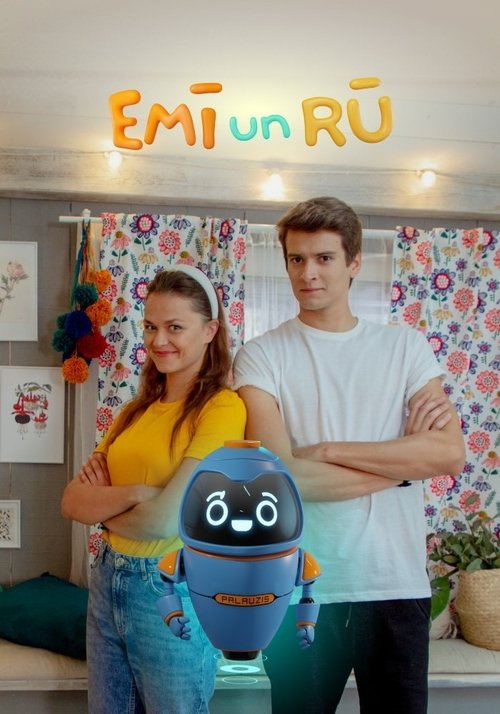




Popular
How does the setting of the small town impact the characters' development?
What motivates Emī to pursue her dreams despite the challenges she faces?
How does Rū's relationship with her family influence her decisions throughout the series?
What pivotal moment causes a rift between Emī and Rū?
What role does the theme of friendship play in Emī and Rū's journey?
Should I watch it?
Ask Your Own Question

What is the plot?
In the opening scene of "Emī un Rū," we are introduced to Emī, a young girl living in a small, picturesque village. She is seen playing with her friends, showcasing her vibrant personality and carefree spirit. The village is depicted as a close-knit community, where everyone knows each other. Emī's family is introduced, highlighting her loving relationship with her parents, who are supportive of her dreams and aspirations.
As the story progresses, we learn that Emī has a deep passion for music, particularly for playing the violin. She practices diligently, dreaming of performing on a larger stage. One day, while practicing in the village square, she catches the attention of a traveling musician named Rū. Rū is charismatic and has a mysterious aura about him. He approaches Emī, complimenting her talent and encouraging her to pursue her dreams. This encounter sparks a friendship between them, and Rū becomes a mentor figure for Emī.
As their bond deepens, Rū shares stories of his travels and the challenges he faced as a musician. Emī is inspired by his tales and begins to envision a life beyond her village. However, Rū harbors a secret; he is on the run from a powerful figure in the music industry who seeks to control him. This adds a layer of tension to their relationship, as Emī remains unaware of the dangers surrounding Rū.
One evening, during a village festival, Emī performs a piece she has been working on, with Rū watching proudly from the crowd. Her performance is met with enthusiastic applause, and she feels a sense of fulfillment. However, the celebration is interrupted when the powerful figure, known as the Maestro, arrives in the village, searching for Rū. The atmosphere shifts from joy to fear as the villagers become aware of the threat.
Rū decides it is time to leave the village to protect Emī and himself. He confides in Emī about his past and the Maestro's relentless pursuit. Emī is torn between her desire to stay in the village and her longing for adventure with Rū. Ultimately, she chooses to accompany him, believing that together they can face the challenges ahead.
As they travel, Rū teaches Emī more about music and the world beyond her village. They encounter various characters along the way, including fellow musicians and those who have been affected by the Maestro's tyranny. Each encounter deepens Emī's understanding of the music industry and the sacrifices artists make for their craft.
Their journey takes a dangerous turn when they are ambushed by the Maestro's henchmen. In a tense confrontation, Rū fights to protect Emī, showcasing his skills as a musician and a fighter. Emī, witnessing Rū's bravery, realizes the depth of her feelings for him. Together, they manage to escape, but not without sustaining injuries and emotional scars.
As they continue their journey, Emī's confidence grows, and she begins to take on a more active role in their fight against the Maestro. She starts composing her own music, inspired by their experiences. Rū encourages her creativity, and they collaborate on a piece that embodies their struggles and hopes.
The climax of the story occurs when they confront the Maestro in a dramatic showdown. The confrontation takes place in a grand concert hall, where the Maestro plans to showcase his control over the music industry. Emī and Rū infiltrate the event, using their music as a weapon against the Maestro's oppressive regime. The performance is electrifying, filled with emotion and defiance.
During the performance, Emī reveals her true talent, captivating the audience and turning them against the Maestro. The power of their music unites the crowd, and they rise up against the Maestro's authority. In a final confrontation, Rū and Emī face the Maestro, leading to a climactic battle of wills and music.
In the aftermath, the Maestro is defeated, and the music industry begins to change for the better. Emī and Rū emerge as symbols of hope and resilience. They return to the village, where Emī is celebrated as a hero. The story concludes with Emī performing in her village once again, but this time with a newfound sense of purpose and a bright future ahead, alongside Rū, who has become her partner in both music and life.
More TV Shows Like This
Browse All TV Shows →
What is the ending?
In the ending of "Emī un Rū," the story culminates in a dramatic confrontation that leads to significant revelations and resolutions for the main characters. Emī faces her past and the choices she has made, while Rū comes to terms with her own identity and the impact of their relationship. The series concludes with a sense of closure, as both characters find a path forward, albeit separately, embracing their individual journeys.
As the final episodes unfold, the tension builds between Emī and Rū. The scene opens in a dimly lit room, where Emī sits alone, her face illuminated by the soft glow of her phone. She scrolls through old messages, memories flooding back, each one a reminder of the bond she shared with Rū. The weight of her decisions hangs heavily on her shoulders, and the audience can feel her internal struggle as she grapples with regret and longing.
In the next scene, Rū is seen walking through a bustling market, her expression a mix of determination and uncertainty. She pauses at a stall, picking up a vibrant piece of fabric, a symbol of her desire to embrace her true self. The camera captures her reflection in a nearby window, revealing the conflict within her as she contemplates her future without Emī. The vibrant colors of the market contrast sharply with her somber thoughts, highlighting her internal battle.
The climax arrives when Emī and Rū finally confront each other in a secluded park, the air thick with unspoken words. Emī's voice trembles as she admits her fears and regrets, her vulnerability laid bare. Rū, with tears in her eyes, responds with her own truth, revealing how Emī's choices have shaped her journey. The emotional exchange is raw and powerful, each character's pain and love intertwining in a poignant moment of honesty.
As the sun begins to set, casting a warm glow over the scene, Emī and Rū share a final embrace, a bittersweet farewell that encapsulates their shared history. They part ways, each stepping into their own future, symbolizing growth and the acceptance of their individual paths. Emī walks away with a newfound sense of purpose, ready to face her past and make amends, while Rū, empowered by her journey, embraces her identity and the possibilities that lie ahead.
In the closing moments, the camera lingers on the empty park bench where they once sat together, a testament to their bond and the changes they have undergone. The series ends with a sense of hope, as both characters look toward the horizon, ready to embrace whatever comes next, leaving the audience with a lingering sense of possibility and renewal.
Is there a post-credit scene?
In the TV show "Emī un Rū," there is indeed a post-credit scene that adds an intriguing layer to the narrative. After the final credits roll, the screen fades back in to a dimly lit room where Emī is seen sitting at a table, her expression contemplative and slightly anxious. The atmosphere is thick with tension, as the soft sound of a clock ticking fills the silence.
As she stares at a small, intricately carved box in front of her, the camera zooms in on her face, capturing the flicker of doubt and determination in her eyes. The box, which has been a recurring symbol throughout the series, represents both her past and the choices she must make for her future.
Suddenly, the door creaks open, and Rū enters, his demeanor serious yet supportive. He approaches Emī, and the unspoken bond between them is palpable. The scene is charged with emotion as they exchange a few meaningful glances, hinting at unresolved issues and the depth of their relationship.
Rū reaches for the box, and as he opens it, the screen cuts to black just before revealing its contents, leaving viewers with a sense of anticipation and curiosity about what lies ahead for both characters. This moment encapsulates the themes of choice, consequence, and the complexity of their connection, setting the stage for potential developments in future storylines.
How does the setting of the small town impact the characters' development?
The small town setting serves as a double-edged sword for the characters. It provides a close-knit community that fosters relationships but also stifles individuality. Emī and Rū's growth is heavily influenced by the town's expectations, leading to moments of rebellion and self-discovery.
What motivates Emī to pursue her dreams despite the challenges she faces?
Emī is driven by a deep desire to prove herself and escape the limitations imposed by her surroundings. Her passion for art and the need for self-expression fuel her determination, even when faced with skepticism from her family and peers.
How does Rū's relationship with her family influence her decisions throughout the series?
Rū's relationship with her family is complex; she feels a strong sense of duty towards them, which often conflicts with her personal aspirations. This internal struggle leads her to make choices that prioritize family expectations over her own desires, creating emotional turmoil.
What pivotal moment causes a rift between Emī and Rū?
The rift between Emī and Rū occurs during a critical art competition when Emī feels betrayed by Rū's decision to side with a rival. This moment of perceived betrayal is charged with emotion, as both characters grapple with their ambitions and the weight of their friendship.
What role does the theme of friendship play in Emī and Rū's journey?
Friendship is central to Emī and Rū's journey, acting as both a source of strength and conflict. Their bond is tested through misunderstandings and competition, yet it ultimately becomes a catalyst for personal growth, as they learn to navigate their ambitions while supporting each other.
Is this family friendly?
"Emī un Rū," produced in 2020, is generally considered family-friendly, but it does contain some scenes and themes that may be sensitive for children or those who are easily upset.
-
Emotional Conflict: The show explores themes of family dynamics, including arguments and misunderstandings that may evoke strong emotions. These scenes can be intense and may resonate with viewers who have experienced similar conflicts.
-
Loss and Grief: There are moments that touch on loss, which can be poignant and may lead to feelings of sadness. Characters may deal with the absence of loved ones, which could be upsetting for younger viewers.
-
Social Issues: The series addresses various social issues, including bullying and peer pressure, which may be distressing for sensitive viewers. These themes are presented in a way that encourages discussion but can still be heavy.
-
Mild Scares: Some scenes may include mild suspense or tension that could be startling for younger children, particularly during moments of conflict or when characters face challenges.
-
Emotional Vulnerability: Characters often display vulnerability, which can lead to emotional scenes that might be difficult for some viewers to watch, especially if they relate closely to the characters' struggles.
Overall, while "Emī un Rū" is suitable for family viewing, parents may want to watch alongside younger children to help navigate any potentially upsetting content.







