




















Popular
What motivates Dr. Emily Carter to take on the controversial surgery in the first episode?
How does the relationship between Dr. Carter and her mentor, Dr. Samuel Hayes, evolve throughout the series?
What is the significance of the patient, Mia, in the storyline?
How does the hospital's administration react to Dr. Carter's unconventional methods?
What internal conflicts does Dr. Carter face regarding her surgical decisions?
Should I watch it?
Ask Your Own Question

What is the plot?
In the opening scene of "With Surgical Precision," we are introduced to Dr. Emily Carter, a brilliant but emotionally distant surgeon, as she performs a complex heart surgery. The operating room is tense, filled with the sounds of beeping machines and the focused chatter of the surgical team. Emily's hands move with precision, but her face reveals a deep-seated anxiety about her personal life, particularly her estranged relationship with her father, a retired surgeon who disapproves of her career choices.
Following the successful surgery, Emily receives a call from her father, who insists on meeting. Reluctantly, she agrees, revealing her internal conflict about their relationship. The scene shifts to a dimly lit diner where they meet. Tension fills the air as they exchange barbs about their differing views on medicine and family. Emily's father expresses disappointment in her life choices, which leads to an emotional confrontation. Emily storms out, feeling both anger and sadness.
The narrative then introduces a subplot involving a mysterious patient, Alex, who arrives at the hospital with severe injuries from a car accident. Emily is assigned to his case, and as she examines him, she notices unusual signs of trauma that suggest foul play. Despite her initial reluctance, she becomes increasingly invested in uncovering the truth behind Alex's injuries. The hospital staff, including her close friend and nurse, Sarah, encourage her to dig deeper, sensing that there is more to the story.
As Emily investigates, she discovers that Alex is a whistleblower who had been gathering evidence against a corrupt pharmaceutical company. This revelation adds urgency to her mission, as she realizes that Alex's life may be in danger. Emily confronts the hospital's administration about the need for security measures, but they dismiss her concerns, prioritizing the hospital's reputation over patient safety. Frustrated, Emily decides to take matters into her own hands.
One night, while working late, Emily receives a threatening message warning her to stop her investigation. Undeterred, she enlists Sarah's help to gather more information about the pharmaceutical company. They discover a connection between the company and a series of suspicious patient deaths. This discovery heightens the stakes, and Emily becomes determined to expose the truth, even if it means risking her career.
As the plot thickens, Emily's father unexpectedly shows up at the hospital, having heard about the investigation. He offers his support, revealing that he has connections within the medical community that could help. Initially resistant, Emily eventually accepts his help, leading to a fragile reconciliation between them. They work together to gather evidence, and their relationship begins to heal as they bond over their shared commitment to medicine.
The tension escalates when Emily and Sarah are ambushed by hired thugs sent by the pharmaceutical company. In a gripping confrontation, they narrowly escape, showcasing Emily's quick thinking and resourcefulness. This encounter solidifies Emily's resolve to bring the truth to light, and she becomes more determined than ever to protect Alex and expose the corruption.
In a climactic sequence, Emily organizes a press conference to reveal her findings. Just as she begins to speak, the pharmaceutical company's CEO attempts to discredit her, but Emily stands her ground, presenting irrefutable evidence. The media frenzy that follows leads to a public outcry, and law enforcement begins an investigation into the company.
The final act sees Emily and her father working together to ensure Alex's safety as he prepares to testify against the pharmaceutical company. In a tense standoff, they confront the thugs once more, leading to a dramatic showdown. Emily's father uses his medical expertise to help subdue one of the attackers, showcasing their newfound partnership.
In the closing scenes, the investigation leads to multiple arrests, and the pharmaceutical company faces severe repercussions. Emily's relationship with her father is transformed, as they find common ground in their shared experiences and commitment to ethical medicine. The series ends with Emily standing in the hospital, reflecting on her journey, ready to face whatever challenges lie ahead, both personally and professionally.









What is the ending?
In the ending of "With Surgical Precision," the main character, Dr. Sarah Mitchell, confronts her past mistakes while performing a high-stakes surgery that could save a young patient's life. As she navigates the complexities of the operation, she faces both external challenges and her internal demons. Ultimately, she succeeds in saving the patient, leading to a moment of redemption. However, her personal relationships suffer as she realizes the cost of her dedication to her career. The series concludes with Sarah standing alone in the hospital, reflecting on her choices, while her colleague, Dr. James Carter, decides to leave the hospital for a new opportunity, symbolizing the shifting dynamics in their professional and personal lives.
As the final episode unfolds, the camera pans over the bustling hospital, the fluorescent lights casting a sterile glow over the chaos of the emergency room. Dr. Sarah Mitchell, a skilled but emotionally burdened surgeon, prepares for a critical surgery on a young boy named Ethan, who has been brought in after a severe accident. The tension in the air is palpable, and Sarah's hands tremble slightly as she reviews the boy's chart, her mind racing with memories of past failures that haunt her.
Scene 1: The Operating Room The scene shifts to the operating room, where the surgical team gathers. Sarah stands at the head of the table, her brow furrowed in concentration. The anesthesiologist, Dr. Lisa Chen, offers a reassuring nod, but Sarah's eyes betray her anxiety. As the anesthesia takes effect, Sarah steels herself, recalling the words of her mentor, who once told her that every surgery is a chance for redemption. The camera zooms in on her face, capturing the flicker of determination mixed with fear.
Scene 2: The Surgery Begins As the surgery begins, the tension escalates. Sarah meticulously navigates through the layers of tissue, her hands steady despite the stakes. The monitor beeps steadily, but the sound of her own heartbeat drowns out everything else. She recalls the last time she lost a patient, the guilt weighing heavily on her conscience. Each incision feels like a battle against her own self-doubt. The surgical team works in sync, but Sarah's internal struggle is evident as she fights to maintain focus.
Scene 3: A Critical Moment Midway through the procedure, complications arise. Ethan's vitals begin to drop, and panic ripples through the room. Sarah's heart races as she calls for a blood transfusion, her voice steady despite the chaos. The camera captures the sweat beading on her forehead, the tension in her jaw. In this moment, she realizes that her past mistakes do not define her; she has the power to change the outcome. With renewed resolve, she pushes through the crisis, her hands moving with surgical precision.
Scene 4: The Aftermath As the surgery concludes successfully, the relief in the room is palpable. Sarah steps back, her breath coming in heavy gasps. The team celebrates, but Sarah's joy is tempered by the weight of her choices. She watches as Ethan is wheeled out of the operating room, a small smile on his face, and for a moment, she feels a flicker of hope. However, the camera shifts to her colleagues, who exchange glances filled with unspoken words. Dr. James Carter, her closest ally, stands apart, contemplating his future.
Scene 5: The Farewell In the final moments, Sarah finds James in the hospital's break room. He reveals that he has accepted a position at a prestigious hospital across the country. The news hits Sarah like a punch to the gut. She realizes that her relentless pursuit of excellence has cost her not only personal relationships but also the support of those who once stood by her side. As they share a bittersweet farewell, the emotional weight of their shared experiences hangs in the air. James expresses his gratitude for their time together, but Sarah can only nod, her heart heavy with regret.
Scene 6: Reflection The series concludes with Sarah standing alone in the empty operating room, the lights dimming around her. She gazes at the surgical instruments, reflecting on the sacrifices she has made. The camera pulls back, revealing the stark contrast between her professional success and personal loneliness. As she walks out, the sound of her footsteps echoes, symbolizing her journey of self-discovery and the realization that while she may have saved a life, she has also lost parts of herself along the way.
In the end, Sarah's fate is one of bittersweet redemption; she has proven her skills as a surgeon but at the cost of her relationships. James's departure signifies a new chapter for both characters, highlighting the sacrifices made in the pursuit of their careers. The series closes on a poignant note, leaving viewers to ponder the balance between ambition and personal connection.
Is there a post-credit scene?
In the TV show "With Surgical Precision," there is indeed a post-credit scene that adds an intriguing layer to the narrative.
As the credits roll, the screen fades to black before transitioning to a dimly lit hospital corridor. The camera slowly pans down the hallway, revealing a series of closed doors, each marked with the names of various departments. The atmosphere is tense, underscored by the distant sounds of medical equipment beeping and the faint murmur of voices.
The scene focuses on one door in particular, labeled "Research and Development." The door creaks open, and we see Dr. Elena Torres, a key character known for her ethical dilemmas throughout the series. She stands inside, surrounded by a team of researchers, all huddled around a table cluttered with medical charts and high-tech devices.
Elena's expression is a mix of determination and anxiety as she addresses her team. "We need to push the boundaries further. The implications of our findings could change everything," she says, her voice steady but laced with urgency. The camera zooms in on her face, capturing the flicker of doubt in her eyes, hinting at the moral complexities she grapples with.
Suddenly, a researcher interrupts, holding up a vial containing a glowing substance. "But at what cost, Elena? We need to consider the consequences." The tension in the room escalates, and Elena's jaw tightens as she contemplates the ethical ramifications of their work.
The scene ends with a close-up of the vial, the glowing substance pulsating ominously, before cutting to black. This moment leaves viewers with a sense of foreboding, suggesting that the pursuit of medical advancement may lead to unforeseen dangers, setting the stage for potential conflicts in future seasons.
What motivates Dr. Emily Carter to take on the controversial surgery in the first episode?
Dr. Emily Carter is driven by a deep-seated desire to prove herself after a traumatic incident in her past where she lost a patient due to a misdiagnosis. This fuels her ambition to push the boundaries of surgical techniques, believing that the controversial surgery could save lives and restore her reputation.
How does the relationship between Dr. Carter and her mentor, Dr. Samuel Hayes, evolve throughout the series?
Initially, Dr. Hayes serves as a guiding figure for Dr. Carter, but as she begins to challenge his traditional methods, their relationship becomes strained. Dr. Hayes feels threatened by her innovative approach, leading to intense confrontations that reveal both their vulnerabilities and the complexities of their mentor-mentee dynamic.
What is the significance of the patient, Mia, in the storyline?
Mia, a young woman with a rare condition, becomes the focal point of Dr. Carter's groundbreaking surgery. Her case not only represents the ethical dilemmas faced by the medical team but also serves as a catalyst for Dr. Carter's personal growth, as she grapples with the weight of her decisions and the impact they have on Mia's life.
How does the hospital's administration react to Dr. Carter's unconventional methods?
The hospital administration is initially supportive of Dr. Carter's innovative approach, seeing it as a potential breakthrough. However, as complications arise during surgeries, they begin to question her methods, leading to a power struggle that tests Dr. Carter's resolve and forces her to confront the consequences of her ambition.
What internal conflicts does Dr. Carter face regarding her surgical decisions?
Dr. Carter experiences intense internal conflict as she balances her desire to innovate with the ethical implications of her choices. She often reflects on her past failures, leading to moments of self-doubt and anxiety, especially when faced with the potential for patient harm, which forces her to reconsider her motivations and the true cost of her ambition.
Is this family friendly?
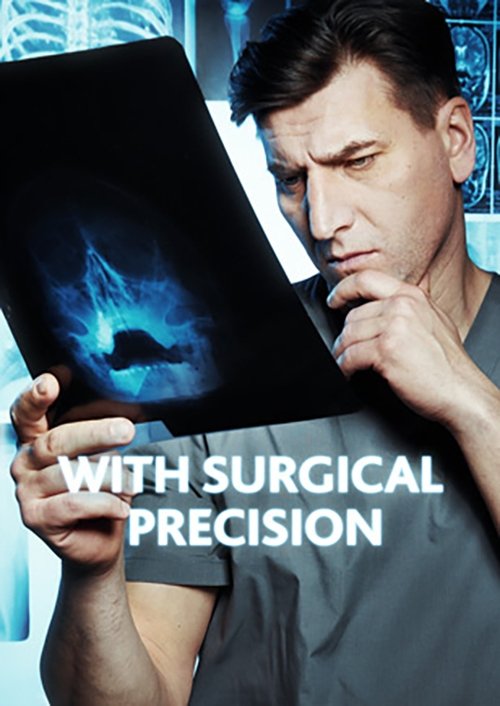
With Surgical Precision, produced in 2021, is not considered family-friendly due to its intense themes and graphic content. Here are some potentially objectionable or upsetting aspects that may affect children or sensitive viewers:
-
Graphic Medical Procedures: The show features detailed depictions of surgical operations, which may be unsettling for younger audiences or those with a fear of medical environments.
-
Emotional Trauma: Characters often grapple with intense emotional struggles, including grief, loss, and ethical dilemmas surrounding life and death, which could be distressing.
-
Violence and Conflict: There are scenes that depict interpersonal conflict and violence, which may be inappropriate for younger viewers.
-
Mature Themes: The narrative explores complex themes such as morality in medicine, the consequences of decisions, and the impact of personal relationships on professional life, which may be difficult for children to understand.
-
Intense Character Interactions: The show includes heated arguments and confrontations that can create a tense atmosphere, potentially causing discomfort.
These elements contribute to a viewing experience that may not be suitable for all audiences, particularly children or those sensitive to such content.